(7% discount is applied at checkout)
Cart is empty
Your go-to destination for cutting-edge server products
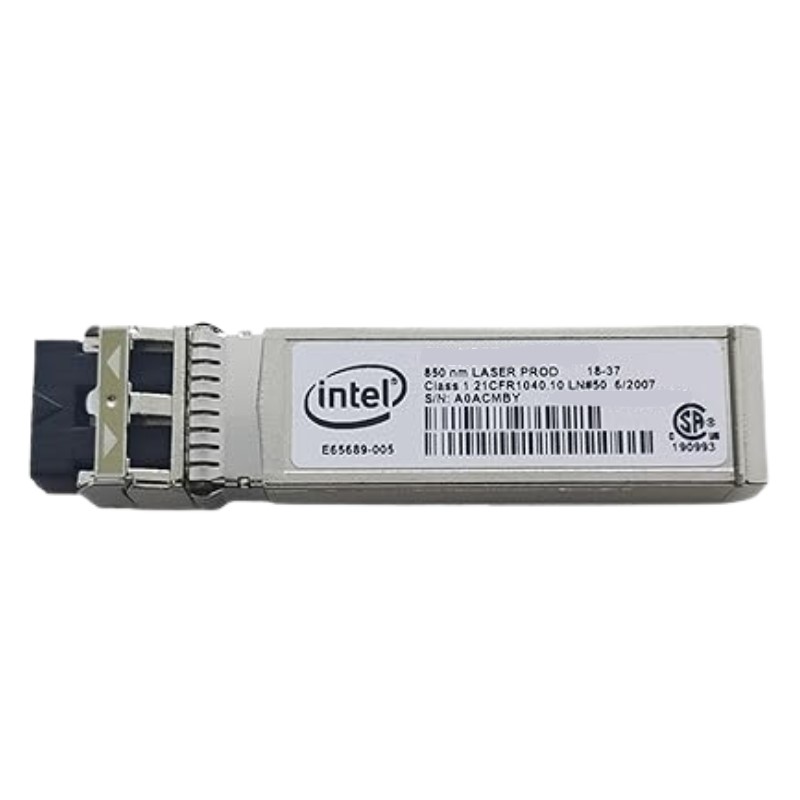


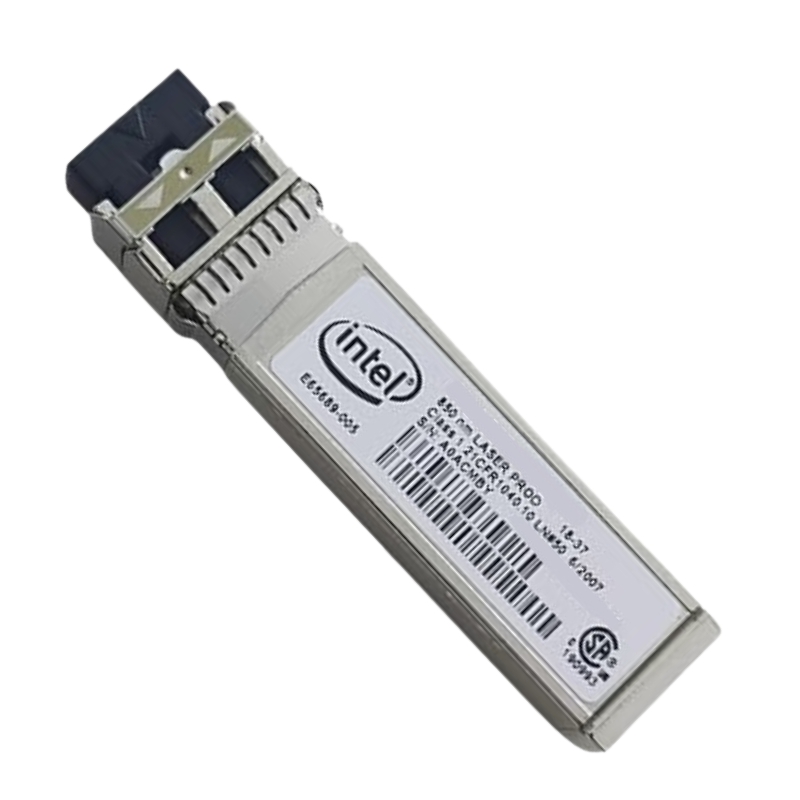
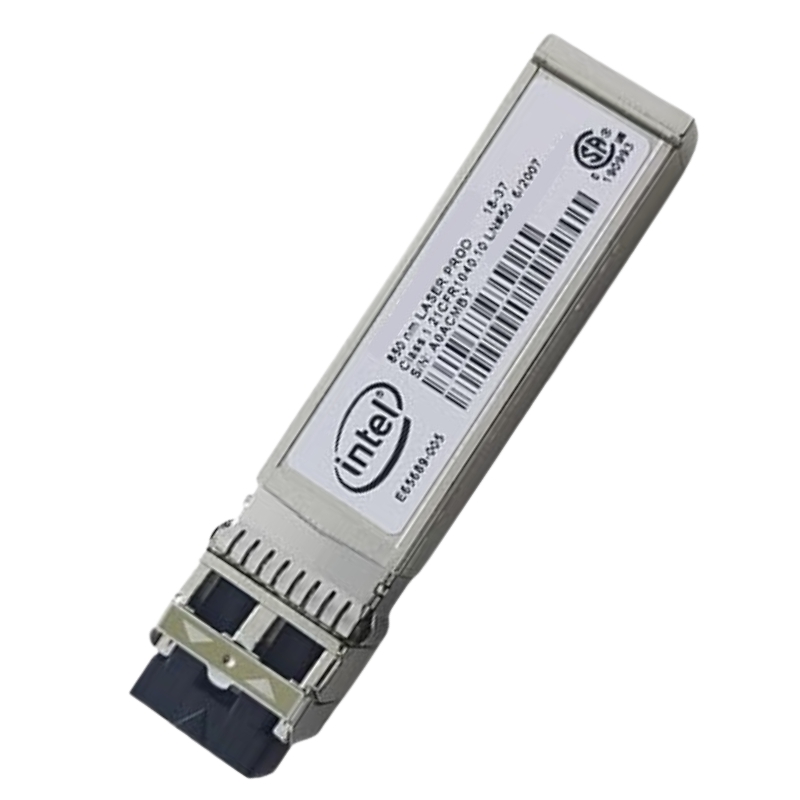
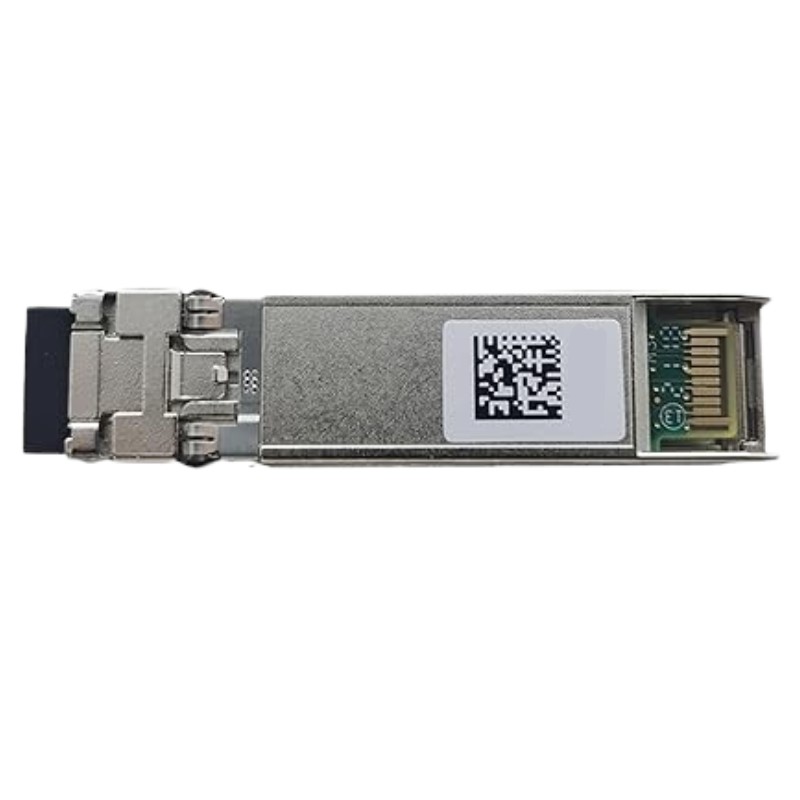
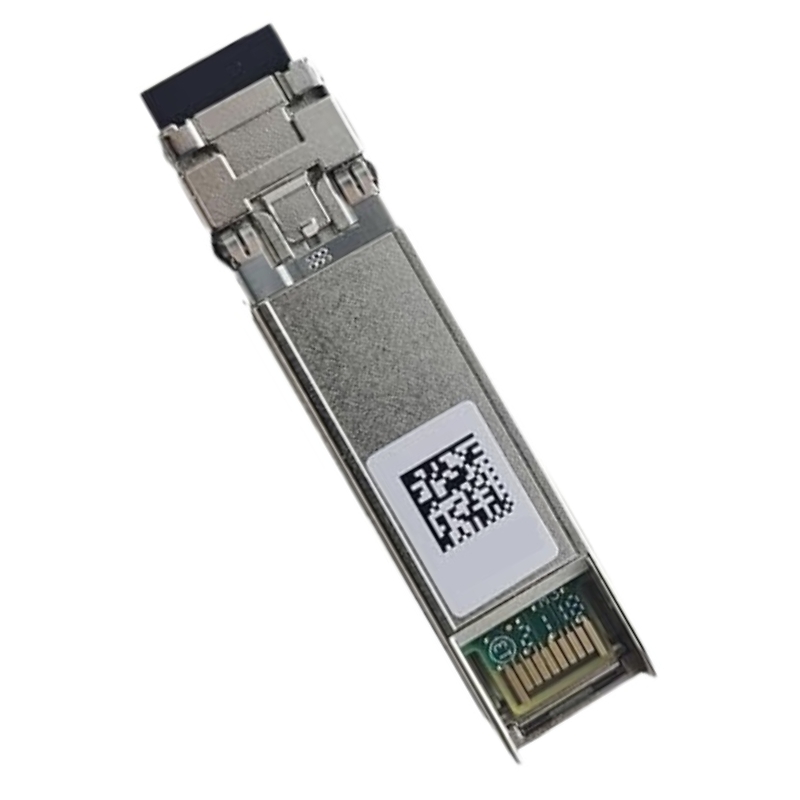
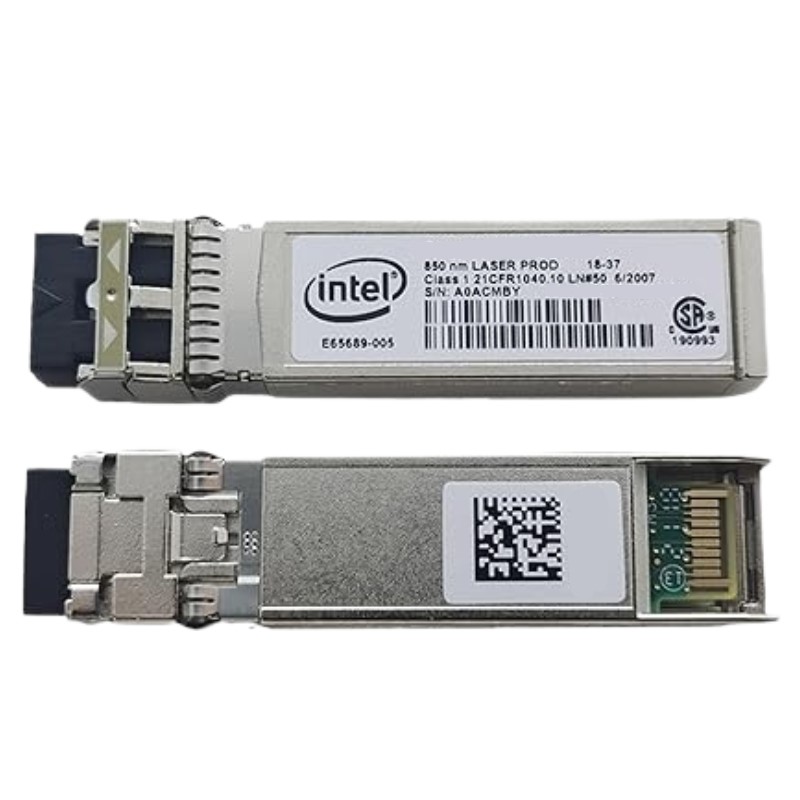
Intel FTLX8574D3BNL-IE 10GBASE-SR SFP+ Transceiver. Excellent Refurbished with 1 year replacement warranty
The Intel FTLX8574D3BNL-IE 10GBASE-SR SFP+ transceiver module is engineered to deliver reliable, high-speed optical networking performance for enterprise, data center, and storage area network (SAN) environments. Designed for seamless integration into 10 Gigabit Ethernet infrastructure, this hot-pluggable module ensures efficient short-range fiber connectivity with optimized signal integrity and low latency.
The Intel FTLX8574D3BNL-IE 10GBASE-SR SFP+ transceiver category represents a high-performance class of short-range optical networking modules designed for 10 Gigabit Ethernet (10GbE) environments. Built for modern enterprise, cloud, and data center infrastructures, this transceiver family focuses on delivering reliable, low-latency, and energy-efficient optical communication over multimode fiber (MMF) links. As part of the SFP+ (Small Form-factor Pluggable Plus) ecosystem, it enables scalable network expansion while maintaining compact hardware integration and simplified deployment across switching and server platforms.
This category is widely used in environments where high throughput, stable optical transmission, and standardized interoperability are critical. The Intel FTLX8574D3BNL-IE module is commonly associated with 10GBASE-SR standards, ensuring compatibility with a wide range of enterprise switches, network interface cards, and storage networking systems.
10GBASE-SR refers to a short-range optical standard that operates over multimode fiber using an 850nm wavelength. This design is optimized for high-speed data transmission within localized environments such as data centers, server rooms, and enterprise LAN backbones. The Intel FTLX8574D3BNL-IE leverages this standard to achieve efficient signal transmission while minimizing attenuation and signal degradation over short distances.
At the core of this transceiver technology is the Vertical Cavity Surface Emitting Laser (VCSEL) operating at 850nm. This laser type is widely recognized for its energy efficiency, stable modulation characteristics, and cost-effective manufacturing. The VCSEL-based design ensures consistent optical output, allowing seamless communication across multimode fiber channels while maintaining low power consumption levels suitable for dense networking environments.
Signal integrity is maintained through advanced modulation techniques that reduce jitter and minimize bit error rates. This ensures that even in high-density switching environments, data transmission remains stable and predictable, which is essential for enterprise workloads and virtualized infrastructure systems.
The SFP+ form factor is a compact, hot-pluggable design that allows network administrators to deploy high-speed connectivity modules without powering down systems. The Intel FTLX8574D3BNL-IE integrates seamlessly into SFP+ slots on compatible network devices, providing flexibility for scaling network bandwidth without redesigning infrastructure hardware.
Hot-swappability is a key advantage of this transceiver category. It enables maintenance and upgrades without interrupting network operations. This feature is particularly beneficial in mission-critical environments where uptime is a priority and downtime can lead to operational or financial impact.
The module is engineered with precision-aligned LC duplex connectors that ensure secure fiber attachment. The housing is designed to withstand repeated insertion cycles while maintaining consistent optical alignment and mechanical stability throughout its lifecycle.
The Intel FTLX8574D3BNL-IE is widely deployed in high-density switching architectures where multiple 10GbE links are required. These environments include leaf-spine data center topologies, enterprise aggregation layers, and high-performance computing clusters. The module’s low-latency performance ensures efficient traffic handling between servers and switching fabrics.
Cloud service providers rely on 10GBASE-SR transceivers to support virtual machine mobility, distributed storage systems, and scalable application hosting. The consistent throughput and predictable latency characteristics of this module category make it suitable for cloud-native architectures that demand continuous data availability and rapid scaling capabilities.
In SAN environments, the transceiver supports high-speed communication between storage arrays and servers. This ensures rapid data retrieval, backup synchronization, and replication processes that are essential for enterprise-grade storage infrastructures.
This transceiver category is optimized for multimode fiber types such as OM3 and OM4. These fiber standards support high bandwidth transmission over short distances while minimizing signal loss. The Intel FTLX8574D3BNL-IE ensures efficient utilization of MMF infrastructure in enterprise networks.
The LC duplex interface is a widely adopted standard in optical networking. It enables bidirectional communication through two fiber strands, one for transmitting and one for receiving data. This design supports stable and efficient data flow between connected devices.
Depending on fiber grade, the module can support varying transmission distances suitable for intra-building connectivity and data center inter-rack communication. OM3 fiber typically supports up to 300 meters, while OM4 fiber extends performance further under optimal conditions.
The Intel FTLX8574D3BNL-IE is engineered to consume minimal power while maintaining high-performance optical transmission. This is essential for reducing operational costs in large-scale deployments where hundreds or thousands of transceivers may be active simultaneously.
Thermal management is critical in high-density switch environments. The module is designed to operate efficiently under varying temperature conditions, ensuring consistent performance even in tightly packed chassis configurations where airflow may be limited.
The housing materials and internal design contribute to effective heat dissipation, preventing overheating and maintaining long-term reliability under continuous operation.
The 10GbE throughput capability ensures that the module supports demanding applications such as virtualization, real-time analytics, and high-volume data transfer workloads. This makes it suitable for modern digital infrastructures that require sustained high-speed connectivity.
Low-latency transmission is achieved through optimized optical signaling and efficient electronic-to-optical conversion processes. This reduces delays in packet transmission, enhancing overall network responsiveness.
Advanced error correction and signal stabilization techniques ensure that jitter is minimized, resulting in cleaner and more reliable data streams across the network.
The Intel FTLX8574D3BNL-IE is designed to integrate seamlessly with Intel-based networking hardware, including Ethernet switches and server network interface cards. This ensures consistent performance across enterprise deployments where Intel infrastructure is widely adopted.
Beyond Intel ecosystems, the module adheres to IEEE 802.3ae standards for 10 Gigabit Ethernet, enabling interoperability with a wide range of third-party networking equipment. This flexibility allows organizations to build heterogeneous network environments without compatibility concerns.
Each module undergoes rigorous testing procedures to ensure compliance with optical performance standards, mechanical durability, and thermal endurance requirements. This ensures consistent quality across large-scale deployments.
Most compatible networking devices automatically recognize the module upon insertion, allowing for immediate integration into existing network configurations without manual driver installation or firmware modifications.
Proper fiber handling, clean connector maintenance, and correct port matching are essential to ensure optimal performance and prevent signal degradation during deployment.


 Contact Us
 Information
 Catalog
 Solid State Drives (SSD)
 Network Switches
 Hard Disk Drives
 HBA & Controllers
 PC & Servers
 PC & Server Memory
 CPU & Processors
 Network Routers
 Power Supplies
 Tape Drives & Libraries
 Network Devices
 Computer & Network Cables