
(7% discount is applied at checkout)
Cart is empty
Your go-to destination for cutting-edge server products
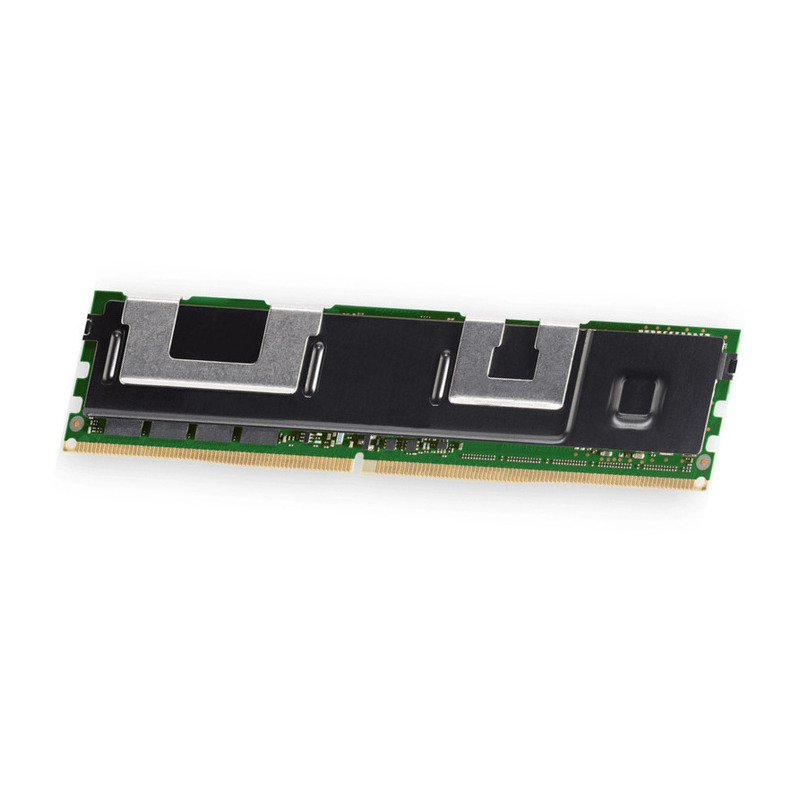
Intel NMB1XXD256GPS 256GB DDR4 PC4-25600 SDRAM 200 Series 3200MHz ECC Memory Module. New (System) Pull with 1 year replacement warranty
The Intel NMB1XXD256GPS 256GB DDR4 SDRAM 200 Series memory module is designed for high-performance enterprise servers and data center applications. Featuring DDR-T interface, ECC support, and AES-256 hardware encryption, it provides reliable, secure, and high-bandwidth memory for virtualization, in-memory databases, and large-scale workloads.
The Intel NMB1XXD256GPS 256GB DDR4 PC4-25600 SDRAM 200 Series 3200MHz ECC Memory Module represents the next level of enterprise memory solutions, designed for high-performance servers, data centers, and large-scale computing infrastructures. Engineered to deliver exceptional throughput, reliability, and scalability, this 256GB DDR4 module supports a wide array of memory-intensive workloads including virtualization, cloud computing, database management, analytics, artificial intelligence, and high-performance computing (HPC). With a 3200MHz operating frequency and PC4-25600 bandwidth, it ensures peak performance, while ECC functionality guarantees data integrity in mission-critical environments.
The Intel NMB1XXD256GPS module leverages the DDR4 3200MHz standard to provide PC4-25600 bandwidth, enabling transfer rates up to 25.6GB/s per DIMM. This high-speed capability ensures that server processors can access memory efficiently, supporting applications with intensive compute and data requirements. DDR4 memory introduces improvements over previous generations, such as higher bandwidth, lower voltage operation, improved signal integrity, and increased reliability. These enhancements make it an ideal choice for enterprise environments where memory performance and system stability are paramount.
The 256GB per module capacity of the Intel NMB1XXD256GPS provides enterprises with unprecedented memory density in a single DIMM. High-capacity modules allow IT administrators to consolidate workloads onto fewer servers, optimizing physical space, reducing power and cooling requirements, and lowering total cost of ownership. This large memory footprint is essential for in-memory database solutions such as SAP HANA, Oracle Database, Microsoft SQL Server, and other high-volume transactional systems. Persistent memory enables larger datasets to reside in DRAM, reducing dependency on slower storage subsystems and accelerating application performance.
Error-correcting code (ECC) technology is integrated into the Intel NMB1XXD256GPS to ensure data integrity during operation. ECC detects and corrects single-bit memory errors, preventing data corruption and maintaining system reliability. In high-density server environments, ECC is critical for mission-critical workloads where even minor memory errors can result in application crashes or data loss. The module’s ECC functionality, combined with high-quality DDR4 components, ensures stable operation under heavy computational and data loads.
The Intel NMB1XXD256GPS 256GB DDR4 module is particularly suited for virtualization platforms and cloud infrastructure that require large, high-speed memory pools. Virtualization workloads benefit from high-capacity DIMMs by enabling more virtual machines per server, reducing hardware sprawl, and optimizing server utilization. Persistent memory integration ensures that memory contents remain available during VM or host restarts, reducing downtime and supporting high-availability deployments. Cloud-native applications and containerized services also gain performance improvements from this module. Memory-intensive applications such as distributed databases, caching layers, and real-time analytics frameworks benefit from faster access to in-memory datasets.
In-memory database platforms such as SAP HANA, Microsoft SQL Server in-memory, and Oracle TimesTen rely on large memory capacities to store datasets entirely in memory, enabling real-time transaction processing and analytics. The Intel NMB1XXD256GPS module allows these platforms to maintain larger datasets in RAM, improving query performance, reducing disk I/O, and delivering faster analytical insights. Persistent memory retention ensures that critical data structures remain available during system reboots, supporting disaster recovery and minimizing downtime. Real-time analytics platforms, including stream processing and event-driven architectures, benefit from the high-speed memory access provided by this module.
High-performance computing (HPC), artificial intelligence (AI), and machine learning (ML) workloads demand memory systems that can handle massive datasets with minimal latency. The Intel NMB1XXD256GPS provides large memory pools and high-speed access, allowing compute nodes to maintain intermediate results, feature matrices, and model parameters in memory. This reduces dependency on slower storage systems and accelerates computational tasks, improving time-to-solution for complex simulations, scientific research, and AI model training.
The Intel NMB1XXD256GPS module operates at optimized power levels while delivering 3200MHz DDR4 performance. Reduced energy consumption translates into lower heat generation, which is critical in high-density server deployments. Efficient thermal management allows data centers to maintain stable operating temperatures, improve airflow efficiency, and reduce cooling costs. Energy-efficient memory modules also contribute to enterprise sustainability goals by lowering overall power consumption and reducing the carbon footprint of server operations.
The Intel NMB1XXD256GPS integrates seamlessly into multi-socket server platforms, supporting Non-Uniform Memory Access (NUMA) optimization for enhanced performance. By distributing memory resources across CPU sockets and maintaining memory locality, NUMA-aware applications can access datasets efficiently with minimal latency. This is particularly important for large-scale virtualization, cloud workloads, and database clusters where memory access patterns significantly affect performance.
Data integrity and security are critical in enterprise deployments. The Intel NMB1XXD256GPS module supports ECC to detect and correct single-bit memory errors while alerting on multi-bit errors. In addition, platform-level security features such as memory encryption and secure initialization protect sensitive enterprise data from unauthorized access. These protections are essential for industries with strict regulatory compliance requirements, including finance, healthcare, and government sectors. Secure memory erase capabilities allow administrators to safely decommission modules or repurpose servers while ensuring that confidential information is removed from memory. These capabilities combined with ECC provide a robust foundation for reliable, secure, and high-performance enterprise memory systems.
Investing in Intel NMB1XXD256GPS modules allows organizations to scale infrastructure gradually while maintaining compatibility with existing server platforms. High-capacity 256GB DIMMs reduce the number of required modules for multi-terabyte memory configurations, simplifying hardware management, lowering installation complexity, and optimizing total cost of ownership. By combining high capacity, ECC reliability, DDR4 3200MHz performance, and PC4-25600 bandwidth, these modules future-proof server platforms for emerging workloads such as AI, HPC, and real-time analytics. Enterprises can implement hybrid memory architectures incorporating DRAM and persistent memory to further enhance performance, reliability, and scalability.
The Intel NMB1XXD256GPS 256GB DDR4 PC4-25600 SDRAM 200 Series 3200MHz ECC Memory Module provides a comprehensive solution for modern enterprise memory demands. It combines high-capacity memory, high-speed DDR4 performance, ECC reliability, and energy efficiency to meet the requirements of virtualization, cloud computing, HPC, AI/ML, real-time analytics, and in-memory database workloads. Its scalable architecture, NUMA optimization, and secure design enable data centers to maintain high performance, reliability, and availability while controlling operational costs.
Enterprise virtualization environments require significant memory resources to support large numbers of virtual machines (VMs) and containerized workloads. The Intel NMB1XXD256GPS allows IT administrators to provision substantial memory for each VM without performance degradation. Its 256GB capacity per DIMM, combined with 3200MHz DDR4 bandwidth, supports high-density server configurations capable of hosting dozens of VMs or containers with predictable performance.
Real-time analytics applications, including fraud detection, financial analytics, and operational monitoring, require immediate access to large volumes of continuously generated data. The Intel NMB1XXD256GPS module provides the necessary bandwidth and low-latency memory access for processing these workloads effectively. Data can be ingested, transformed, and analyzed directly in-memory, reducing reliance on slower storage systems and enabling instantaneous decision-making. Data streaming platforms, such as Apache Kafka, Apache Flink, and Spark Streaming, benefit from the module’s high-capacity memory for caching, state management, and message processing.
In addition to high-speed DRAM performance, Intel NMB1XXD256GPS modules can complement persistent memory configurations, supporting accelerated in-memory computing for enterprise applications. Organizations can store critical datasets in memory for low-latency access while maintaining persistence to improve recovery time after outages. This hybrid memory approach enables faster analytical processing, more efficient caching strategies, and optimized workload distribution across enterprise servers.
The Intel NMB1XXD256GPS module supports enterprise high-availability and disaster recovery strategies. Its ECC functionality, high reliability, and persistent memory compatibility allow critical applications to recover quickly from power interruptions, system reboots, or unplanned outages. Enterprises can implement memory-backed checkpoints, fast restart mechanisms, and redundant configurations to ensure continuous operations and minimal downtime.


 Contact Us
 Information
 Catalog
 Solid State Drives (SSD)
 Network Switches
 Hard Disk Drives
 HBA & Controllers
 PC & Servers
 PC & Server Memory
 CPU & Processors
 Network Routers
 Power Supplies
 Tape Drives & Libraries
 Network Devices
 Computer & Network Cables