(7% discount is applied at checkout)
Cart is empty
Your go-to destination for cutting-edge server products
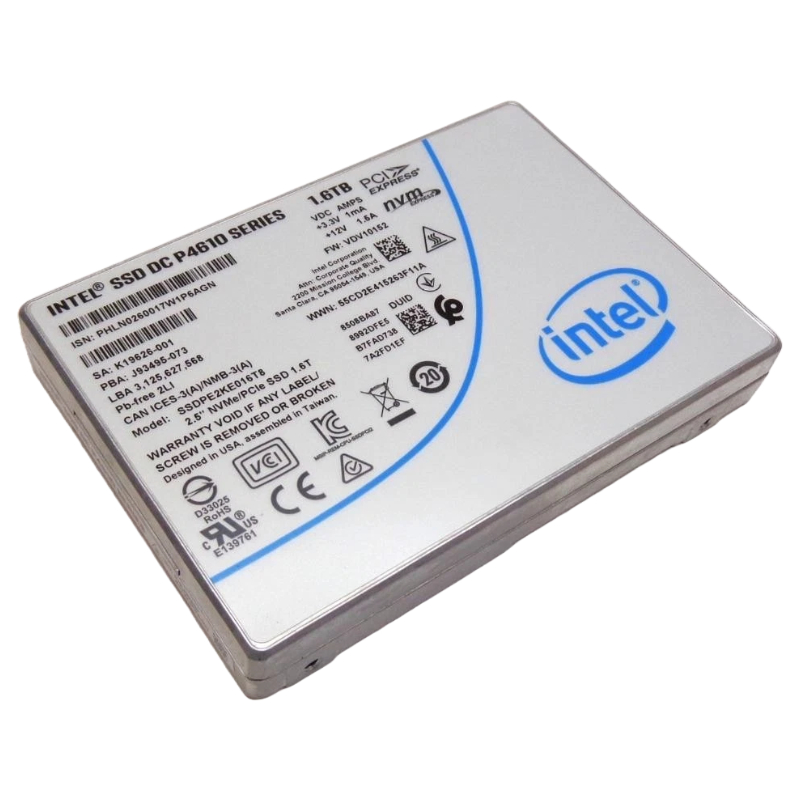


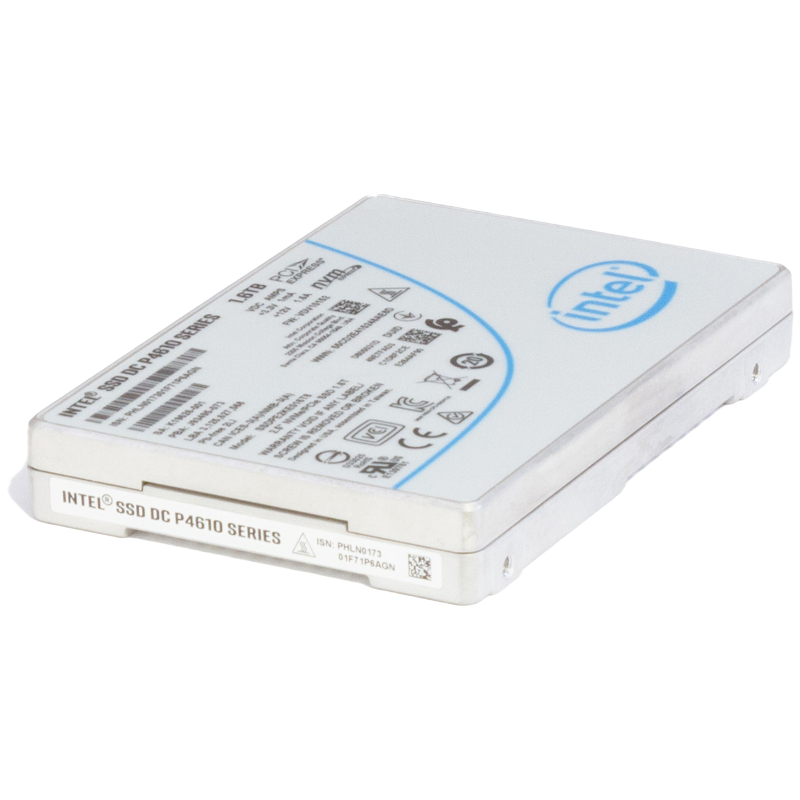
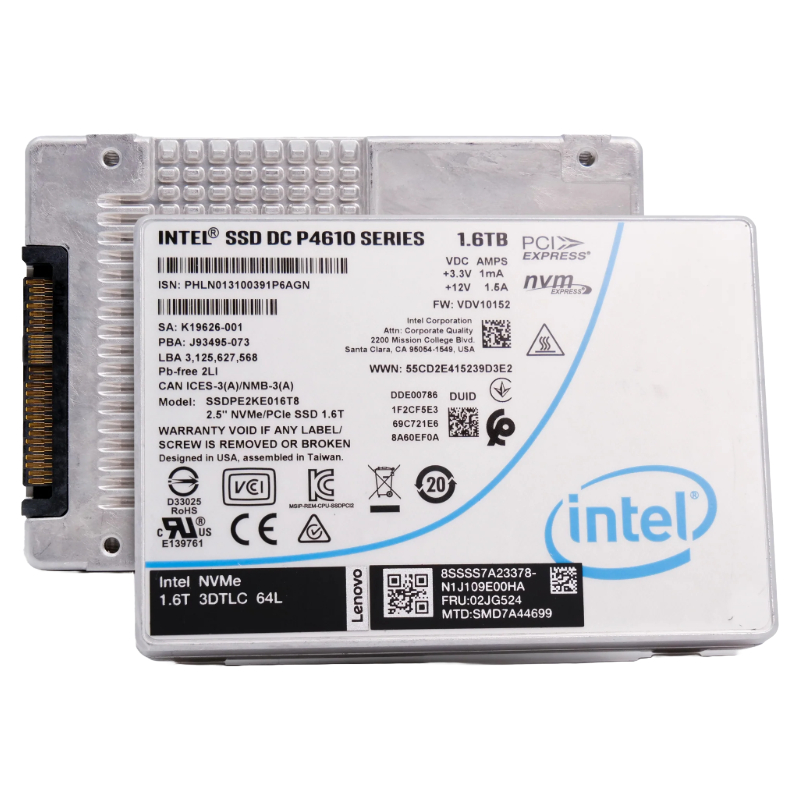
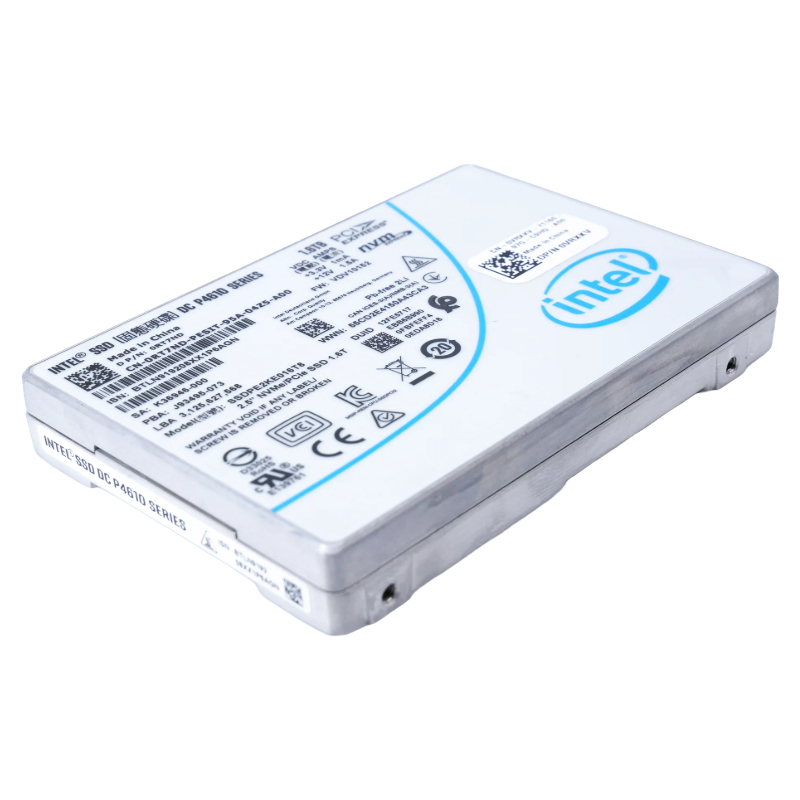
Intel SSDPE2KE016T801 NVMe 1.6TB SSD DC P4610 Series Internal 3d TLC Nand. Factory-Sealed New in Original Box (FSB) with 3 years Warranty
| SKU/MPN | Warranty | Price | Condition | You save |
|---|---|---|---|---|
| SSDPE2KE016T801 | 1 Year Warranty | $1,368.00 | Factory-Sealed New in Original Box (FSB) | You save: $478.80 (26%) |
| SSDPE2KE016T801 | 1 Year Warranty | Contact us for a price | New (Box Not Sealed) |
The Intel SSDPE2KE016T801 NVMe 1.6TB SSD DC P4610 Series represents a new level of high-performance storage designed for modern data centers and enterprise infrastructure. This model, part of Intel’s distinguished DC P4610 family, provides exceptional speed, reliability, and endurance, built specifically for intensive workloads that require consistent throughput and low latency. Using PCIe 3.1 x4 interface technology and 3D TLC NAND architecture, it delivers outstanding IOPS and sequential performance for applications such as virtualization, analytics, cloud computing, and database management. Designed with Intel’s advanced firmware and architecture, the SSDPE2KE016T801 enhances overall server responsiveness and improves scalability across complex storage environments.
The Intel SSDPE2KE016T801 leverages the power of the NVMe (Non-Volatile Memory Express) protocol over a PCIe 3.1 x4 interface to maximize bandwidth and minimize latency. Unlike legacy SATA-based SSDs, the NVMe interface allows this drive to communicate directly with the CPU through high-speed lanes, providing faster data access and response times. The result is superior queue management, enabling servers to handle more simultaneous transactions and operations efficiently. This architecture is critical for enterprise workloads that demand consistent performance even under intensive read and write cycles. The combination of NVMe technology and Intel’s engineering precision ensures optimized throughput for diverse applications ranging from online transaction processing to high-frequency data analysis.
Built with Intel’s high-density 3D TLC NAND flash memory, the SSDPE2KE016T801 offers both large capacity and robust durability. The 3D TLC structure stacks multiple layers of memory cells vertically, allowing for increased density without compromising reliability. This design significantly reduces cell wear and power consumption while extending the drive’s operational lifespan. Each layer of 3D TLC NAND contributes to enhanced error correction, stable read and write cycles, and consistent latency performance over extended usage periods. This architecture is ideal for enterprise data centers that prioritize endurance and long-term data retention alongside speed and efficiency.
Intel’s DC P4610 Series is engineered with an emphasis on reliability and data integrity, ensuring that mission-critical operations remain uninterrupted. The SSDPE2KE016T801 integrates end-to-end data protection, power loss protection, and advanced error correction algorithms. These features safeguard data during sudden power interruptions and prevent potential corruption that could occur during transfer or storage. The built-in firmware monitors drive health and provides predictive failure analysis, enabling administrators to perform timely maintenance or replacement before performance degradation occurs. Such enterprise-grade resilience guarantees continuous uptime and reduces total cost of ownership by minimizing unplanned downtime.
The Intel SSDPE2KE016T801 is built to accelerate demanding workloads by delivering consistent high throughput and predictable latency. Its optimized NVMe controller and firmware manage data streams intelligently, ensuring maximum efficiency for mixed workloads involving random and sequential operations. From cloud infrastructures to virtualization environments, this SSD maintains its responsiveness even under sustained load conditions, enhancing system performance and end-user experience.
With its PCIe 3.1 x4 interface, the SSDPE2KE016T801 achieves remarkable input/output operations per second (IOPS), enabling faster access to large data sets. The high read and write throughput of this drive reduces waiting times for data retrieval and application startup. Enterprises leveraging AI workloads, high-frequency trading, or large-scale analytics benefit from the consistent latency and sustained performance this SSD provides. Its ability to maintain steady throughput under heavy workloads differentiates it from consumer-grade alternatives, ensuring reliability in mission-critical environments.
The SSDPE2KE016T801 adapts seamlessly to diverse workload types. Whether deployed in a high-performance computing cluster, a cloud data center, or a virtual desktop infrastructure, it delivers consistent throughput. Its firmware is optimized to handle both read-intensive and mixed-use applications, making it a flexible choice for organizations with evolving performance requirements. This adaptability allows IT managers to standardize storage solutions across multiple platforms without compromising performance.
When deployed in dense rack-mounted systems, maintaining consistent thermal stability is crucial. The SSDPE2KE016T801 maintains operational stability even in tightly packed configurations, thanks to Intel’s advanced heat dissipation design. This makes it suitable for large-scale data centers and enterprises running resource-intensive workloads 24/7, where maintaining ambient efficiency is vital for overall system health and uptime.
The Intel SSDPE2KE016T801 NVMe 1.6TB SSD is designed for seamless integration into existing enterprise infrastructure. Supporting the NVMe protocol over PCIe 3.1, it ensures compatibility with a wide range of modern servers and platforms. The drive’s form factor, typically in a 2.5-inch U.2 design, allows it to fit easily into current storage bays, making deployment efficient and straightforward. Enterprises can upgrade to this model without major hardware reconfiguration, minimizing downtime and transition costs.
Scalability is one of the core strengths of the Intel DC P4610 Series. The SSDPE2KE016T801 allows enterprises to start small and expand as data requirements grow. Multiple units can be deployed in parallel for higher capacity or redundancy, with performance scaling linearly with the number of drives. This scalability ensures that organizations can meet increasing data demands without sacrificing speed or stability.


 Contact Us
 Information
 Catalog
 Solid State Drives (SSD)
 Network Switches
 Hard Disk Drives
 HBA & Controllers
 PC & Servers
 PC & Server Memory
 CPU & Processors
 Network Routers
 Power Supplies
 Tape Drives & Libraries
 Network Devices
 Computer & Network Cables