(7% discount is applied at checkout)
Cart is empty
Your go-to destination for cutting-edge server products


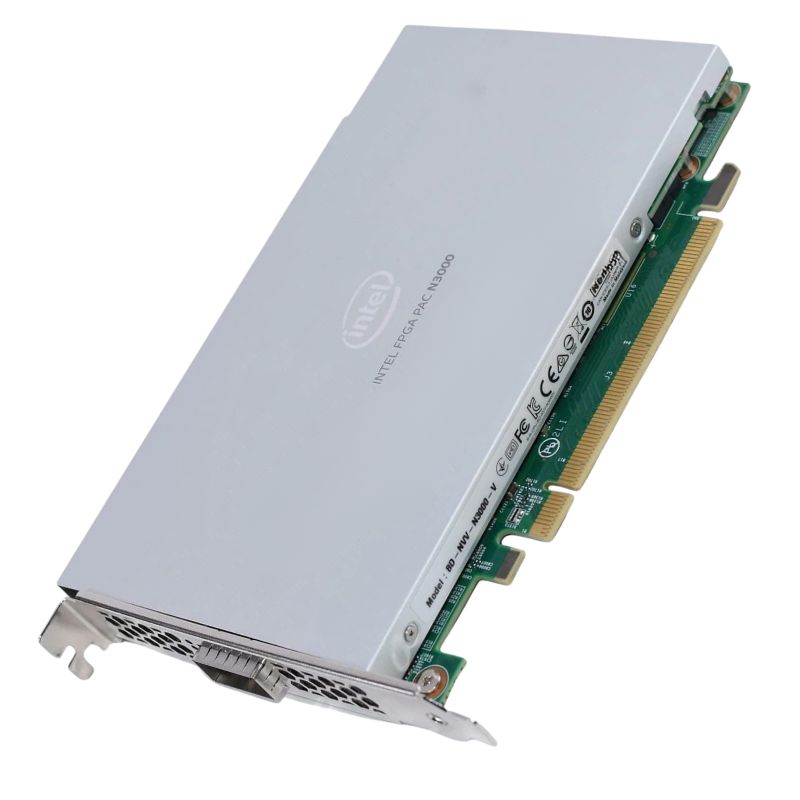
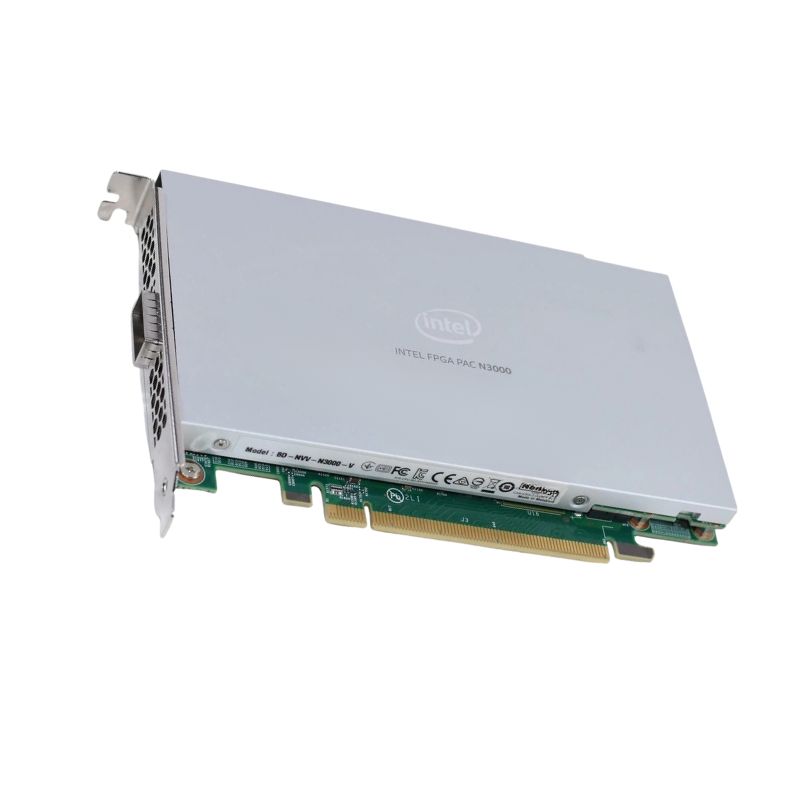
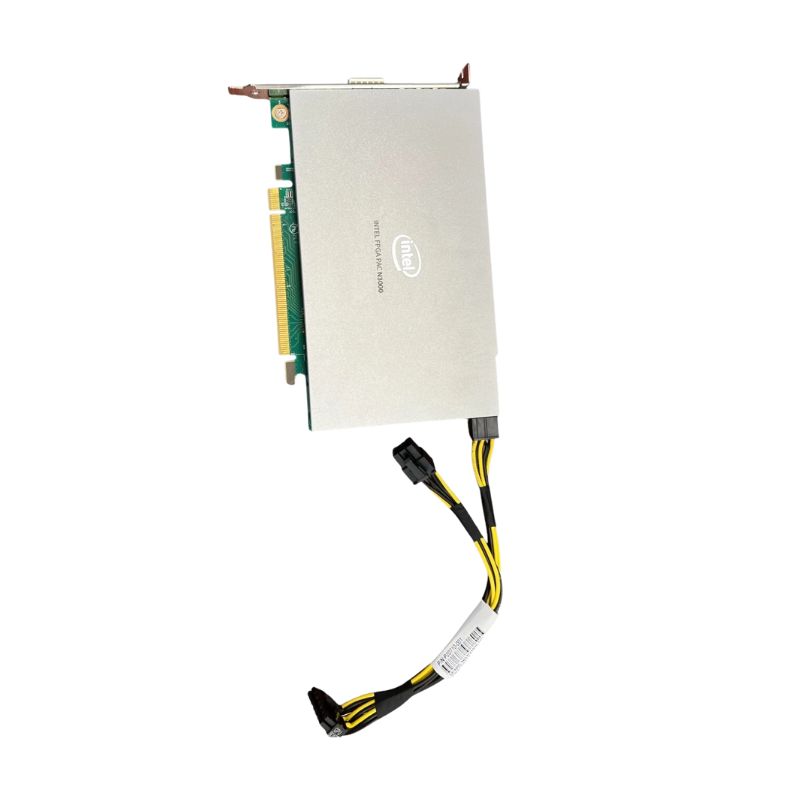
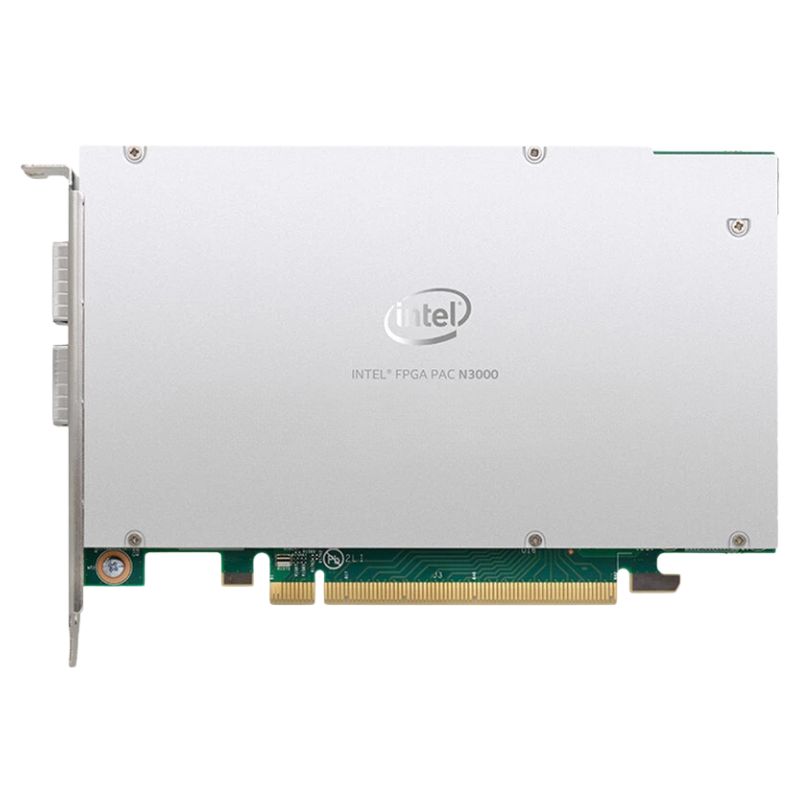
Intel BD-NVV-N3000-VH PAC N3000 N3000V FPGA Network Accelerator Card. New Sealed in Box (NIB) with 3 Years Warranty
The HPE BD-NVV-N3000-VH Intel Pac N3000 N3000v FPGA Network Accelerator Card is engineered to provide exceptional acceleration for network applications. This advanced network accelerator delivers enhanced processing power, optimized performance, and scalability for a variety of high-performance computing tasks.
Memory Cache
The BD-NVV-N3000-VH Intel PAC N3000V FPGA Network Accelerator Card is a high-performance programmable acceleration solution designed for modern data center networking, telecom infrastructure, cloud computing environments, and edge computing deployments. Built on Intel’s Programmable Acceleration Card (PAC) architecture and leveraging FPGA (Field Programmable Gate Array) technology, this accelerator card is engineered to handle demanding workloads that require ultra-low latency, deterministic performance, and highly parallel packet processing capabilities.
This category represents a specialized class of hardware accelerators that sit between traditional NIC (Network Interface Card) solutions and full-scale compute GPUs, offering a unique balance of programmability and hardware-level performance optimization. The BD-NVV-N3000-VH Intel PAC N3000V FPGA Network Accelerator Card is particularly optimized for network function virtualization (NFV), software-defined networking (SDN), cybersecurity workloads, real-time analytics, and high-throughput packet processing pipelines.
At the core of the BD-NVV-N3000-VH Intel PAC N3000V FPGA Network Accelerator Card is a powerful FPGA fabric that enables dynamic reconfiguration of hardware logic. Unlike fixed-function ASICs or general-purpose CPUs, FPGA-based accelerators can be programmed to implement custom packet processing pipelines, encryption engines, or data transformation logic. This makes the card highly adaptable to evolving network standards and enterprise workloads.
The FPGA architecture supports parallel execution of logic blocks, enabling simultaneous processing of multiple network streams. This is critical for applications requiring line-rate packet inspection, deep packet inspection (DPI), or high-frequency trading network optimization.
The Intel Programmable Acceleration Card (PAC) framework integrates FPGA hardware with a standardized software stack that simplifies deployment and management. The BD-NVV-N3000-VH Intel PAC N3000V FPGA Network Accelerator Card benefits from this ecosystem by providing compatibility with Intel FPGA SDK for OpenCL, DPDK acceleration libraries, and virtualization frameworks.
This integration allows developers and system architects to deploy acceleration workloads without requiring deep hardware design expertise, significantly reducing development cycles and improving deployment scalability across distributed infrastructure environments.
The BD-NVV-N3000-VH Intel PAC N3000V FPGA Network Accelerator Card is designed to support high-throughput network interfaces capable of handling multiple 10GbE, 25GbE, or even higher-speed Ethernet configurations depending on deployment design. These interfaces allow seamless integration into modern spine-leaf data center architectures where bandwidth scalability and low latency are critical.
By offloading packet processing tasks from the CPU to the FPGA, the card significantly reduces system bottlenecks and improves overall network efficiency. This is particularly beneficial for hyperscale cloud providers and telecom operators managing massive traffic loads.
Latency-sensitive applications such as algorithmic trading, 5G core networks, and real-time analytics pipelines require deterministic packet handling. The FPGA-based architecture enables nanosecond-level processing precision, ensuring minimal jitter and consistent throughput under heavy load conditions.
The BD-NVV-N3000-VH Intel PAC N3000V FPGA Network Accelerator Card achieves this through hardware-accelerated packet classification engines, flow tracking modules, and inline processing pipelines that eliminate software overhead.
Network Function Virtualization (NFV) replaces traditional hardware appliances such as firewalls, load balancers, and routers with software-based equivalents running on virtualized infrastructure. The BD-NVV-N3000-VH Intel PAC N3000V FPGA Network Accelerator Card plays a crucial role in accelerating these virtual network functions by offloading compute-intensive operations.
This includes tasks such as packet filtering, NAT (Network Address Translation), tunneling protocols, encryption/decryption, and traffic shaping. By offloading these workloads to the FPGA, service providers can significantly increase VM density while reducing CPU utilization.
Software-Defined Networking (SDN) environments require flexible and programmable data planes. The accelerator card supports SDN integration by allowing dynamic updates to packet processing logic without hardware replacement. This enables rapid deployment of new network policies and services in cloud-native environments.
The BD-NVV-N3000-VH Intel PAC N3000V FPGA Network Accelerator Card is commonly deployed in OpenFlow-based and hybrid SDN architectures where centralized control planes interact with programmable data plane hardware.
In hyperscale environments, efficiency and scalability are critical. The BD-NVV-N3000-VH Intel PAC N3000V FPGA Network Accelerator Card enables data centers to reduce CPU overhead by offloading network-heavy workloads, allowing compute resources to focus on application processing rather than packet handling.
This leads to improved rack density, lower power consumption, and optimized workload distribution across compute clusters. The card is particularly effective in microservices architectures and containerized environments where east-west traffic is dominant.
Cloud platforms rely heavily on multi-tenant isolation, secure packet routing, and high-speed virtualization. The FPGA-based acceleration allows cloud providers to enforce security policies at line rate, ensuring tenant isolation without sacrificing performance.
The BD-NVV-N3000-VH Intel PAC N3000V FPGA Network Accelerator Card also enhances virtual switch performance in environments such as Kubernetes clusters and OpenStack deployments.
Security workloads such as TLS termination, IPSec tunneling, and secure VPN gateways require high computational power. The FPGA architecture enables inline encryption engines that process data without routing it through CPU-based software stacks.
This reduces encryption overhead and improves throughput for secure communications, making the accelerator card suitable for enterprise-grade cybersecurity infrastructure.
The BD-NVV-N3000-VH Intel PAC N3000V FPGA Network Accelerator Card can be programmed to perform real-time intrusion detection using pattern matching and anomaly detection logic implemented directly in hardware.
This enables rapid identification of malicious traffic patterns, DDoS attack mitigation, and protocol anomaly detection at line speed, significantly enhancing network security posture.
Telecom operators deploying 5G infrastructure require extremely low latency and high throughput for core network functions. The FPGA accelerator supports user plane function (UPF) acceleration, enabling efficient packet forwarding and session management.
The BD-NVV-N3000-VH Intel PAC N3000V FPGA Network Accelerator Card is particularly effective in handling GTP-U encapsulation, traffic steering, and QoS enforcement in 5G environments.
At the network edge, computing resources are limited but performance demands remain high. The accelerator card enables edge nodes to perform local packet processing, reducing backhaul traffic and improving response times for latency-sensitive applications such as IoT, AR/VR, and autonomous systems.
Developers can program the BD-NVV-N3000-VH Intel PAC N3000V FPGA Network Accelerator Card using Intel FPGA SDK for OpenCL, enabling a higher-level abstraction for hardware programming. This reduces the complexity of FPGA development and allows software engineers to implement acceleration kernels efficiently.
The Data Plane Development Kit (DPDK) is widely used for high-speed packet processing applications. The accelerator card integrates with DPDK to offload packet steering, classification, and buffering tasks, enabling near line-rate performance for network applications.
Modern deployments increasingly rely on containerized environments such as Docker and Kubernetes. The BD-NVV-N3000-VH Intel PAC N3000V FPGA Network Accelerator Card supports container orchestration frameworks, allowing acceleration workloads to be dynamically assigned and scaled across clusters.
By offloading network-intensive tasks from the CPU, the accelerator card significantly increases system efficiency. This allows compute clusters to allocate more resources to application logic, improving overall throughput and reducing latency.
The FPGA fabric enables highly parallel execution of networking tasks. Multiple packet streams can be processed simultaneously without contention, making the BD-NVV-N3000-VH Intel PAC N3000V FPGA Network Accelerator Card ideal for high-density traffic environments.
In financial environments, microsecond-level latency differences can have significant impacts. The accelerator card provides deterministic processing paths, enabling high-frequency trading systems to execute orders faster and more reliably.
Big data platforms benefit from real-time packet ingestion and preprocessing capabilities. The FPGA accelerator enables inline data filtering and transformation before data reaches analytics engines, improving processing efficiency.
Security operations centers (SOCs) use FPGA acceleration to handle massive log ingestion, threat detection, and anomaly analysis. The BD-NVV-N3000-VH Intel PAC N3000V FPGA Network Accelerator Card enhances these workflows by enabling real-time traffic inspection.
The accelerator card connects via high-speed PCI Express interfaces, ensuring maximum bandwidth between host systems and FPGA logic. This enables rapid data transfer and minimal communication overhead between CPU and accelerator.
Designed for enterprise-grade servers, the card integrates into standard rack-mounted systems used in data centers worldwide. Its flexible deployment model allows integration into both bare-metal and virtualized environments.
One of the most significant advantages of the BD-NVV-N3000-VH Intel PAC N3000V FPGA Network Accelerator Card is its ability to evolve over time. As network protocols and workloads change, FPGA logic can be reprogrammed without replacing hardware.
The accelerator is designed to support evolving standards such as 400G Ethernet, advanced encryption protocols, and next-generation SDN frameworks, ensuring long-term relevance in rapidly changing IT environments.
The accelerator card supports advanced packet classification techniques that enable intelligent traffic routing based on application type, protocol, or user-defined rules.
DPI capabilities allow the system to inspect payload-level data for security filtering, traffic analytics, and compliance monitoring in real time.
Single Root I/O Virtualization (SR-IOV) enables multiple virtual machines to share the same physical accelerator card while maintaining performance isolation and security boundaries.
The BD-NVV-N3000-VH Intel PAC N3000V FPGA Network Accelerator Card is optimized for cloud environments where multiple tenants require dedicated performance without interference.


 Contact Us
 Information
 Catalog
 Solid State Drives (SSD)
 Network Switches
 Hard Disk Drives
 HBA & Controllers
 PC & Servers
 PC & Server Memory
 CPU & Processors
 Network Routers
 Power Supplies
 Tape Drives & Libraries
 Network Devices
 Computer & Network Cables