(7% discount is applied at checkout)
Cart is empty
Your go-to destination for cutting-edge server products
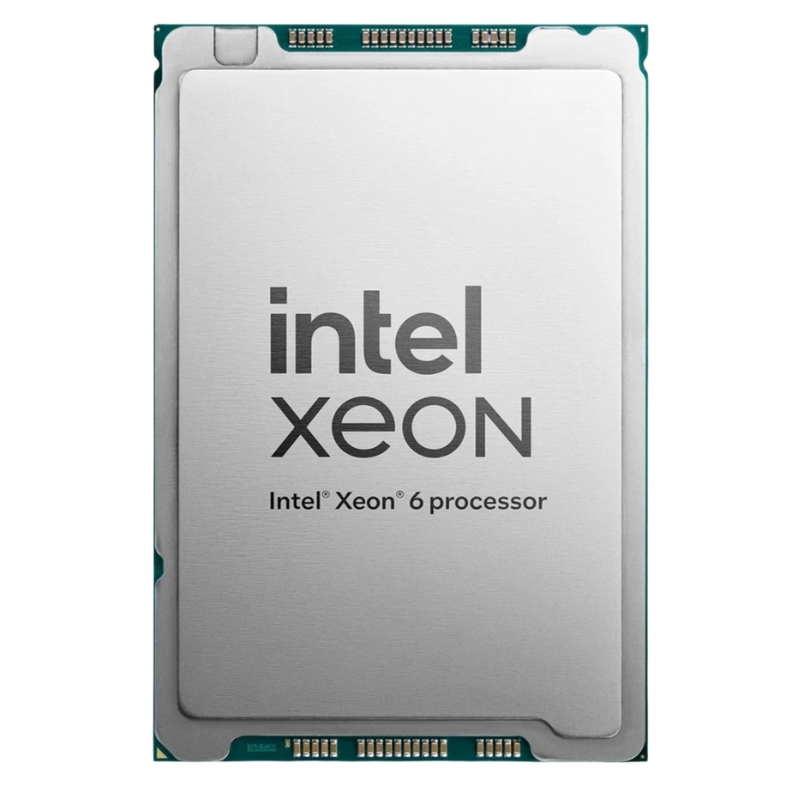


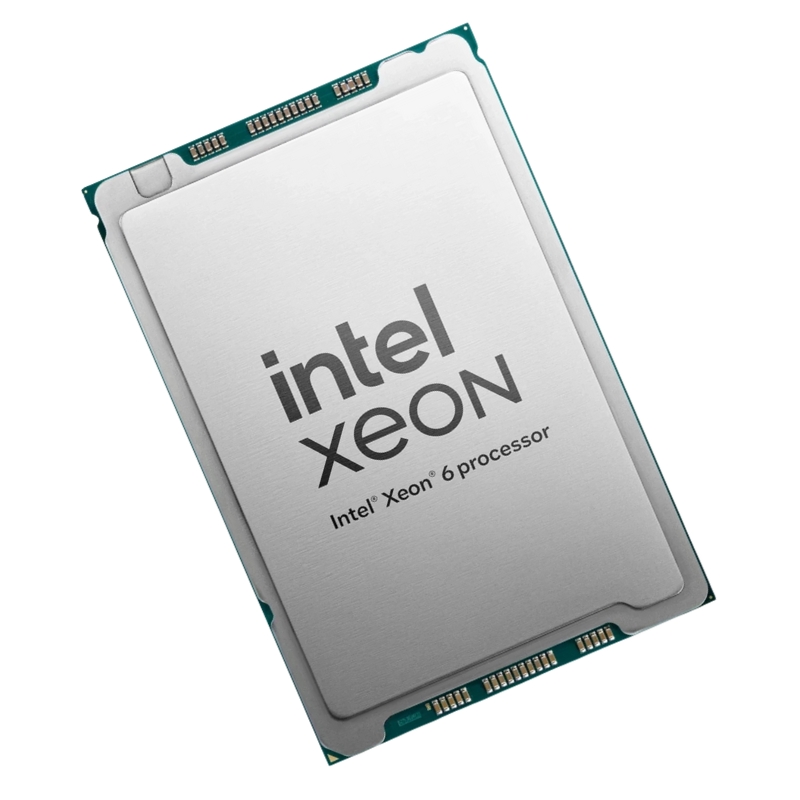
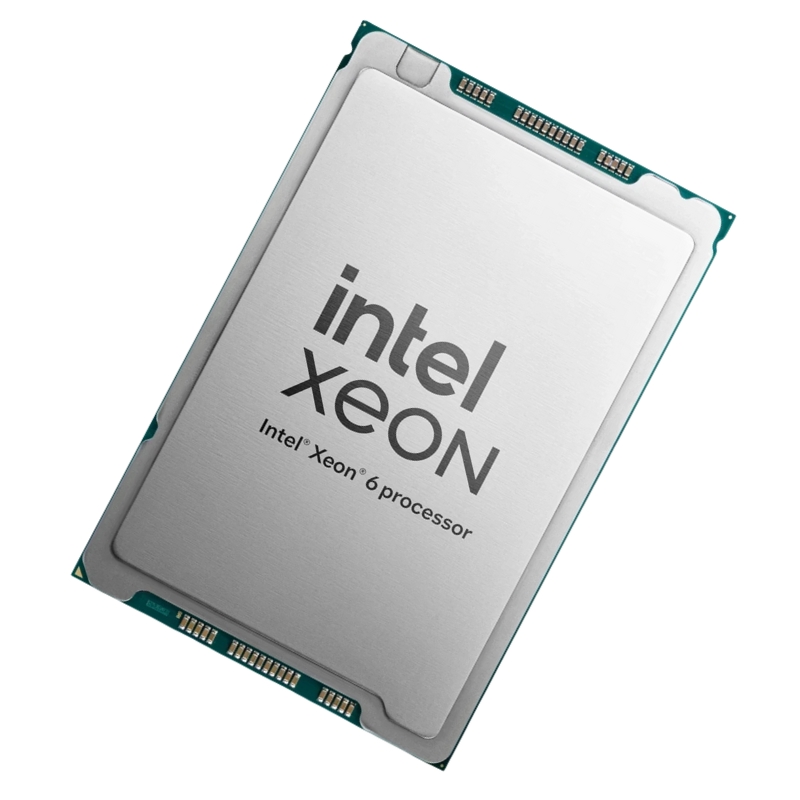
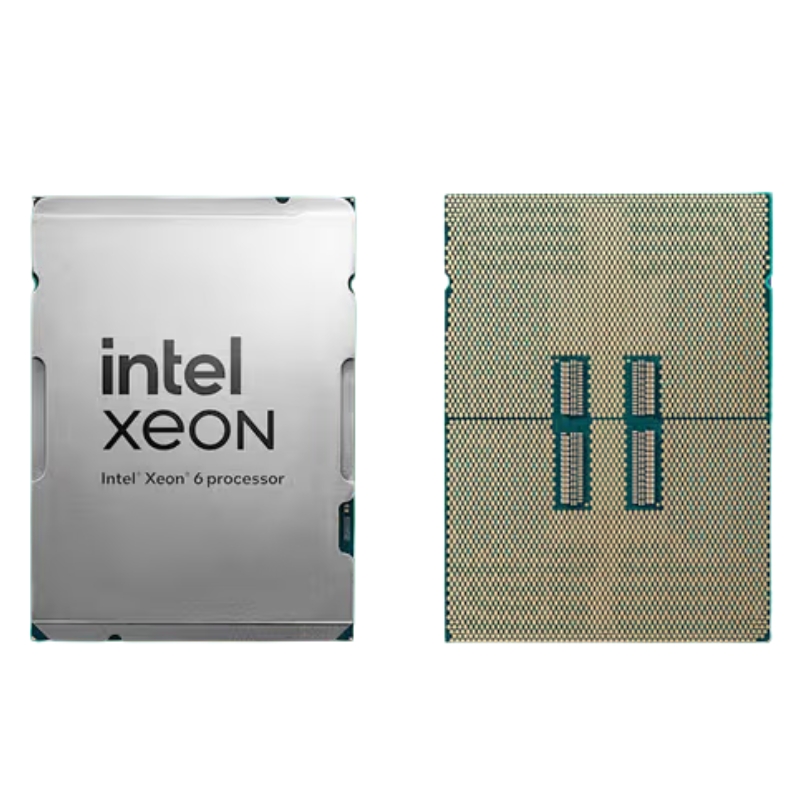
Intel PK8072006270400 Xeon 6761P 64 Cores 2.50 GHz 336MB Cache 350W Processor. New System Pull with 1 Year Replacement Warranty
The Intel Xeon Platinum 6761P, identified by part number PK8072006270400, represents the pinnacle of data center processing technology. This 64-core processor is engineered for the most demanding computational workloads, featuring a base clock speed of 2.50 GHz with substantial 336MB of L3 cache and a 350W thermal design power (TDP). Built on Intel's advanced processor architecture, the 6761P delivers exceptional performance for enterprise servers, high-performance computing (HPC) clusters, and cloud infrastructure deployments where maximum core count and memory bandwidth are critical requirements.
The Xeon Platinum 6761P features 64 physical cores capable of executing 128 threads simultaneously through Intel's Hyper-Threading technology. With a base clock frequency of 2.50 GHz, this processor maintains consistent performance across all cores while supporting Intel Turbo Boost Technology 2.0 for dynamic frequency increases during lighter workloads. The massive 336MB of L3 cache ensures that data remains readily available to all cores, minimizing latency and maximizing computational efficiency for memory-intensive applications.
Each of the 64 cores features dedicated L1 and L2 cache, while the shared 336MB L3 cache operates as an inclusive last-level cache. This hierarchical cache architecture optimizes data access patterns for both single-threaded and massively parallel workloads. The core interconnect fabric enables low-latency communication between cores while maintaining cache coherency across the entire processor complex.
The 6761P supports eight channels of DDR4 memory with official support for speeds up to 3200 MHz. With a maximum memory capacity of 4TB per socket (when using 128GB LRDIMMs), PK8072006270400 this processor can address enormous datasets without requiring constant access to slower storage subsystems. The integrated memory controller features advanced reliability, availability, and serviceability (RAS) capabilities including error correcting code (ECC) support, memory mirroring, and memory sparing for mission-critical deployments.
With eight memory channels operating at 3200 MT/s, the Xeon Platinum 6761P delivers peak memory bandwidth exceeding 204 GB/s. This substantial memory bandwidth ensures PK8072006270400 that the 64 cores remain fed with data, preventing computational stalls that can occur in memory-bound applications. The balanced architecture ensures that memory bandwidth scales effectively with core count, maintaining performance efficiency across diverse workload types.
The Xeon Platinum 6761P excels in HPC environments where parallel processing capabilities directly impact research outcomes. Applications in computational fluid dynamics, finite element analysis, molecular dynamics, weather modeling, and astrophysics simulations benefit tremendously from the high core count and large cache. Research institutions and national laboratories leverage these processors to accelerate discovery while reducing time-to-solution for complex scientific problems.
In the financial services industry, the 6761P enables complex Monte Carlo simulations, algorithmic trading backtesting, and real-time risk analysis. The processor's ability to handle massive PK8072006270400 datasets in memory reduces computational bottlenecks in time-sensitive financial modeling. Quantitative analysis firms utilize these processors to develop and validate sophisticated trading models that require thousands of parallel simulations.
For cloud service providers and enterprise virtualization environments, the 6761P delivers exceptional virtual machine density. With 64 cores and support for up to 4TB of memory per socket, a single dual-socket server can host hundreds of virtual machines while maintaining performance isolation and quality of service. The processor includes hardware-assisted virtualization technologies that reduce virtualization overhead and improve security for multi-tenant environments.
Modern containerized applications and microservices architectures benefit from the high core count of the 6761P, which allows for efficient deployment of numerous container instances while maintaining resource isolation. The processor's architecture supports granular quality-of-service controls that ensure critical services receive appropriate compute resources in dense deployment scenarios.
While specialized accelerators handle training of deep neural networks, the Xeon Platinum 6761P excels in AI inference workloads and traditional machine learning algorithms. The large cache capacity benefits ensemble methods, recommendation systems, and graph analytics applications that exhibit irregular memory access patterns. Data science teams utilize these processors for feature engineering, model evaluation, and deployment of production machine learning systems.
The 6761P delivers exceptional performance for big data frameworks including Apache Spark, Hadoop, and distributed databases. The balanced combination of core count, memory bandwidth, and cache capacity PK8072006270400 accelerates data transformation, aggregation, and analysis operations. Enterprises processing terabyte-scale datasets benefit from reduced query times and improved analytics throughput.
The Intel Xeon Platinum 6761P utilizes the LGA4677 socket and requires motherboards based on the Intel Eagle Stream platform with compatible chipsets. System integrators must ensure proper BIOS support for this specific processor SKU and adequate power delivery capable of sustaining the 350W TDP during peak workloads. The platform supports up to two sockets in symmetric multiprocessing (SMP) configuration, enabling systems with up to 128 cores and 8TB of memory in a dual-processor configuration.
With a 350W TDP, the 6761P requires robust voltage regulator modules (VRMs) and comprehensive cooling solutions. Server manufacturers implement multi-phase power designs with high-quality components to ensure stable operation under sustained full load. Thermal solutions range from high-performance heat sinks with optimized airflow to liquid cooling systems for maximum heat dissipation in dense server configurations.
The processor integrates 80 lanes of PCI Express 5.0 connectivity, providing substantial I/O bandwidth for network interfaces, storage controllers, and accelerators. This enables configuration with multiple 100GbE network adapters, NVMe storage arrays, and computational accelerators without creating I/O bottlenecks. The platform supports CXL (Compute Express Link) 1.1 for coherent attachment of memory expansion and accelerator devices.
Systems based on the Xeon Platinum 6761P can leverage the PCIe 5.0 interface for high-performance NVMe storage, delivering up to twice the bandwidth of previous generation PCIe 4.0 solutions. This enables all-flash storage arrays capable of saturating multiple 100GbE network connections, making the platform ideal for storage-intensive applications and I/O-bound workloads.
In standardized benchmarks such as SPECrate 2017 Integer, the Xeon Platinum 6761P demonstrates exceptional computational throughput, significantly outperforming previous generation PK8072006270400 processors with lower core counts. The 64-core architecture delivers nearly linear scaling for embarrassingly parallel workloads while maintaining strong performance for applications with significant inter-thread communication requirements.
Applications characterized by large working sets and random memory access patterns benefit from the 336MB shared L3 cache, which reduces memory latency and off-chip memory traffic. Benchmarks simulating in-memory databases, graph analytics, and large-scale simulations show performance improvements of 30-50% compared to processors with smaller cache sizes but similar core counts and frequencies.
In virtualization benchmarks measuring virtual machine density while maintaining performance service level agreements, systems equipped with Xeon Platinum 6761P processors demonstrate the ability to host 30-40% more virtual machines compared to systems with 32-core processors at similar frequencies. The performance advantage increases further for workloads with varying resource requirements that benefit from the additional headroom.
The Xeon Platinum 6761P incorporates extensive RAS capabilities essential for mission-critical deployments. These include machine check architecture recovery, instruction retry capabilities, and comprehensive error logging and reporting. The processor implements parity protection on internal arrays and end-to-end reliability on all system interfaces to detect and correct transient errors before they impact system operation.
Beyond standard ECC protection, the memory subsystem supports patrol scrubbing, memory mirroring, and sparing capabilities. Patrol scrubbing proactively detects and corrects memory errors before they accumulate, while mirroring maintains redundant copies of memory contents on separate channels. Memory sparing automatically redirects memory accesses from failing DIMMs to spare memory resources without system downtime.
The broader platform enhances processor RAS features with hot-pluggable components, redundant power supplies, and comprehensive system monitoring. Firmware and management PK8072006270400 controllers provide predictive failure analysis by tracking component health metrics over time, enabling proactive maintenance before hardware failures impact system availability.
The platform implements secure boot capabilities, measured boot with trust chain verification, and hardware-based root of trust. Management engines provide secure remote management capabilities while protecting against unauthorized access. Firmware resilience features protect against corruption and unauthorized modification of system firmware components.
The Xeon Platinum 6761P competes in the high-core-count server processor segment, offering distinct advantages for specific workload types. Compared to processors with similar core counts from alternative architectures, the 6761P maintains strong single-threaded performance while delivering exceptional throughput for parallel workloads. The mature x86 ecosystem provides extensive software compatibility and optimization across operating systems, hypervisors, and applications.
The value proposition of the 6761P varies significantly across different workload categories. For virtualized environments and HPC applications that scale well with core count, the processor delivers exceptional value. For workloads requiring highest single-thread performance or featuring limited parallelism, alternative processors with higher clock speeds may provide better price-performance characteristics.
Optimal performance requires balanced system configuration with adequate memory capacity and bandwidth. For memory-intensive workloads, configuring all eight memory channels with identical DIMMs ensures maximum memory bandwidth. Storage subsystems should leverage the available PCIe 5.0 bandwidth to prevent I/O bottlenecks, particularly for data-intensive applications.
Data center infrastructure must accommodate the 350W TDP per processor, with additional capacity for associated components. Proper airflow management and cooling capacity are essential to maintain optimal operating temperatures and prevent thermal throttling under sustained loads. Power distribution units and uninterruptible power supplies must be sized appropriately for the increased power density.
Applications should be optimized for NUMA (Non-Uniform Memory Access) architecture to maximize performance on multi-socket systems. Operating PK8072006270400 system and hypervisor settings should be tuned for high-core-count processors, including appropriate interrupt affinity and process scheduling parameters. Recent versions of operating systems and development tools include optimizations specifically for processors with high core counts and large cache sizes.
The processor includes extensive performance monitoring counters that enable detailed analysis of application behavior and resource utilization. System administrators should implement comprehensive monitoring to identify potential bottlenecks and optimize resource allocation. Performance tuning should focus on cache utilization, memory bandwidth saturation, and thread scheduling efficiency.
The Xeon Platinum 6761P represents a mature implementation of Intel's server processor architecture with extensive software ecosystem support. Investment in systems based on this processor PK8072006270400 provides a stable platform with predictable performance characteristics and long-term reliability. The platform's support for emerging technologies such as CXL ensures compatibility with future memory and accelerator innovations.
Systems based on the 6761P offer investment protection through modular design, field-upgradable components, and long-term hardware support cycles. The balanced architecture ensures relevance for multiple generations of workload requirements, while the extensive I/O capabilities provide headroom for future storage and network technologies.


 Contact Us
 Information
 Catalog
 Solid State Drives (SSD)
 Network Switches
 Hard Disk Drives
 HBA & Controllers
 PC & Servers
 PC & Server Memory
 CPU & Processors
 Network Routers
 Power Supplies
 Tape Drives & Libraries
 Network Devices
 Computer & Network Cables