(7% discount is applied at checkout)
Cart is empty
Your go-to destination for cutting-edge server products
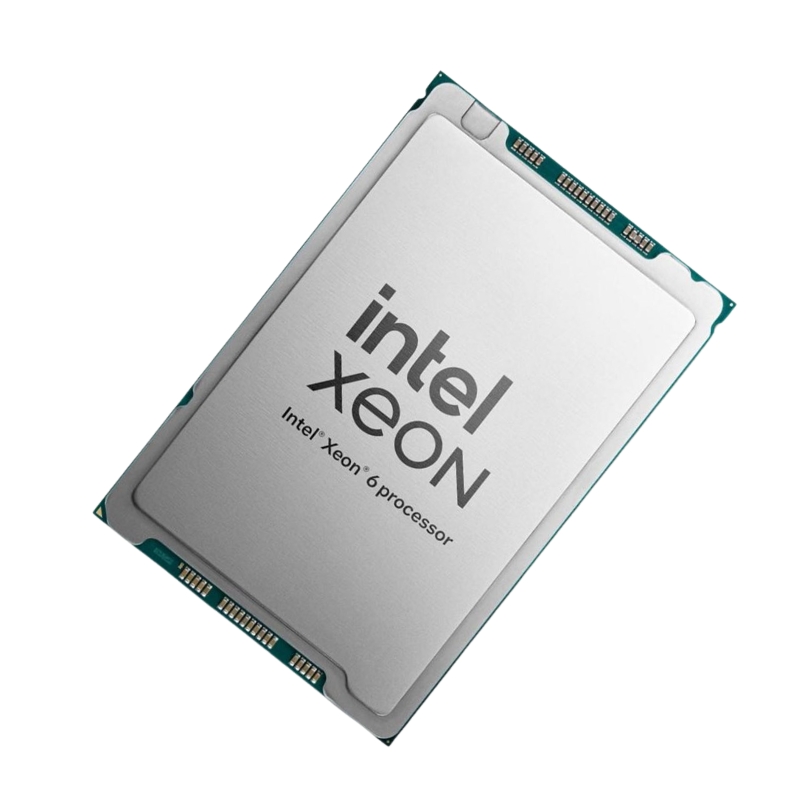


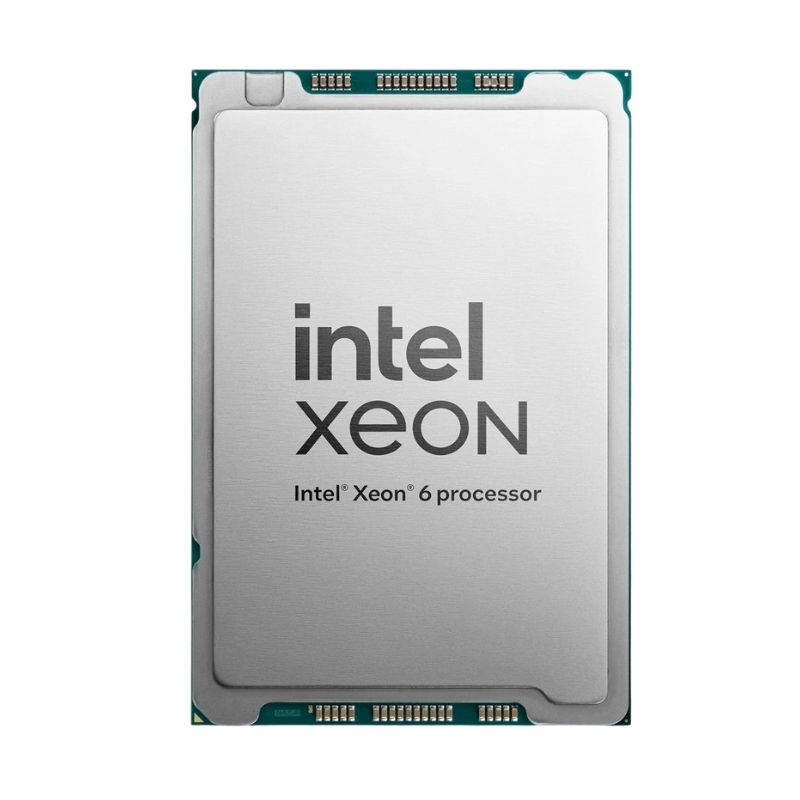
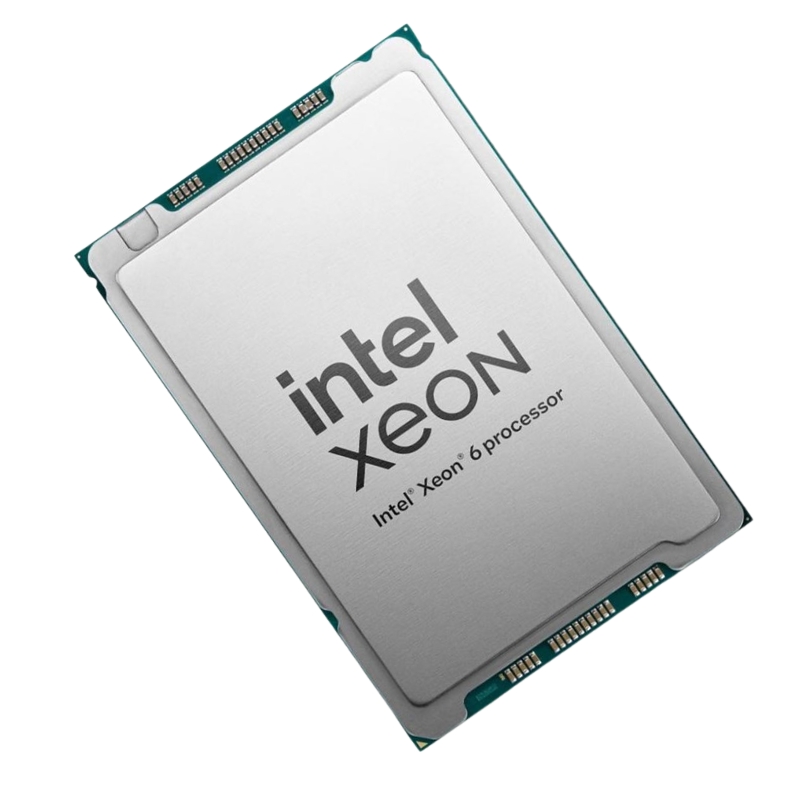
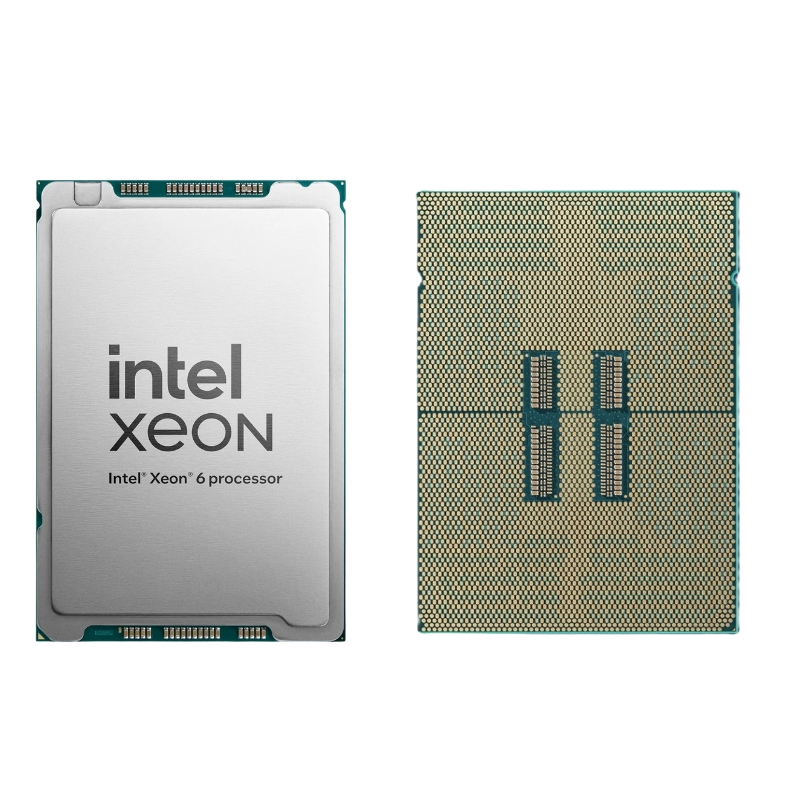
Intel PK8072006455400 Xeon 6776P 64C 128T 2.3GHZ 336M Cache LGA4677 Tray Processor. New (System) Pull with 1 Year Replacement Warranty
The Intel Xeon 6776P PK8072006455400 is a high-performance server CPU engineered for data centers, cloud computing, and enterprise-grade workloads. Featuring 64 cores and 128 threads, this processor delivers exceptional speed, multitasking, and reliability for demanding business environments.
The Intel PK8072006455400 represents the commercial part number for the Xeon Platinum 6776P tray processor, designed for OEMs and system integrators who typically provide their own cooling solutions. This alphanumeric identifier distinguishes it from boxed versions with bundled coolers and signifies its positioning within Intel's data center portfolio. Understanding this part numbering system is crucial for procurement specialists and IT managers to ensure compatibility with their specific deployment models and support requirements.
Intel's processor naming follows a sophisticated convention that reveals key characteristics. The "Xeon Platinum" designation indicates it belongs to the premium tier of Intel's data center processors, while "6776P" provides specific model information. The "67" prefix typically denotes the generation and architecture family, with "76" indicating performance characteristics and core count tiering within the Platinum series. The "P" suffix often signifies performance-optimized SKUs with specific TDP and frequency characteristics tailored for balanced workload requirements.
The Xeon Platinum 6776P leverages Intel's advanced 10nm Enhanced SuperFin process technology, representing a significant leap from previous 14nm architectures. This manufacturing breakthrough enables higher transistor density, improved performance per watt, and enhanced power efficiency. The technology incorporates novel super-high-performance transistors with enhanced channel mobility, combined with a Super MIM (Metal-Insulator-Metal) capacitor that delivers significant performance gains at all voltage points, particularly benefiting data center workloads with varying intensity patterns.
Compared to the previous Cascade Lake generation, the Ice Lake-SP architecture demonstrates substantial IPC (Instructions Per Cycle) improvements ranging from 18-20% across various server workloads. These gains stem from multiple architectural enhancements including larger caches, improved branch prediction, deeper buffers, and execution unit optimizations. The memory controller has been completely redesigned to support eight memory channels of DDR4-3200, representing a significant bandwidth increase over the six channels of DDR4-2933 in previous generations.
With 64 physical cores and 128 threads through Intel's Hyper-Threading technology, the Xeon Platinum 6776P delivers exceptional parallel processing capabilities. This core density makes it particularly suitable for heavily virtualized environments, high-performance computing (HPC) applications, and scale-out cloud native deployments where workload density and thread parallelism directly impact overall system efficiency and throughput.
Intel's Hyper-Threading technology enables each physical core to execute two independent instruction streams simultaneously, effectively doubling the execution contexts available to the operating system and applications. In data center environments, this technology has demonstrated particular effectiveness for workloads with high thread-level parallelism, including web serving, application servers, and database systems where multiple simultaneous transactions benefit from the additional logical processors.
The processor operates at a 2.3GHz base frequency while supporting Intel Turbo Boost Technology 3.0, which can dynamically increase clock speeds beyond the base operating frequency based on workload characteristics, power consumption, and thermal headroom. This technology intelligently prioritizes the highest-performing cores, delivering maximum single-threaded performance when needed while maintaining efficiency during multi-threaded operations.
Beyond single-core turbo frequencies, the processor maintains aggressive all-core turbo ratios that significantly elevate performance during sustained multi-threaded workloads. Thermal Velocity Boost provides additional frequency enhancements when the processor is operating below specific temperature thresholds, offering extra performance headroom for well-cooled systems. These dynamic frequency scaling technologies ensure optimal performance across varying workload profiles and environmental conditions.
The massive 336MB of L3 cache represents one of the most significant architectural advancements in the Ice Lake-SP generation. Organized in a distributed, segmented architecture, this cache operates as a victim cache that stores data evicted from L2 caches, dramatically reducing memory latency for frequently accessed data. The non-inclusive cache architecture optimizes die area efficiency while maintaining coherency across the entire multi-core system.
Unlike the ring bus architecture of previous Xeon generations, the Ice Lake-SP platform employs a two-dimensional mesh interconnect that provides scalable, low-latency communication between cores, memory controllers, and I/O interfaces. This mesh topology delivers superior bandwidth and latency characteristics particularly beneficial for many-core configurations, ensuring efficient data movement across the entire processor die without creating communication bottlenecks.
With eight memory channels supporting DDR4-3200, the Xeon Platinum 6776P delivers unprecedented memory bandwidth exceeding 204 GB/s in theoretical peak performance. This substantial bandwidth increase directly benefits memory-intensive applications including in-memory databases, scientific simulations, financial modeling, and high-frequency trading systems where memory throughput often represents the primary performance bottleneck.
The memory controller incorporates extensive reliability features including Intel Run Sure Technology with SDDC (Single Device Data Correction) for enhanced RAS (Reliability, Availability, and Serviceability) capabilities. These features provide transparent correction of single DRAM device failures without system downtime, along with patrol scrubbing to proactively detect and correct soft errors, ensuring data integrity in mission-critical deployments.
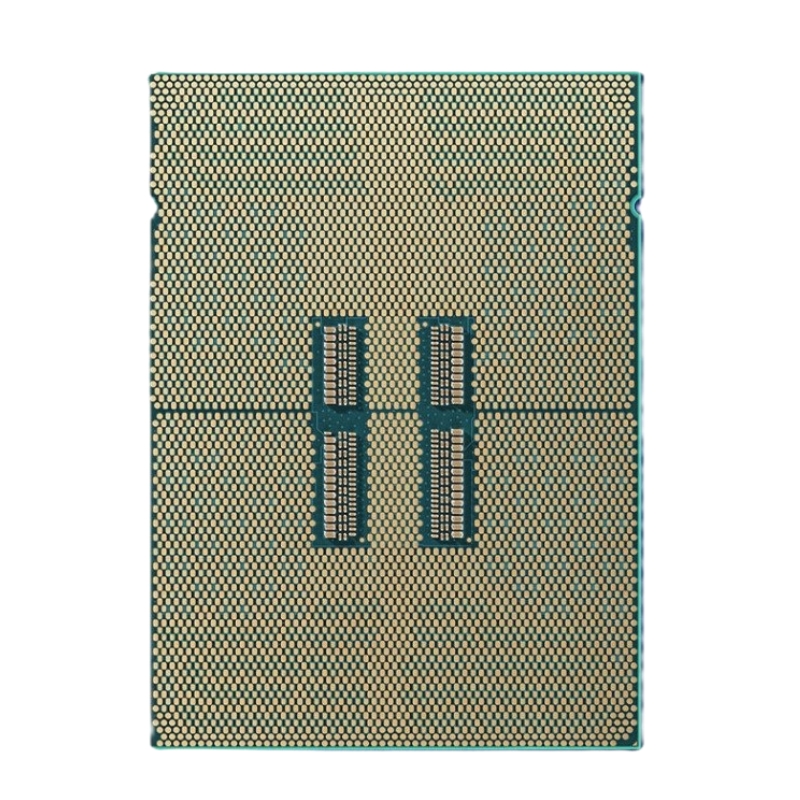
The LGA4677 socket (also known as Socket E) represents Intel's platform for the Ice Lake-SP generation, featuring 4,677 lands for processor contact points. This socket requires specific mounting mechanisms and thermal solutions designed to accommodate the processor's 270W TDP while maintaining mechanical stability and optimal thermal transfer characteristics. System builders must ensure proper installation torque and thermal interface material application to achieve rated performance.
The Xeon Platinum 6776P requires motherboards based on the Intel C621A chipset, which provides the necessary physical interface, power delivery, and management capabilities. These platforms typically feature extensive PCIe connectivity, multiple network interfaces, and robust management controllers. System integrators should verify specific motherboard vendor compatibility lists and ensure appropriate BIOS revisions to guarantee full functionality and performance optimization.
With 64 lanes of PCIe 4.0, the processor delivers double the per-lane bandwidth compared to previous PCIe 3.0 implementations, totaling approximately 128 GB/s of bidirectional bandwidth. This substantial I/O capability enables support for multiple high-speed network interfaces (including 100GbE and beyond), NVMe storage arrays, and computational accelerators without creating I/O bottlenecks that could limit overall system performance.
System architects can strategically allocate PCIe lanes to balance storage, networking, and accelerator requirements based on specific workload demands. Typical configurations might dedicate lanes to multiple NVMe storage devices, high-speed networking adapters, and GPUs or FPGAs for accelerated computing. The flexible partitioning allows optimization for various use cases from storage-dense configurations to compute-accelerated deployments.
In high-performance computing environments, the Xeon Platinum 6776P demonstrates exceptional performance across various scientific, engineering, and research applications. The combination of high core count, substantial memory bandwidth, and advanced vector capabilities (including AVX-512) delivers significant performance improvements for computational fluid dynamics, finite element analysis, molecular dynamics, and weather modeling simulations.
For virtualized infrastructure, the processor enables exceptional consolidation ratios, with single systems capable of hosting hundreds of virtual machines while maintaining performance service level agreements. The extensive core count and memory capacity support high-density virtual desktop infrastructure (VDI), cloud-native applications, and containerized workloads with minimal performance overhead from the virtualization layer.
In database environments, the processor delivers outstanding performance for both online transaction processing (OLTP) and data warehousing workloads. The large cache hierarchy significantly reduces memory latency for frequently accessed data pages and index structures, while the high memory bandwidth accelerates large table scans and aggregation operations. Advanced security features including Intel Software Guard Extensions (SGX) provide protection for sensitive database records without compromising performance.
For in-memory database platforms such as SAP HANA, the combination of massive memory capacity support (up to 6TB per socket in optimized configurations) and high memory bandwidth enables real-time analytics on enormous datasets. The balanced architecture ensures that computational resources remain synchronized with memory access patterns, preventing CPU starvation during complex analytical queries and transactional processing.
With a Thermal Design Power (TDP) of 270 watts, the processor requires robust cooling solutions capable of maintaining junction temperatures within operational limits under full computational load. Enterprise cooling solutions typically incorporate large heatsinks with optimized fin density, high-static-pressure fans, and in some implementations, liquid cooling technologies for maximum thermal dissipation efficiency in dense server configurations.
Advanced power management capabilities include multiple performance states (P-states) and package power states (C-states) that dynamically adjust power consumption based on workload demand. The integrated power control unit (PCU) implements sophisticated algorithms to balance performance requirements with power constraints, while telemetry data available through management interfaces enables data center operators to optimize power allocation and cooling capacity.
Comprehensive RAS features include advanced Machine Check Architecture with support for corrected error logging, fault containment, and recovery mechanisms. The processor implements parity protection on internal arrays, ECC on caches and buffers, and extensive error reporting through system management interfaces. These capabilities minimize system downtime and data corruption in mission-critical environments where availability requirements exceed 99.999%.
Beyond processor-specific capabilities, the platform implements additional reliability features including hot-pluggable components, redundant firmware, and predictive failure analysis. When combined with operating system and application-level high-availability mechanisms, these features create a resilient computing environment capable of transparently handling component failures and scheduled maintenance without service interruption.
In HPC environments, the Xeon Platinum 6776P excels at computationally intensive simulations, modeling, and analysis workloads. The high core count and memory bandwidth accelerate parallel applications scaling across multiple cores, while support for AVX-512 instructions delivers significant performance improvements for vectorizable code common in scientific computing and engineering applications.
For AI workloads, the processor delivers robust performance for machine learning inference at scale, particularly when deployed across multiple nodes. While specialized accelerators may outperform for training operations, the balanced architecture provides excellent inference throughput for production deployment of trained models, with support for popular frameworks including TensorFlow, PyTorch, and MXNet through Intel-optimized distributions.
In cloud and hyperscale environments, the processor enables exceptional virtual machine and container density while maintaining consistent performance across tenant workloads. The architecture supports technologies including Intel Resource Director Technology (RDT) that provides visibility and control over shared resources, allowing cloud providers to implement quality-of-service guarantees and optimize infrastructure utilization.
For storage and network-focused workloads, the combination of PCIe 4.0 connectivity and high memory bandwidth enables implementation of software-defined storage, network functions virtualization (NFV), and content delivery networks at massive scale. The processing capabilities can keep pace with high-speed storage devices and network interfaces without becoming the performance bottleneck in data-intensive applications.
When evaluating total cost of ownership, the Xeon Platinum 6776P demonstrates compelling value through performance density, power efficiency, and management capabilities. The architectural improvements in the Ice Lake-SP generation deliver significant performance per watt advantages over previous generations, while integrated management features reduce operational overhead in large-scale deployments.
Performance characteristics vary significantly across different workload types, with particular strengths in memory-bandwidth-sensitive applications, highly parallelized code, and mixed-workload environments. Organizations should evaluate processor selection based on specific application profiles rather than synthetic benchmarks alone, considering factors such as memory access patterns, threading models, and I/O requirements unique to their operational needs.


 Contact Us
 Information
 Catalog
 Solid State Drives (SSD)
 Network Switches
 Hard Disk Drives
 HBA & Controllers
 PC & Servers
 PC & Server Memory
 CPU & Processors
 Network Routers
 Power Supplies
 Tape Drives & Libraries
 Network Devices
 Computer & Network Cables