(7% discount is applied at checkout)
Cart is empty
Your go-to destination for cutting-edge server products
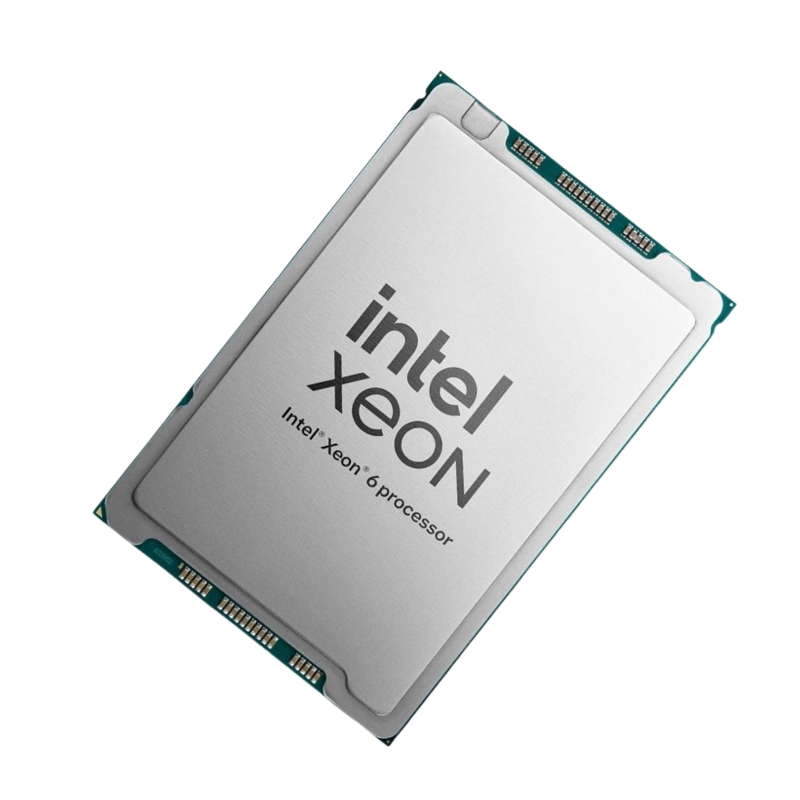


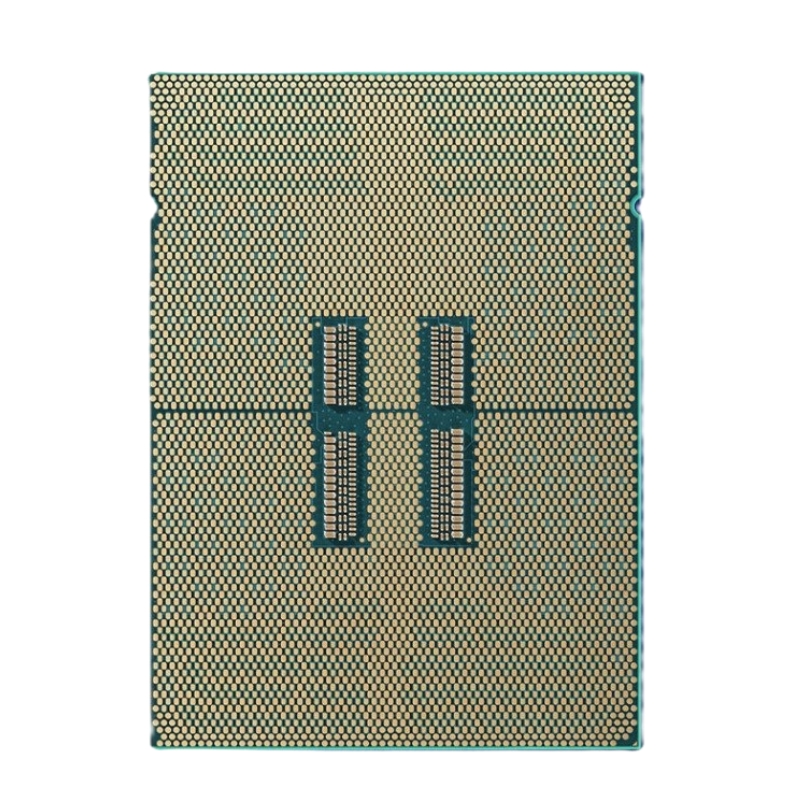
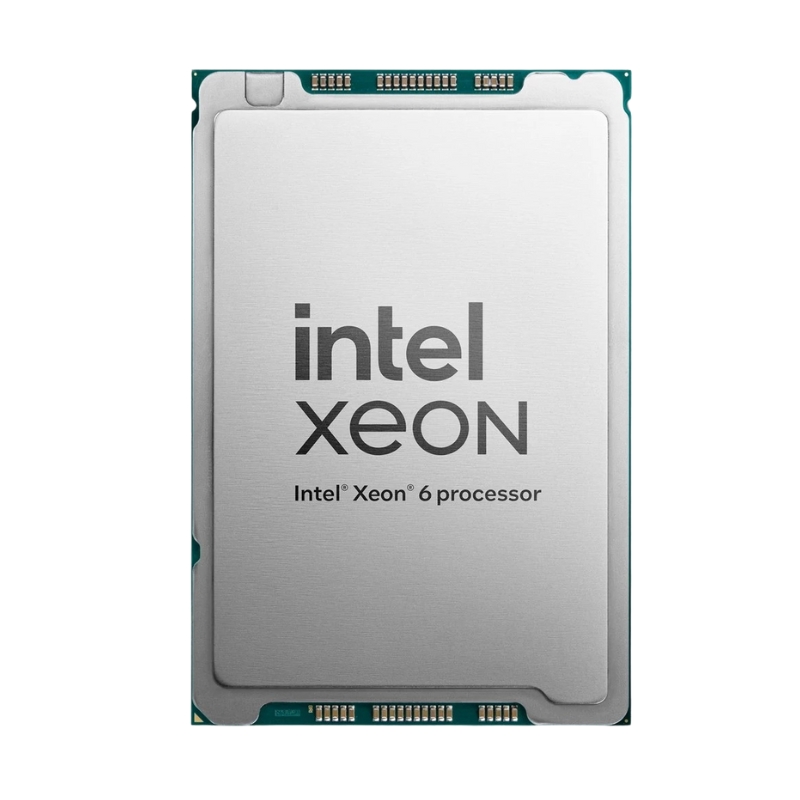
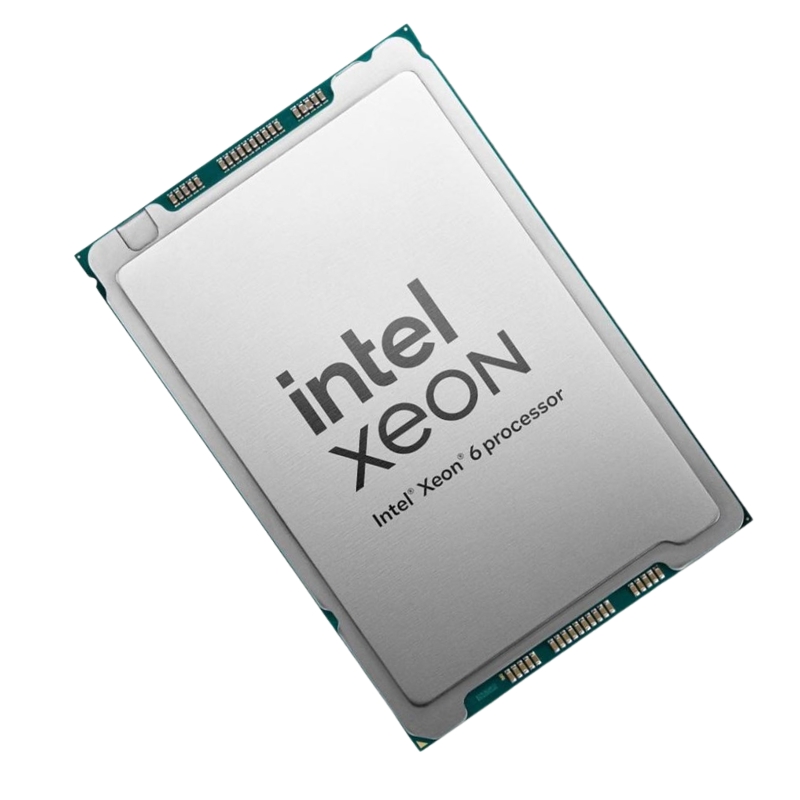
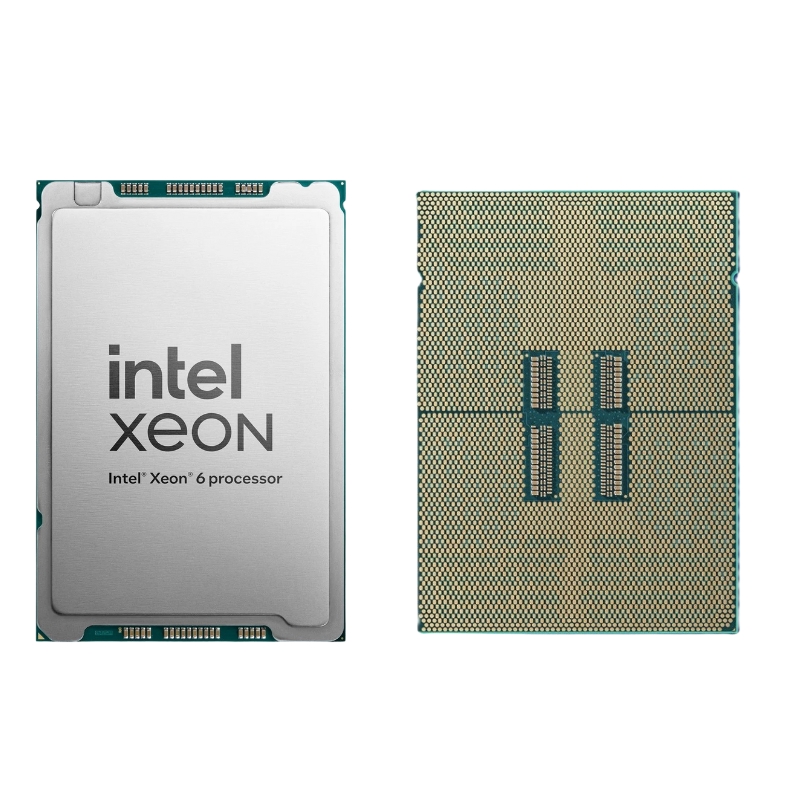
Intel PK8072007151000 Xeon 6962p 2.7Ghz 72-Core 432mb Cache 24gt/s Upi Speed Socket Fclga7529 500w Processor. New Sealed in Box (NIB) with 3 years Warranty
The Intel Xeon 6962P (Part Number: PK8072007151000) is a high-performance server-grade CPU engineered for enterprise-level workloads, data centers, and high-performance computing (HPC) environments. Featuring advanced Intel architecture, this processor delivers exceptional speed, scalability, and energy efficiency for demanding applications.
The Intel Xeon Platinum 6962P, codenamed part of the "Cascade Lake-SP" refresh, represents the absolute zenith of Intel's data center processor lineup for its 2nd Generation Xeon Scalable platform. Engineered for the most demanding computational workloads, this 72-core behemoth is not merely a processor; it's a complete computing ecosystem on a single chip. Designed for mission-critical enterprise applications, high-performance computing (HPC), advanced artificial intelligence, and dense virtualization environments, the 6962P delivers unparalleled levels of parallel processing power, memory bandwidth, and I/O flexibility. Its architecture is purpose-built to tackle challenges that were previously the domain of specialized, expensive, and less flexible computing systems.
The alphanumeric designation PK8072007151000 is Intel's unique ordering code for the boxed version of the Xeon Platinum 6962P processor. This part number is crucial for procurement, ensuring you receive the genuine, Intel-warranted product. It distinguishes this specific SKU from other variants, such as tray processors (intended for system integrators), and guarantees it includes the necessary thermal solution and documentation for a standard deployment.
At the heart of the Xeon Platinum 6962P lies the refined Cascade Lake-SP microarchitecture. This is an enhancement of the earlier Skylake-SP design, focusing on improved performance, security, and feature sets critical for the modern data center.
The defining feature of the 6962P is its staggering core count. With 72 physical cores, it can execute 144 simultaneous threads with Intel's Hyper-Threading Technology. This massive parallel processing capability is supported by an intelligent and multi-tiered cache structure designed to keep data flowing efficiently to the cores.
Each core possesses its own dedicated L1 and L2 cache. The L1 cache is split into 32 KB for instructions and 32 KB for data, providing the lowest-latency access for the core's immediate computations. Backing this is a 1 MB L2 cache per core, which acts as a secondary high-speed buffer, reducing the need to fetch data from the slower, shared L3 cache.
The crown jewel of the cache subsystem is the 432 MB of L3 Smart Cache. This is not a simple pool of memory; it's a non-inclusive, shared cache that is dynamically allocated across all 72 cores. Its "Smart" nature refers to its intelligent allocation algorithms, which ensure that data most likely to be reused is kept within this fast, on-die memory. For memory-intensive applications like in-memory databases (e.g., SAP HANA), large-scale simulations, and virtualization, this massive L3 cache dramatically reduces the number of times the processor must access the main system RAM, which is a key bottleneck in high-performance systems.
To effectively utilize 72 cores, a high-speed, low-latency interconnect is essential for communication between multiple processor sockets and with system I/O. The 6962P features three Ultra Path Interconnect (UPI) 2.0 links, each operating at a blistering 24 GT/s (GigaTransfers per second).
In a dual-socket configuration (a common setup for high-end servers), these UPI links create a coherent memory domain, allowing both processors to access the combined memory pool as a single system. The high bandwidth of 24 GT/s ensures that inter-socket communication and cache coherency traffic do not become a performance bottleneck, maintaining near-linear scaling when adding a second 6962P processor.
The PK8072007151000 specifications of the Xeon Platinum 6962P translate directly into real-world performance for specific, demanding workloads. It is not a general-purpose processor but a specialized tool for computational giants.
The sheer core count and cache size make the 6962P ideal for workloads that can be highly parallelized.
In fields like computational fluid dynamics, weather modeling, genomic sequencing, and finite element analysis, problems are broken down into millions of small, parallel tasks. The 6962P can process a vast number of these tasks simultaneously, significantly reducing time-to-solution and enabling more complex, higher-fidelity models.
Monte Carlo simulations for derivative pricing and risk assessment require running thousands of stochastic simulations. The parallel nature of these calculations sees a near-linear performance increase with the core count, making the 6962P exceptionally efficient for this task.
Beyond raw compute, the memory subsystem is a critical performance factor.
These systems hold the entire database in RAM for instant access. The 6962P's support for large amounts of DDR4 memory (up to 4.5TB per socket in some platforms), combined with its massive L3 cache to reduce memory latency, allows for lightning-fast transaction processing and real-time analytics on massive datasets.
For building dense virtualized environments or a private cloud, the 6962P is a consolidation powerhouse. A single server equipped with two of these processors (144 cores / 288 threads) can host hundreds of virtual machines, improving hardware utilization, reducing the data center footprint, and simplifying management.
While dedicated GPUs often handle the training phase of AI models, the Xeon Platinum 6962P excels in the data preparation, feature engineering, and model inference stages. Its high core count is perfect for parallel data preprocessing, and running inference on multiple, concurrent models or large batch sizes can be efficiently handled on the CPU, especially when integrated with Intel's DL Boost technology for accelerated AI inference.
The processor utilizes the Socket FCLGA7529 (Flip-Chip Land Grid Array). This 7529-pin socket is specifically designed for the Intel C621 series chipset and the 2nd Generation Xeon Scalable processors. It provides the necessary power delivery, memory channels, and UPI connections. It is physically and electrically incompatible with other Xeon sockets.
The 6962P features a six-channel memory controller, supporting DDR4 memory. When fully populated with twelve DIMMs per processor (in a dual-socket system), this creates an immense memory bandwidth pipeline, essential for feeding data to the 72 cores. It supports DDR4-2933 memory speeds, providing a significant bandwidth uplift over previous generations and ensuring the cores are rarely starved for data.
A key feature of the Cascade Lake platform is support for Intel Optane Persistent Memory (PMem). This revolutionary technology bridges the gap between DRAM and storage, offering a large, persistent memory tier. The 6962P can leverage PMem in two modes: App Direct Mode, where applications are coded to use it as a persistent, byte-addressable store, and Memory Mode, where it acts as a large, volatile extension of DRAM, transparent to the application. This is transformative for large in-memory databases and big data analytics.
The 500W Thermal Design Power (TDP) is one of the most critical specifications to consider. TDP represents the maximum amount of heat the processor is expected to generate under its maximum theoretical load. This has direct implications for system design.
A server motherboard must have a Voltage Regulator Module (VRM) robust enough to deliver clean, stable power at very high currents. Furthermore, the server's power supply units (PSUs) must be sized accordingly. A dual-socket system with two 6962P processors would have a peak CPU power draw of 1000W, requiring high-wattage, highly efficient (80 Plus Platinum or Titanium) PSUs. Data center power and cooling infrastructure must also be assessed to support such systems.
Beyond raw performance, the Xeon Platinum 6962P incorporates a suite of advanced technologies that enhance security, reliability, and manageability.
This technology introduces new Vector Neural Network Instructions (VNNI) that accelerate deep learning inference workloads. By combining operations that previously required three instructions into a single one, VNNI significantly increases the throughput and efficiency for inferencing on the CPU, making the 6962P a capable platform for deploying AI models.
This is a set of features that allows for finer-grained control over processor performance. For cloud service providers, SST-Core Power (SST-CP) can be particularly valuable, enabling them to configure different core frequencies and power levels on a single processor SKU. This allows for the creation of multiple performance-tiered virtual machine instances from a uniform hardware pool, optimizing resource utilization and power efficiency.
The Cascade Lake architecture includes hardware-level mitigations for several speculative execution side-channel vulnerabilities (e.g., Meltdown, L1TF). Furthermore, it includes:
SGX allows applications to create secure, encrypted memory regions called "enclaves." Code and data inside an enclave are protected from being viewed or modified by any other software, including the operating system and hypervisor, providing a hardened trusted execution environment for sensitive code and data.
This is a umbrella term for a suite of reliability, availability, and serviceability (RAS) features. It includes advanced machine check recovery, component-level fault analysis, and other technologies that help ensure the platform remains stable and available, even in the face of internal errors, which is paramount for mission-critical applications.


 Contact Us
 Information
 Catalog
 Solid State Drives (SSD)
 Network Switches
 Hard Disk Drives
 HBA & Controllers
 PC & Servers
 PC & Server Memory
 CPU & Processors
 Network Routers
 Power Supplies
 Tape Drives & Libraries
 Network Devices
 Computer & Network Cables