(7% discount is applied at checkout)
Cart is empty
Your go-to destination for cutting-edge server products
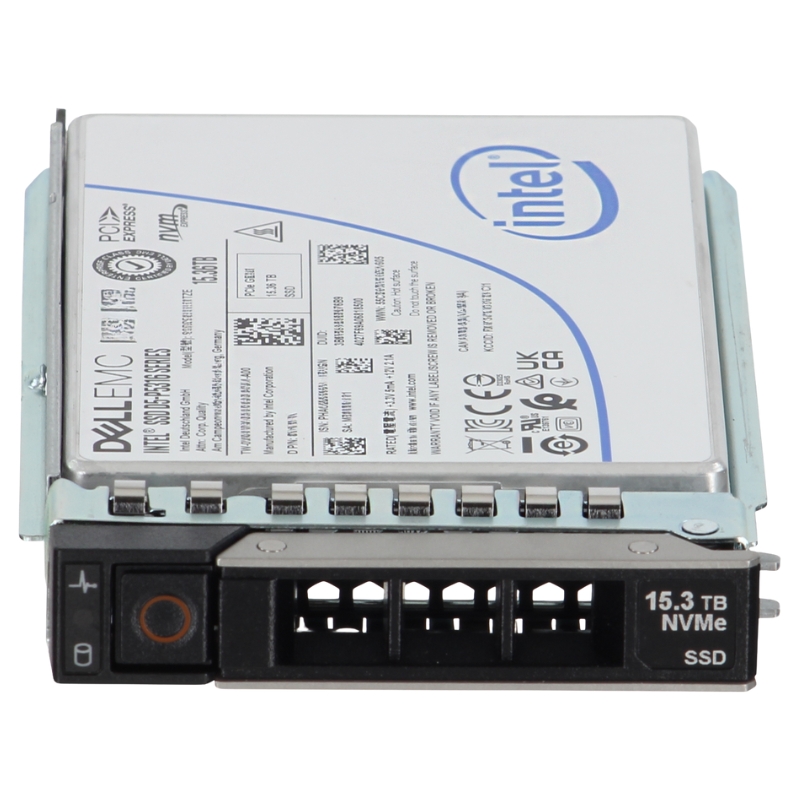


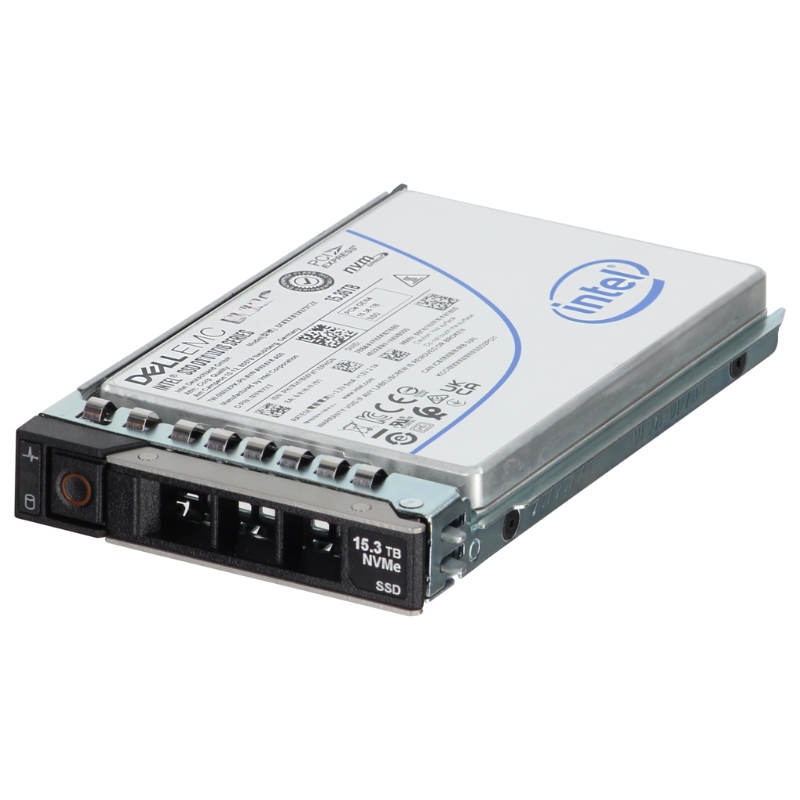
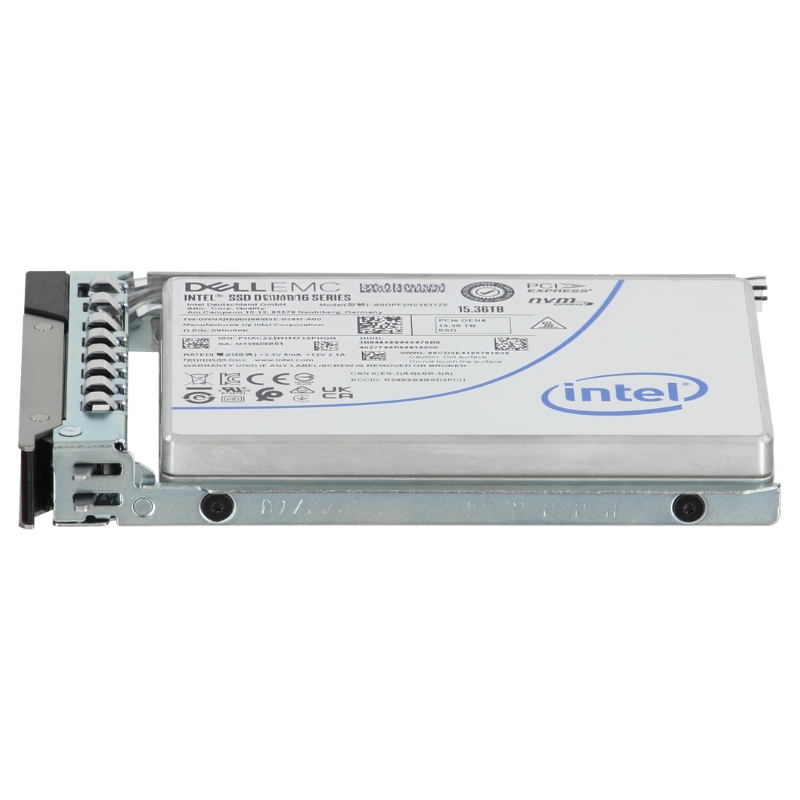
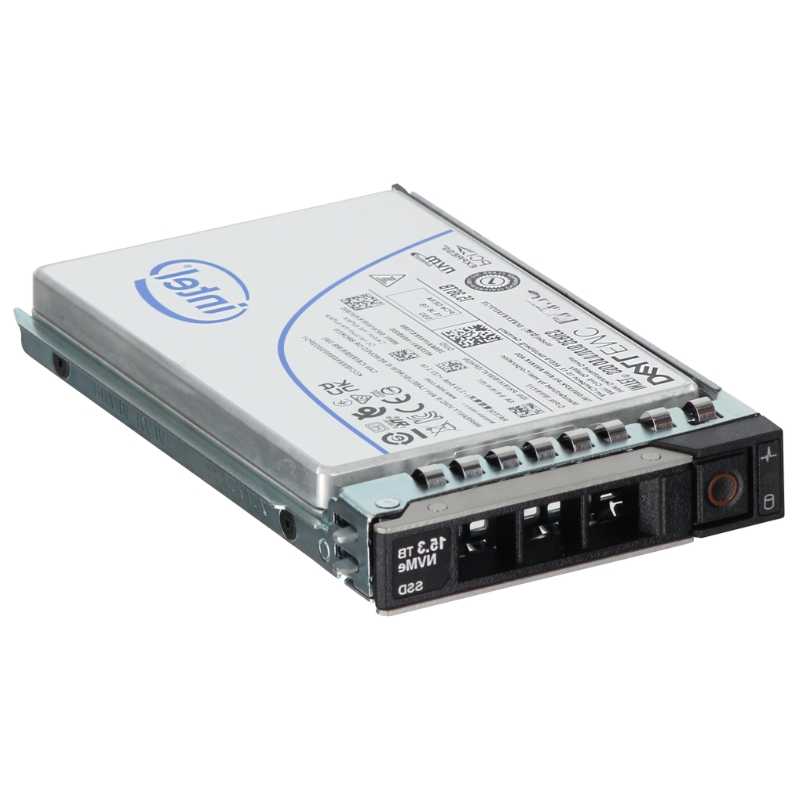
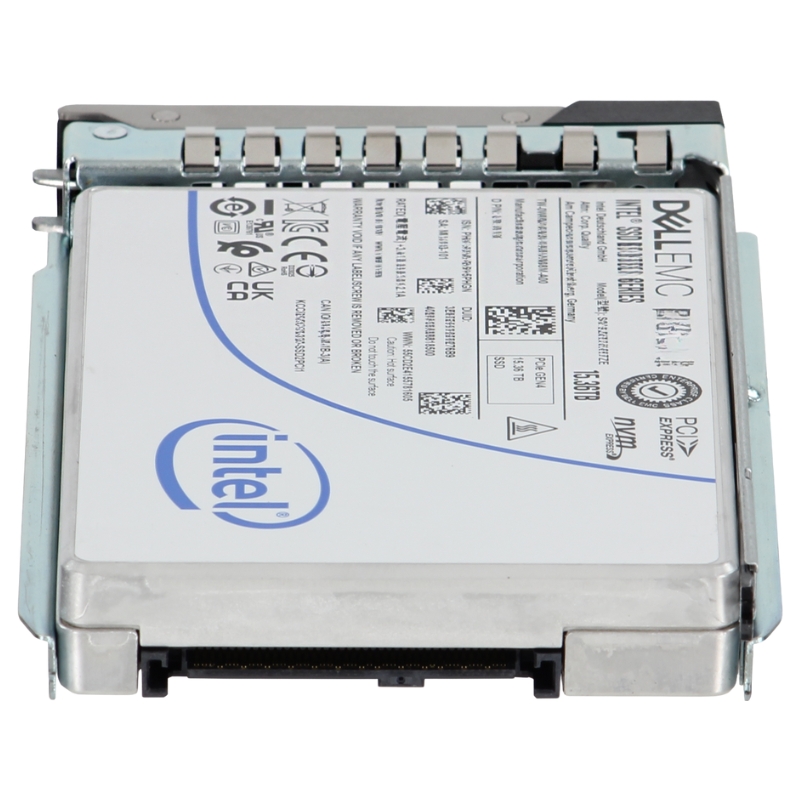
Intel SSDPD2KS153T8R 15.36TB D7-D4512 NVMe PCIe SSD. New Sealed in Box (NIB) with 3 years Warranty - EMC Version
Engineered for the most demanding data-centric tasks, this high-capacity solid-state drive offers a monumental 15.36 terabytes of storage. Housed within an efficient U.2 2.5-inch form factor, it delivers exceptional space economy alongside its robust performance capabilities, making it a premier choice for modern data centers.
Revolutionary Data Transfer Speeds
Harnessing the cutting-edge PCIe Gen3 x4 NVMe interface, this storage solution achieves unprecedented data transfer velocities. It significantly outperforms legacy SATA-based SSDs, ensuring rapid access to critical information and seamless operation for bandwidth-heavy applications.
Constructed for non-stop, around-the-clock functionality, this drive incorporates enterprise-grade dependability features. With comprehensive power-failure protection and end-to-end data integrity safeguards, it guarantees maximum uptime and data security for mission-critical deployments.
Excelling in environments dominated by read operations, the drive provides exceptionally high IOPS and remarkably low latency. It is perfectly suited for a diverse range of applications including large-scale database management, virtualized infrastructure, and expansive cloud computing platforms.
The unit supports a full suite of NVMe management utilities, facilitating proactive health monitoring through S.M.A.R.T. attributes and real-time temperature sensing. This allows for predictive maintenance and optimal operational control throughout the drive's lifecycle.
The INTEL SSDPD2KS153T8R represents the 15.36TB capacity point in the D7-D4512 family, engineered for mission-critical data center workloads that demand predictable latency, robust endurance, and high throughput over the PCIe® NVMe® stack. Positioned for hyperscale and enterprise IT alike, this U.2, 2.5-inch SSD focuses on consistent Quality of Service (QoS) across mixed read/write patterns, enabling reliable application performance in virtualized infrastructures, database clusters, analytics pipelines, software-defined storage, and cloud-native environments.
By combining large 15.36TB raw capacity, modern NVMe command sets, and enterprise firmware tuned for determinism, the INTEL SSDPD2KS153T8R minimizes tail latency while sustaining heavy parallel I/O. Its architecture is optimized for scale-out designs where thousands of concurrent operations must complete within tight service-level objectives, from OLTP transactions and search indexing to microservice backends handling high request rates.
The INTEL SSDPD2KS153T8R in the D7-D4512 line adheres to the 2.5-inch U.2 (SFF-8639) cabled backplane interface, providing a field-proven combination of hot-swap serviceability and dense front-bay installation. PCI Express lanes ensure high parallel bandwidth, while the NVMe protocol reduces overhead compared to SATA/SAS, enabling faster command completion and more efficient queue management.
In 1U and 2U storage nodes, using U.2 slots allows operators to right-size performance and capacity mix per chassis. The 15.36TB capacity point is often used to reach multi-hundred-terabyte nodes without resorting to drive count extremes, simplifying power, airflow, and failure domain management.
Ideal in servers with mixed CPU-to-drive lane budgets, where a balance of GPU, NIC, and storage PCIe resources is essential. NVMe multipath and namespace features support flexible orchestration across clustered deployments.
Enterprise storage performance extends beyond peak IOPS figures. The INTEL SSDPD2KS153T8R emphasizes predictable completion times under sustained stress, which is crucial for microservices, real-time bidding, fraud detection, and interactive analytics. Tight latency distribution, especially on the 99.9th percentile under mixed read/write pressure, helps avoid application hiccups and noisy-neighbor effects.
Modern NVMe controllers excel when applications submit enough parallel work. This SSD is tuned to scale with queue depth while mitigating latency amplification. Applications using asynchronous I/O, io_uring, SPDK, or NVMe multipath can extract consistent performance even as concurrency grows.
Lower tail latency reduces the need for over-provisioning instances or implementing complex caching layers purely to mask storage variability. This contributes to simpler system design and better cost predictability.
Enterprise NVMe drives like the D7-D4512 class adopt endurance ratings tailored for sustained daily writes while maintaining long-term reliability. The 15.36TB capacity point is designed for read-intensive and mixed-use categories typical in server-side applications that write continuously but not at cache-tier extremes.
On-board capacitors protect in-flight data during unexpected power events. PLP ensures that acknowledged writes are committed to non-volatile media, reducing the risk of journal corruption, partial page writes, or metadata inconsistency.
Comprehensive SMART attributes and vendor telemetry help administrators monitor wear, temperature, media error rates, and performance counters. Automated alerts feed into observability stacks, enabling replacement planning before service impact.
Data-at-rest protection is a baseline requirement across many sectors. Enterprise NVMe drives in this category typically support hardware-accelerated encryption, secure erase, and crypto erase workflows aligned with compliance programs and incident response playbooks.
Hardware-based AES encryption prevents data exposure if a drive leaves the controlled perimeter. Combined with BIOS/UEFI boot restrictions and OS-level key management, the drive becomes a strong component of a zero-trust storage architecture.
Clear reporting of encryption state and secure erase completion supports auditors and security teams, simplifying evidence generation for frameworks such as ISO 27001 or SOC 2.
The INTEL SSDPD2KS153T8R excels as a general-purpose enterprise NVMe SSD where high capacity per bay and dependable latency are prized. Below are representative workload categories optimized by this drive’s profile.
In software-defined stacks, drive behavior directly affects replication, erasure coding, and rebuild timelines. The 15.36TB capacity helps administrators reach rack-level TCO goals while NVMe performance reduces the time windows for maintenance events.
ZFS deployments benefit from consistent latency across synchronous writes, ZIL/SLOG interactions, and scrub operations. The sizeable capacity allows flexible dataset sizing, snapshots, and efficient send/receive pipelines for backup and replication.
With modern NVMe, parity schemes must balance CPU overhead and rebuild speed. The INTEL SSDPD2KS153T8R’s throughput helps reduce Mean Time to Repair (MTTR), shrinking the exposure window for a second failure during resilvering or reconstruction.
Consolidating 15.36TB per bay reduces the number of drives needed to achieve capacity targets, lowering idle power overhead and simplifying cabling. Efficient NVMe command handling and idle states help curb watt-per-terabyte metrics.
The U.2 interface ensures broad server compatibility, and NVMe standards simplify OS integration. Still, successful deployments hinge on firmware alignment, BIOS/UEFI settings, and driver currency.
NVMe namespaces and multipath features allow flexible logical subdivision and redundancy. Plan namespace sizes to match application shard boundaries and failure domains for clean operational semantics.
At 15.36TB, a single INTEL SSDPD2KS153T8R can hold substantial databases, time-series archives, or analytics datasets. Right-sizing entails more than raw terabytes; it must account for endurance headroom, over-provisioning, and backup windows.
Sharding across multiple drives improves parallelism and reduces blast radius. Use consistent hashing or partitioned schemas to distribute hot keys and minimize hotspots.
Restores often gate RTOs. Faster NVMe media reduces restoration windows, but plan for parallelism in the backup solution—multiple streams, compression choices, and network throughput—so the drive’s speed isn’t bottlenecked elsewhere.
Even the most reliable drives are a single component in a larger availability strategy. Combine device-level safeguards with cluster-level replication and coherent backup practices for robust continuity.
Multi-AZ or multi-region replication protects against site failures. The SSD’s consistent latency helps maintain replication SLAs by stabilizing log shipping and quorum writes.
Regular failover drills validate that backup, snapshot, and replication chains remain operable under real-world conditions. Monitor storage-layer metrics during tests to identify subtle regressions.
Threshold-based alerts on endurance, temperature, and error rates should be complemented with anomaly detection that flags deviations from historical norms. Integrate storage signals with orchestration platforms to trigger live migration or workload shifting when needed.
Below are typical solution patterns where the INTEL SSDPD2KS153T8R’s blend of capacity and steady latency shines.
Time-series databases and log pipelines benefit from consistent write paths and fast queries, enabling tighter SLOs for incident response and capacity planning dashboards.
Organizations modernizing storage stacks can realize immediate latency improvements by transitioning from legacy protocols to NVMe. The D7-D4512 class offers a practical drop-in within U.2 server bays.
Incorporate application-level retry budgets and timeout configurations aligned with NVMe’s lower latency so as not to inherit overly conservative settings from legacy platforms.
Prepare runbooks covering firmware updates, secure erase, RMA handling, and namespace resizing to keep the environment consistent through growth phases.
Attach firmware artifacts and validation results to tickets in the change management system. This simplifies audits and ensures repeatability across sites and teams.
Use controller-supported online update methods where appropriate and keep redundant paths active so workloads can fail over during updates with minimal service impact.
Despite robust engineering, every environment encounters anomalies. A structured approach reduces time to resolution and prevents recurrence.
Run targeted workloads that mirror production patterns. Compare latency percentiles against baselines to determine if the anomaly is storage-specific or systemic.
Document findings, update runbooks, and adjust alert thresholds. If a drive is replaced, ensure secure erase or cryptographic erase procedures are followed prior to RMA shipment.
Large fleets depend on consistent labeling and inventory hygiene. The model identifier “SSDPD2KS153T8R” should appear in CMDB entries, rack labels, and scanning workflows for accuracy across teams.
Ensure SRE, security, and compliance teams share a common vocabulary and linked records so that change, incident, and audit processes stay synchronized.
Different data engines expose unique knobs for storage behavior. Aligning those settings with NVMe characteristics yields meaningful gains.
Outside the core data center, the D7-D4512 form factor and consistency traits serve constrained environments where maintenance visits are costly.
Network functions and subscriber databases benefit from predictable storage response, sustaining throughput under fluctuating traffic loads while maintaining strict SLAs.
Event historian databases and alarms require consistent write performance and reliable power-loss handling in environments where unplanned shutdowns can occur.
Engineering SLAs around the INTEL SSDPD2KS153T8R means defining not only averages but also the worst-case windows acceptable to the business. Build guardrails that tie storage behavior to user experience.
Maintain I/O and capacity headroom to accommodate growth and bursts. The 15.36TB capacity point makes it practical to reserve free space without under-utilizing bays.
Before enabling new features or ingest pipelines, simulate expected I/O patterns against staging nodes to validate that storage remains within SLA tolerances.
Infrastructure as Code (IaC) practices reduce variance across deployments and accelerate recovery from failures. Treat drive onboarding, namespace layout, and monitoring agents as code-driven tasks.
Execute periodic synthetic workloads that benchmark read/write patterns and validate latency SLOs. Compare results against baselines to catch regressions early.
Bundle scripts for secure erase, firmware rollback, and rapid reprovisioning so operators can restore service quickly in high-pressure scenarios.
As storage fabrics evolve, enterprise NVMe SSDs in the U.2 category continue to play a key role. Whether attached directly to compute or exported via NVMe-oF, the INTEL SSDPD2KS153T8R provides the building block for flexible topologies.
Disaggregation enables dynamic allocation of storage to workloads. With predictable latency and high capacity per device, the D7-D4512 class adapts well to pooled resource models.
Local NVMe capacity supports low-latency datasets while less sensitive workloads burst to cloud object storage. Caching and tiering mitigate egress costs and keep performance-critical I/O on-prem.
Before training, teams stage large feature sets and intermediate artifacts. The 15.36TB footprint accommodates wide datasets while consistent performance keeps data pipelines flowing.
While deployment environments differ, enterprise buyers evaluating the INTEL SSDPD2KS153T8R can anchor their selection to the following technical hallmarks of this category:
To translate category traits into planning decisions, consider several example scenarios that map well to a 15.36TB enterprise NVMe drive:
Beyond performance, enterprises must steward data responsibly. The drive’s encryption and sanitization support help enforce governance policies, while telemetry enhances auditability and incident readiness. Combine device capabilities with role-based access, key rotation schedules, and immutable logs to maintain a defensible security posture.
Use snapshots and tiering policies that align retention with business requirements. Eliminate redundant data copies to reduce blast radius and cost, leveraging the drive’s capacity efficiently.
Pre-approve secure erase workflows and maintain documentation so responders can execute quickly and safely during adverse events.
For multi-region deployments, align encryption and sanitization practices with local regulations, ensuring that hardware processes and evidence trails meet jurisdictional demands.


 Contact Us
 Information
 Catalog
 Solid State Drives (SSD)
 Network Switches
 Hard Disk Drives
 HBA & Controllers
 PC & Servers
 PC & Server Memory
 CPU & Processors
 Network Routers
 Power Supplies
 Tape Drives & Libraries
 Network Devices
 Computer & Network Cables