(7% discount is applied at checkout)
Cart is empty
Your go-to destination for cutting-edge server products
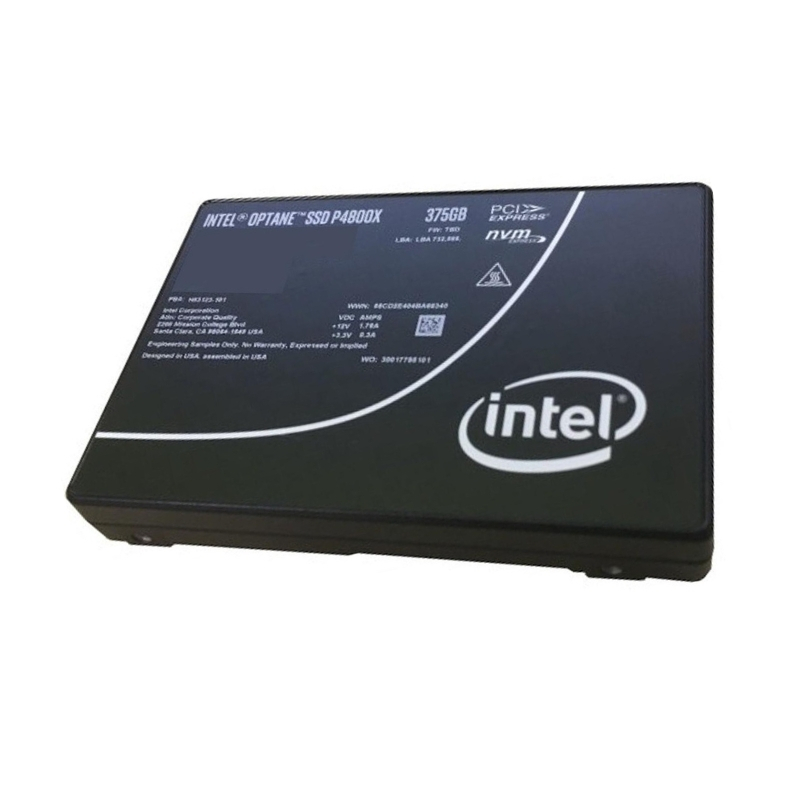


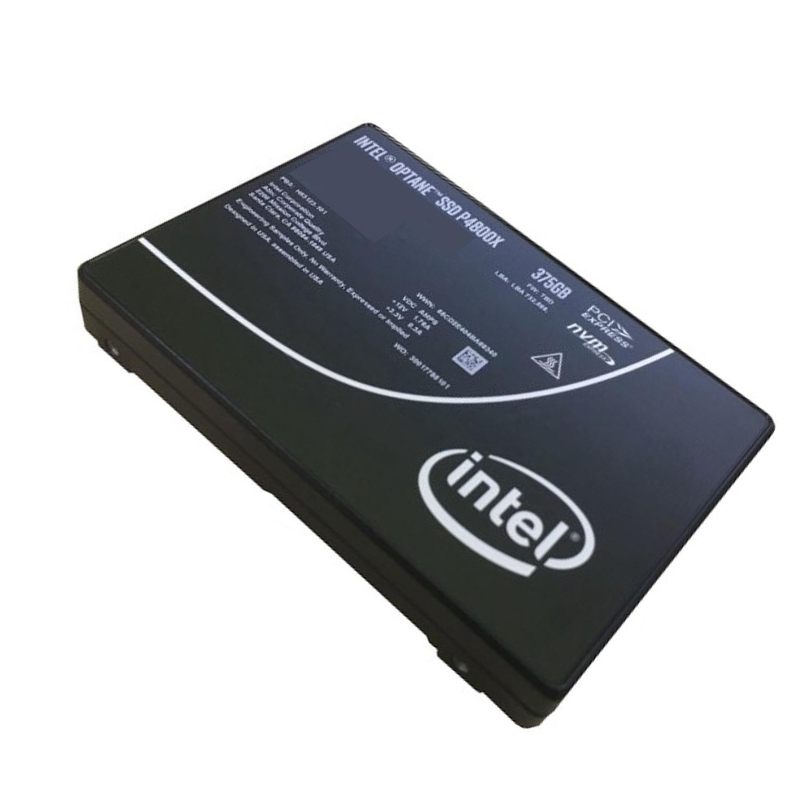
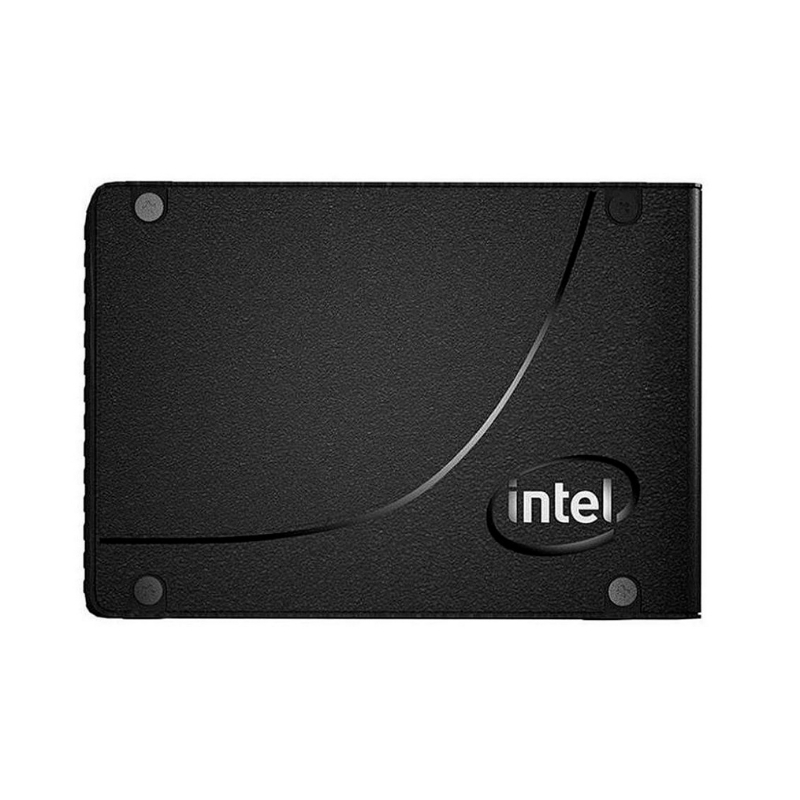
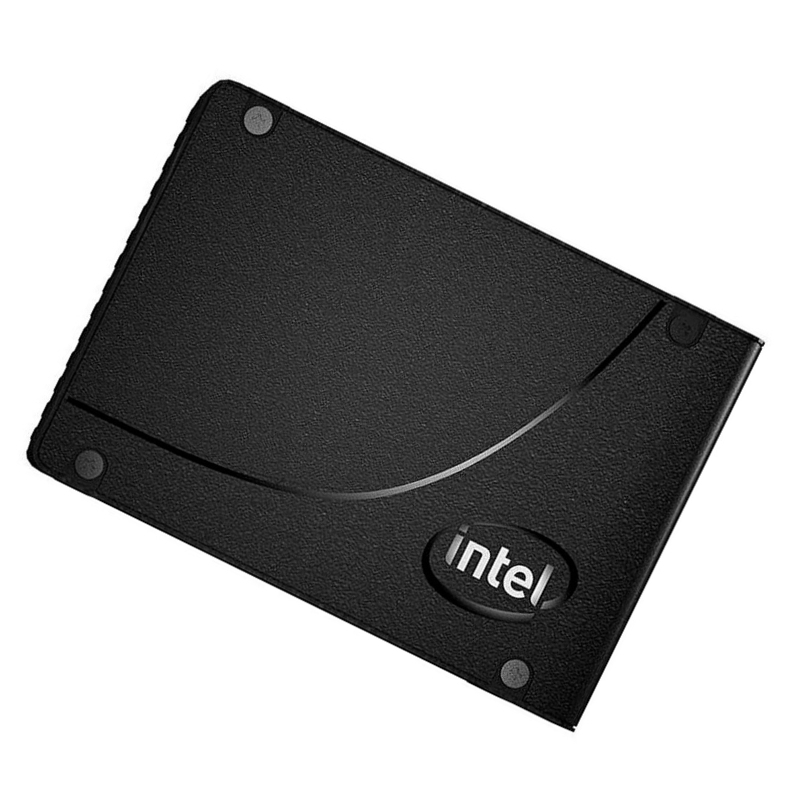
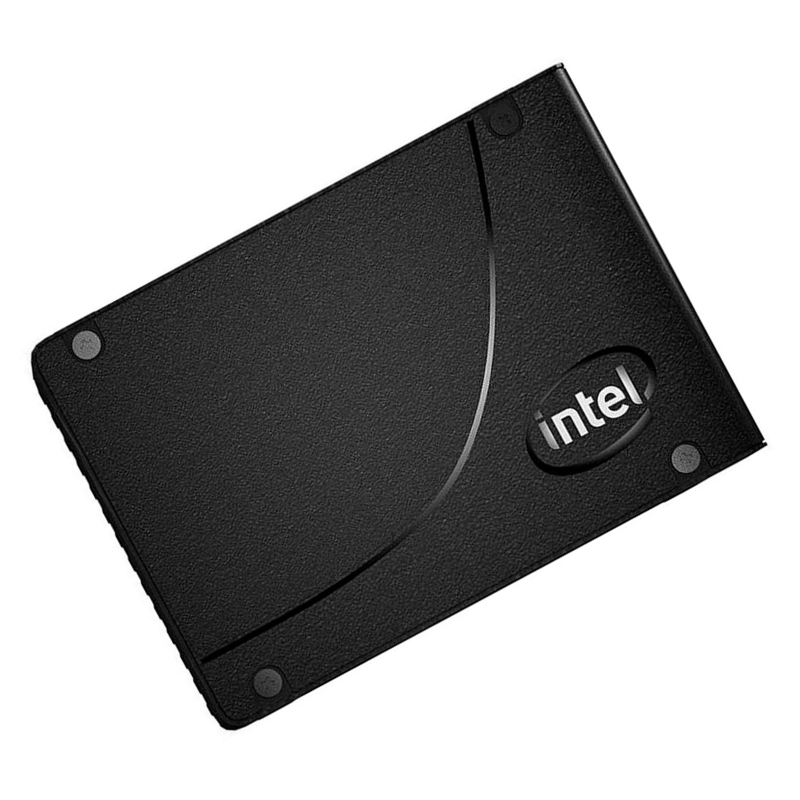
Intel SSDPE21K375GAP Optane DC P4800x 375GB 2.5inch PCI Express 3.0 NVME Internal SSD. Excellent Refurbished with 1 Year Replacement Warranty - HPE Version
The Intel Optane DC P4800X 375GB SSD represents a breakthrough in storage technology, delivering unparalleled speed, endurance, and efficiency for high-performance computing environments. Designed for data-intensive applications, this PCIE 3.0 NVME internal solid-state drive leverages 3D XPoint memory technology for ultra-low latency and exceptional reliability.
The Intel Optane DC P4800X SSDPE21K375GAP is a high-performance, low-latency solid state drive (SSD) built on Intel’s Optane technology. Designed for demanding enterprise workloads, the P4800X drive delivers exceptional I/O responsiveness and endurance, making it a standout in the PCI Express 3.0 NVMe category. Offering a capacity of 375 GB, this drive is optimized for data center environments, providing persistent memory–like performance in a compact, efficient form factor.
One of the most striking attributes of the P4800X is its ultra-low access latency. Thanks to Intel Optane technology, it uses 3D XPoint media—a revolutionary memory fabric that bridges the gap between DRAM and NAND. The result is dramatically faster response times than conventional NAND-based SSDs, especially under mixed or random I/O workloads. This low latency enables consistent performance even when scaling up to thousands of IOPS.
Unlike typical NAND SSDs, which degrade relatively quickly under sustained write pressure, the P4800X is engineered for endurance. It supports a high write endurance rating, enabling the drive to handle heavy write cycles typical of write-intensive workloads such as logging, caching, and real‑time analytics. Built for enterprise use, it also includes advanced error correction, power-loss protection, and thermal monitoring to ensure consistent, reliable operation even under demanding conditions.
With its persistent write cache capability, the P4800X can temporarily store data while preserving power-loss protection, minimizing the risk of write interruption. This persistent cache ensures that data isn't lost during abrupt power outages, which is especially critical in mission-critical enterprise environments. The write-back cache architecture delivers high throughput without compromising data integrity.
The drive employs a PCI Express 3.0 interface with NVMe protocol, leveraging multiple lanes for parallelism and maximizing throughput. This interface ensures compatibility with a wide range of server platforms and provides high bandwidth, delivering thousands of IOPS and optimized throughput performance. The NVMe protocol also supports features such as namespace management, queueing, and efficient CPU utilization.
With a storage capacity of 375 GB, the P4800X is designed for mission-critical workloads where low latency and high endurance matter more than raw capacity. This relatively modest capacity is balanced by its extraordinary performance, making it well suited for use as a tier-one cache, transaction log drive, or metadata store in data centers.
Stable QoS is a hallmark of the P4800X: it maintains consistent performance across varying loads and queue depths, minimizing latency spikes and ensuring predictable behavior. For data center architects, this means fewer surprises in response times, which is crucial for applications like OLTP databases, real-time caching layers, and high-frequency trading platforms.
The P4800X leverages 3D XPoint memory to deliver significantly higher endurance compared to typical NAND-based SSDs. This results in a very high drive write endurance rating, making it suitable for workloads with frequent writes or constant logging. Its endurance rating can support drive writes well beyond the capabilities of standard enterprise SSDs, reducing the need for frequent replacements and lowering the total cost of ownership.
The drive includes thermal sensors that continuously monitor temperature. When necessary, it throttles performance or invokes thermal mitigation techniques to protect against overheating. This ensures both reliability and longevity, even under heavy load or when installed in densely packed server racks.
In tiered storage architectures, the P4800X functions as a high-performance cache tier. It accelerates read and write access to hot data, acting as a bridge between DRAM and traditional NAND SSD or HDD tiers. This use case is particularly effective in VDI (Virtual Desktop Infrastructure), file servers, and virtualization environments, where frequently accessed data benefits from the drive’s exceptionally low latency.
Data-intensive computing tasks, such as HPC simulations, big data analytics, and real-time streaming ingestion, demand storage with both speed and reliability. The P4800X’s ability to sustain high performance under mixed workloads makes it a perfect fit. Applications like scientific modeling, machine learning training, and real‑time data analytics benefit from its fast access times and endurance.
In virtualization environments—especially hyper-converged infrastructure platforms—the P4800X can act as a performance acceleration layer. It reduces the performance overhead associated with virtual machine I/O by handling high queue‑depth random operations. When integrated with HCI systems, it enhances responsiveness, boosts VM boot times, and reduces latency for virtualized storage workloads.
While not a direct replacement for DRAM, the P4800X provides a persistent memory-like experience. For applications that require near-memory speeds but also need persistence across power cycles, this drive offers a compelling solution. It can be used in conjunction with software frameworks or as a backing store, offering lower cost than DRAM while retaining non-volatility.
The P4800X is compatible with a wide array of server platforms that support PCIe 3.0 and NVMe. It can be deployed in x86-based servers, virtualization environments, and data center architectures from major OEMs. The drive also supports standard storage management tools and firmware update mechanisms, making integration and life-cycle management straightforward.
Compared to traditional NAND-based NVMe SSDs, the Intel Optane DC P4800X offers significantly lower latency and higher endurance. While NAND SSDs can deliver high throughput, they often suffer when handling random I/O at deep queue depths, especially in mixed read/write scenarios. The P4800X excels in such scenarios because of its 3D XPoint media, making it ideal for write‑intensive workloads and latency-sensitive applications.
While DRAM remains the fastest storage medium in terms of pure latency, it lacks persistence: data is lost when power is removed. NVDIMM (non-volatile DIMM) solutions require specific platform support and are relatively costly. The P4800X offers a middle ground: performance that approaches memory-level latency with persistence, without the need for special motherboard support. This makes it an attractive option for workloads requiring fast, persistent storage.
Ensure proper airflow and server cooling to maintain optimal thermal conditions. Monitor drive temperature via SMART telemetry and adjust server configurations if thermal throttling is observed. Additionally, implement backup power policies (such as UPS) to leverage the power-loss protection built into the drive—this will protect in-flight writes during outages.
Although the P4800X offers power-loss protection, it should be part of a broader data protection strategy. Regular backups, replication, or journaling should be implemented alongside the drive. For example, critical data stored on the P4800X can be asynchronously replicated to a secondary site, ensuring business continuity in case of failure.
Intel ensures that the P4800X drive maintains data integrity through robust error correction and end-to-end protection. The drive’s firmware verifies data through ECC, safeguarding stored information against corruption. This is essential in enterprise and data center usage, where data accuracy is critical to business operations.
The modular nature of PCIe NVMe drives means that the P4800X can be easily scaled out in data centers. Administrators can add multiple drives to servers or storage arrays to match performance requirements. Its compatibility with virtualization and tiered storage architectures provides flexibility in deployment design — enabling scalable, high-performance infrastructure that can evolve with growing demands.


 Contact Us
 Information
 Catalog
 Solid State Drives (SSD)
 Network Switches
 Hard Disk Drives
 HBA & Controllers
 PC & Servers
 PC & Server Memory
 CPU & Processors
 Network Routers
 Power Supplies
 Tape Drives & Libraries
 Network Devices
 Computer & Network Cables