(7% discount is applied at checkout)
Cart is empty
Your go-to destination for cutting-edge server products
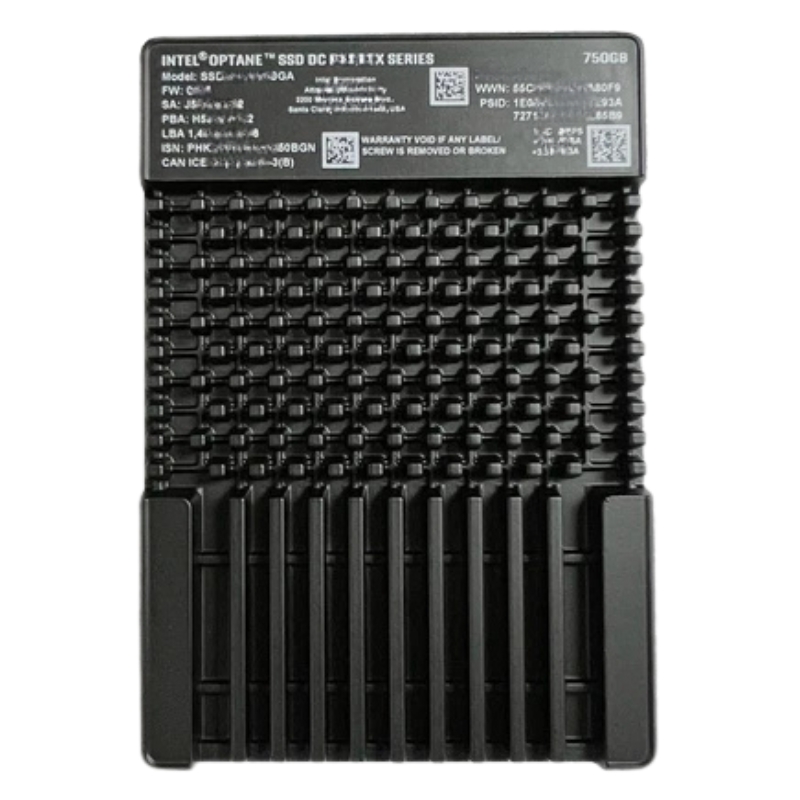


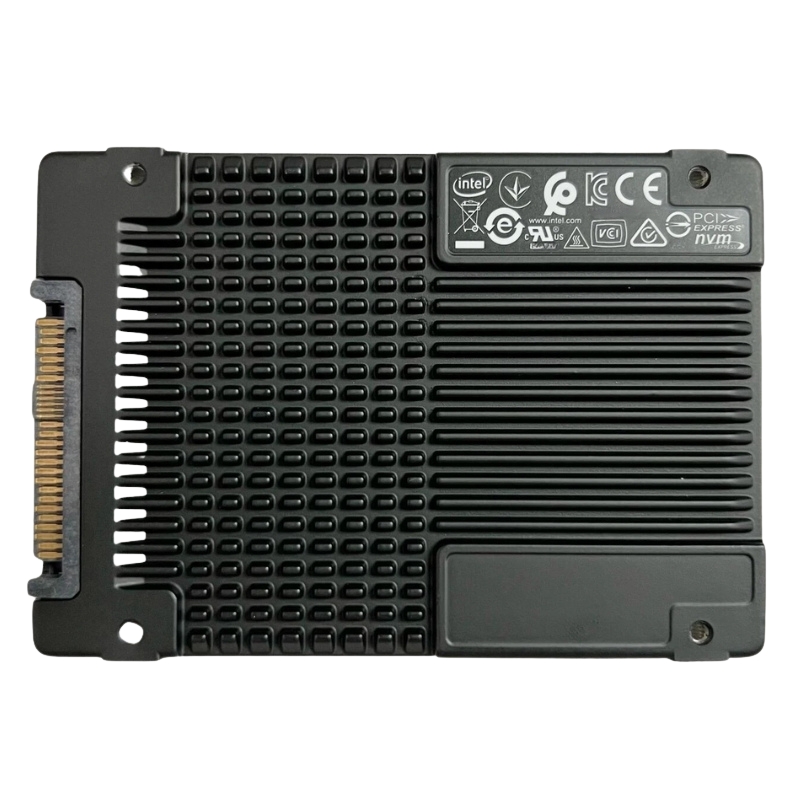
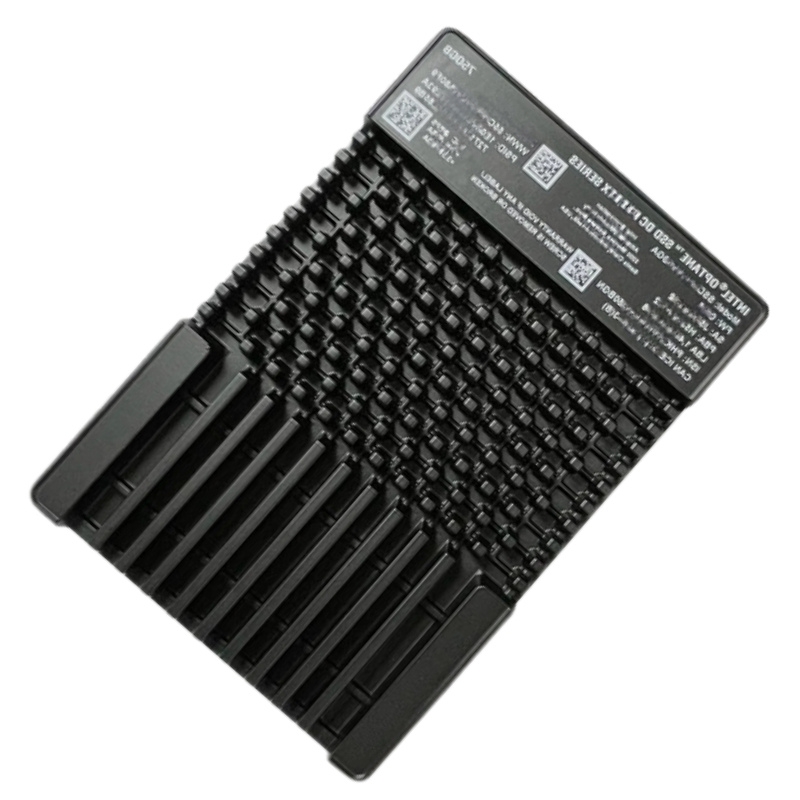
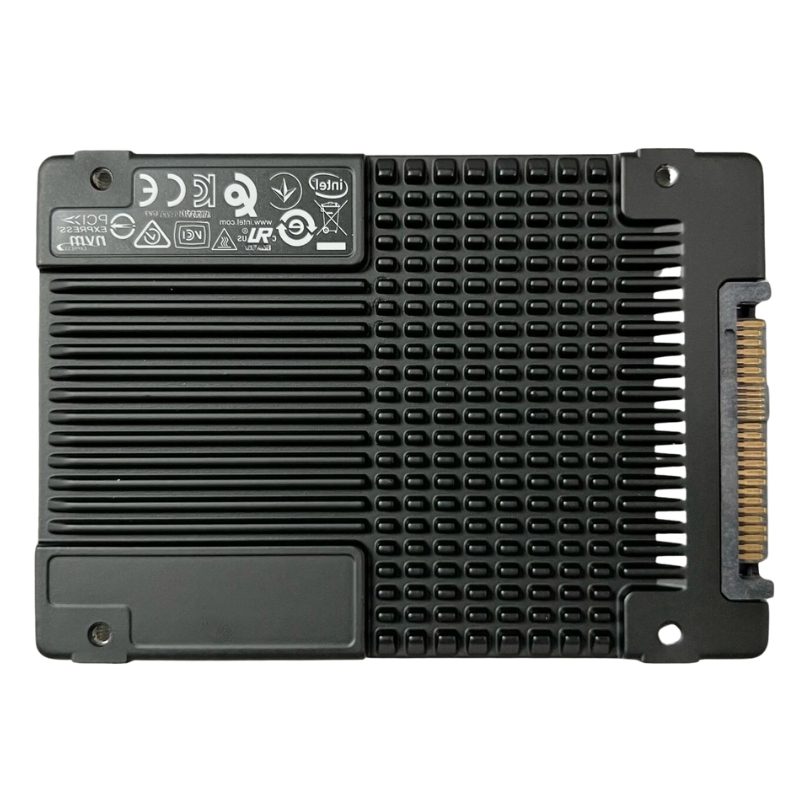
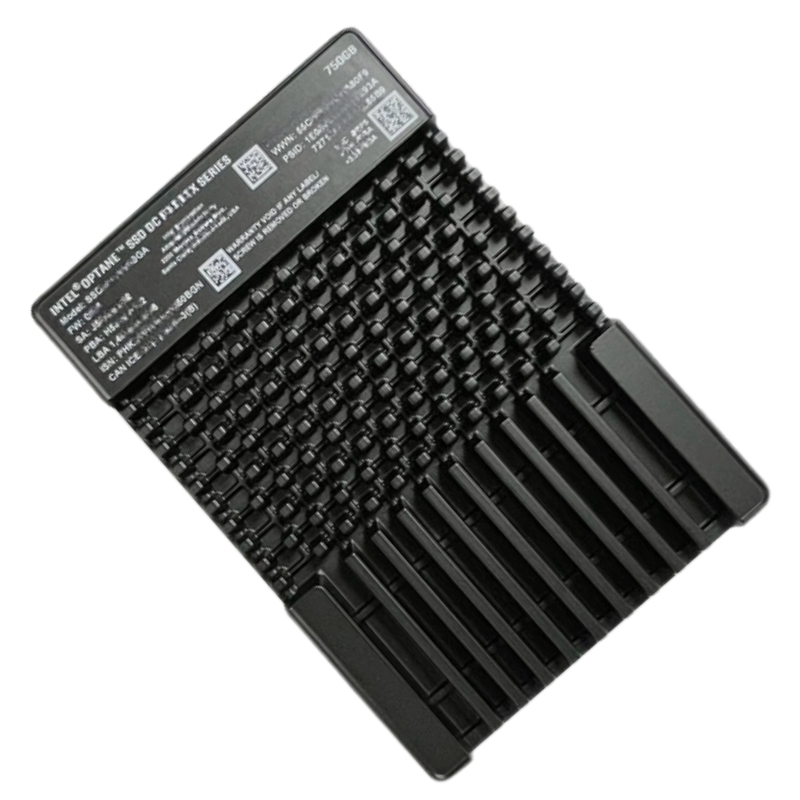
Intel SSDPE21K750GA 750GB Optane P4800x U.2 2.5inch PCI-E NVMe SSD. Factory-Sealed New in Original Box (FSB) with 3 years Warranty
| SKU/MPN | Warranty | Price | Condition | You save |
|---|---|---|---|---|
| SSDPE21K750GA | 1 Year Warranty | $959.00 | Factory-Sealed New in Original Box (FSB) | You save: $335.65 (26%) |
| SSDPE21K750GA | 1 Year Warranty | $475.00 | Excellent Refurbished | You save: $166.25 (26%) |
Explore the detailed operational characteristics and engineering specifications of the high-performance internal solid-state drive, engineered for enterprise-level applications and demanding computing environments.
The unit is categorized as an internal solid-state data storage device, bearing the model designation INTEL Optane P4800x with the identifier SSDPE21K750GA.
Leverages groundbreaking 3D XPoint memory technology, a non-volatile medium that significantly accelerates data access speeds compared to conventional NAND flash.
Incorporates robust 256-bit encryption standards to safeguard sensitive data and ensure compliance with modern security requirements.
Boasts an impressive Mean Time Between Failures (MTBF) rating of 2 million hours, underscoring its exceptional endurance and design integrity.
Maintains an exceptionally low Uncorrectable Bit Error Rate (UBER), quantified at fewer than 1 sector per 10^17 bits read, guaranteeing superior data accuracy and preservation.
Optane drives are uniquely positioned in the storage landscape because they deliver consistently low response times under heavy and mixed workloads. Unlike flash-based SSDs whose latency can vary significantly during sustained writes or under full-drive conditions, Optane media exhibits predictable latency behavior. For database front-ends, real-time analytics, and caching layers, this predictability translates directly into better user experience and more deterministic application performance.
One of the defining categories for Optane SSDs is endurance. The underlying 3D XPoint media tolerates many more write cycles compared to traditional NAND-based SSDs, enabling long-term deployments for write-heavy applications. This endurance advantage reduces the risk of premature drive retirement and lowers the total cost of ownership (TCO) for workloads where write amplification and sustained random writes are routine.
The U.2 2.5" form factor provides a standardized, hot-swappable enterprise friendly enclosure that fits modern server racks and storage arrays. Combined with PCIe and NVMe protocol support, the P4800X benefits from direct-attached, low-overhead communication with host CPUs. NVMe namespaces, multipath options, and direct fabric attachments make the P4800X suitable for both standalone and clustered deployments.
Optane’s 3D XPoint memory is a non-volatile technology that operates fundamentally differently from NAND flash. It bridges the gap between DRAM and NAND by offering non-volatility along with latency characteristics closer to volatile memory. This architectural difference enables high-speed, high-endurance storage tiers that are ideally suited for cache, log acceleration, metadata storage, and other roles where consistent microsecond-scale access times matter.
Optane's value is highest when aligned with workloads that require very low latency and high write endurance. Typical high-value use cases include OLTP databases, high-frequency trading engines, virtualized memory and swap acceleration, metadata and index storage, and tiered caching in hybrid storage arrays. Matching drive capabilities to workload patterns helps avoid over-provisioning while extracting maximum business value.
NVMe supports deep queue depths and multiple submission/completion queues that exploit multi-core host systems. To optimize Optane performance, tune applications and host drivers to leverage parallel I/O paths and proper queue sizing. Many enterprise storage stacks achieve better response time stability by distributing I/O across NVMe queues and CPUs to reduce contention.
Ensure the operating system and NVMe drivers are fully compatible and up to date. Modern kernels and hypervisor platforms include NVMe enhancements that reduce overhead and improve performance. Firmware compatibility and driver maturity play a critical role in unlocking the P4800X's deterministic latency characteristics.
The U.2 form factor and enterprise NVMe controllers produce heat that must be managed to maintain consistent performance. Rack-level airflow planning, adequate front-to-back ventilation, and attention to server power states help preserve thermal headroom. Some Optane drives may throttle under extreme thermal stress — plan for case and chassis designs that prioritize cooling when building dense Optane-based storage arrays.
Using the P4800X as a direct-attached acceleration tier provides the fastest path to lower application latency. This pattern is common for front-end database nodes and cache servers where local, deterministic access to storage dramatically improves responsiveness. Direct-attached Optane requires careful host provisioning, monitoring, and backup strategies to ensure overall system resilience.
Many organizations choose hybrid tiers where Optane serves as a high-speed cache or write-acceleration layer in front of larger-capacity NAND SSD arrays. This pattern maximizes economical capacity while providing near-DRAM performance characteristics for hot data. Cache policies, tiering algorithms, and software stack integrations (e.g., application-level caching, block-level tiering, or filesystem-aware caching) determine effectiveness in hybrid deployments.
Integration with caching software, NVMe-oF front-ends, or storage orchestration layers can multiply the benefits of Optane. Evaluate middleware for support of persistent namespaces, failover behavior, and telemetry for capacity and performance planning. Enterprise orchestration tools that are NVMe-aware can help streamline large-scale deployments and lifecycle operations.
Optane devices can be shared across nodes using NVMe over Fabrics to deliver low-latency remote block storage. In networked environments, fabric choices (RoCE, TCP, Fibre Channel) and the underlying network topology influence predictable latency and bandwidth. NVMe-oF expands Optane's reach beyond single-server acceleration to cluster-level low-latency pools when the fabric design and orchestration are carefully engineered.
Enterprise drives expose SMART attributes and telemetry APIs to monitor health, media wear, error rates, and thermal conditions. Proactive monitoring is essential to preemptively replace drives approaching endurance limits or exhibiting abnormal behavior. Integrate Optane telemetry into existing monitoring frameworks (SNMP, IPMI, or vendor management tools) for automated alerts and maintenance workflows.
Even with superior endurance, planning for over-provisioning and capacity management is best practice. Over-provisioning reserves media for internal housekeeping and helps sustain performance under sustained writers. Drive provisioning strategies — including spare capacity reservation, load-balancing across namespaces, and rate limiting of write-heavy applications — extend device life and preserve QoS.
Firmware updates are important for reliability, security, and performance. Maintain a documented change-control process for firmware deployment and a rollback plan in case of compatibility issues. For critical environments, test firmware updates in a staging cluster to validate behavior before broad production rollout.
Verify that servers and backplanes support U.2 drives and NVMe boot if you plan to boot the OS from Optane. Some servers require BIOS/UEFI updates or specific HBA/BIOS configurations for NVMe support. Confirm hot-swap capabilities and sled/adapter compatibility when populating high-density chassis.
Capacity planning should balance hot data set size against Optane's premium positioning. Use workload profiling to measure read/write hotness and select appropriate device counts or hybrid tier ratios. Rather than over-provisioning a single node with excessive capacity, consider distributed caching architectures to achieve both performance scaling and resilience.
Plan for both peak IOPS and sustained throughput. While Optane excels at low-latency random I/O, throughput scaling is achieved by clustering multiple drives or distributing I/O across multiple NVMe namespaces and CPU cores. Avoid single-device saturation by scaling out rather than scaling up where predictable performance is required.
Enterprise drives commonly support cryptographic features for data-at-rest protection, including hardware-based encryption and secure erase commands. Confirm support for TCG Opal or industry-standard encryption if data protection and regulatory compliance are required. Secure erase routines are useful for decommissioning and re-provisioning drives.
Data integrity mechanisms — such as end-to-end data path protection and power-loss protection features — are critical in protecting transactional workloads. While Optane media itself is non-volatile, understanding the drive’s internal behavior for write ordering and flush semantics is important for application-level durability guarantees. Coordinate application-level fsync/flush behavior with controller capabilities to ensure transactional integrity.
Intel and ecosystem partners provide management utilities, firmware upgrade tools, and diagnostics to simplify deployment and maintenance. Tools that expose telemetry, run diagnostics, and orchestrate firmware upgrades ease lifecycle management. Integrating these tools into automated deployment pipelines reduces human error and improves response time for maintenance tasks.
Many monitoring solutions support NVMe telemetry either natively or via plugins. Use these solutions to track latency percentiles, sustained write volumes, temperature trends, and SMART health. Automated playbooks can trigger drive replacements or workload migrations in response to thresholds, preserving availability and preventing unplanned downtime.
Because Optane differs from conventional NAND media, invest in staff training and documentation that clarifies expected behavior, troubleshooting steps, and tuning knobs. Internal runbooks that cover firmware update procedures, thermal mitigation, and emergency failover procedures reduce operational risk.
Database systems that demand low-latency random writes and predictable response times benefit significantly from Optane. Use Optane for transaction logs, hot indexes, and caching layers to reduce commit latency and improve transaction throughput under contention.
Virtualized environments and VDI deployments generate many small random I/O operations and can suffer from latency spikes during boot storms or heavy login periods. Optane excels at smoothing these spikes, providing predictable boot and login times and improving end-user experience.
For real-time analytics and in-memory databases that overflow main memory or require persistent memory-like performance, Optane offers an intermediate layer that reduces spills to slower storage and maintains low-latency access to critical datasets.
Optane devices typically command a premium compared to NAND SSDs due to their specialty media and enterprise positioning. Evaluate the price-to-performance trade-off by quantifying business value: improved transaction throughput, lower latency penalties, reduced licensing costs (due to fewer database replicas), or improved SLA compliance may justify the premium. Consider pilot projects to quantify ROI before large-scale purchases.
Maintain a strategic inventory of spare Optane drives or compatible units to shorten repair windows. For high-availability clusters, plan for N+1 capacity and document procedures for hot-swap replacement and rebuild to limit performance impact during maintenance.
Compared to high-end NAND NVMe SSDs, Optane delivers lower and more consistent latency, especially under sustained or mixed workloads. While NAND variants may offer larger capacity at a lower cost-per-GB and higher peak throughput for sequential transfers, Optane’s strength is deterministic random I/O and endurance. The right choice depends on whether the primary need is capacity and throughput or latency and write endurance.
For cold data, archival storage, or applications dominated by large sequential transfers, high-capacity NAND SSDs or tiered HDD/NAND solutions may be more cost-effective. Always align storage choices to the workload profile and broader IT strategy.
Before committing to Optane, run real-world workload profiling to quantify latency percentiles, IOPS distribution, and hot dataset size. Accurate profiling prevents overspend and verifies that Optane delivers measurable improvements.
Enterprise Optane requires enterprise operational discipline — periodic firmware updates, active telemetry monitoring, and integration with backup/recovery procedures. Avoid ad-hoc deployment without change control and testing.
Use NVMe namespaces, multiqueue capabilities, and modern driver stacks to fully exploit Optane performance. Where possible, distribute I/O across cores and queues to remove single-threaded bottlenecks.
Implement capacity planning that anticipates hot-data growth and contains policies to promote/evict data from Optane tiers to lower-cost NAND or object storage when appropriate.
Developers should consider NVMe-friendly I/O patterns to reduce syscall overhead and exploit parallel submission. Techniques such as batching small writes, using asynchronous I/O, and implementing smart caching layers can help exploit Optane’s strengths without overwhelming host resources.
Filesystem and database settings — such as block sizes, journaling options, and checkpoint frequency — interact with Optane characteristics. Tune transactional commits and checkpoint mechanisms to balance durability with latency, and validate behavior under failure modes to ensure recovery semantics meet requirements.
When benchmarking, mimic production workloads rather than relying solely on synthetic tests. Use real workload drivers, measure percentile latency under load, and run sustained tests to expose any throttling or thermal effects. Benchmark both raw device performance and end-to-end application metrics for a complete picture.


 Contact Us
 Information
 Catalog
 Solid State Drives (SSD)
 Network Switches
 Hard Disk Drives
 HBA & Controllers
 PC & Servers
 PC & Server Memory
 CPU & Processors
 Network Routers
 Power Supplies
 Tape Drives & Libraries
 Network Devices
 Computer & Network Cables