(7% discount is applied at checkout)
Cart is empty
Your go-to destination for cutting-edge server products
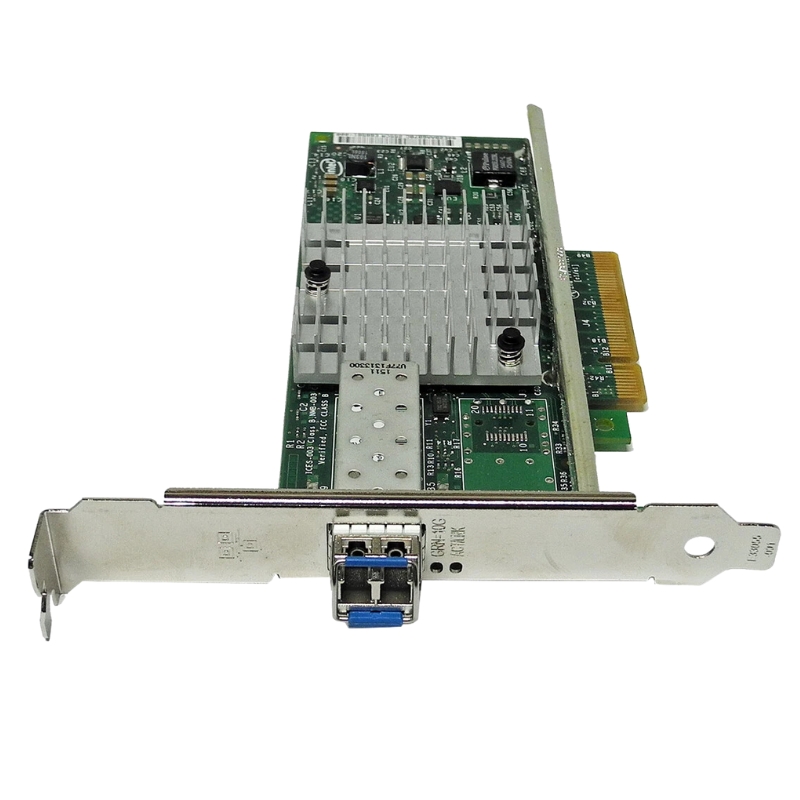


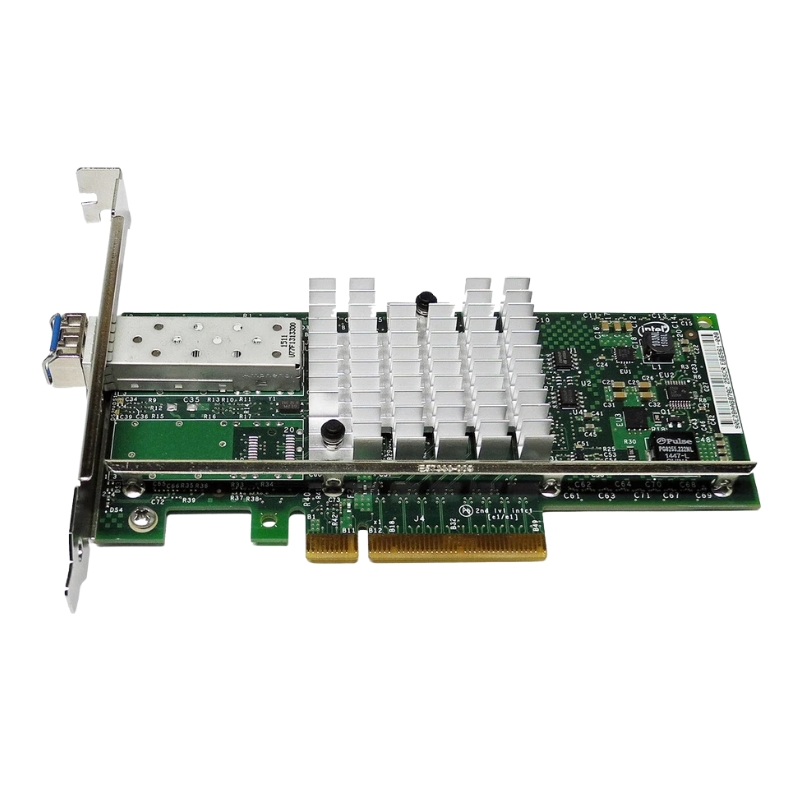
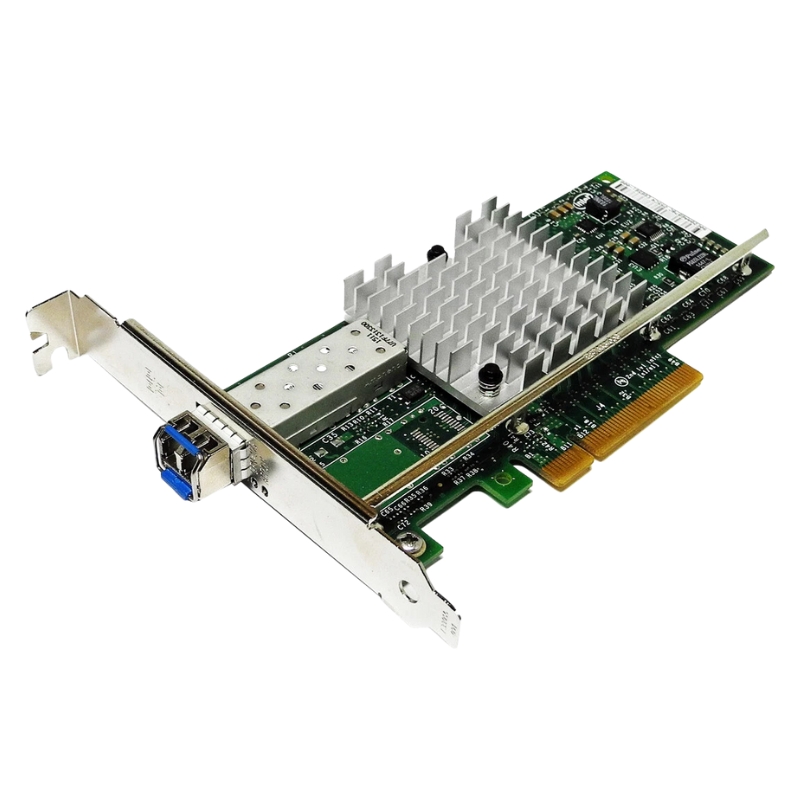
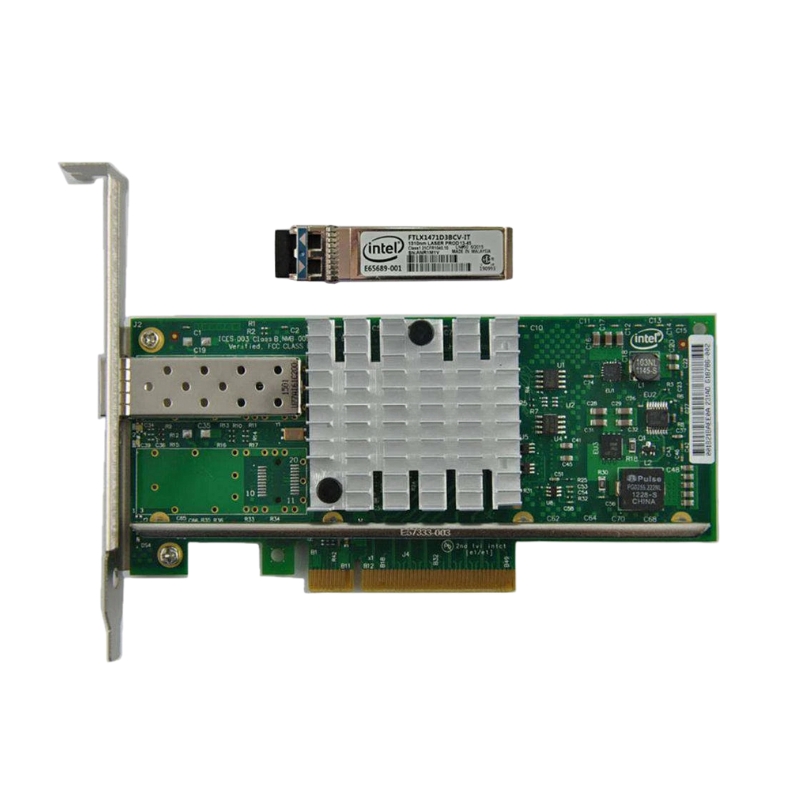
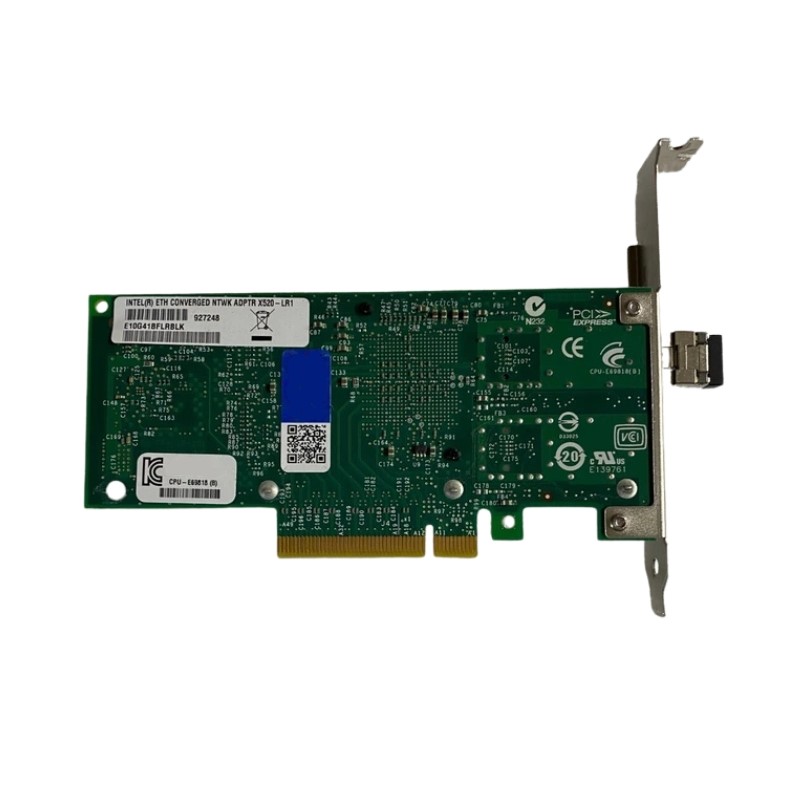
Intel X520-LR1 10 Gigabit Ethernet Low Profile PCI-Express Converged Network Adapter. Excellent Refurbished with 1 year replacement warranty
Outline of Intel X520-LR1 Ethernet Converged Network Adapter
The Intel Ethernet Converged Network Adapter X520-LR1 is engineered to deliver robust, high-throughput networking performance for enterprise servers, virtualization platforms, and mission-critical data centers. Built on a reliable PCI Express architecture, this adapter enhances system communication efficiency by enabling ultra-fast data transfer, reduced latency, and stable long-distance connectivity over fiber infrastructure.
The category of 10 Gigabit Ethernet low-profile PCI-Express converged network adapters represents a critical foundation for modern enterprise networking environments where high throughput, ultra-low latency, and virtualization efficiency are essential. Within this category, the Intel X520-LR1 10 Gigabit Ethernet Low Profile PCI-Express Converged Network Adapter stands as a widely recognized solution engineered for data centers, cloud infrastructure, and high-performance computing environments that require stable, scalable, and efficient network communication layers.
This category focuses on network interface cards (NICs) designed to deliver 10GbE performance over fiber-optic infrastructure, specifically optimized for long-reach optical connectivity through LR (Long Range) transceiver support. These adapters are commonly deployed in environments where bandwidth-intensive applications such as virtualization clusters, distributed databases, storage replication, and enterprise application hosting demand consistent and predictable network performance.
At the core of this category is the convergence of multiple networking capabilities into a single adapter, allowing both traditional Ethernet traffic and storage-related traffic to be managed efficiently over unified infrastructure. This convergence reduces hardware complexity while improving data flow efficiency across enterprise systems.
Low profile PCI-Express network adapters are designed specifically for rack-mounted servers, blade servers, and compact enterprise systems where physical space constraints are a critical consideration. These adapters maintain full performance capability while conforming to reduced bracket height specifications, enabling deployment in dense server environments.
The PCI-Express interface ensures high-speed communication between the adapter and the server motherboard, minimizing bottlenecks and ensuring that the full 10GbE bandwidth can be utilized effectively. This makes the category highly suitable for virtualization platforms and cloud computing clusters where multiple virtual machines share network resources simultaneously.
Fiber optic connectivity, particularly LR1 (Long Range 1310nm single-mode optics), plays a central role in extending the reach of 10GbE networks across large-scale infrastructures. This enables connectivity over distances up to 10 kilometers or more depending on optical conditions and transceiver specifications. Such capability is essential for campus networks, inter-building data center links, and geographically distributed enterprise systems.
The use of single-mode fiber in this category ensures minimal signal degradation, improved data integrity, and consistent throughput performance over long distances. This makes LR-based adapters an essential component in enterprise network design strategies where reliability and scalability are key requirements.
The architecture of 10GbE PCI-Express converged adapters is built around advanced network controller silicon designed to handle high packet throughput while minimizing CPU utilization. These controllers incorporate hardware offloading engines that manage tasks such as TCP segmentation, checksum offloading, and interrupt moderation.
By reducing the processing burden on the host CPU, these adapters allow server resources to be allocated more efficiently toward application workloads rather than network processing overhead. This architectural design is particularly important in virtualized environments where CPU cycles are a shared resource across multiple virtual machines.
The Intel X520-LR1 10 Gigabit Ethernet Low Profile PCI-Express Converged Network Adapter Intel X520-LR1 10 Gigabit Ethernet Low Profile PCI-Express Converged Network Adapter exemplifies this architecture through its balanced integration of performance, power efficiency, and hardware-level optimization for enterprise workloads.
PCI-Express architecture serves as the backbone of data transfer between the network adapter and the host system. These adapters typically utilize multiple PCIe lanes to ensure sufficient bandwidth for sustained 10GbE throughput without congestion. The efficient utilization of PCIe lanes allows simultaneous bidirectional data flow, ensuring that both inbound and outbound traffic maintain consistent performance levels.
This is particularly important in data-intensive environments such as backup systems, storage replication clusters, and high-frequency trading platforms where microsecond-level latency variations can impact performance outcomes.
Modern converged network adapters employ advanced interrupt moderation techniques to reduce CPU overhead caused by excessive network interrupts. Instead of triggering a CPU interrupt for every packet, the adapter aggregates packets and processes them in batches. This significantly reduces CPU utilization and improves overall system efficiency.
Latency reduction is further achieved through techniques such as direct memory access (DMA), which allows network data to be transferred directly into system memory without intermediate CPU involvement. This architecture ensures that high-throughput workloads remain stable even under peak traffic conditions.
Virtualization platforms such as hypervisors rely heavily on efficient network adapters to distribute traffic across multiple virtual machines. In this category, 10GbE adapters provide the necessary bandwidth consolidation to support dense virtual machine environments without network congestion.
Each virtual machine can be assigned virtual NICs that map to the physical adapter, allowing isolated yet high-speed communication channels. This is essential in private cloud environments and multi-tenant infrastructures where network segmentation and performance isolation are required.
Converged network adapters are also widely used in storage over IP solutions such as iSCSI and NAS-based architectures. By combining storage and network traffic onto a single high-speed interface, enterprises can reduce infrastructure complexity and improve data flow efficiency.
This convergence eliminates the need for separate storage networking hardware, reducing both capital expenditure and operational overhead. It also simplifies network design and improves scalability in storage-intensive environments.
Enterprise deployments often require redundancy at the network level to ensure continuous availability. 10GbE adapters are commonly deployed in pairs or clusters to provide failover capabilities. In the event of a link failure, traffic is automatically rerouted through secondary adapters, ensuring uninterrupted service delivery.
This redundancy is critical in mission-critical applications such as financial systems, healthcare data management, and large-scale e-commerce platforms where downtime is not acceptable.
One of the defining features of this category is hardware-based offloading, which significantly enhances system efficiency. By shifting tasks such as checksum calculation, segmentation, and protocol processing from the CPU to the network adapter, overall system performance is improved.
This allows servers to handle higher workloads without requiring proportional increases in CPU resources, making infrastructure deployment more cost-effective and scalable.
Single Root Input/Output Virtualization (SR-IOV) is a key feature in modern converged network adapters, enabling a single physical adapter to appear as multiple virtual devices. This allows direct assignment of virtual functions to virtual machines, improving network performance and reducing hypervisor overhead.
SR-IOV is particularly beneficial in cloud environments where high-density virtualization requires efficient and isolated network access for each virtual instance.
Quality of Service (QoS) mechanisms are integrated into this category to ensure that critical traffic receives priority over less important data streams. This is essential in environments where mixed workloads such as video streaming, transactional databases, and backup operations coexist on the same network infrastructure.
Traffic prioritization ensures that latency-sensitive applications maintain consistent performance even during peak usage periods.
Long Range (LR) optical transceivers operate at 1310nm wavelength and are designed for single-mode fiber connections. These transceivers enable stable data transmission over long distances with minimal signal loss, making them ideal for inter-building or campus-wide network deployments.
The use of optical fiber in this category ensures immunity to electromagnetic interference, which is a significant advantage in industrial and high-density data center environments.
Signal integrity is maintained through advanced encoding and error correction mechanisms that reduce packet loss and ensure accurate data delivery. This is particularly important in high-speed networks where even minor errors can result in significant performance degradation.
The combination of hardware-level error correction and fiber-optic transmission ensures consistent and reliable communication across extended distances.
Distributed enterprise environments often require scalable network architectures that can expand across multiple physical locations. LR-based 10GbE adapters provide the foundation for such scalability, enabling seamless interconnection between geographically separated data centers.
This allows organizations to build resilient, distributed infrastructures capable of handling large-scale data replication and disaster recovery operations.
Security is a fundamental requirement in enterprise networking, particularly in environments handling sensitive data. 10GbE converged adapters support secure transmission protocols and hardware-level isolation mechanisms that reduce exposure to network-based threats.
By offloading network processing to dedicated hardware, these adapters also reduce the attack surface associated with software-based networking stacks.
In multi-tenant cloud environments, network isolation is essential to ensure that data from different tenants remains separated and secure. Converged adapters support virtualization-based isolation mechanisms that enforce strict separation between virtual network interfaces.
This ensures compliance with enterprise security policies and regulatory requirements in industries such as finance, healthcare, and government services.
Network reliability is enhanced through built-in fault tolerance mechanisms that detect and recover from transmission errors. These mechanisms ensure that temporary disruptions do not result in long-term connectivity loss.
Adaptive retransmission and link monitoring technologies help maintain stable network performance even under adverse conditions.
10GbE low profile PCI-Express adapters are designed for broad compatibility with enterprise-grade server platforms. They support major operating systems, virtualization hypervisors, and network management frameworks, making them highly versatile in heterogeneous IT environments.
This compatibility ensures seamless integration into existing infrastructure without requiring extensive hardware modifications.
Energy efficiency is a key consideration in data center design. These adapters are engineered to minimize power consumption while maintaining high performance. Advanced thermal management systems ensure stable operation even under sustained network load conditions.


 Contact Us
 Information
 Catalog
 Solid State Drives (SSD)
 Network Switches
 Hard Disk Drives
 HBA & Controllers
 PC & Servers
 PC & Server Memory
 CPU & Processors
 Network Routers
 Power Supplies
 Tape Drives & Libraries
 Network Devices
 Computer & Network Cables