(7% discount is applied at checkout)
Cart is empty
Your go-to destination for cutting-edge server products
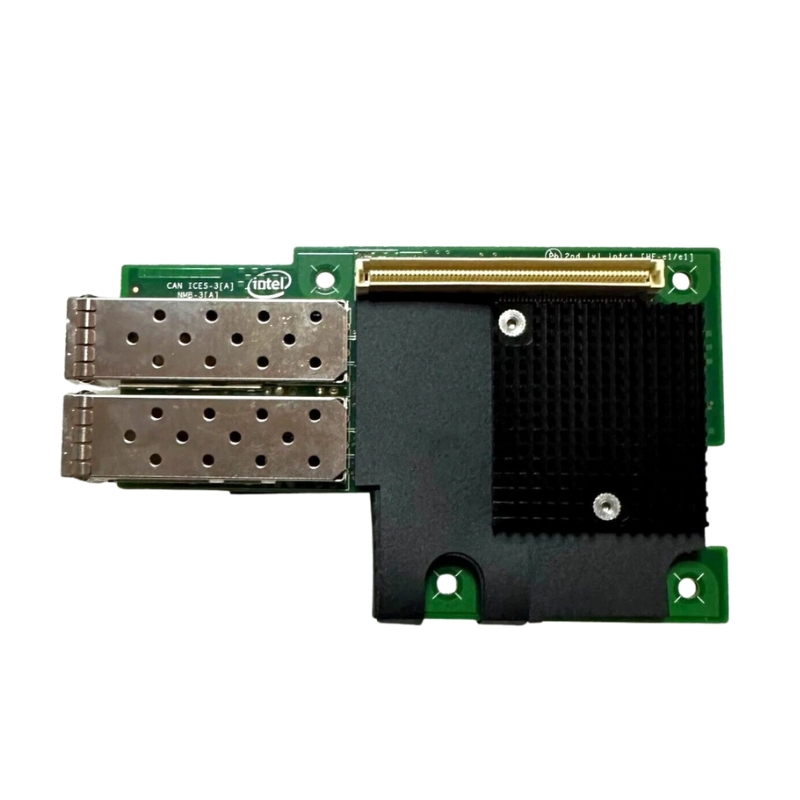


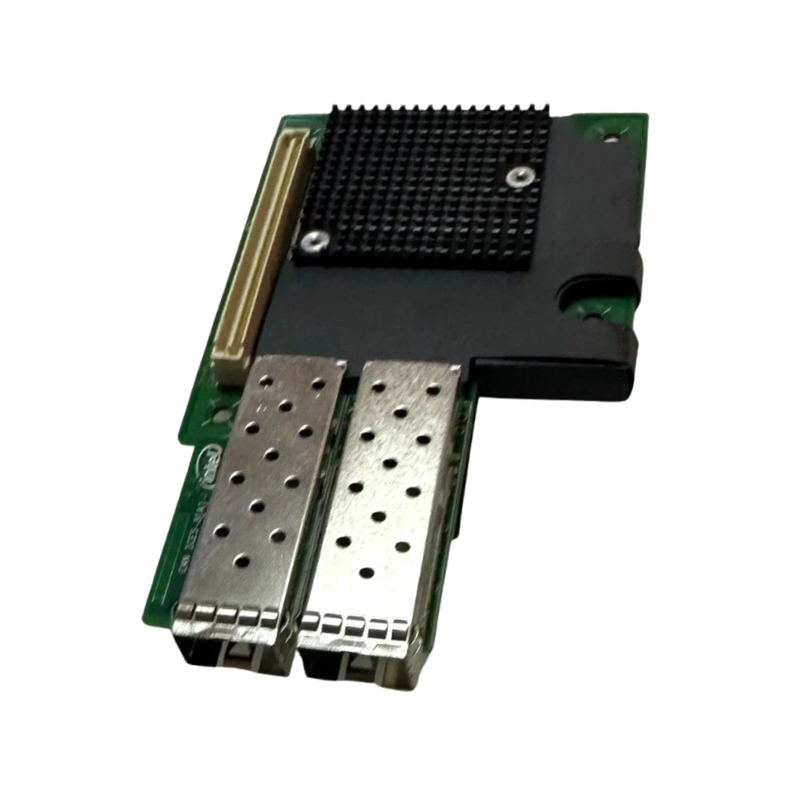
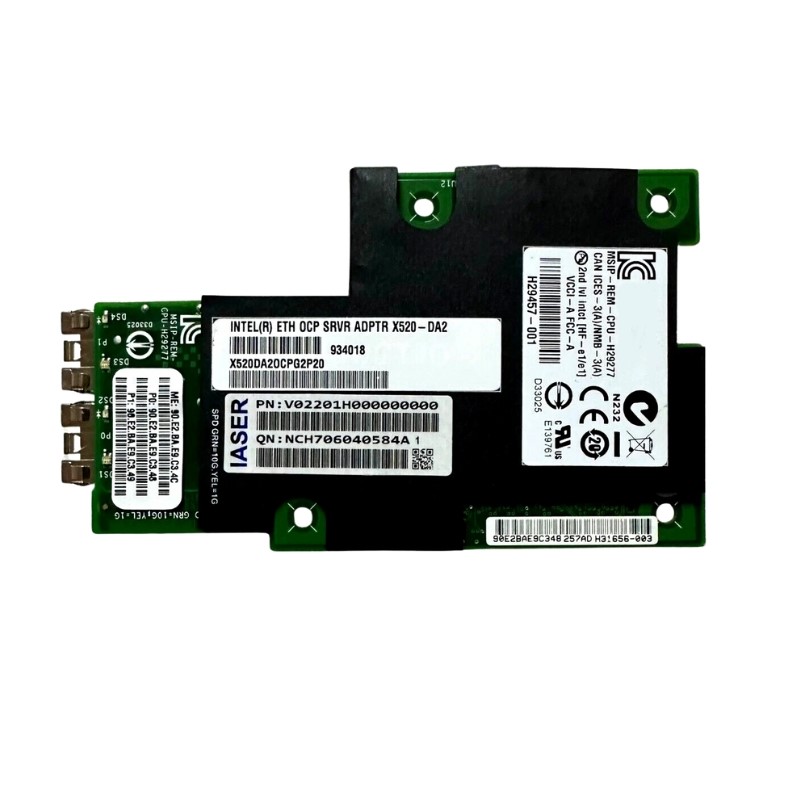
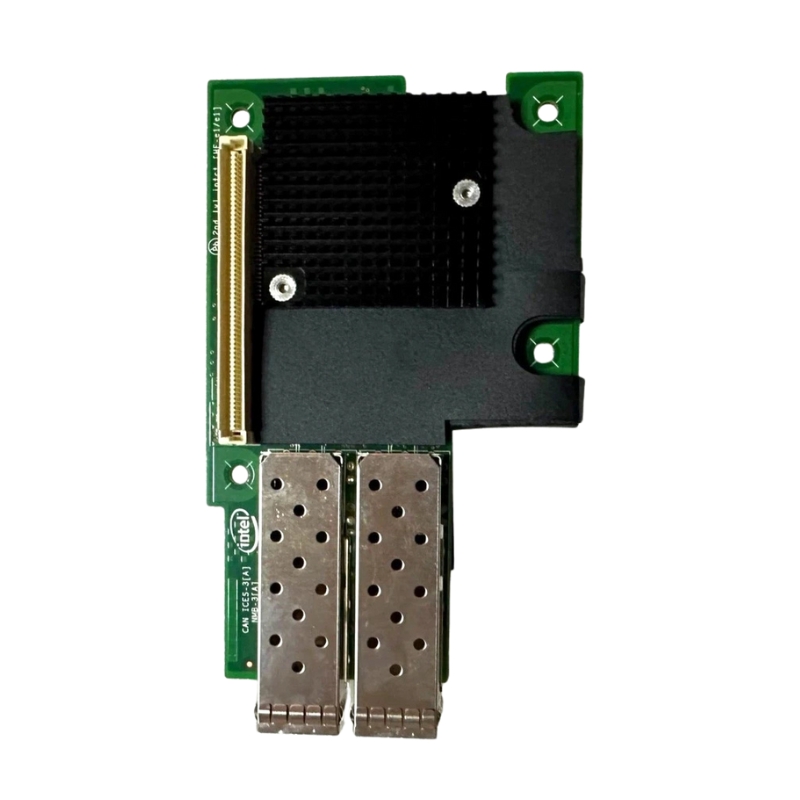
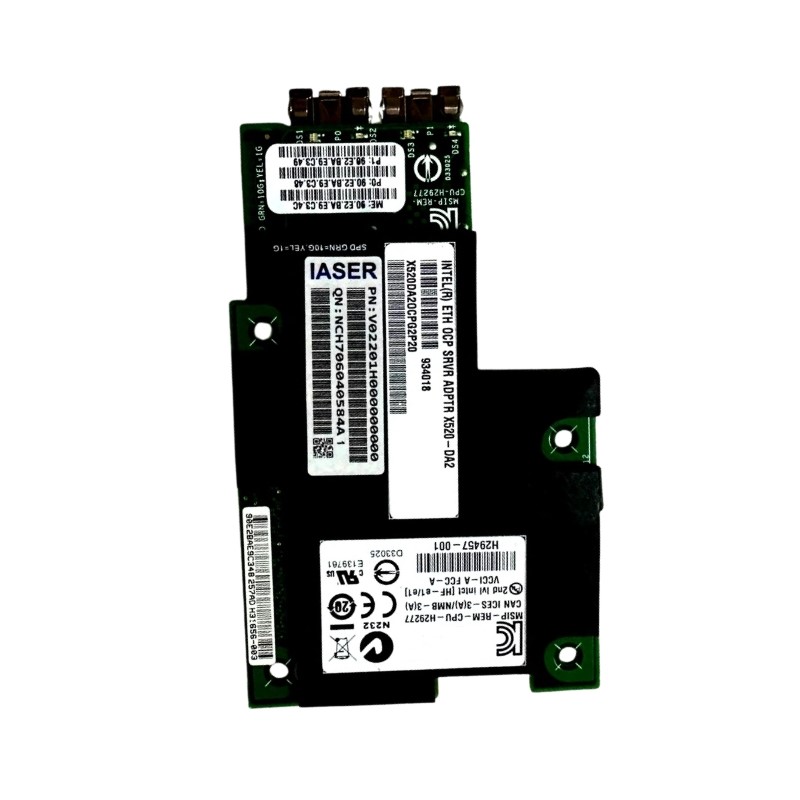
Intel X520DA2OCPG2P20 10 Gigabit Ethernet Dual Port Low Profile SFP+ PCI-Express Server Adapter. Excellent Refurbished with 1 year replacement warranty
Overview of Intel 10GbE Dual-Port SFP+ Server Network Adapter
The Intel X520DA2OCPG2P20 is a high-performance dual-port 10 Gigabit Ethernet server adapter engineered for modern enterprise networking, cloud infrastructure, virtualization, and high-density data centers. Built with advanced Intel Ethernet technology, this low-profile PCI-Express adapter delivers exceptional throughput, reduced network latency, and dependable connectivity for bandwidth-intensive workloads. Supporting dual SFP+ interfaces, it enables flexible deployment with fiber optic transceivers or Direct Attach Copper (DAC) cables to meet a wide variety of networking requirements.
Designed to optimize server communication while minimizing CPU overhead, the adapter incorporates advanced hardware acceleration technologies that improve application responsiveness and overall network efficiency. Whether deployed in enterprise servers, virtualization hosts, storage environments, or clustered computing platforms, the Intel X520DA2OCPG2P20 provides reliable performance and scalable connectivity.
The category of Intel-based dual-port 10 Gigabit Ethernet server adapters designed around SFP+ connectivity represents a critical foundation in modern high-density data center infrastructure. Within this ecosystem, the Intel X520DA2OCPG2P20 10 Gigabit Ethernet Dual Port Low Profile SFP+ PCI-Express Server Adapter is positioned as a highly efficient networking solution engineered for scalable enterprise workloads, virtualization clusters, cloud computing environments, and high-throughput storage architectures. This class of adapter is built to bridge server compute capabilities with advanced network backbones, ensuring deterministic latency, consistent bandwidth delivery, and protocol-level efficiency across demanding workloads.
At its core, this category focuses on delivering dual 10GbE ports through a compact SFP+ interface architecture that supports both optical fiber and direct attach copper cabling. The PCI-Express interface ensures direct integration with server motherboards, minimizing bottlenecks and maximizing packet processing efficiency. In modern infrastructures where east-west traffic dominates data center flows, such adapters are essential for maintaining consistent application performance and eliminating network congestion points.
The Intel X520 family is built upon a mature and widely adopted network controller architecture that emphasizes hardware-based offloading of compute-intensive networking tasks. This includes checksum offload, TCP segmentation offload, and interrupt moderation techniques that significantly reduce CPU overhead. In high-density virtualized environments, these capabilities allow hypervisors to allocate more processing resources to workloads rather than network stack processing.
The dual-port configuration in the Intel X520DA2OCPG2P20 variant enables parallel traffic processing, offering redundancy and load balancing capabilities at the hardware level. Each port operates independently while sharing a unified controller architecture optimized for multi-queue receive-side scaling. This ensures efficient distribution of network packets across multiple CPU cores, improving overall system throughput and reducing latency spikes under heavy traffic conditions.
Virtualization environments benefit significantly from Intel’s SR-IOV (Single Root Input/Output Virtualization) support, allowing multiple virtual machines to directly access physical network resources with near-native performance. This reduces hypervisor overhead and improves network determinism in cloud-native and containerized deployments.
The low profile design of this adapter category is engineered for modern rack servers where space optimization is a priority. Data centers increasingly rely on compact server configurations that maximize compute density per rack unit. The low-profile bracket ensures compatibility with constrained chassis environments while maintaining thermal efficiency and airflow balance.
The OCP-oriented design of the Intel X520DA2OCPG2P20 variant further enhances modular deployment strategies. Open Compute Project standards emphasize interoperability, serviceability, and simplified infrastructure scaling. This alignment allows operators to integrate the adapter into OCP-compliant server platforms where standardized networking modules reduce complexity and improve lifecycle management.
In high-density environments, the ability to deploy consistent networking modules across multiple server nodes simplifies inventory management and reduces operational overhead. This contributes directly to improved total cost of ownership while maintaining predictable performance characteristics across compute clusters.
The SFP+ interface used in this adapter category provides exceptional flexibility in networking deployments. Supporting both optical transceivers and DAC cables, it enables organizations to tailor connectivity based on distance, power consumption, and cost considerations. Optical fiber configurations are typically used for inter-rack or inter-building connections, while direct attach copper is ideal for short-reach server-to-switch links within the same rack.
At 10 Gigabit Ethernet speeds, signal integrity becomes a critical factor. The SFP+ architecture is designed to maintain low bit error rates through precise electrical signaling and standardized module interfaces. This ensures stable transmission even under sustained high-throughput workloads such as database replication, distributed file systems, and real-time analytics pipelines.
The adaptability of SFP+ also allows infrastructure teams to future-proof deployments by swapping transceivers without replacing the underlying adapter hardware. This modular approach reduces upgrade costs and extends the lifecycle of server networking components.
The PCI-Express interface is fundamental to the performance characteristics of this adapter category. By connecting directly to the server’s PCIe bus, the adapter achieves high-speed data transfer between system memory and network interfaces. This reduces reliance on CPU-mediated data movement and allows for direct memory access operations that significantly improve throughput efficiency.
In modern server architectures, PCIe lane allocation plays a crucial role in determining network performance. The X520-based adapter is designed to leverage sufficient PCIe bandwidth to support full 10GbE line-rate performance across both ports simultaneously. This ensures that network traffic does not become constrained by internal system architecture limitations.
Efficient DMA engine utilization allows the adapter to offload packet buffering and memory handling tasks, reducing latency and improving deterministic response times for latency-sensitive applications such as financial trading systems and high-frequency transaction processing environments.
This category of server adapter is widely deployed in enterprise virtualization clusters where multiple virtual machines share high-speed network resources. The dual-port configuration allows for redundancy and failover capabilities, ensuring continuous connectivity even in the event of a link failure. Load balancing across ports enhances throughput and ensures stable performance during peak workloads.
In cloud infrastructure environments, these adapters are commonly integrated into hyper-converged systems where compute, storage, and networking converge within the same physical nodes. The high bandwidth capacity supports distributed storage systems, object storage replication, and microservices communication frameworks that require consistent low-latency networking.
Database clusters also benefit significantly from this class of adapter. High transaction volumes and replication traffic demand stable and predictable network performance. The Intel X520 architecture ensures that packet processing remains efficient even under sustained load conditions.
The Intel X520 series integrates a range of advanced hardware acceleration features designed to reduce CPU utilization. Checksum offload allows the adapter to compute packet integrity checks at the hardware level, freeing CPU resources for application processing. TCP segmentation offload improves efficiency by allowing large data streams to be segmented directly by the network adapter rather than the host CPU.
Interrupt moderation techniques further enhance system stability by reducing the frequency of CPU interrupts generated by network traffic. This leads to smoother performance under heavy packet loads and reduces context-switching overhead within operating systems.
These capabilities are particularly valuable in environments where consistent performance is critical, such as enterprise virtualization platforms, cloud hosting infrastructures, and high-frequency data ingestion systems.
Although this category is centered around 10 Gigabit Ethernet, it plays a crucial role in transitional data center architectures where scalability and cost efficiency are key considerations. Organizations often deploy multiple dual-port adapters across server clusters to achieve aggregated bandwidth scaling without immediately migrating to higher-speed interfaces such as 25GbE or 40GbE.
The modular nature of PCIe-based SFP+ adapters allows for gradual infrastructure upgrades. As networking demands evolve, these adapters can be replaced or complemented with higher-speed solutions without requiring full system redesigns.
This flexibility ensures that enterprises can balance performance requirements with budget constraints while maintaining operational continuity across infrastructure generations.
The Intel X520 series benefits from extensive driver support across major operating systems and virtualization platforms. This includes compatibility with enterprise Linux distributions, Windows Server environments, and widely used hypervisors. Such broad compatibility ensures seamless integration into diverse IT ecosystems.
Hypervisor environments such as VMware-based infrastructures, KVM deployments, and cloud orchestration platforms leverage the adapter’s SR-IOV and virtualization offload capabilities to optimize virtual machine networking performance. This reduces overhead and ensures consistent service delivery across multi-tenant environments.
Driver maturity also contributes to long-term stability, making this category suitable for mission-critical deployments where predictable behavior and vendor support are essential.


 Contact Us
 Information
 Catalog
 Solid State Drives (SSD)
 Network Switches
 Hard Disk Drives
 HBA & Controllers
 PC & Servers
 PC & Server Memory
 CPU & Processors
 Network Routers
 Power Supplies
 Tape Drives & Libraries
 Network Devices
 Computer & Network Cables