(7% discount is applied at checkout)
Cart is empty
Your go-to destination for cutting-edge server products


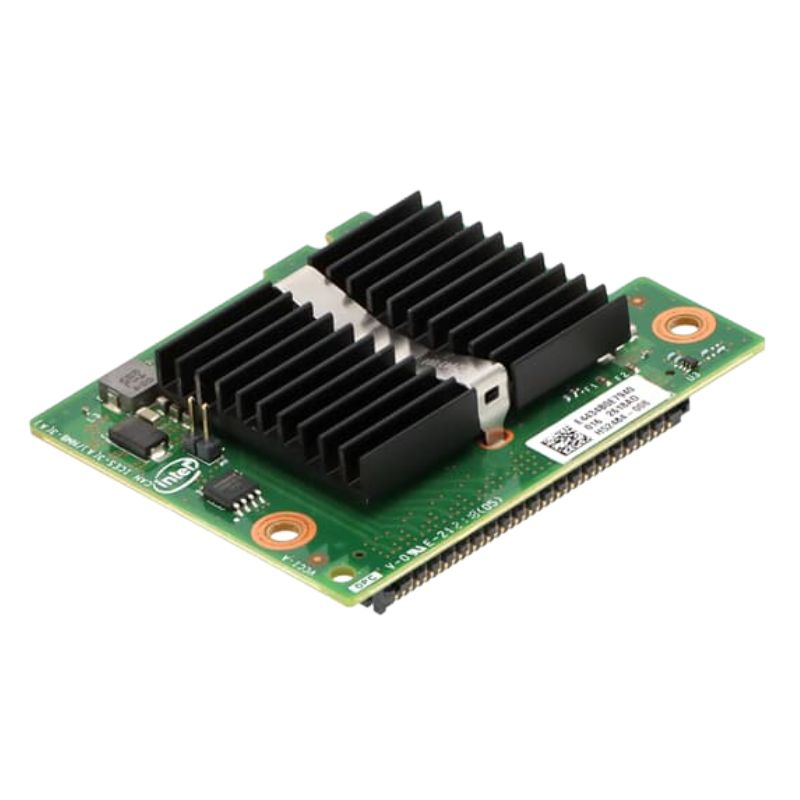
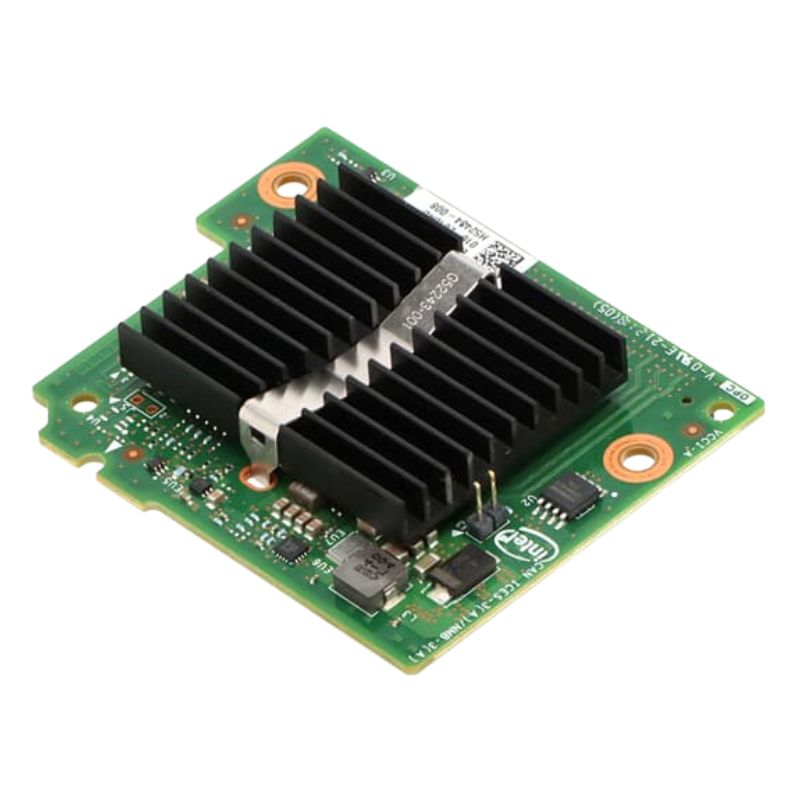
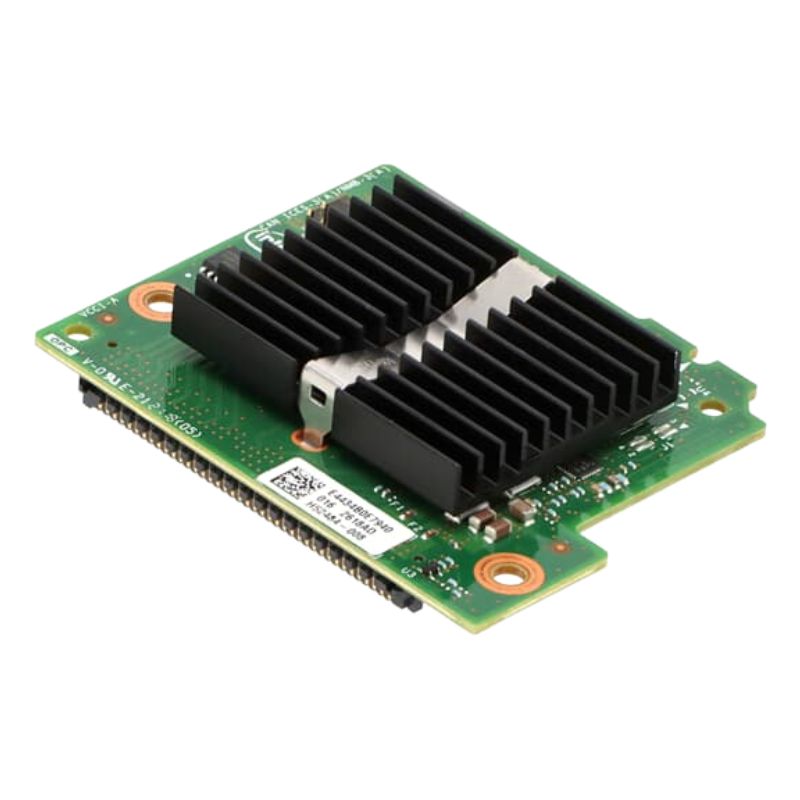
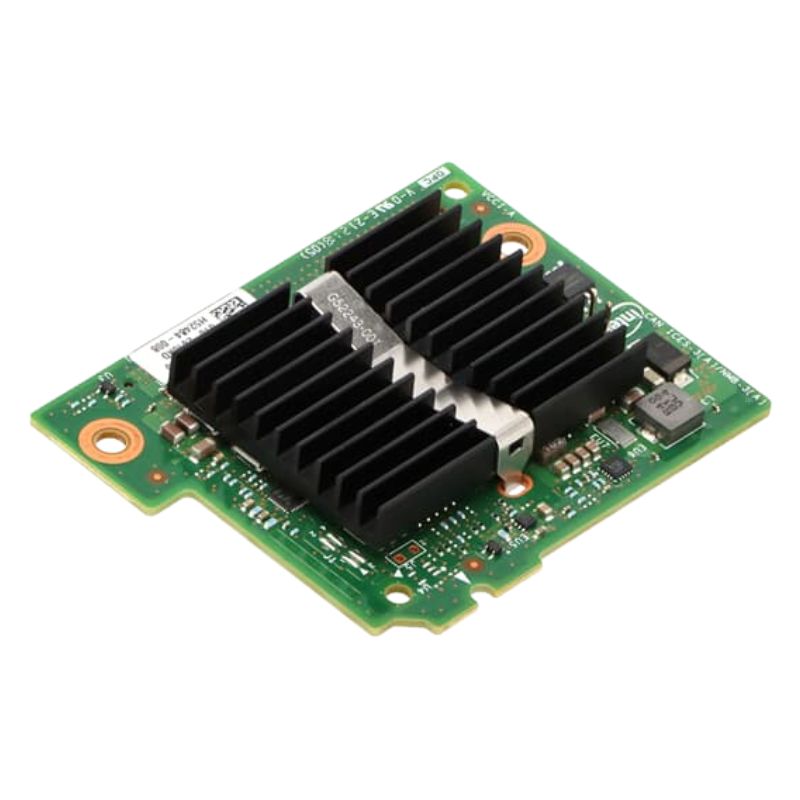
Intel X710-KR2 Ethernet Server Blade 2 Ports Network Daughter Card. Excellent Refurbished with 1 year replacement warranty - Dell Version
The Intel X710-KR2 Ethernet Server Blade is a high-performance dual-port Network Daughter Card engineered to deliver advanced connectivity, superior throughput, and optimized virtualization capabilities for modern data center environments. Designed with PCI Express 3.0 x8 architecture, this adapter enhances server networking efficiency by integrating intelligent hardware offloads, scalable packet processing, and robust support for cloud and NFV workloads. It is built to maximize performance when paired with Intel Xeon-based systems, ensuring low latency, high reliability, and efficient handling of demanding enterprise traffic scenarios.
The Intel X710-KR2 Ethernet Server Blade 2 Ports Network Daughter Card represents a high-performance networking solution designed for modern data center environments where reliability, throughput, and low latency are essential. This dual-port network daughter card integrates advanced Ethernet controller architecture to support scalable server deployments, particularly in blade server systems that require compact yet powerful network interface expansion capabilities. The device is engineered to deliver consistent data flow between server compute resources and enterprise or cloud networking infrastructures, ensuring efficient packet processing even under heavy workloads.
As enterprise IT infrastructures continue to evolve toward virtualization, cloud-native applications, and software-defined networking, the need for adaptable and high-speed interconnects becomes increasingly important. The Intel X710-KR2 Ethernet Server Blade 2 Ports Network Daughter Card is positioned within this context as a flexible networking component that enhances server I/O capabilities without requiring full-height adapter cards or external expansion modules. Its daughter card design allows direct integration into compatible blade server architectures, optimizing both physical space usage and thermal efficiency.
At the core of the Intel X710-KR2 Ethernet Server Blade 2 Ports Network Daughter Card lies a sophisticated Ethernet controller architecture designed to manage high-bandwidth communication with minimal latency. The dual-port configuration enables simultaneous handling of multiple data streams, which is particularly valuable in clustered computing environments, virtualization hosts, and high-performance application servers.
The architecture is optimized for parallel processing of network packets, reducing CPU overhead by offloading key networking tasks from the host processor. This includes checksum calculations, segmentation tasks, and packet filtering operations. By delegating these functions to dedicated hardware logic, the system can allocate more processing power to application-level workloads, resulting in improved overall system efficiency.
The Intel X710-KR2 Ethernet Server Blade 2 Ports Network Daughter Card also supports advanced queue management mechanisms that allow efficient handling of multiple traffic flows. This ensures that latency-sensitive applications such as financial trading platforms, real-time analytics systems, and high-frequency transactional databases receive prioritized and consistent network performance.
One of the defining characteristics of the Intel X710-KR2 Ethernet Server Blade 2 Ports Network Daughter Card is its compatibility with blade server ecosystems. Blade servers are designed to maximize compute density while minimizing physical space requirements, and the daughter card form factor aligns perfectly with this objective. By integrating directly into the server blade backplane, the card eliminates the need for traditional PCIe slot usage, thereby freeing up valuable expansion capacity for other system components.
This integration model also enhances airflow and thermal management within the server chassis. Because the network daughter card is positioned internally and designed to align with system airflow patterns, it contributes minimally to thermal disruption while maintaining consistent operational temperatures. This is particularly important in large-scale data centers where thermal efficiency directly impacts energy consumption and operational cost.
The Intel X710-KR2 Ethernet Server Blade 2 Ports Network Daughter Card is well-suited for virtualization environments that rely on hypervisors and container-based architectures. It supports virtualization technologies that allow a single physical network interface to be segmented into multiple virtual interfaces, enabling efficient multi-tenant networking.
In virtualized infrastructures, network resource allocation must be dynamic and highly efficient. The dual-port capability of the card allows administrators to separate traffic types, such as management traffic, storage traffic, and application traffic, across different physical or virtual channels. This separation enhances security, reduces congestion, and improves predictability in network performance.
Additionally, hardware-assisted virtualization features reduce overhead associated with virtual network switching. This ensures that virtual machines running on the same physical host can communicate internally with minimal latency while maintaining isolation from external network traffic where necessary.
Modern data centers require networking components that support redundancy, failover capabilities, and continuous uptime. The Intel X710-KR2 Ethernet Server Blade 2 Ports Network Daughter Card is designed to support high availability configurations where multiple network paths are maintained simultaneously. In the event of a port or link failure, traffic can be rerouted through the alternate port, ensuring uninterrupted service delivery.
This redundancy is critical in mission-critical environments such as cloud hosting providers, telecommunications infrastructure, and enterprise ERP systems. The card’s dual-port design allows administrators to implement link aggregation strategies that combine bandwidth across both ports while also providing fault tolerance.
In addition, load balancing mechanisms distribute network traffic evenly across available interfaces, preventing bottlenecks and ensuring consistent application performance even during peak usage periods.
A key advantage of the Intel X710-KR2 Ethernet Server Blade 2 Ports Network Daughter Card is its ability to offload compute-intensive networking tasks from the host CPU. This includes operations such as TCP segmentation offload, large receive offload, and stateless offloads that significantly reduce processor utilization.
By handling these tasks at the hardware level, the card reduces system overhead and improves energy efficiency. This is particularly important in large-scale server deployments where even marginal improvements in CPU efficiency can translate into substantial cost savings across hundreds or thousands of nodes.
The offloading capabilities also contribute to improved packet processing consistency, ensuring that network performance remains stable under varying workload conditions.
Scalability is a fundamental requirement in modern IT infrastructure, and the Intel X710-KR2 Ethernet Server Blade 2 Ports Network Daughter Card is designed with this principle in mind. It supports environments that scale from small enterprise deployments to large hyperscale cloud infrastructures.
As organizations expand their computing resources, the demand for high-throughput networking increases proportionally. The card’s architecture allows seamless integration into larger network fabrics without requiring significant redesign of existing infrastructure. This makes it a practical choice for incremental upgrades as well as full-scale data center expansions.
Its compatibility with standardized Ethernet protocols ensures interoperability with a wide range of switches, routers, and network appliances, enabling smooth integration into heterogeneous networking environments.
Network security is a critical consideration in any enterprise deployment, and the Intel X710-KR2 Ethernet Server Blade 2 Ports Network Daughter Card contributes to secure data transmission through hardware-assisted processing capabilities. While primary security enforcement is handled at higher layers of the network stack, the card supports efficient handling of encrypted traffic flows and secure segmentation of network channels.
Data integrity mechanisms ensure that packets are transmitted and received without corruption, even under high-throughput conditions. Error detection and correction processes are managed efficiently at the hardware level, reducing the likelihood of packet loss or retransmission overhead.
In environments where compliance and data protection are essential, such as financial services or healthcare systems, these features contribute to maintaining reliable and secure network communication channels.
The Intel X710-KR2 Ethernet Server Blade 2 Ports Network Daughter Card is designed for compatibility with a range of blade server platforms that support Intel networking architecture. Its integration requires alignment with specific motherboard layouts and system firmware configurations that recognize the daughter card interface.
System administrators typically deploy this card in environments where standardized Ethernet networking is already established. Compatibility with major operating systems and virtualization platforms ensures that deployment is straightforward, requiring minimal configuration adjustments.
As networking technologies continue to evolve toward higher speeds and more intelligent traffic management, the Intel X710-KR2 Ethernet Server Blade 2 Ports Network Daughter Card remains adaptable to emerging requirements. Its architecture is aligned with modern networking standards that emphasize virtualization, automation, and software-defined control.
This adaptability ensures that systems equipped with this card remain relevant in evolving IT landscapes where workload distribution, cloud integration, and hybrid infrastructure models dominate enterprise strategies.


 Contact Us
 Information
 Catalog
 Solid State Drives (SSD)
 Network Switches
 Hard Disk Drives
 HBA & Controllers
 PC & Servers
 PC & Server Memory
 CPU & Processors
 Network Routers
 Power Supplies
 Tape Drives & Libraries
 Network Devices
 Computer & Network Cables