(7% discount is applied at checkout)
Cart is empty
Your go-to destination for cutting-edge server products
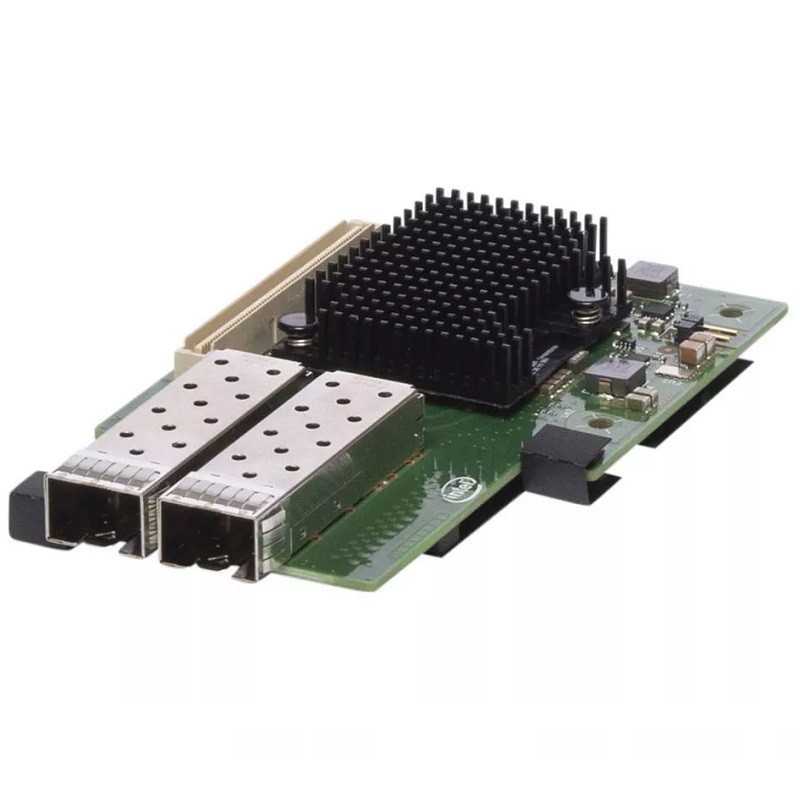


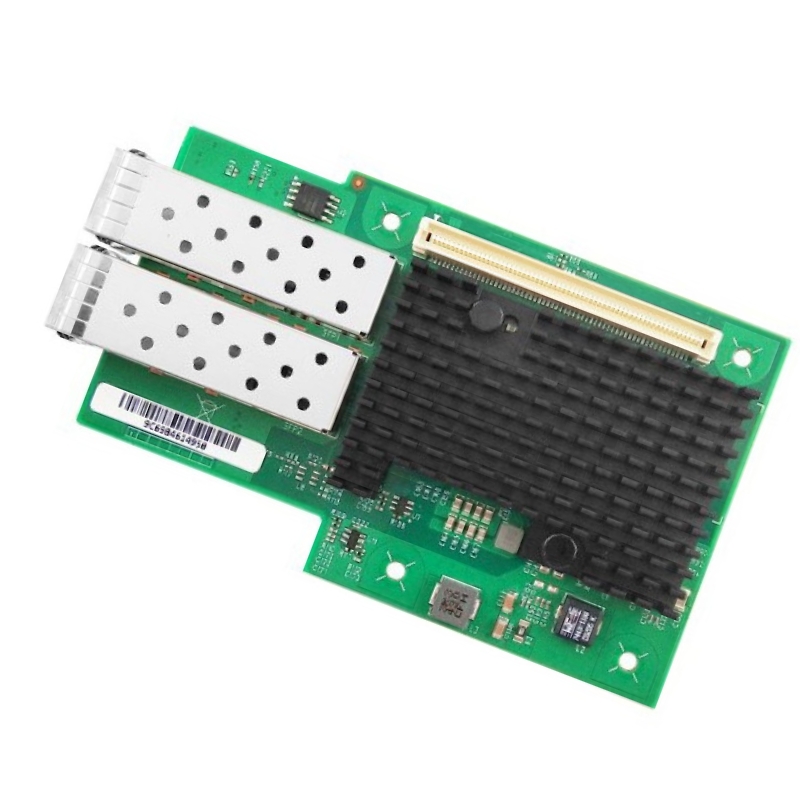
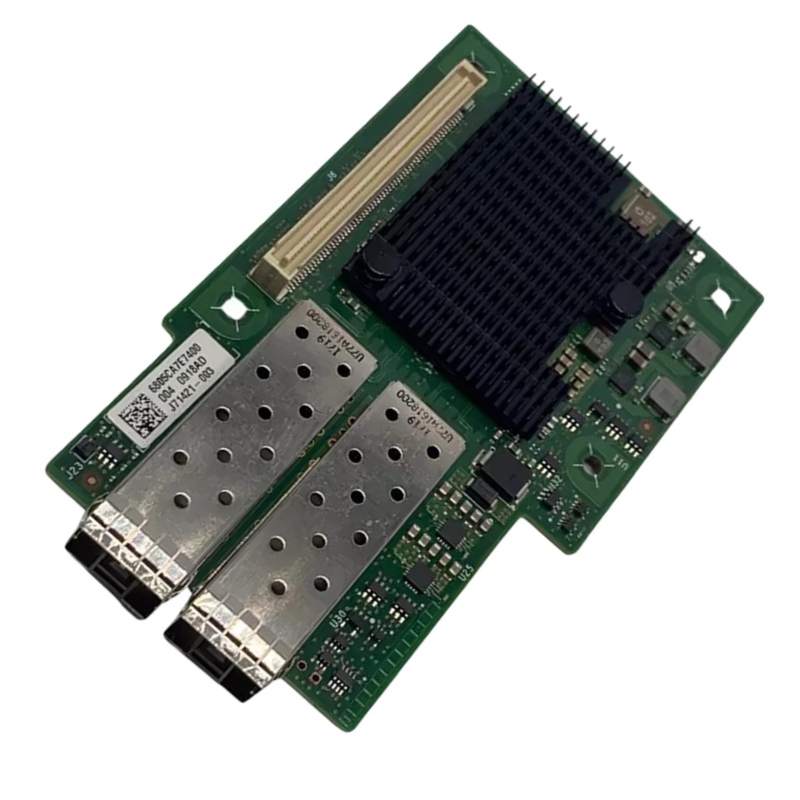
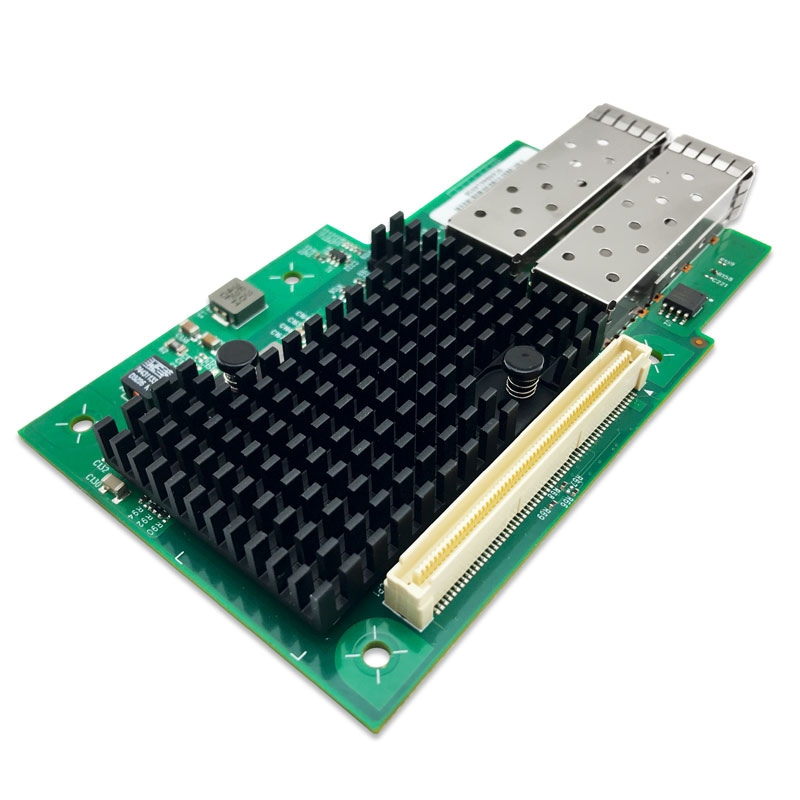
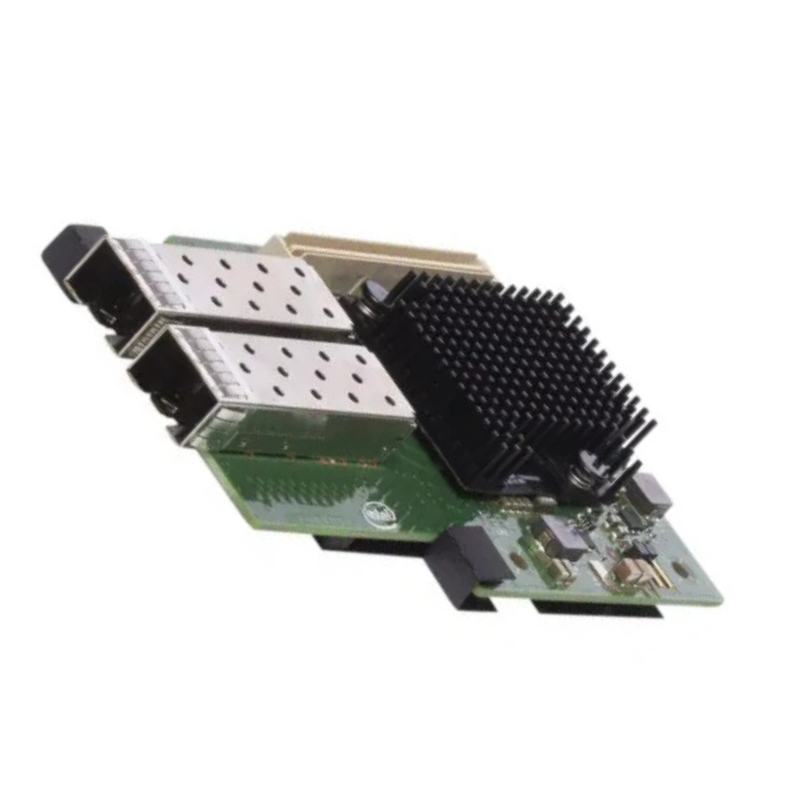
Intel X710DA2OCP1 10 Gigabit Ethernet Dual Port Low Profile SFP+ PCI-Express Network Adapters. Excellent Refurbished with 1 year replacement warranty - Dell Version
Intel X710DA2OCP1 10 Gigabit Ethernet Dual Port Low Profile SFP+ PCI-Express Network Adapter is a compact, enterprise-grade connectivity solution engineered to deliver ultra-fast, reliable, and scalable network performance for modern data centers and high-demand computing environments. Built for efficiency and stability, this advanced network interface card integrates dual 10GbE SFP+ ports and a high-speed PCI Express 3.0 x8 interface, ensuring seamless data transmission, reduced latency, and optimized throughput across virtualized and cloud-based infrastructures. Designed in a low-profile form factor, it fits perfectly into space-constrained server systems while maintaining exceptional bandwidth capacity and protocol versatility for mission-critical applications.
The Intel X710DA2OCP1 dual port network adapter category represents a class of high throughput connectivity solutions designed for modern enterprise, cloud, and data intensive environments. These adapters are engineered to support demanding network workloads where consistent bandwidth, low latency, and scalable architecture are essential for maintaining operational efficiency. Built around advanced Ethernet controller technology, this category focuses on delivering stable 10 Gigabit per second performance per port, enabling aggregated bandwidth that supports virtualization clusters, storage networks, and high density server infrastructures.
Within enterprise network environments, this category is positioned as a backbone component for servers that require reliable external and internal communication channels. It is commonly integrated into systems where workload consolidation, high speed data transfer, and distributed computing architectures are required. The dual port design ensures redundancy and increased throughput capability, allowing network administrators to balance traffic loads across multiple channels while maintaining continuous uptime.
The underlying architecture of this network adapter category is based on advanced Ethernet controller technology optimized for parallel data processing and efficient packet handling. The hardware design incorporates integrated logic for managing packet segmentation, flow control, and error handling at the adapter level, reducing dependency on central processing units. This design approach enables servers to allocate more processing power toward application workloads rather than network management tasks.
The dual port structure is implemented with independent data paths, allowing simultaneous transmission and reception across both interfaces. This separation enhances throughput stability under heavy traffic conditions and reduces bottlenecks in high demand environments. The hardware also supports advanced buffering mechanisms that help smooth traffic bursts, ensuring consistent data flow even during peak usage periods.
Engineered for compatibility with modern server platforms, the adapter integrates seamlessly with PCI Express bus systems, allowing efficient data exchange between the network interface and system memory. The architecture is optimized for low latency operations, ensuring rapid packet forwarding and minimal delay across network paths.
This category is built to support consistent 10 Gigabit Ethernet performance across both ports, enabling high speed data transfer suitable for enterprise workloads. The performance capabilities are designed to handle large volumes of simultaneous connections, making the adapter suitable for virtualization clusters, database replication, and distributed computing systems.
The performance optimization includes advanced offloading capabilities that reduce CPU intervention during packet processing. This allows for higher throughput efficiency and improved system responsiveness under heavy workloads. Network traffic handling is streamlined through hardware acceleration features that manage checksum calculations, segmentation tasks, and interrupt moderation.
In environments where latency sensitivity is critical, such as financial systems or real time analytics platforms, the adapter ensures predictable packet delivery times and stable throughput performance. The dual port configuration further enhances performance by enabling load distribution across multiple network paths, minimizing congestion and improving overall efficiency.
A defining feature of this category is its support for SFP+ transceiver modules, which provide flexible connectivity options for both copper and fiber optic network infrastructures. This modular design allows organizations to tailor network configurations based on distance requirements, bandwidth demands, and environmental conditions.
SFP+ interfaces enable the use of interchangeable transceivers, supporting short range and long range optical connections. This flexibility is particularly valuable in data center environments where network topology may evolve over time. By allowing simple transceiver replacement, the adapter supports scalable infrastructure upgrades without requiring full hardware replacement.
Fiber optic compatibility enhances signal integrity over long distances, reducing electromagnetic interference and ensuring stable transmission across complex network layouts. Copper based configurations provide cost effective solutions for shorter connections within server racks or adjacent equipment clusters.
The PCI Express interface is a critical component of this adapter category, providing high bandwidth communication between the network controller and the host system. Designed for modern server architectures, PCI Express ensures rapid data transfer rates that align with 10 Gigabit Ethernet capabilities.
This integration allows the adapter to operate efficiently within multi lane PCI Express slots, maximizing throughput while maintaining compatibility with a wide range of server motherboards. The architecture supports scalable lane configurations, ensuring that network performance is not constrained by bus limitations.
System compatibility extends across enterprise grade server platforms, enabling deployment in virtualization hosts, storage servers, and cloud computing nodes. The adapter is designed to function within both dedicated and shared PCI Express environments, ensuring adaptability across different hardware configurations.
The low profile form factor of this adapter category is optimized for dense server environments where internal space is limited. This compact design allows installation in rack mounted servers and blade systems without interfering with adjacent components or airflow channels.
The reduced physical footprint contributes to improved system organization, enabling multiple network adapters to be installed within a single server chassis. This is particularly beneficial in high density computing environments where maximizing hardware utilization is essential.
Despite its compact size, the adapter maintains full performance capabilities, ensuring that space efficiency does not compromise network throughput or reliability. The design also supports improved thermal distribution, helping maintain stable operating temperatures under continuous load conditions.
This category is widely used in enterprise data centers where high speed connectivity is essential for application delivery, virtualization, and storage networking. The dual port configuration supports redundancy and load balancing strategies that enhance network resilience and operational continuity.
In large scale computing environments, these adapters are deployed in server clusters that support cloud infrastructure, enabling efficient distribution of workloads across multiple nodes. The high bandwidth capability ensures that virtual machines and containers can communicate effectively without network congestion.
The adapter is also suitable for database servers that require rapid synchronization between primary and secondary nodes. In such environments, consistent throughput and low latency are critical for maintaining data integrity and system performance.
Virtualized environments benefit significantly from the advanced capabilities of this network adapter category. The ability to handle multiple virtual network interfaces simultaneously allows for efficient resource allocation across virtual machines.
Hardware level offloading reduces overhead on hypervisors, enabling more efficient virtualization performance. This is particularly important in cloud environments where resource optimization directly impacts scalability and operational cost efficiency.
The dual port architecture also supports network segmentation within virtual environments, allowing administrators to isolate traffic streams for security, performance optimization, and workload distribution. This makes the adapter suitable for multi tenant cloud architectures where traffic separation is essential.
One of the key advantages of this category is its ability to offload processing tasks from the central processor to dedicated hardware components within the adapter. This includes tasks such as packet segmentation, checksum validation, and interrupt moderation.
By reducing CPU involvement in network processing, overall system efficiency is significantly improved. Servers are able to allocate more computational resources to application workloads, resulting in better performance across enterprise applications.
This offloading capability also contributes to lower latency and improved throughput consistency, particularly under heavy network load conditions. It ensures that system performance remains stable even when handling large volumes of concurrent network traffic.
Reliability is a core design principle of this network adapter category. The dual port configuration inherently supports redundancy, allowing one port to take over traffic in the event of a failure or maintenance requirement on the other.
This redundancy capability is essential in mission critical environments where downtime is not acceptable. It ensures continuous network availability and minimizes disruption during hardware or network failures.
The adapter is also designed with error correction and fault detection mechanisms that help maintain data integrity during transmission. These features contribute to stable long term operation in demanding enterprise environments.
Security considerations are integrated into the design of this adapter category through support for traffic segmentation and isolation. This allows network administrators to separate sensitive data streams from general traffic, reducing exposure risks within shared environments.
Hardware assisted processing helps reduce vulnerability to certain types of network based attacks by ensuring controlled packet handling and structured data flow management. These capabilities are particularly important in environments that handle sensitive financial, healthcare, or enterprise data.
The adapter also supports secure virtualization networking models, enabling isolated virtual network interfaces for different workloads within the same physical server infrastructure.
In converged infrastructure environments, this category plays a key role in integrating storage and data networking over a unified high speed network. The 10 Gigabit bandwidth capacity ensures that storage replication, backup operations, and data synchronization processes are performed efficiently.
The adapter is commonly used in storage area network configurations where low latency and high throughput are required for consistent performance. It supports large data transfers without introducing bottlenecks that could affect storage system responsiveness.
Converged infrastructure deployments benefit from the adapter’s ability to handle mixed traffic types, including storage, application, and management data streams within a single hardware interface.


 Contact Us
 Information
 Catalog
 Solid State Drives (SSD)
 Network Switches
 Hard Disk Drives
 HBA & Controllers
 PC & Servers
 PC & Server Memory
 CPU & Processors
 Network Routers
 Power Supplies
 Tape Drives & Libraries
 Network Devices
 Computer & Network Cables