
(7% discount is applied at checkout)
Cart is empty
Your go-to destination for cutting-edge server products
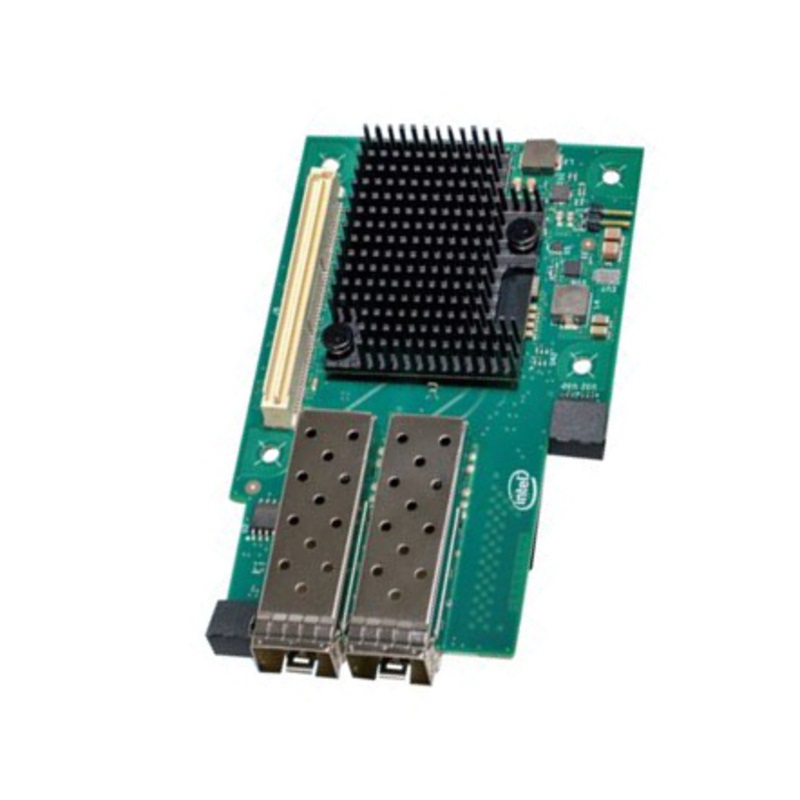
Intel X710DA2OCPV3 Dual Port Low Profile SFP+ PCI-Express 10 Gigabit Ethernet Optical Fiber Network Adapters. Excellent Refurbished with 1 Year Replacement Warranty - Dell Version
Intel X710DA2OCPV3 Dual Port Low Profile SFP+ PCI-Express 10 Gigabit Ethernet Optical Fiber Network Adapter is a high-performance networking solution designed to deliver stable, fast, and efficient data transmission across modern enterprise and data center environments. Built on advanced Intel Ethernet architecture, this adapter supports dual-port connectivity and fiber-based communication, ensuring reduced latency, improved throughput, and enhanced reliability for demanding workloads such as virtualization, cloud computing, storage networking, and high-speed server interconnects.
The Intel X710DA2OCPV3 Dual Port Low Profile SFP+ PCI Express 10 Gigabit Ethernet Optical Fiber Network Adapter category represents a high performance class of server networking solutions engineered for modern data centers, enterprise computing environments, virtualization platforms, and high throughput network infrastructures. This category is centered on advanced optical fiber connectivity using SFP+ interfaces, enabling stable, low latency, and high bandwidth communication across server clusters, storage networks, and cloud orchestration systems. Designed for PCI Express architecture, these adapters integrate seamlessly into compatible server motherboards, offering scalable throughput and flexible deployment options in both new and legacy infrastructure environments.
The architecture behind this category is built around efficient packet processing and optimized hardware offloading capabilities. The Intel X710 series chipset foundation supports intelligent traffic management, reducing CPU overhead and enabling servers to dedicate more resources to application workloads rather than network processing tasks. The dual port configuration enhances redundancy and load distribution, allowing simultaneous data transmission paths that improve reliability and throughput efficiency in mission critical environments.
The low profile form factor ensures compatibility with compact server chassis, blade systems, and high density rack deployments. This physical design consideration is particularly important for organizations operating large scale data centers where space optimization and airflow efficiency are critical parameters. The PCI Express interface ensures high speed communication between the network adapter and system bus, minimizing latency and maximizing data transfer rates across connected systems.
A defining characteristic of this category is the use of SFP+ optical fiber interfaces. These interfaces support 10 Gigabit Ethernet transmission over fiber optic cabling, delivering superior signal integrity over long distances compared to copper-based solutions. Fiber connectivity reduces electromagnetic interference and ensures stable communication in electrically noisy environments such as industrial data centers and high density server rooms.
The SFP+ slots provide flexibility in transceiver selection, enabling administrators to choose appropriate optical modules based on distance requirements, fiber type, and network topology. This modularity enhances long term scalability and allows infrastructure upgrades without replacing the entire adapter hardware. The adaptability of fiber-based networking is particularly valuable in environments requiring multi building connectivity or distributed data center architecture.
The dual port design of the Intel X710DA2OCPV3 category enables simultaneous operation of two independent network channels. This architecture supports advanced load balancing techniques, failover protection, and traffic segmentation. In enterprise environments where uptime is critical, dual port redundancy ensures that network connectivity remains operational even if one link experiences degradation or failure.
Network administrators can configure these ports for various operational modes including aggregated bandwidth operation or isolated traffic channels dedicated to specific workloads such as storage replication, virtualization traffic, or application delivery networks. This flexibility enhances infrastructure resilience while improving overall system efficiency.
The PCI Express interface used in this category provides a high throughput communication pathway between the adapter and the host system. Designed for compatibility with modern server architectures, the interface supports multiple lane configurations that ensure sufficient bandwidth for 10 Gigabit Ethernet operations. This direct connection reduces bottlenecks and enables consistent high speed performance even under heavy network load conditions.
System compatibility extends across a wide range of enterprise server platforms, including rack mounted servers, blade servers, and virtualization optimized hardware. The adapter is engineered for seamless integration with major server operating systems and network stacks, ensuring broad deployment capability across heterogeneous IT environments.
This category incorporates advanced hardware offloading capabilities designed to improve network efficiency and reduce CPU utilization. Tasks such as checksum calculation, segmentation, and packet filtering can be processed directly by the network controller. This allows server CPUs to focus on application processing rather than repetitive networking tasks, resulting in improved overall system performance.
The adapter also supports interrupt moderation and intelligent queue management systems that help regulate network traffic flow. These features are particularly beneficial in high traffic environments where packet storms or burst traffic patterns can otherwise degrade system responsiveness.
In enterprise data centers, this category is commonly deployed to support virtualization clusters, storage area networks, and high availability application infrastructures. The high bandwidth capacity of 10 Gigabit Ethernet ensures that virtual machine migration, distributed computing tasks, and real time database replication can occur without network congestion.
Cloud computing environments also benefit significantly from this adapter category, particularly in multi tenant infrastructures where network segmentation and traffic isolation are required. The dual port configuration enables administrators to separate management traffic from production workloads, enhancing security and operational clarity.
Virtualization platforms rely heavily on efficient network adapters capable of handling multiple virtual network interfaces. The Intel X710DA2OCPV3 category supports virtual machine networking through advanced virtualization technologies that allow direct assignment of network resources to virtual instances. This reduces latency and improves throughput for virtual workloads.
In cloud infrastructure environments, the adapter contributes to scalable networking solutions that can handle dynamic workload distribution. Whether supporting private cloud, hybrid cloud, or public cloud architectures, the hardware ensures stable connectivity and consistent performance under variable load conditions.
Storage systems such as network attached storage and storage area networks require high bandwidth and low latency communication channels. This category is well suited for such environments due to its 10 Gigabit Ethernet capability and optical fiber support. Large data transfers, backup operations, and replication processes benefit from the consistent throughput provided by this adapter class.
The use of fiber optics enhances signal stability during long distance data transmission, making it suitable for geographically distributed storage systems. This ensures data consistency and reliability across multiple storage nodes connected through high speed networking infrastructure.
The Intel X710DA2OCPV3 category is designed with broad driver support across major operating systems used in enterprise environments. Compatibility extends to various Linux distributions, Windows Server editions, and virtualization hypervisors. This ensures that organizations can integrate the adapter into existing infrastructure without extensive reconfiguration or compatibility issues.
Driver optimization plays a key role in ensuring stable performance. Regular updates enhance security, improve packet processing efficiency, and expand compatibility with evolving network protocols. This long term support structure is essential for enterprise deployments requiring sustained reliability.
Security is an integral aspect of modern network adapter design. This category supports hardware level features that help protect data integrity during transmission. These features reduce vulnerability to packet manipulation and ensure consistent delivery of accurate network data across connected systems.
Isolation of network traffic through dual port segmentation also enhances security by enabling separation of sensitive workloads from general traffic streams. This architectural separation reduces exposure risks and improves compliance with enterprise security policies.
In high density computing environments, space efficiency and scalability are critical. The low profile design of this adapter allows installation in compact server chassis without compromising airflow or accessibility. This makes it suitable for blade server systems and densely populated rack environments where hardware optimization is essential.
Rack optimization benefits further from the ability to deploy multiple adapters across clustered systems, enabling large scale network expansion without physical infrastructure redesign. This supports evolving enterprise requirements and scalable growth strategies.
The Intel X710DA2OCPV3 category includes advanced packet processing capabilities that enhance traffic management efficiency. These capabilities enable intelligent handling of network congestion, prioritization of critical data flows, and reduction of packet loss under heavy load conditions.
Traffic shaping and flow control mechanisms ensure that bandwidth is distributed effectively across multiple applications. This is particularly important in environments where multiple services share the same physical infrastructure and require consistent performance guarantees.
Scalability is a core advantage of this category, enabling organizations to expand network capacity as operational demands increase. The modular nature of SFP+ interfaces allows for easy upgrades, while PCI Express architecture ensures that system-level expansion remains efficient and cost effective.
As organizations transition toward software defined networking and automated infrastructure management, adapters in this category provide the foundational hardware required for dynamic and scalable network architectures. Their flexibility supports evolving workloads and increasing data demands.
Reliability is a fundamental requirement in enterprise networking environments. This category is engineered for continuous operation under heavy workloads, ensuring consistent performance across extended deployment cycles. The combination of hardware acceleration, robust thermal design, and stable firmware contributes to long term operational stability.
Redundant configurations enabled by dual ports further enhance system reliability, ensuring uninterrupted network connectivity even during maintenance or partial system failures. This makes the adapter suitable for mission critical applications where downtime is not acceptable.
The Intel X710DA2OCPV3 category integrates smoothly into modern networking ecosystems that include cloud orchestration platforms, virtualization clusters, and hybrid infrastructure systems. Its compatibility with standardized networking protocols ensures interoperability across diverse hardware and software environments.
This broad compatibility reduces deployment complexity and allows organizations to unify network infrastructure across multiple operational domains. The adapter serves as a foundational component in building resilient and high performance network architectures.


 Contact Us
 Information
 Catalog
 Solid State Drives (SSD)
 Network Switches
 Hard Disk Drives
 HBA & Controllers
 PC & Servers
 PC & Server Memory
 CPU & Processors
 Network Routers
 Power Supplies
 Tape Drives & Libraries
 Network Devices
 Computer & Network Cables