(7% discount is applied at checkout)
Cart is empty
Your go-to destination for cutting-edge server products
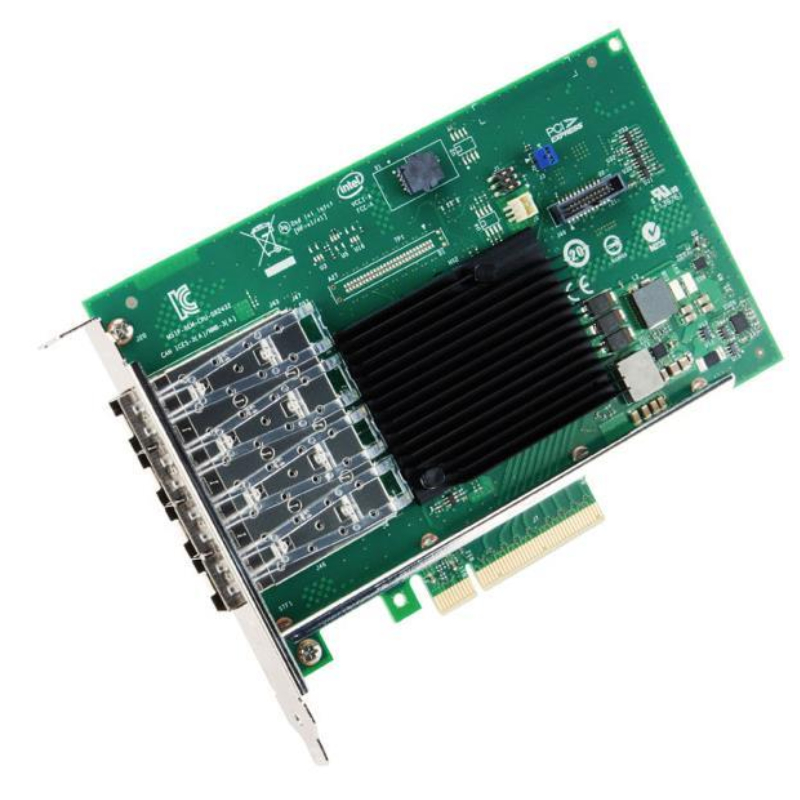


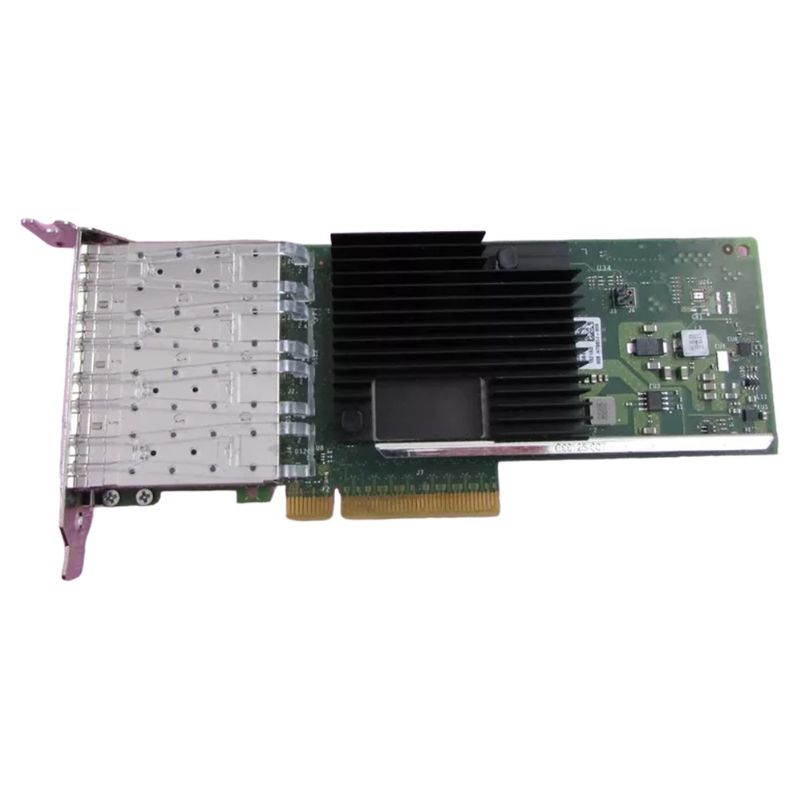
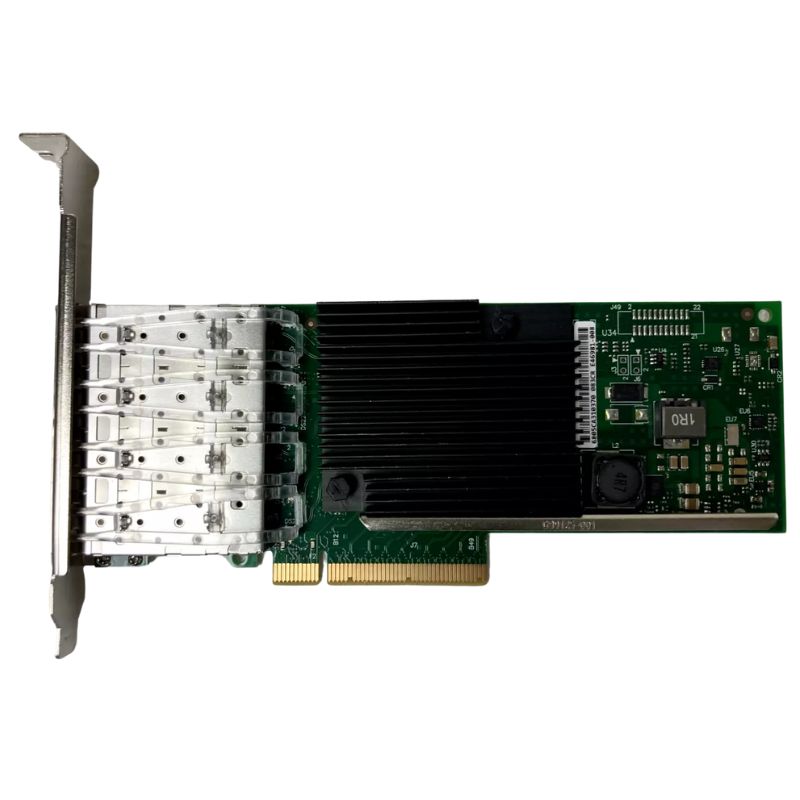
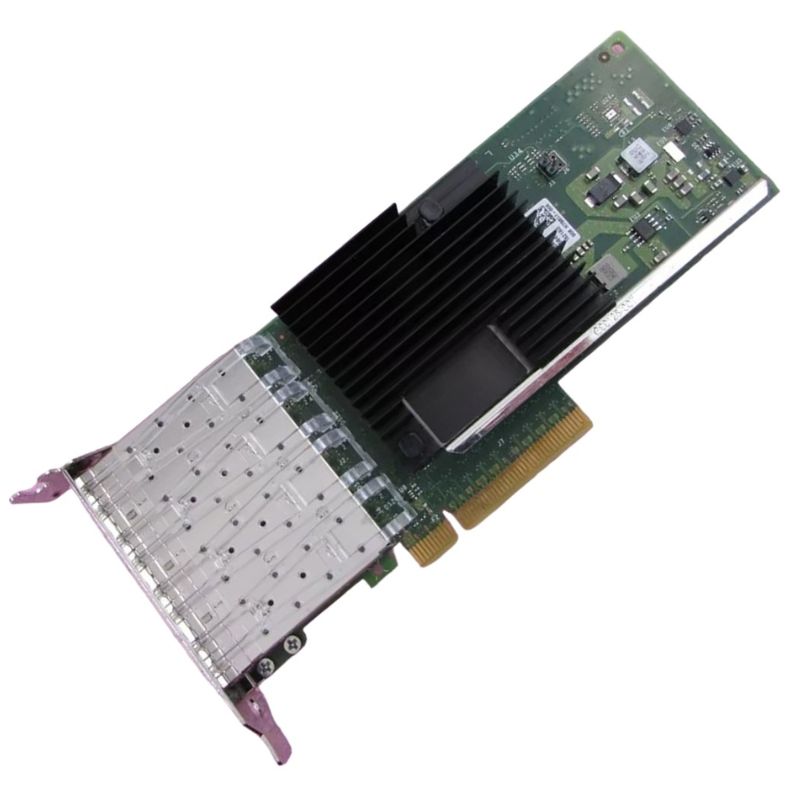
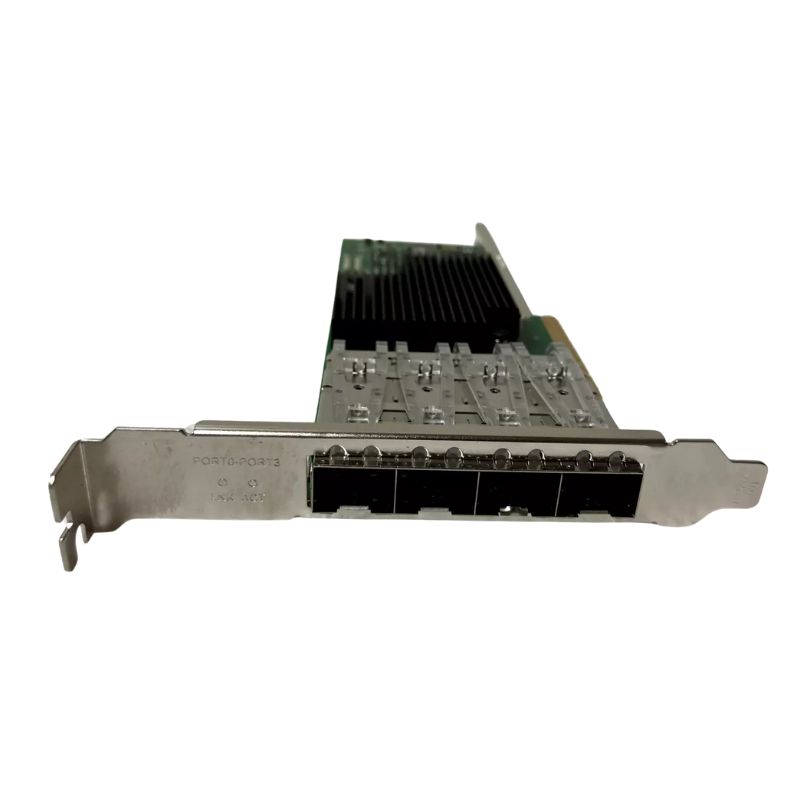
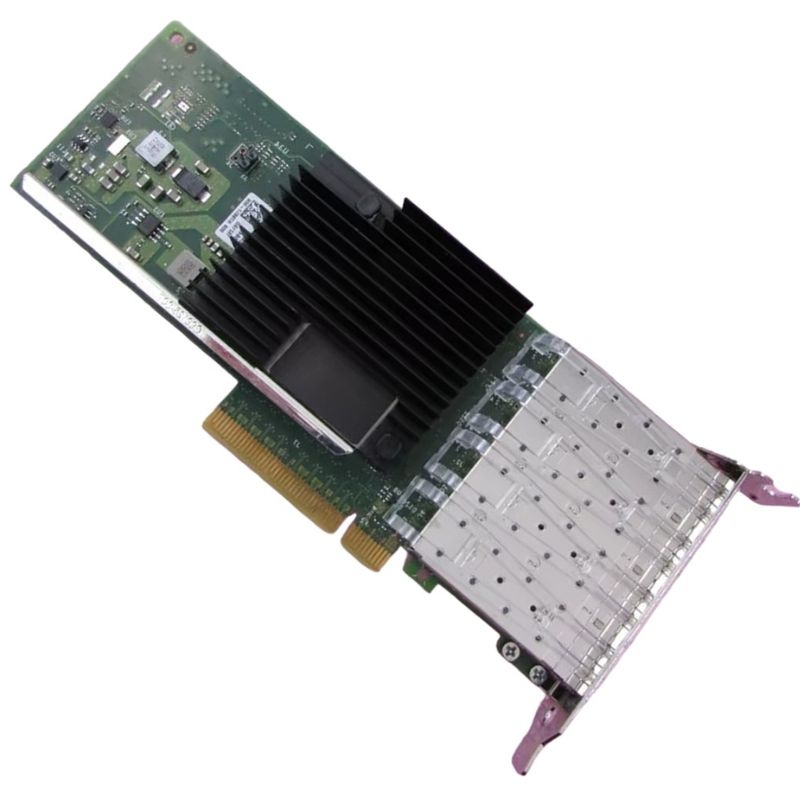
Intel X710DA4FHG1P5 4-Port SFP+ 10Gbps Ethernet PCI Express Converged Adapter. Excellent Refurbished with 1 year replacement warranty
Intel X710DA4FHG1P5 is a high-performance four-port 10 Gigabit SFP+ Ethernet converged network adapter designed for modern data-driven infrastructures. Built for scalable enterprise and cloud environments, this PCI Express-based interface card delivers reliable wired connectivity with enhanced throughput efficiency, supporting virtualization, storage networking, and advanced traffic management in a single integrated solution.
The Intel X710DA4FHG1P5 4-Port SFP+ 10Gbps Ethernet PCI Express Converged Adapter represents a high-density networking interface designed for modern enterprise infrastructures that require consistent throughput, low latency data transfer, and flexible integration within virtualized environments. This adapter is positioned within a broader category of converged network interface solutions that unify traditional Ethernet communication with advanced data center requirements such as storage traffic handling, virtualization support, and high availability workloads. Built around Intel’s established Ethernet controller architecture, this device supports multiple SFP+ optical connections that allow scalable deployment across server clusters, storage arrays, and cloud computing nodes.
The internal architecture of this converged adapter is engineered to handle parallel data streams efficiently across four independent SFP+ ports. Each port is capable of sustaining up to 10 gigabits per second, enabling a cumulative potential throughput that meets the demands of high-performance computing environments. The PCI Express interface ensures direct communication with the host system's motherboard, reducing overhead and improving packet processing efficiency.
The design integrates advanced offloading capabilities that reduce CPU utilization by delegating networking tasks such as checksum calculation, segmentation, and packet classification directly to the adapter hardware. This architecture allows servers to allocate more processing power to application-level workloads instead of network management operations.
The PCI Express interface used in this converged adapter ensures high-speed communication between the network hardware and system memory. This direct pathway significantly reduces latency and increases bandwidth efficiency, making it suitable for environments where rapid data exchange is critical. The adapter is typically installed in server-class motherboards with multiple PCI Express lanes, allowing full utilization of available bandwidth.
Compatibility spans a wide range of enterprise server platforms designed for virtualization, cloud hosting, and database management. The adapter is optimized for multi-queue processing, enabling balanced workload distribution across CPU cores and improving overall system responsiveness under heavy network traffic conditions.
The four SFP+ ports provide flexible connectivity options using both fiber optic transceivers and direct attach copper cables. This flexibility allows network architects to design infrastructures that balance cost efficiency with long-distance transmission requirements. Optical transceivers support extended reach connections suitable for inter-rack and inter-building communication, while copper-based DAC solutions are ideal for short-range, high-speed server interconnects within data centers.
Each port operates independently, allowing simultaneous communication channels that improve redundancy and load balancing. This multi-port configuration supports link aggregation techniques that increase bandwidth availability and provide failover capabilities in case of link disruption.
The 10Gbps Ethernet capability of this adapter ensures that large data transfers occur with minimal delay, making it ideal for environments handling big data analytics, virtualization clusters, and high-frequency transaction systems. The consistent throughput reduces packet loss and ensures stable performance even under peak loads.
The adapter is designed to maintain packet integrity and reduce jitter, which is essential for latency-sensitive applications such as real-time financial systems, multimedia streaming infrastructures, and distributed computing frameworks.
As a converged network interface device, this adapter supports multiple traffic types over a single infrastructure, including traditional Ethernet traffic and storage-related communication protocols. This convergence reduces hardware complexity and simplifies data center design by eliminating the need for separate network and storage adapters.
The convergence capability improves operational efficiency by allowing unified management of network and storage traffic. This integration is particularly beneficial in virtualized environments where multiple workloads share the same physical hardware resources.
The adapter is engineered with virtualization support features that enable efficient operation in hypervisor-based environments. It supports hardware-assisted virtualization technologies that allow multiple virtual machines to share a single physical network interface without performance degradation.
Virtual switching offload capabilities reduce the burden on host systems by handling packet routing at the hardware level. This ensures that virtual machines maintain consistent network performance even when running in densely populated server environments.
In modern data center environments, this adapter is commonly deployed in compute nodes, storage servers, and network aggregation layers. Its ability to handle multiple high-speed connections makes it suitable for large-scale server clusters where efficient data exchange between nodes is essential.
The adapter also supports redundant network configurations, ensuring continuous operation in mission-critical environments. By distributing network load across multiple ports, system architects can design resilient infrastructures that maintain uptime even during hardware failures or maintenance cycles.
Cloud computing environments require flexible and scalable networking solutions capable of handling dynamic workloads. This adapter supports such requirements by providing high-bandwidth connectivity and low-latency data transfer capabilities that are essential for cloud orchestration platforms.
The hardware acceleration features contribute to efficient resource utilization in cloud environments, allowing service providers to maximize virtual machine density without compromising network performance. This makes it suitable for private cloud, hybrid cloud, and large-scale public cloud infrastructures.
The converged design of the adapter supports efficient storage networking operations, enabling communication with storage arrays over high-speed Ethernet links. This reduces the need for dedicated storage networking hardware and simplifies infrastructure design.
High-throughput capabilities ensure that large volumes of data can be transferred between compute nodes and storage systems without bottlenecks. This is particularly important in environments running database clusters, backup systems, and distributed file systems.
Performance optimization is achieved through advanced hardware offloading mechanisms that reduce CPU overhead. Functions such as segmentation offload, interrupt moderation, and packet filtering are handled directly by the adapter.
These optimizations improve system efficiency by reducing the number of CPU cycles required for network processing. As a result, application performance is enhanced, particularly in environments with heavy network traffic loads.
Scalability is a fundamental aspect of this adapter’s design. With four independent SFP+ interfaces, network administrators can expand bandwidth capacity without replacing existing infrastructure. This modular approach supports incremental upgrades in growing data center environments.
Link aggregation and teaming features allow multiple ports to function as a single logical connection, further increasing available bandwidth and providing redundancy for critical systems.
Reliability is enhanced through support for redundant network paths and failover mechanisms. In the event of a link failure, traffic is automatically rerouted through alternate connections, minimizing downtime and maintaining service continuity.
These reliability features make the adapter suitable for mission-critical enterprise applications where uninterrupted network access is essential.
The architecture of this adapter is designed to support evolving networking demands, ensuring compatibility with future high-speed infrastructure upgrades. Its scalable design allows integration into next-generation data center environments.
As networking technologies continue to evolve, the adapter’s flexible architecture ensures long-term usability and adaptability within modern IT ecosystems.


 Contact Us
 Information
 Catalog
 Solid State Drives (SSD)
 Network Switches
 Hard Disk Drives
 HBA & Controllers
 PC & Servers
 PC & Server Memory
 CPU & Processors
 Network Routers
 Power Supplies
 Tape Drives & Libraries
 Network Devices
 Computer & Network Cables