(7% discount is applied at checkout)
Cart is empty
Your go-to destination for cutting-edge server products


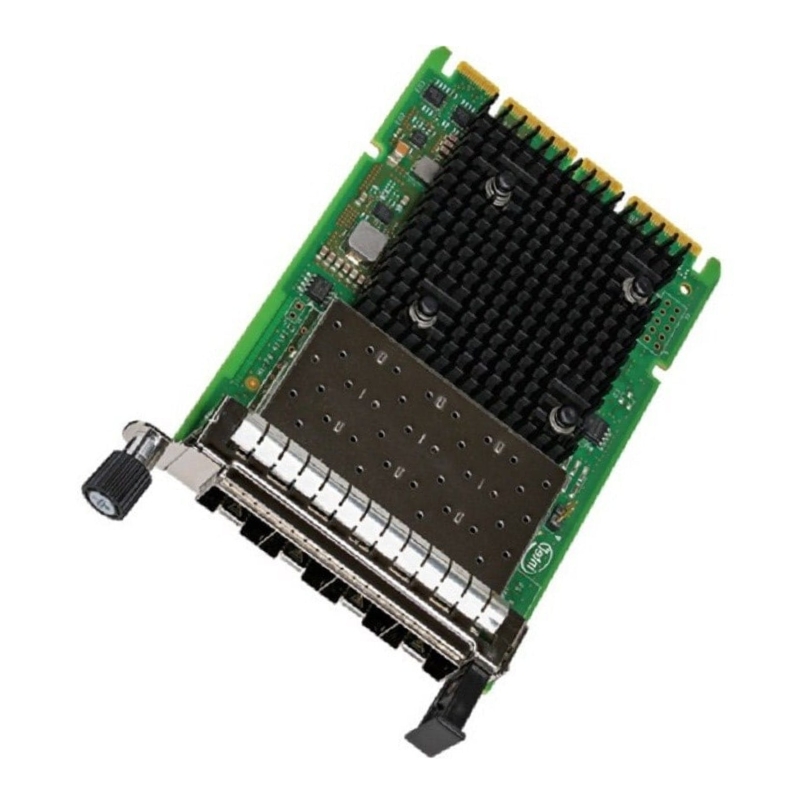
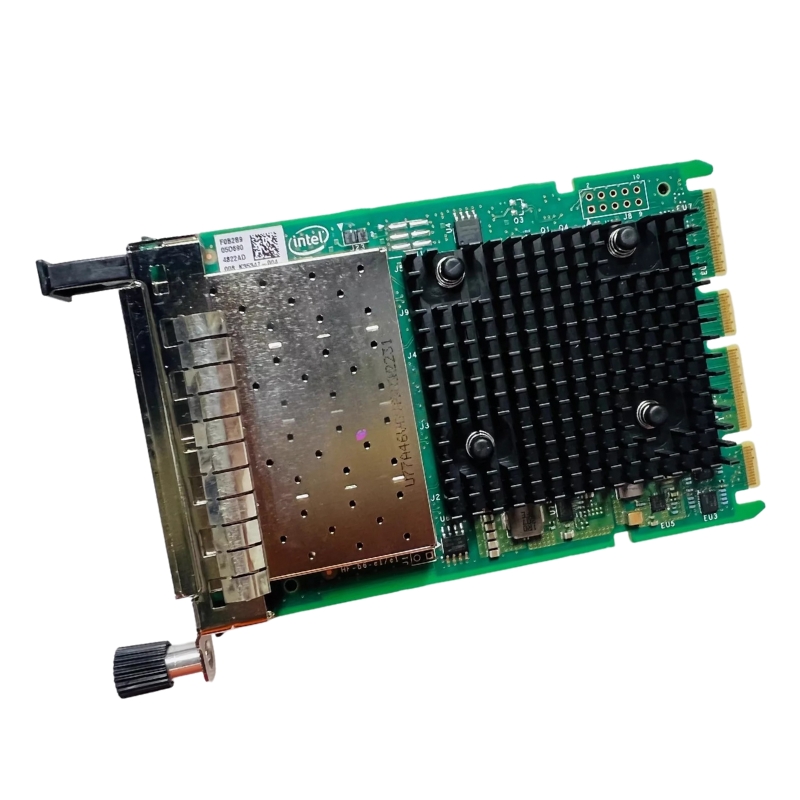
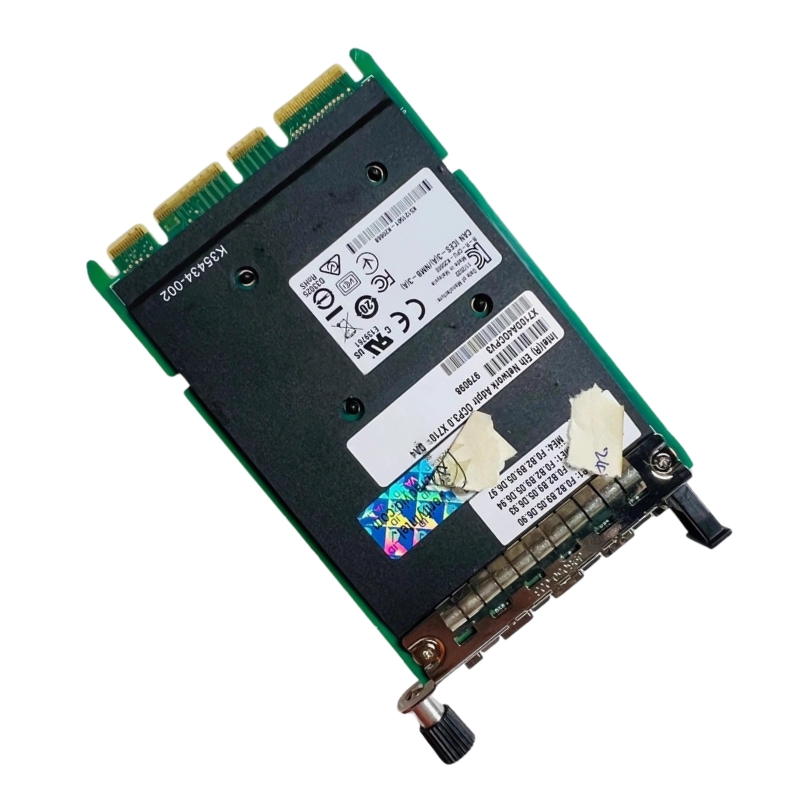
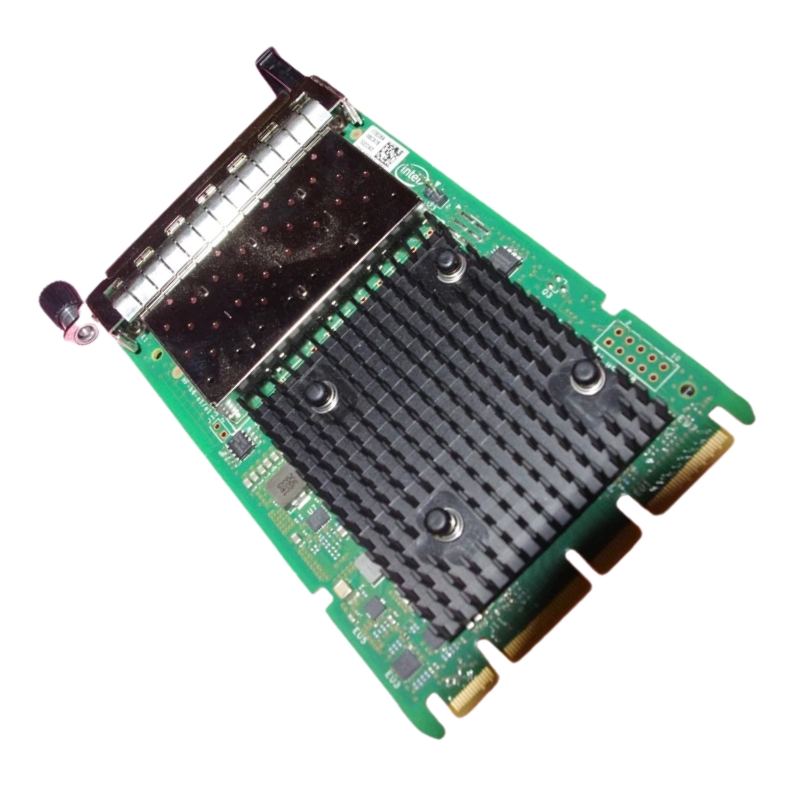
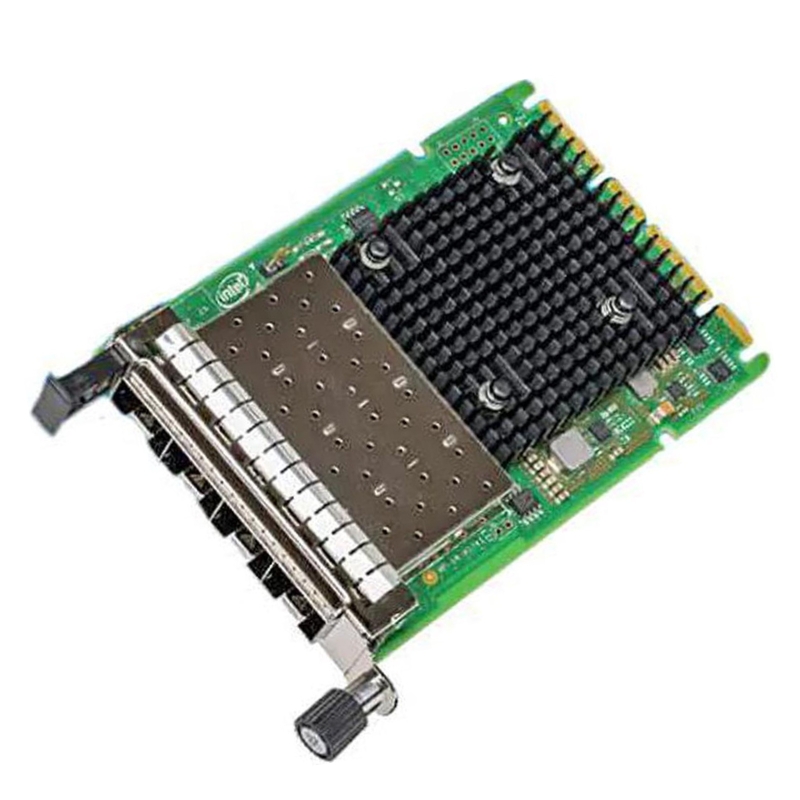
Intel X710DA4OCPV3 10 Gigabit Ethernet Quad Port SFP+ PCI-Express OCP Network Adapters. New Sealed in Box (NIB) with 3 Years Warranty
Intel X710DA4OCPV3 10 Gigabit Ethernet Quad Port SFP+ PCI-Express Open Compute Project (OCP) 3.0 network adapter is engineered to deliver advanced multi-port data throughput for modern data center environments. Designed to support scalable cloud infrastructure and virtualization workloads, this quad-port SFP+ interface card provides reliable, high-speed network communication with optimized latency and enhanced packet processing efficiency. Built on Intel’s proven Ethernet architecture, it ensures stable connectivity, improved workload balancing, and efficient handling of demanding enterprise traffic across virtualized and physical systems.
The Intel X710DA4OCPV3 10 Gigabit Ethernet Quad Port SFP+ PCI Express OCP network adapter category represents a high performance class of server networking hardware designed for modern data intensive infrastructures. This category focuses on advanced Ethernet connectivity solutions that support dense virtualized environments, cloud scale deployments, enterprise data centers, and high throughput computing platforms. The adapter is engineered to deliver consistent low latency packet processing while maintaining strong throughput across multiple simultaneous network streams. It is widely utilized in systems requiring reliable multi port fiber connectivity, particularly where scalability and deterministic network behavior are essential for mission critical workloads. The quad port configuration provides flexibility in network design, enabling segmentation of traffic flows, redundancy configurations, and load distribution strategies that improve operational continuity in complex IT ecosystems.
Within this category, emphasis is placed on modularity and interoperability with standardized SFP+ optical transceivers, allowing administrators to tailor connectivity based on distance, bandwidth requirements, and infrastructure topology. The OCP PCI Express form factor further enhances adaptability in compatible server platforms by offering a streamlined installation mechanism and optimized airflow characteristics compared to traditional network interface card designs. This combination of design efficiency and performance orientation positions the category as a core component in scalable enterprise networking architectures.
The architecture of the Intel X710DA4OCPV3 series is built around a multi queue, multi core packet processing engine that distributes network workloads across available CPU resources efficiently. This design reduces bottlenecks that typically occur in single queue networking systems by enabling parallel processing of incoming and outgoing traffic streams. The adapter integrates advanced silicon level optimizations that improve packet classification, checksum offloading, and segmentation tasks, thereby reducing host CPU overhead and improving overall system responsiveness.
A fundamental design principle of this category is deterministic performance under variable load conditions. The hardware is structured to maintain stable throughput even during peak network utilization scenarios. This is particularly important in environments where workload fluctuations are frequent, such as cloud hosting infrastructures or large scale virtualization clusters. The architecture also emphasizes compatibility with modern virtualization frameworks, ensuring seamless integration with hypervisors and container orchestration platforms.
Another key aspect of the design is energy efficiency optimization. By leveraging advanced process technology and intelligent power management techniques, the adapter dynamically adjusts power consumption based on workload intensity. This ensures reduced operational costs in large deployments without compromising performance consistency.
The OCP PCI Express form factor used in this category represents a standardized approach to server hardware design that improves serviceability and system integration. The Open Compute Project architecture promotes modular server design, allowing network adapters to be installed, replaced, or upgraded with minimal system disruption. This is particularly valuable in large data center environments where downtime must be minimized and hardware lifecycle management is critical.
The PCI Express interface provides high bandwidth communication between the network adapter and the host system, ensuring that data transfer rates are not constrained by bus limitations. This allows the quad port SFP+ interface to operate at full capacity, delivering aggregated bandwidth suitable for demanding network workloads. The mechanical design of the OCP slot also contributes to improved thermal airflow, which is essential for maintaining stable operation in high density server racks.
This form factor also supports standardized interoperability across multiple server vendors, making it easier for infrastructure architects to deploy consistent networking configurations across heterogeneous environments. The result is improved scalability and reduced complexity in large scale system deployments.
The quad port SFP+ configuration is a defining feature of this category, enabling simultaneous operation of four independent 10 Gigabit Ethernet channels. This multi port design provides significant flexibility in network architecture planning, allowing administrators to segment traffic into distinct functional channels such as storage communication, virtual machine traffic, management networks, and external data exchange pathways.
Each SFP+ interface supports a variety of optical transceivers and direct attach copper solutions, offering adaptability for both short range and long range connectivity requirements. This flexibility allows the same adapter to be deployed across diverse network topologies without requiring hardware replacement. The ability to mix and match transceiver types further enhances infrastructure adaptability and reduces procurement complexity.
The quad port structure also improves redundancy capabilities. In mission critical systems, multiple ports can be configured in failover mode to ensure continuous network availability in the event of a link failure. Alternatively, link aggregation techniques can be employed to combine multiple ports into a single logical channel, increasing throughput and improving load balancing efficiency.
Performance is a central focus of this category, with the adapter engineered to support high packet per second processing rates and low latency communication. The hardware offload capabilities significantly reduce CPU involvement in routine networking tasks, allowing system processors to focus on application level workloads. This results in improved overall system efficiency and better utilization of compute resources.
The adapter is optimized for handling mixed traffic patterns, including small packet bursts and sustained high bandwidth streams. This is particularly important in environments such as virtualization clusters and cloud infrastructure where network traffic is highly variable and unpredictable. The intelligent queue management system ensures fair distribution of processing resources across active network flows, preventing congestion and maintaining stable throughput.
Advanced buffering mechanisms within the adapter help absorb traffic spikes, reducing packet loss and ensuring smooth data transmission even under heavy load conditions. These performance characteristics make the category suitable for environments where network reliability and consistency are essential operational requirements.
In data center environments, this category of network adapter plays a critical role in enabling high speed connectivity between compute nodes, storage systems, and external network gateways. The quad port design allows for separation of traffic types, which improves network efficiency and simplifies traffic management strategies. Storage traffic can be isolated from application traffic, reducing congestion and improving performance predictability.
The adapter is commonly deployed in server clusters that require high availability and fault tolerance. Its ability to support redundant network paths ensures that services remain operational even during partial network failures. This is particularly important for enterprise applications that require continuous uptime and minimal service interruption.
In large scale virtualization environments, the adapter supports high density virtual machine deployments by providing sufficient network bandwidth for multiple simultaneous workloads. This ensures that virtualized applications maintain consistent performance even when hosted on shared physical infrastructure.
Virtualization platforms benefit significantly from the multi queue and hardware offload capabilities integrated into this category. The adapter supports efficient distribution of virtual machine network traffic across multiple physical cores, reducing bottlenecks and improving responsiveness. Features such as virtual function support enable direct assignment of network resources to virtual machines, enhancing isolation and performance.
Cloud computing environments rely heavily on scalable and predictable network performance. This adapter category provides the necessary foundation for building elastic infrastructure where workloads can be dynamically allocated across physical servers. The ability to maintain consistent network performance under variable load conditions is essential for maintaining service quality in cloud based applications.
Containerized environments also benefit from the low latency and high throughput characteristics of this adapter. Microservices architectures generate large volumes of inter service communication, and the efficient packet processing capabilities of the hardware help maintain system responsiveness and reduce communication overhead.
The adapter incorporates a wide range of network offloading features designed to reduce CPU utilization and improve system efficiency. These include checksum offloading, segmentation offloading, and packet classification acceleration. By transferring these tasks from software to hardware, the system is able to process higher volumes of network traffic without increasing processor load.
Offloading capabilities also extend to virtualization specific functions, allowing virtual machines to achieve near native network performance. This is particularly important in environments where multiple virtual instances share the same physical hardware resources. The reduction in software processing overhead leads to improved scalability and better resource utilization across the system.
Advanced filtering and steering mechanisms allow network traffic to be directed efficiently to appropriate processing queues. This ensures optimal use of system resources and reduces latency in high demand scenarios.
Security and reliability are integral aspects of this category. The adapter supports hardware level isolation features that enhance data protection in multi tenant environments. This is particularly important in cloud infrastructure where multiple users share physical resources. Secure packet processing mechanisms help ensure that network traffic is handled safely and efficiently.
Reliability is achieved through robust hardware design and support for redundant network configurations. The quad port structure enables multiple failover pathways, ensuring continuous network availability even in the event of hardware or link failure. Error detection and correction mechanisms further enhance data integrity during transmission.
The adapter is designed to operate reliably under continuous high load conditions, making it suitable for mission critical applications that require uninterrupted network connectivity.
The Intel X710DA4OCPV3 category is designed for broad compatibility with modern server platforms that support OCP PCI Express networking modules. It integrates seamlessly with a wide range of operating systems and virtualization platforms, ensuring flexible deployment options across heterogeneous environments.
System integration is simplified through standardized driver support and consistent hardware abstraction layers. This reduces configuration complexity and ensures predictable behavior across different hardware configurations. The adapter is suitable for deployment in both bare metal and virtualized environments, providing flexibility for infrastructure architects.
Compatibility extends to various network management tools and monitoring systems, enabling centralized control and performance tracking across large scale deployments.
Deployment scenarios for this category include enterprise data centers, cloud service provider infrastructures, high performance computing clusters, and storage intensive environments. In each scenario, the adapter provides reliable high bandwidth connectivity that supports demanding workload requirements.
In enterprise environments, it is often used to connect application servers to core network infrastructure, ensuring stable communication between business critical systems. In cloud environments, it supports dynamic workload scaling and multi tenant isolation. In high performance computing clusters, it enables rapid data exchange between compute nodes, improving overall processing efficiency.
Storage environments benefit from the adapter’s ability to handle high throughput data transfer, ensuring fast access to distributed storage systems and reducing latency in data retrieval operations.
Management and driver support for this category is designed to ensure ease of deployment and long term maintainability. Standardized driver packages provide consistent performance across supported operating systems, reducing administrative overhead. Monitoring tools allow administrators to track network performance metrics, identify bottlenecks, and optimize configurations as needed.
Remote management capabilities enable administrators to configure and troubleshoot network adapters without physical access to the server. This is particularly useful in large scale data center environments where systems are distributed across multiple geographic locations.
Firmware update mechanisms ensure that the adapter remains compatible with evolving network standards and performance enhancements over time.
Scalability is a fundamental requirement in modern network infrastructure, and this category is designed with growth in mind. The quad port configuration allows incremental expansion of network capacity without requiring additional hardware installations. This makes it easier to scale infrastructure in response to increasing workload demands.
The adapter supports high density deployment scenarios where multiple units are installed within a single server rack. This enables organizations to scale compute and networking resources simultaneously, ensuring balanced system growth.
Scalability is further enhanced through support for advanced networking features such as link aggregation and virtual switching integration, which allow network capacity to be expanded logically as well as physically.


 Contact Us
 Information
 Catalog
 Solid State Drives (SSD)
 Network Switches
 Hard Disk Drives
 HBA & Controllers
 PC & Servers
 PC & Server Memory
 CPU & Processors
 Network Routers
 Power Supplies
 Tape Drives & Libraries
 Network Devices
 Computer & Network Cables