(7% discount is applied at checkout)
Cart is empty
Your go-to destination for cutting-edge server products
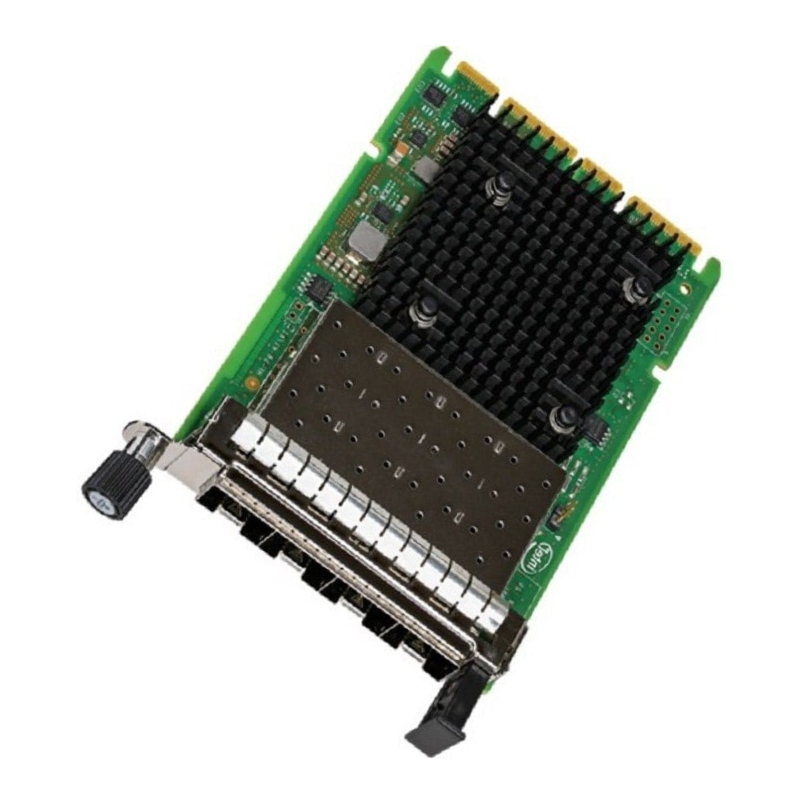


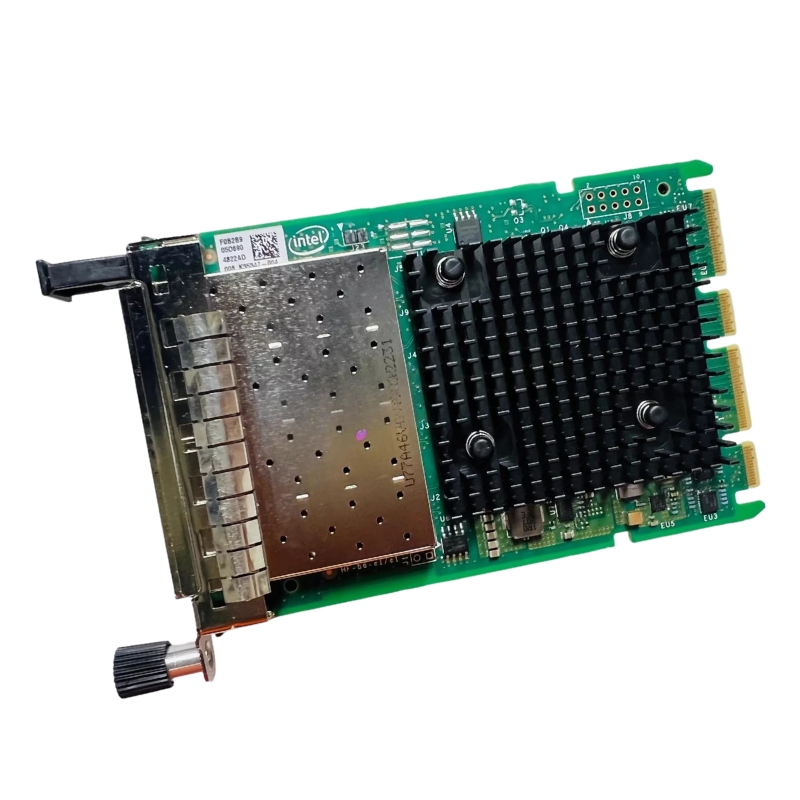
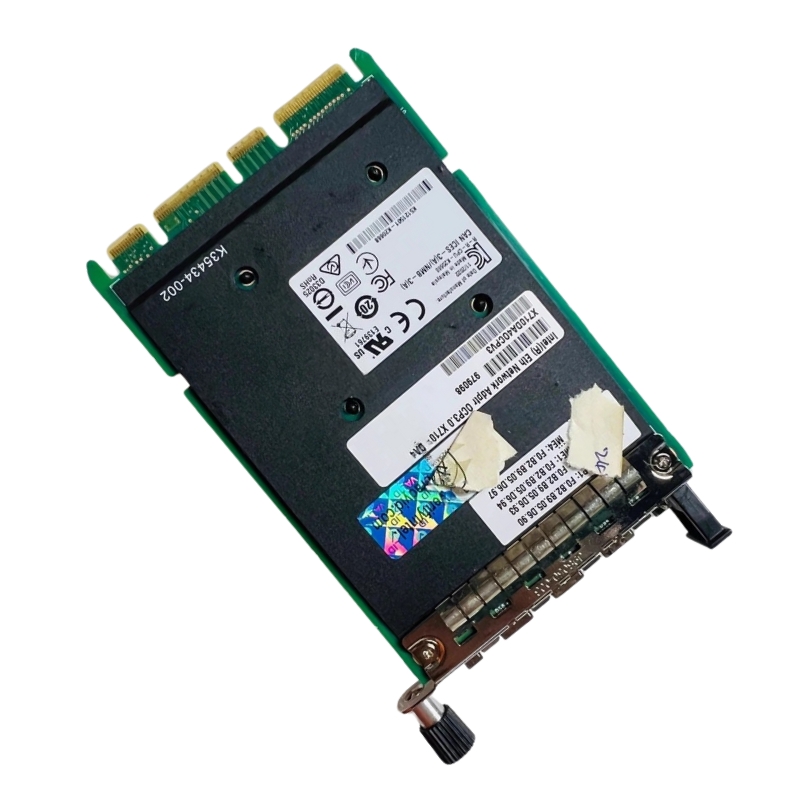
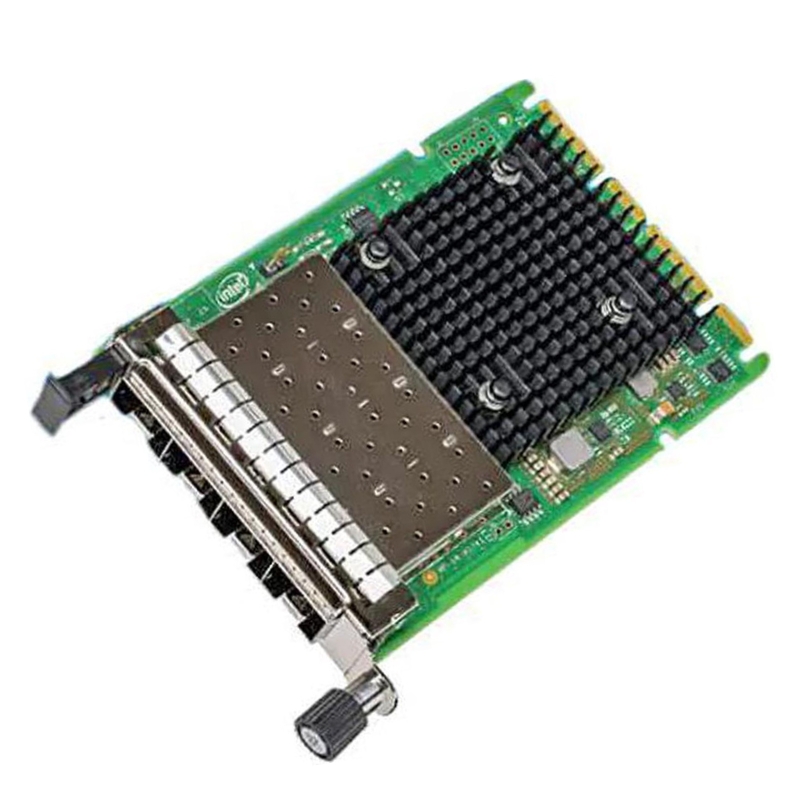
Intel X710DA4OCPV3G1P Quad Port Plug-in Card OCP3.0 X710-DA4 Ethernet Network Adapters. New Sealed in Box (NIB) with 3 Years Warranty
The Intel X710DA4OCPV3G1P Quad-Port Plug-in Network Adapter based on the X710-DA4 architecture is a high-performance OCP 3.0 Ethernet solution engineered to enhance modern data center connectivity. Designed for scalability and efficiency, this advanced adapter delivers four independent 10 Gigabit SFP+ interfaces, enabling seamless high-speed data transmission, improved workload distribution, and optimized server-to-network communication. Built on Intel’s proven networking technology, it supports enterprise-grade reliability, virtualization readiness, and low-latency packet processing for demanding cloud and enterprise environments.
The Intel X710DA4OCPV3G1P Quad Port Plug-in Card OCP3.0 X710-DA4 Ethernet Network Adapter is designed for modern data center networking environments where high throughput, deterministic latency, and flexible deployment models are essential. Built on advanced controller architecture from
At its core, the adapter combines hardware offload capabilities with intelligent traffic distribution mechanisms. The quad port configuration allows simultaneous handling of multiple independent data streams, enabling server systems to scale network bandwidth without requiring additional physical expansion cards. This is particularly beneficial in dense rack environments where space efficiency and airflow optimization are critical design constraints.
The architecture is optimized for low latency communication between compute nodes and storage systems, ensuring that packet transmission overhead is minimized. The design supports parallel processing of network tasks, allowing the host CPU to remain focused on application workloads instead of being burdened with network packet management operations.
The OCP 3.0 form factor used in this adapter reflects a modern shift toward modular, serviceable, and open hardware standards. This design enables direct integration into compatible server backplanes, eliminating the need for traditional PCI bracket-based installation. The plug-in card structure improves airflow dynamics within the chassis, contributing to thermal efficiency and overall system stability.
OCP 3.0 also emphasizes interoperability across multiple server platforms, making this adapter suitable for deployment in heterogeneous infrastructure environments. The standardized mechanical and electrical interfaces ensure predictable compatibility with OCP-ready systems, reducing integration complexity for large-scale infrastructure deployments.
The modular nature of the design allows for simplified maintenance and faster replacement cycles. In environments where uptime is critical, such as financial trading platforms or distributed cloud systems, this design minimizes downtime during hardware servicing operations.
The Intel X710 series controller integrated into this adapter is engineered for high-efficiency packet processing. It supports advanced queuing mechanisms that distribute network traffic across multiple processing queues, enabling balanced workload distribution across CPU cores. This architecture significantly enhances throughput in multi-threaded server environments.
Hardware offloading features reduce CPU utilization by handling tasks such as checksum computation, segmentation, and packet classification directly on the adapter. This results in improved system responsiveness and higher application density per server node.
The controller is optimized for both small packet and large packet workloads, ensuring consistent performance across diverse traffic patterns. This makes it suitable for environments that combine transactional workloads with bulk data transfers.
The quad port configuration provides multiple independent communication channels, enabling simultaneous network connections to different switches, virtual networks, or storage arrays. Each port operates with dedicated processing resources, allowing full-duplex communication without internal contention.
This multi-port architecture supports advanced traffic segmentation strategies commonly used in data center virtualization and cloud orchestration platforms. Network administrators can assign dedicated ports to specific traffic classes, improving isolation and performance predictability.
Bandwidth aggregation techniques can also be implemented at the system level, allowing multiple ports to function collectively as a high-throughput network interface. This approach is particularly beneficial in environments requiring sustained high data transfer rates such as distributed storage clusters and real-time analytics systems.
Although the adapter is designed for OCP 3.0 systems, it maintains compatibility principles aligned with PCI Express communication standards. This ensures efficient data transfer between the network interface and the host system memory architecture. The integration layer is optimized for low-latency DMA operations, reducing bottlenecks during high-volume traffic conditions.
The communication pipeline between the adapter and system memory is engineered to minimize interrupt overhead. This is achieved through interrupt moderation techniques and adaptive buffering strategies that balance latency and throughput dynamically based on workload conditions.
Modern virtualized environments require network interfaces that can efficiently allocate resources among multiple virtual machines. This adapter supports Single Root Input Output Virtualization functionality, enabling the creation of multiple virtual network interfaces from a single physical port.
Each virtual function operates independently, providing isolated network pathways for virtual machines or containers. This isolation improves security and ensures predictable performance in multi-tenant environments where workloads vary significantly.
The virtualization features also reduce overhead associated with software-based switching layers, improving overall network efficiency in hypervisor-driven architectures.
In enterprise data centers, this adapter is commonly deployed in compute nodes that require reliable high-speed connectivity to storage networks and application clusters. Its quad port design allows administrators to separate traffic types such as management, storage replication, and application data flows.
The adapter is particularly well suited for environments that rely on distributed computing frameworks, where nodes must frequently exchange large volumes of data with minimal latency. Its deterministic performance characteristics make it suitable for mission-critical systems requiring consistent network behavior.
Cloud service providers benefit from the scalability and flexibility offered by this network adapter. It supports dynamic workload allocation, allowing cloud orchestration platforms to assign network resources based on demand.
In multi-tenant cloud environments, isolation between workloads is essential. The adapter's virtualization capabilities ensure that each tenant receives dedicated logical network resources without interference from other tenants.
The hardware design also supports automated provisioning systems, enabling rapid deployment of new compute instances with predefined network configurations.
Within enterprise environments, this adapter is used to support core business applications such as database systems, enterprise resource planning platforms, and unified communication systems. The quad port configuration allows separation of internal and external traffic flows, improving security and performance management.
Organizations deploying hybrid cloud architectures can use this adapter to maintain consistent connectivity between on-premises infrastructure and external cloud platforms. Its stability and predictable throughput make it suitable for long-duration data synchronization tasks.
The adapter supports multiple operating system environments commonly used in enterprise and cloud infrastructures. These include major Linux distributions, Windows Server platforms, and virtualization hypervisors.
Driver optimization ensures that hardware features are fully exposed to the operating system, enabling administrators to leverage advanced capabilities such as traffic shaping, packet filtering, and hardware offload acceleration.
Security is integrated at the hardware level through support for packet filtering and isolation mechanisms. These features help reduce exposure to unauthorized traffic and potential network-based attacks.
The adapter supports secure boot mechanisms that ensure firmware integrity before system initialization. This reduces the risk of low-level compromise and helps maintain trusted computing environments.
In virtualized deployments, isolation between virtual functions ensures that one compromised workload does not impact others sharing the same physical interface.
Scalability is a fundamental requirement in modern infrastructure design. This adapter supports scalable network architectures by enabling incremental expansion of bandwidth and connectivity without requiring major system redesign.
In large distributed environments, multiple adapters can be deployed across compute clusters to create highly parallel communication fabrics capable of handling massive data exchange workloads.


 Contact Us
 Information
 Catalog
 Solid State Drives (SSD)
 Network Switches
 Hard Disk Drives
 HBA & Controllers
 PC & Servers
 PC & Server Memory
 CPU & Processors
 Network Routers
 Power Supplies
 Tape Drives & Libraries
 Network Devices
 Computer & Network Cables