(7% discount is applied at checkout)
Cart is empty
Your go-to destination for cutting-edge server products
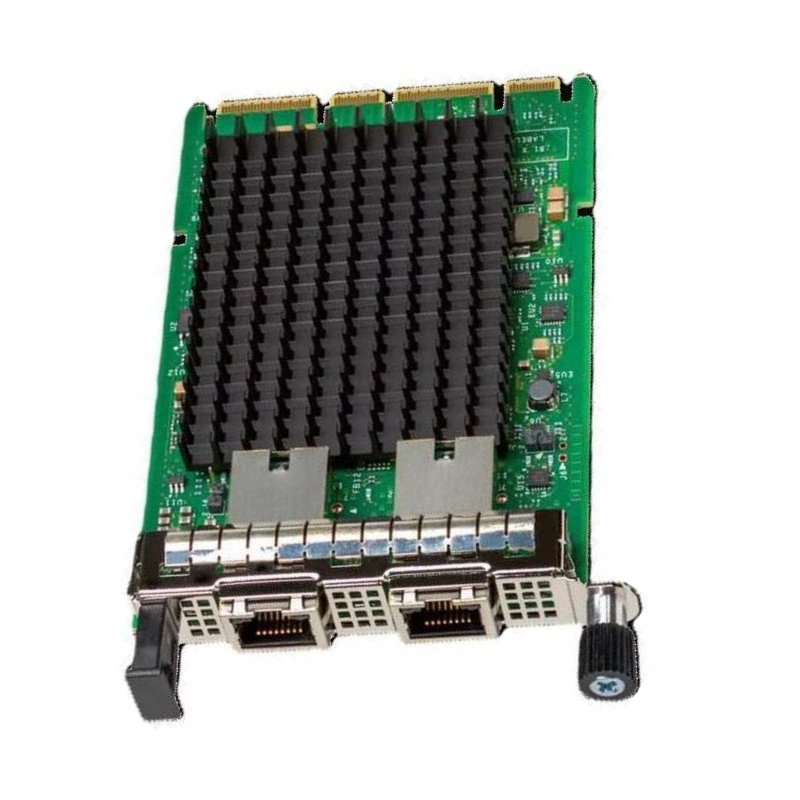


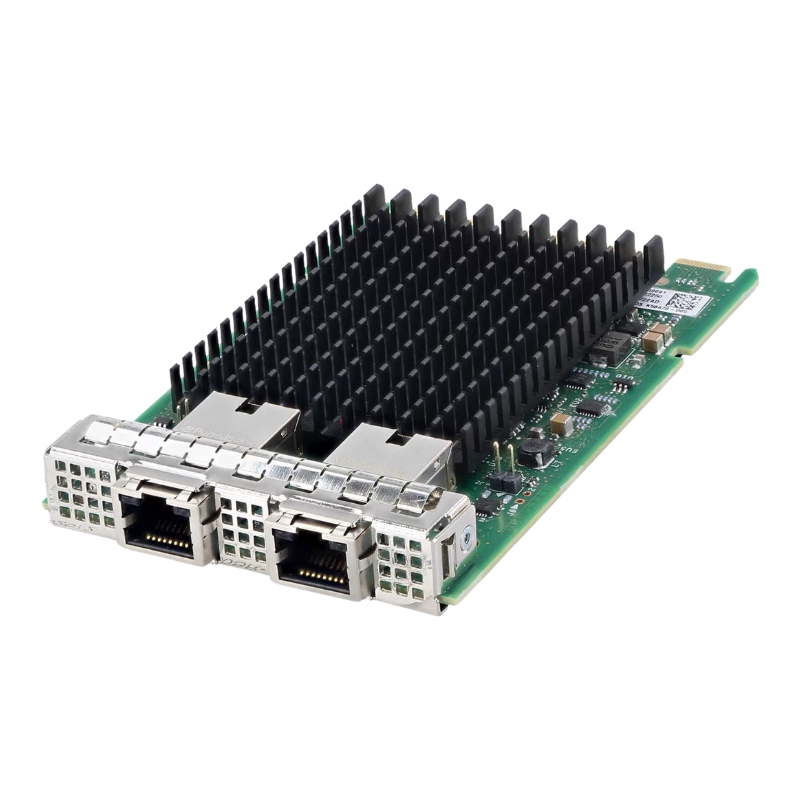
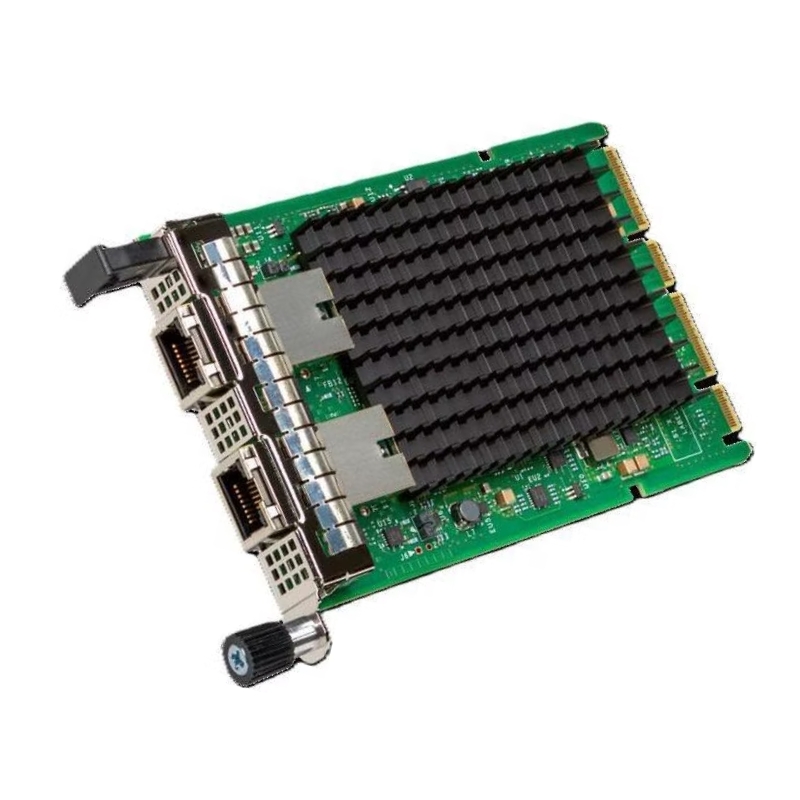
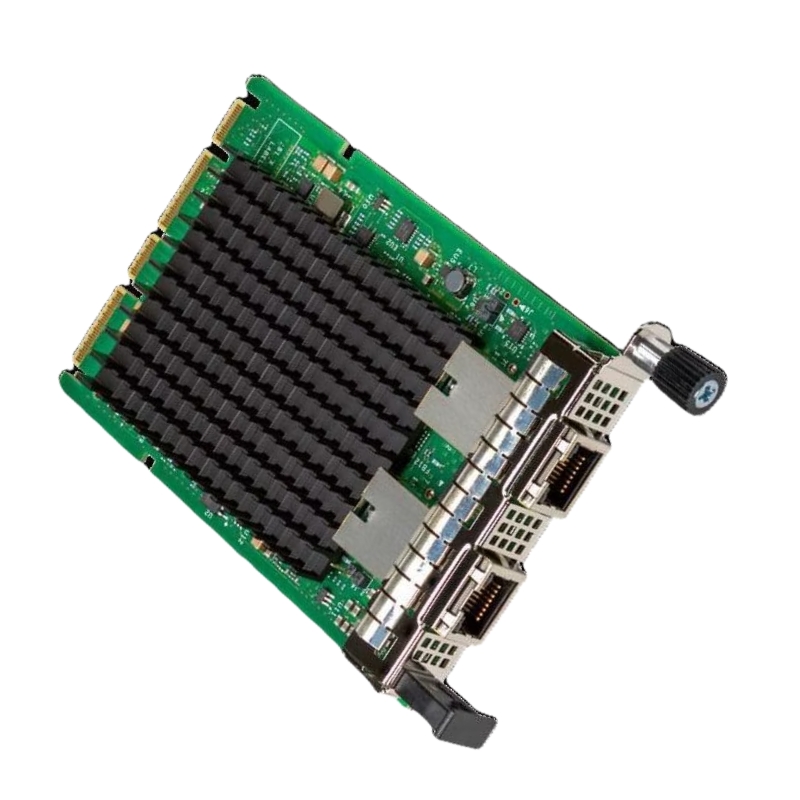
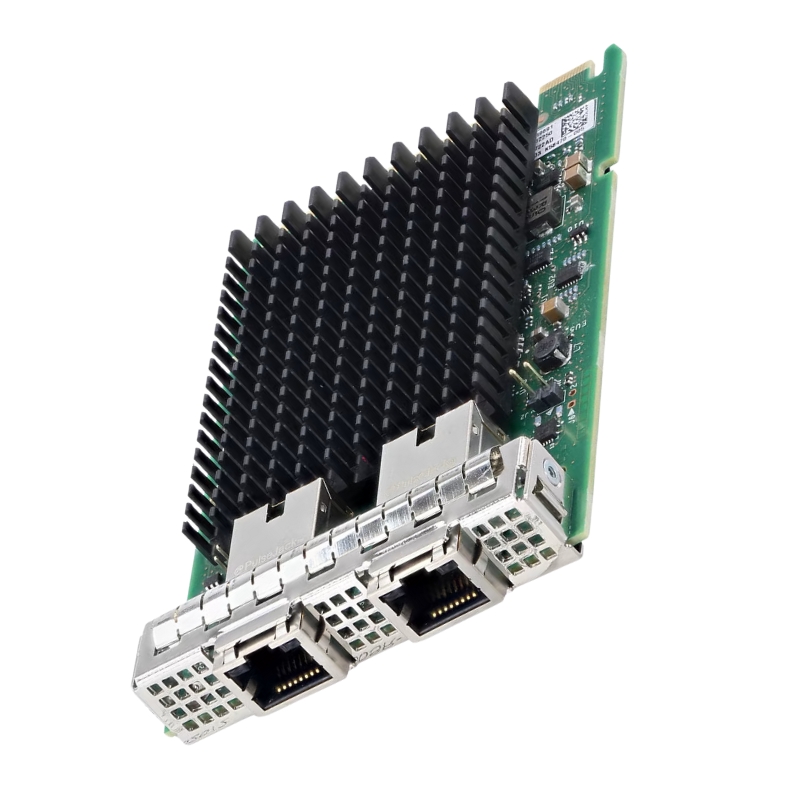
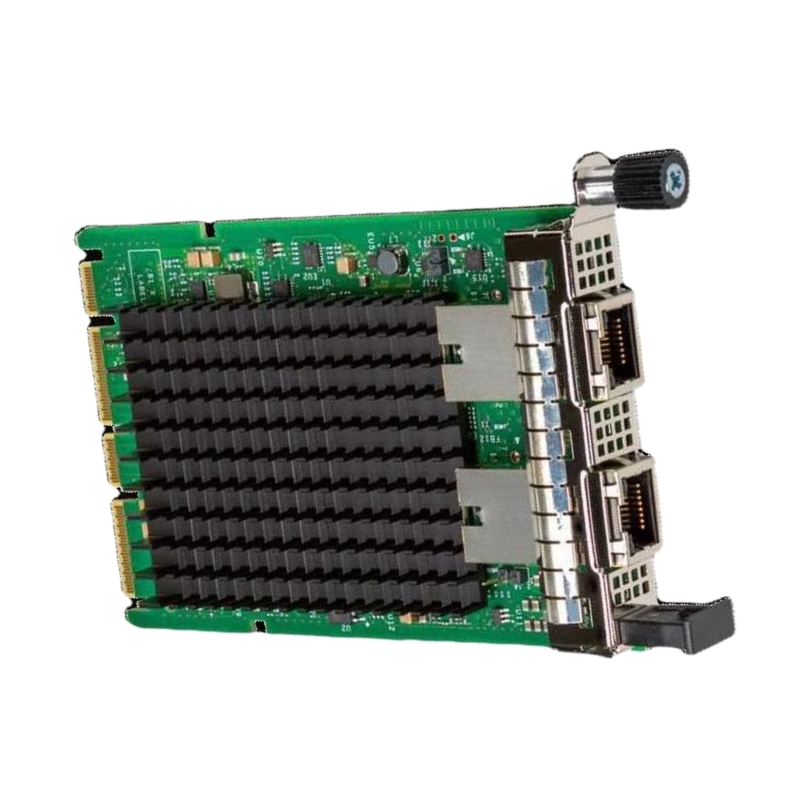
Intel X710T2LOCPV3G1P 2 Ports PCIe 3.0 10-GbE OCP 3.0 Ethernet Network Adapter Card. New Sealed in Box (NIB) with 3 years Warranty
The Intel X710T2LOCPV3G1P is a high-performance dual-port 10 Gigabit Ethernet network adapter designed for modern data centers and enterprise servers. Built on PCI Express 3.0 architecture and compliant with the OCP 3.0 form factor, this adapter delivers reliable connectivity, low latency, and efficient throughput for demanding networking workloads.
The Intel X710T2LOCPV3G1P is defined by a precise set of technical specifications that dictate its performance envelope and compatibility. Understanding these is crucial for proper integration and deployment.
This adapter provides two independent network ports, each capable of operating at speeds of 1, 10 Gigabits per second (Gbps). The use of SFP+ cages offers flexibility in physical media selection, allowing data center managers to choose between direct-attach copper cables (DAC) for short runs or optical SFP+ modules for multimode or single-mode fiber connections over longer distances.
Leveraging a PCI Express (PCIe) 3.0 x8 lane interface, the card ensures ample bandwidth is available to the host system. A PCIe 3.0 x8 slot provides a theoretical bidirectional bandwidth of approximately 7.88 GB/s, which comfortably sustains the full duplex traffic of both 10-GbE ports simultaneously without becoming a bottleneck.
The OCP 3.0 (Open Compute Project) form factor is a standardized design for network adapters, primarily found in modern rackmount servers from leading OEMs and ODMs. Unlike traditional PCIe add-in cards, OCP NICs are oriented horizontally and connect directly to a dedicated socket on the server motherboard.
Improved Airflow & Thermal Design: The low-profile, horizontal mounting minimizes obstruction in the server chassis, promoting better airflow for cooling CPUs and memory.
Simplified Maintenance & Hot-Swappability: Many OCP 3.0 implementations support tool-less removal and insertion, enabling faster replacement or upgrade without full server power-down in compatible systems.
Standardized Footprint: Ensures interoperability across a wide range of server platforms that adhere to the OCP specification, offering flexibility in procurement and deployment.
At the heart of the adapter lies the Intel Ethernet Controller X710, a highly integrated ASIC designed for performance and efficiency. This controller natively supports the critical features that define modern datacenter networking.
Beyond raw throughput, the value of a high-end network adapter like the X710T2LOCPV3G1P is realized through its sophisticated feature set, which offloads processing from the host CPU and enables advanced network architectures.
In virtualized server environments, network I/O can quickly become a performance constraint. This adapter addresses this through hardware-level virtualization assist technologies.
SR-IOV allows a single physical port to be presented as multiple virtual functions (VFs) that can be assigned directly to virtual machines (VMs). This bypasses the software-based virtual switch in the hypervisor, granting the VM near-native network performance with dramatically lower latency and CPU overhead.
VMDq works in tandem with SR-IOV or independently. It offloads the sorting and steering of network packets to the dedicated hardware on the NIC. The hypervisor's virtual switch delivers packets directly to the correct VM queue, significantly reducing I/O processing cycles on the host CPU.
Convergence of network and storage traffic is a key trend, and the X710T2LOCPV3G1P is equipped to handle storage protocols efficiently.
The adapter provides full hardware offload for iSCSI (Internet Small Computer Systems Interface) and FCoE (Fibre Channel over Ethernet). This means the TCP/IP processing and data movement for iSCSI, or the FCoE frame processing, is handled by the NIC's controller, freeing server CPU resources for application workloads.
A standout feature is its support for RDMA over TCP/IP (iWARP). RDMA enables data to be transferred directly from the memory of one computer to another without involving the operating system or CPU of either machine. This yields ultra-low latency and high throughput, which is indispensable for latency-sensitive applications like high-performance computing (HPC), financial trading, and clustered storage (e.g., Microsoft Storage Spaces Direct).
The controller supports sophisticated packet filtering, prioritization, and steering mechanisms essential for maintaining service-level agreements (SLAs) in multi-tenant or business-critical environments.
DCB is a suite of IEEE standards (including PFC) that enables a lossless Ethernet fabric. PFC allows the pausing of specific traffic classes (e.g., storage traffic like FCoE) without affecting other data flows. This is critical for converged networks where storage and data traffic share the same physical link.
RSS efficiently distributes network receive processing across multiple CPU cores, preventing a single core from becoming a bottleneck. Intel's Flow Director technology uses advanced filters to direct specific traffic flows to designated CPU cores or virtual machine queues, optimizing application performance and predictability.
The combination of high bandwidth, low latency, and advanced features makes the Intel X710T2LOCPV3G1P suitable for several demanding IT infrastructure roles.
HCI platforms combine compute, storage, and networking on standard x86 servers. The intense east-west traffic between nodes for storage replication and VM migration demands high-bandwidth, low-latency networking. The X710T2LOCPV3G1P's iWARP RDMA capability is often a key requirement for achieving the necessary performance in solutions like VMware vSAN, Microsoft S2D, or Nutanix.
In servers hosting dozens or hundreds of VMs, network I/O virtualization overhead can cripple performance. By leveraging SR-IOV and VMDq, this adapter dramatically reduces CPU utilization associated with networking, allowing more CPU cycles to be allocated to revenue-generating virtualized applications and supporting higher VM density.
Applications where microseconds matter, such as quantitative analysis, real-time risk modeling, or high-frequency trading platforms, benefit from the deterministic low latency provided by the adapter's kernel bypass capabilities (via RDMA) and efficient driver stack. The reliable, high-throughput connections ensure rapid data exchange between compute and data feed nodes.
For video editing, rendering farms, and broadcast environments that work with massive 4K/8K media files, fast network storage access is non-negotiable. The 10-GbE bandwidth and iSCSI offload capabilities facilitate smooth, real-time collaboration from shared storage systems.
Successful deployment requires attention to driver support, management tools, and physical infrastructure.
Intel provides reliable, feature-complete drivers for a wide range of operating systems, including:
Microsoft Windows Server and Windows 11/10Linux distributions (Red Hat Enterprise Linux, SUSE Linux Enterprise Server, Canonical Ubuntu, etc.)
VMware ESXi
Citrix Hypervisor
FreeBSD and others
It is critical to use the latest driver versions from Intel to ensure stability, performance, and access to all advertised features.
The adapter can be configured and monitored using industry-standard tools like SNMP, as well as Intel's own utilities. The Intel Ethernet Network Adapter User Interface for Windows provides local configuration. For datacenter-scale management, Intel Device Configuration Manager (DCM) offers centralized discovery, firmware updates, and configuration profiling for fleets of Intel NICs.


 Contact Us
 Information
 Catalog
 Solid State Drives (SSD)
 Network Switches
 Hard Disk Drives
 HBA & Controllers
 PC & Servers
 PC & Server Memory
 CPU & Processors
 Network Routers
 Power Supplies
 Tape Drives & Libraries
 Network Devices
 Computer & Network Cables