(7% discount is applied at checkout)
Cart is empty
Your go-to destination for cutting-edge server products
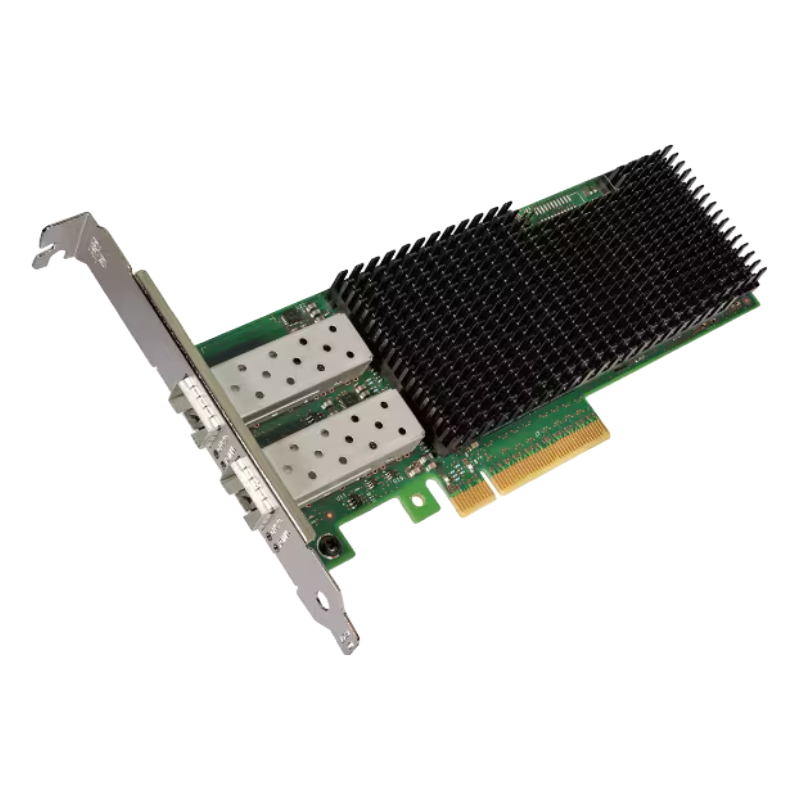


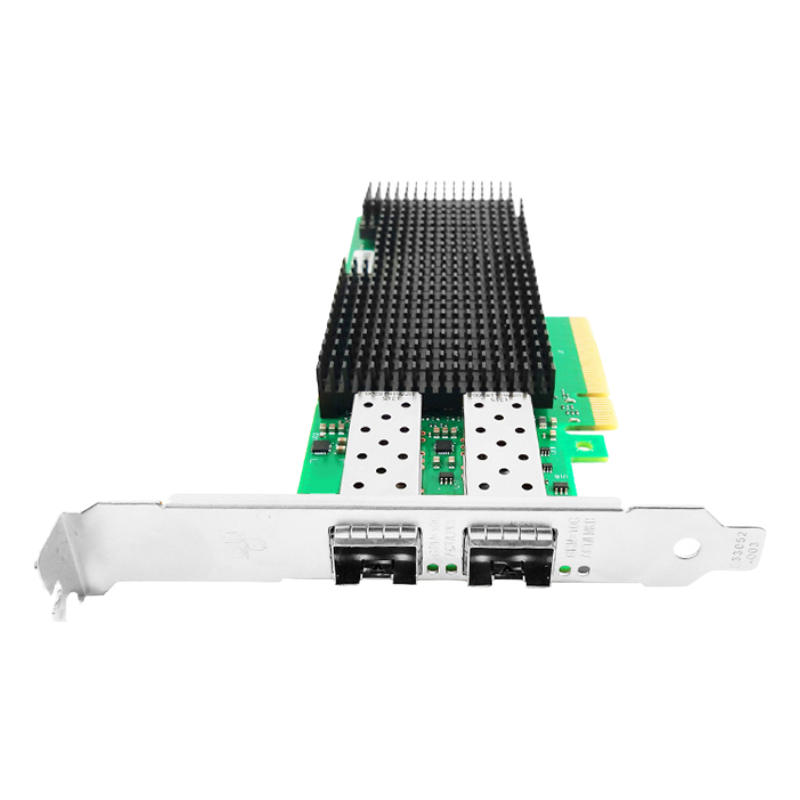
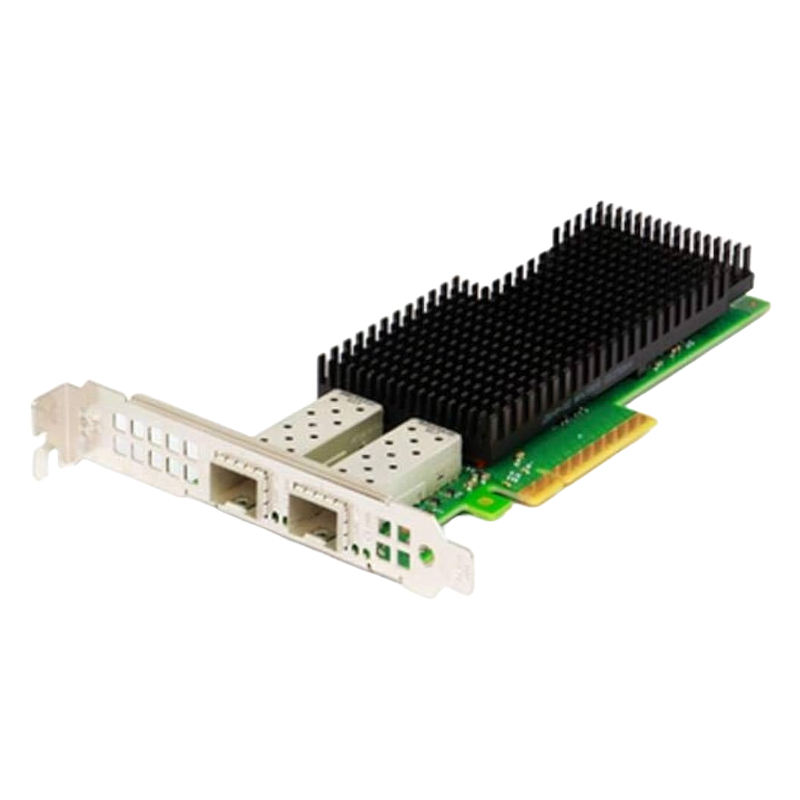
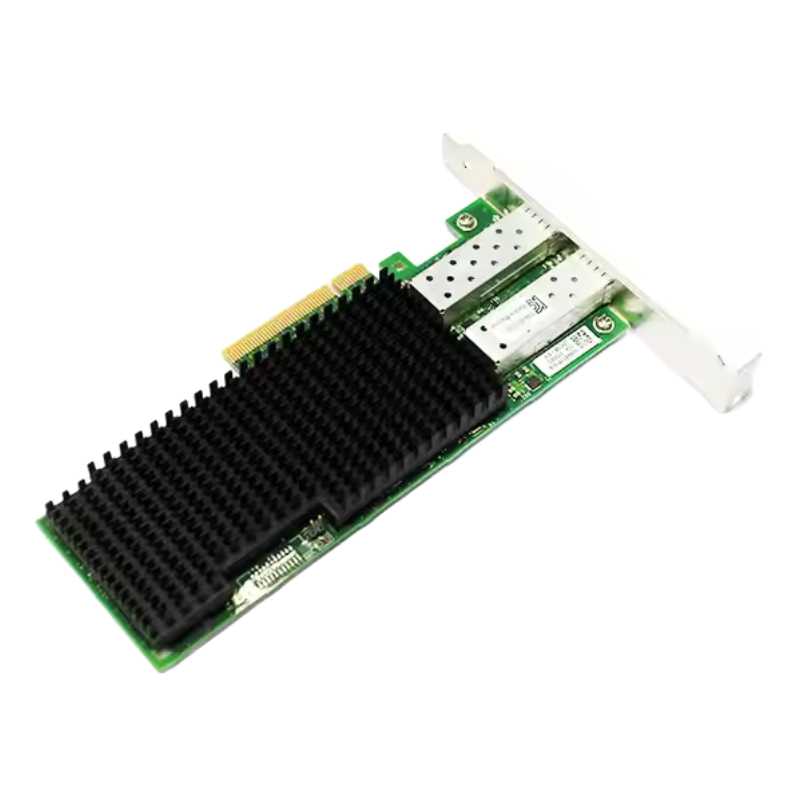
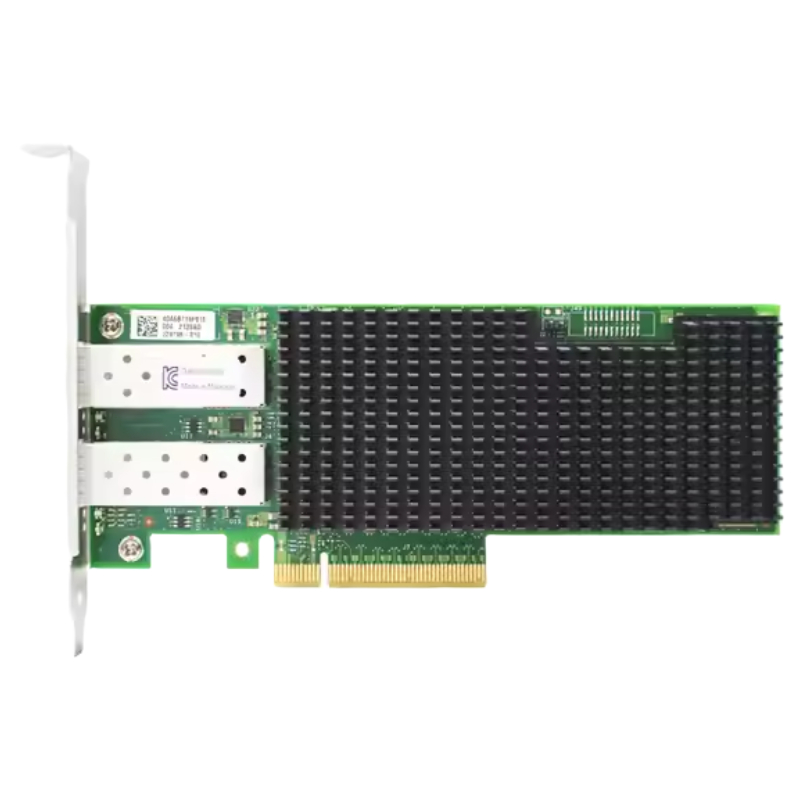
Intel XXV710DA2BLK 2-Port 25Gbps SFP28 PCI-E Gigabit Ethernet Server Network Adapters. Excellent Refurbished with 1 year replacement warranty
The Intel XXV710DA2BLK is a dual‑port 25GbE Ethernet adapter designed for high‑speed connectivity in enterprise, cloud, and data center environments. Featuring PCI‑Express 3.0 and OCP‑2 compliance, this plug‑in card delivers reliable throughput, advanced virtualization, and intelligent offload features for optimized performance.
The Intel XXV710DA2BLK 25Gb Dual-Port DA PCIe OCP-2 Ethernet Network Adapter represents a high-performance networking solution engineered for modern data centers, cloud-scale infrastructures, and enterprise virtualization environments. Built around Intel’s advanced Ethernet controller architecture, this adapter delivers 25 Gigabit Ethernet connectivity across dual ports, optimized for high throughput, low latency, and efficient packet processing. As workloads continue to grow in complexity, the demand for scalable and reliable network interface cards becomes increasingly critical, and this adapter addresses those demands with precision.
Designed in compliance with OCP 2.0 (Open Compute Project) standards, the Intel XXV710DA2BLK ensures flexible deployment in OCP-compatible server systems, making it suitable for hyperscale cloud providers, enterprise server farms, and virtualization-heavy workloads. Its dual-port configuration enables redundancy and load balancing, significantly improving network resilience and operational continuity.
At the heart of the Intel XXV710DA2BLK lies the Intel Ethernet Controller XXV710, a highly optimized silicon platform designed for 10/25GbE performance scaling. This controller is engineered to support advanced offloading capabilities, reducing CPU overhead and allowing host systems to focus on application-level processing rather than packet management tasks. The architecture supports multiple queues per port, enabling efficient traffic distribution and minimizing bottlenecks in high-density environments.
The dual-port design of the Intel XXV710DA2BLK enhances network efficiency by enabling simultaneous data streams across two independent 25GbE interfaces. This configuration supports link aggregation, failover mechanisms, and workload segmentation, making it ideal for environments requiring continuous uptime and predictable bandwidth allocation. Each port operates independently, ensuring maximum flexibility in traffic management.
The PCI Express interface integrated into this adapter ensures high-speed communication between the network controller and the host system. By leveraging PCIe lanes efficiently, the adapter minimizes latency while maximizing throughput. This is particularly important in data-intensive applications such as distributed computing, real-time analytics, and large-scale virtualization environments where data movement speed is critical.
The Open Compute Project (OCP) 2.0 form factor adopted by the Intel XXV710DA2BLK ensures standardized deployment across compatible server architectures. This allows data center operators to maintain uniform hardware configurations, simplifying maintenance, upgrades, and scalability planning. The OCP design also enhances airflow efficiency and thermal management within densely packed server environments.
OCP-based network adapters are designed for modular integration, allowing operators to replace or upgrade components without disrupting entire systems. The Intel XXV710DA2BLK benefits from this modularity, enabling rapid deployment and simplified lifecycle management in enterprise infrastructures.
The 25GbE capability of the Intel XXV710DA2BLK bridges the gap between traditional 10GbE and higher-end 40GbE solutions. It provides a balanced approach to bandwidth scalability, delivering significantly improved data throughput while maintaining cost efficiency. This makes it suitable for cloud service providers, high-performance computing clusters, and enterprise virtualization systems.
Latency-sensitive applications benefit greatly from the optimized packet processing pipeline embedded in this adapter. By reducing jitter and improving packet forwarding efficiency, the Intel XXV710DA2BLK ensures consistent network performance even under heavy load conditions.
The Intel XXV710DA2BLK supports Single Root I/O Virtualization (SR-IOV), enabling the partitioning of a single physical network port into multiple virtual interfaces. This is essential for cloud environments where multiple virtual machines must share network resources without performance degradation. Each virtual function can be assigned directly to a VM, reducing overhead and improving efficiency.
Compatibility with leading hypervisors ensures seamless integration into virtualized infrastructures. The adapter’s hardware offloading capabilities reduce CPU consumption, allowing hypervisor systems to allocate more resources to compute-intensive workloads rather than network processing.
The Intel XXV710DA2BLK supports advanced data transfer techniques such as RDMA over Converged Ethernet (RoCE), enabling direct memory-to-memory data transfers between systems without involving the CPU. This drastically reduces latency and improves throughput in distributed computing environments.
HPC clusters benefit significantly from RDMA capabilities, as they require ultra-low latency communication between nodes. The adapter ensures that data is transmitted with minimal overhead, improving performance in scientific simulations, financial modeling, and AI training workloads.
In cloud environments, scalability is a fundamental requirement. The Intel XXV710DA2BLK is engineered to support large-scale deployments where thousands of nodes must communicate efficiently. Its dual-port architecture allows flexible traffic distribution, supporting both east-west and north-south traffic patterns in cloud networks.
Security and isolation are essential in shared cloud infrastructures. This adapter ensures secure separation of network traffic across tenants while maintaining high throughput and predictable performance levels.
The Intel XXV710DA2BLK includes advanced stateless offloading features that reduce CPU workload by handling checksum calculations, segmentation, and packet reassembly directly within the hardware. This improves system efficiency and enhances application performance under heavy network loads.
Multiple hardware queues allow the adapter to distribute traffic efficiently across CPU cores. This ensures balanced system utilization and reduces processing bottlenecks in high-traffic environments.
Security is embedded into the design of the Intel XXV710DA2BLK through support for encrypted traffic handling and secure tunneling protocols. These features ensure data integrity and confidentiality across enterprise and cloud networks.
The adapter includes hardware filtering mechanisms that allow early-stage packet inspection and classification, reducing exposure to malicious traffic and improving overall network security posture.
The Intel XXV710DA2BLK is supported across major operating systems including Linux distributions, Windows Server environments, and virtualization platforms. This broad compatibility ensures seamless deployment across heterogeneous infrastructures.
Integration with Intel’s Ethernet software stack provides administrators with tools for performance tuning, diagnostics, and monitoring. This allows fine-grained control over network behavior and optimization of system resources.
The physical design of the Intel XXV710DA2BLK prioritizes thermal efficiency, ensuring stable operation under sustained high-load conditions. The OCP 2.0 form factor enhances airflow management within server chassis, reducing thermal hotspots and improving overall system reliability.
Energy efficiency is a key consideration in modern data centers. This adapter is engineered to deliver high performance while minimizing power consumption, helping organizations reduce operational costs and environmental impact.
In virtualized environments, the Intel XXV710DA2BLK supports dense VM deployments, ensuring consistent bandwidth allocation and low latency communication between virtual machines.
Storage systems relying on NVMe over Fabrics and distributed storage architectures benefit from the adapter’s high throughput and low latency capabilities, ensuring fast and reliable data access across nodes.
AI workloads require rapid data movement between compute nodes. The Intel XXV710DA2BLK supports these requirements by providing stable and high-speed network connectivity for distributed training systems.
Quality of Service (QoS) capabilities allow administrators to prioritize critical network traffic, ensuring that latency-sensitive applications receive optimal bandwidth allocation even during peak usage periods.
The dual-port architecture enables intelligent load balancing, distributing traffic evenly across both interfaces to prevent congestion and maintain consistent performance levels.


 Contact Us
 Information
 Catalog
 Solid State Drives (SSD)
 Network Switches
 Hard Disk Drives
 HBA & Controllers
 PC & Servers
 PC & Server Memory
 CPU & Processors
 Network Routers
 Power Supplies
 Tape Drives & Libraries
 Network Devices
 Computer & Network Cables