(7% discount is applied at checkout)
Cart is empty
Your go-to destination for cutting-edge server products
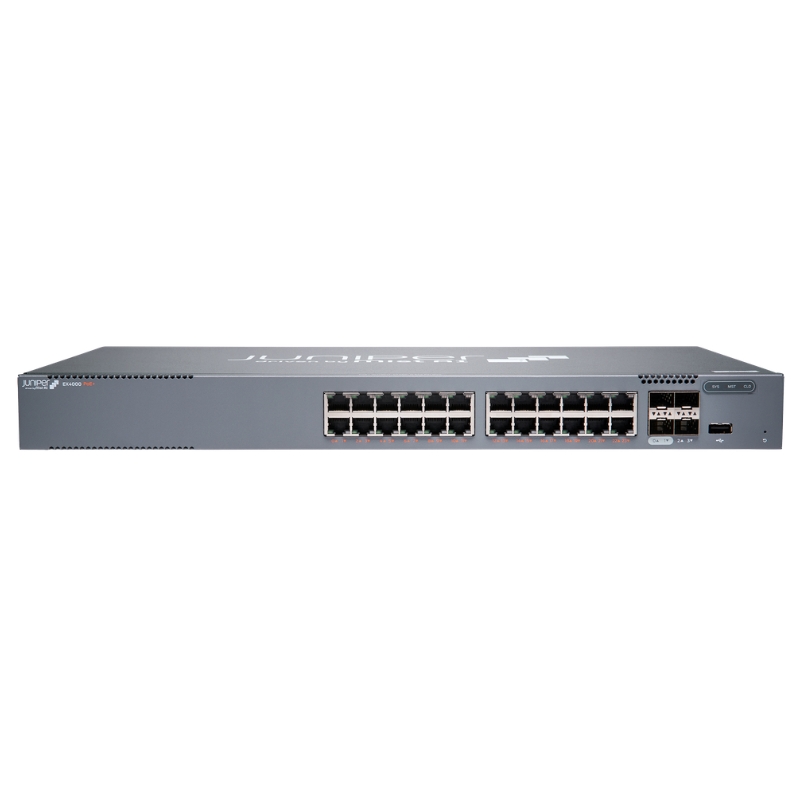


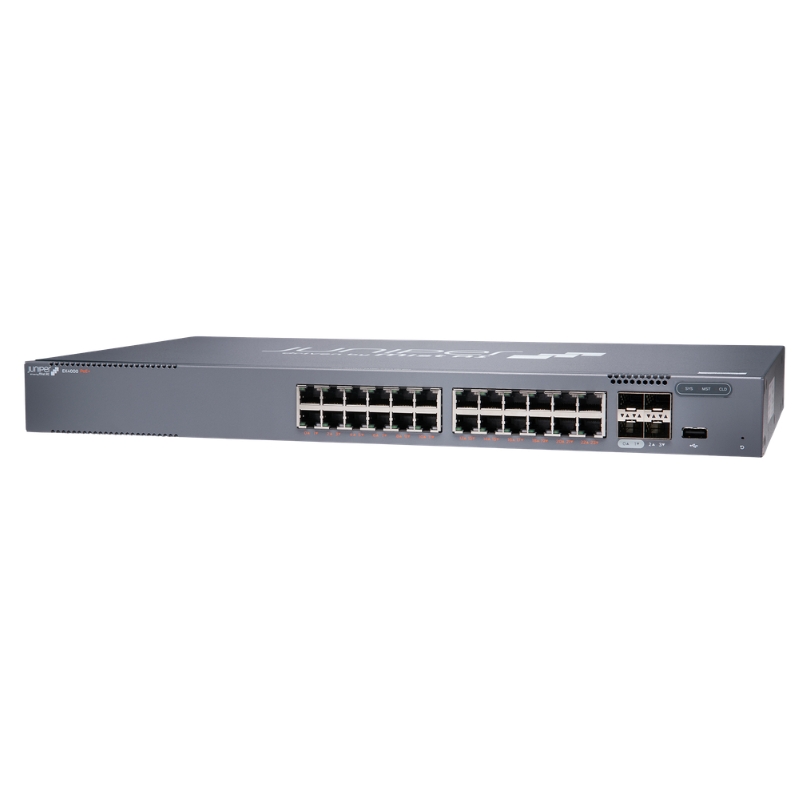
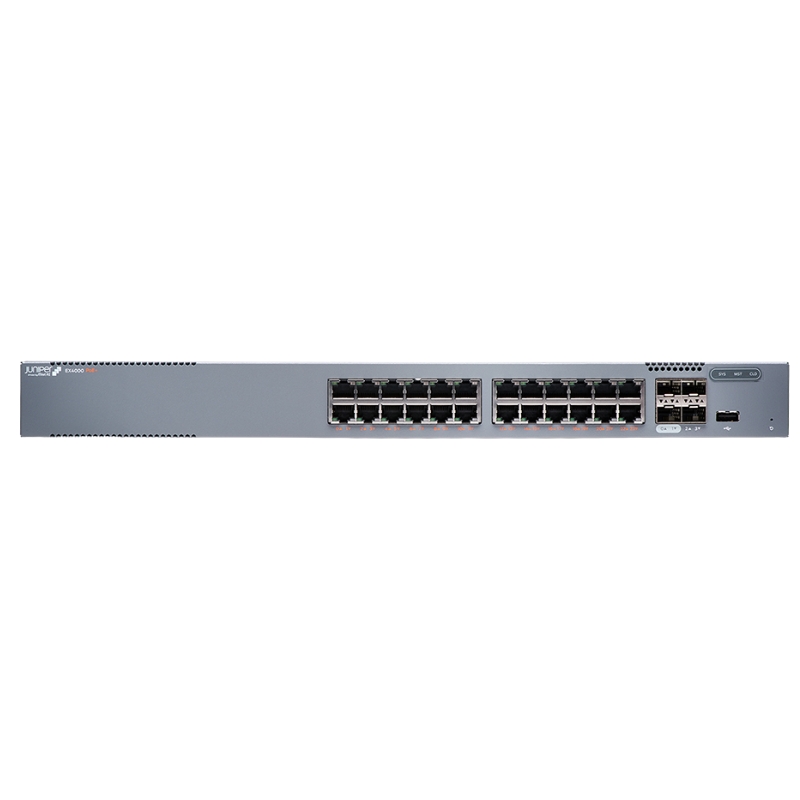
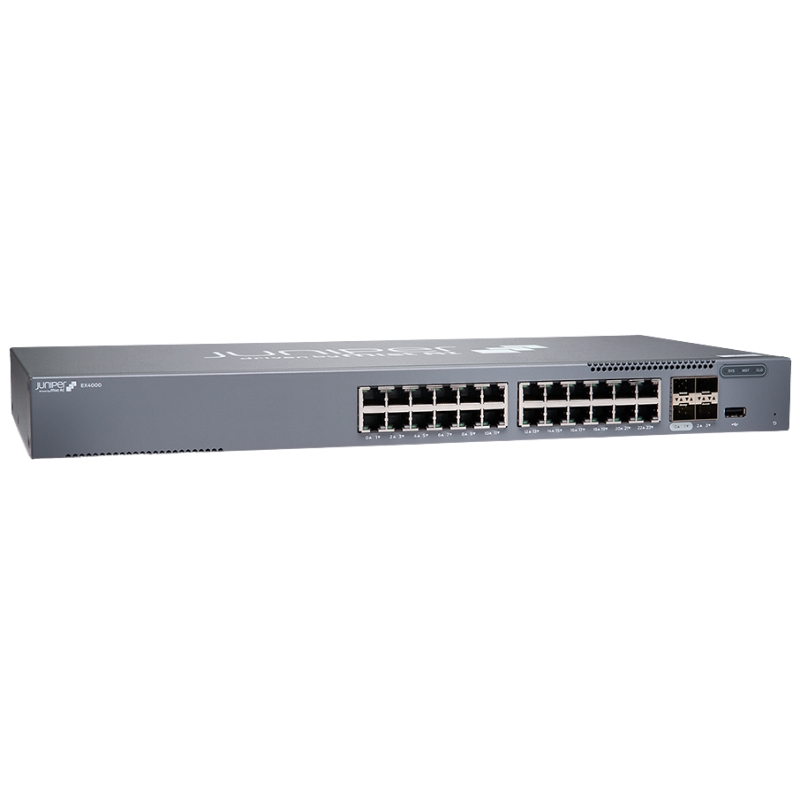
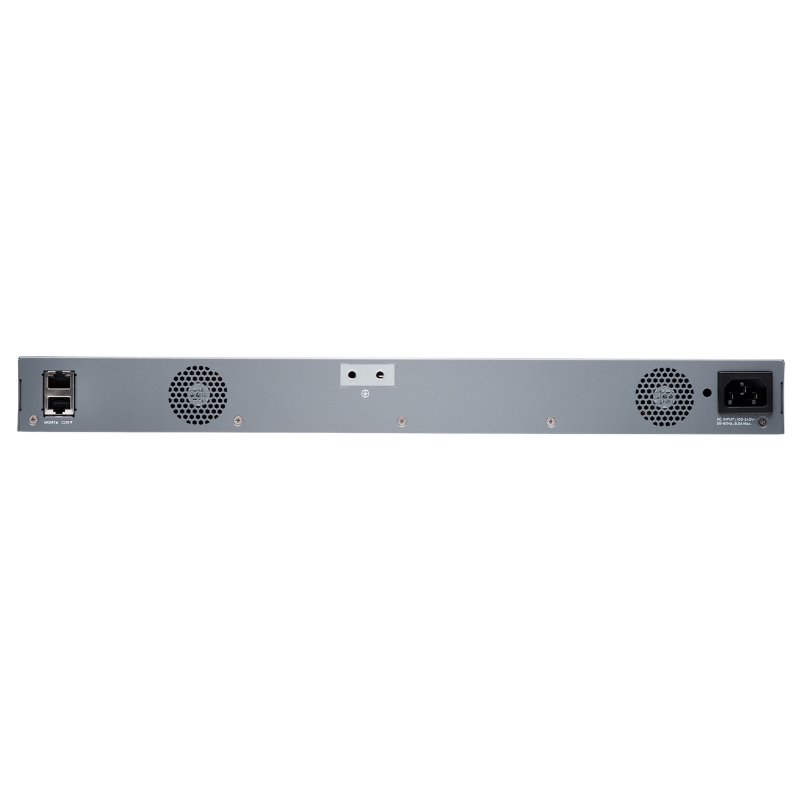
Juniper Networks EX4000-24P 24 Ports 1GbE PoE+ 2 x 10 Gigabit Ethernet SFP+ Uplink Ports Rack Mountable Switch. New Sealed with 1 Year Replacement Warranty
The Juniper Networks EX4000-24P stands as a cornerstone within the Juniper EX Series Ethernet switches, purpose-built for high-performance access layer deployments. As a member of the EX4000 family, this switch merges the reliability of 1GbE connectivity with the versatility of Power over Ethernet Plus (PoE+) and redundant 10 Gigabit uplinks.
The Juniper Networks EX4000-24P 24 Ports 1GbE PoE+ 2 x 10 Gigabit Ethernet SFP+ Uplink Ports Rack Mountable Switch is engineered as a high-performance enterprise access switching platform built to support modern campus, branch, and distributed network infrastructures. This model integrates twenty-four Gigabit Ethernet copper access ports delivering reliable Layer 2 and Layer 3 connectivity while maintaining optimized throughput for high-density device environments. The switching fabric is designed with a non-blocking architecture that ensures consistent packet forwarding under peak load conditions, maintaining low latency and deterministic performance for real-time applications, unified communications, and bandwidth-intensive enterprise workloads.
The internal hardware layout emphasizes efficient airflow management and component placement to maintain stable thermal performance within rack-mounted deployments. Precision-designed circuit pathways and signal routing reduce electromagnetic interference while maintaining high signal integrity for uplink ports and switching ASICs. The chassis construction uses durable metal housing that provides structural rigidity, electromagnetic shielding, and protection against environmental stress factors commonly encountered in enterprise network closets or data center edge environments.
The switching fabric inside the EX4000-24P is built to support high throughput traffic aggregation from access devices such as IP phones, wireless access points, surveillance cameras, thin clients, and desktop workstations. The internal switching engine handles simultaneous bidirectional traffic across all ports without introducing packet bottlenecks, ensuring sustained wire-speed forwarding. Packet buffer architecture is optimized to prevent congestion drops during microbursts or traffic spikes, which is essential for maintaining application performance during peak business hours.
The forwarding engine utilizes hardware-accelerated packet processing to maintain deterministic forwarding latency. This design offloads traffic handling from the control plane, allowing routing protocols, management functions, and monitoring tasks to operate independently without affecting data plane performance. Hardware-based forwarding tables support extensive MAC address learning and routing entries, ensuring compatibility with large network segments and multi-VLAN deployments.
Traffic prioritization mechanisms within the switch enable classification and scheduling of packets according to defined quality of service policies. The hardware scheduler ensures that latency-sensitive traffic such as voice and video is transmitted ahead of lower-priority data flows. This guarantees consistent performance for unified communications platforms, conferencing systems, and time-critical enterprise applications.
The switch features twenty-four 10/100/1000BASE-T access ports designed to accommodate a wide range of network-connected devices. Each copper interface supports automatic speed negotiation and duplex detection, enabling seamless interoperability with legacy equipment as well as modern Gigabit-capable endpoints. Integrated auto-MDI/MDIX functionality eliminates the need for crossover cables, simplifying installation and reducing deployment complexity.
All twenty-four access ports support Power over Ethernet Plus technology, allowing the switch to deliver electrical power directly through Ethernet cabling to compatible devices. This capability eliminates the requirement for separate power adapters or local electrical outlets for endpoints such as IP cameras, wireless access points, VoIP phones, badge readers, and IoT sensors. The power delivery subsystem includes intelligent allocation algorithms that distribute available wattage efficiently across active ports.
The PoE controller continuously monitors power consumption levels for each connected device and dynamically adjusts power allocation to ensure optimal utilization of the switch’s total power budget. Ports automatically detect powered devices and supply only the required wattage, reducing energy waste and improving operational efficiency. This adaptive power distribution system ensures that critical devices maintain uninterrupted power even when the switch is operating near maximum capacity.
Administrators can monitor real-time power usage metrics for each port through management interfaces. This visibility allows network engineers to track consumption trends, forecast power requirements device-level issues related to power draw anomalies. Per-port monitoring also supports proactive capacity planning for expanding PoE deployments.
The EX4000-24P includes two dedicated 10 Gigabit Ethernet SFP+ uplink ports designed for high-bandwidth connectivity to aggregation switches, distribution layers, or core network infrastructure. These uplinks support fiber or direct attach copper modules, enabling flexible connectivity options depending on distance, latency requirements, and physical deployment constraints. High-speed uplinks prevent access layer congestion by providing sufficient bandwidth for aggregated traffic from all access ports.
The dual uplink architecture allows administrators to configure link aggregation or failover redundancy to enhance network availability. When configured for aggregation, both uplinks operate simultaneously to increase throughput capacity. When configured for redundancy, one link remains on standby and activates automatically if the primary link fails, ensuring uninterrupted network connectivity.
The SFP+ interfaces support a wide range of compatible transceiver modules for multimode fiber, single-mode fiber, or direct attach cables. This flexibility allows deployment across diverse network topologies ranging from short-distance rack interconnects to long-haul campus fiber links. Optical compatibility ensures the switch integrates seamlessly into existing infrastructure without requiring additional conversion equipment.
The EX4000-24P supports comprehensive Layer 2 switching functionality to facilitate efficient network segmentation, traffic isolation, and broadcast domain control. Virtual LAN support enables administrators to logically divide a physical network into multiple isolated segments for security and performance optimization. MAC address learning and aging mechanisms maintain accurate forwarding tables while preventing stale entries from occupying memory resources.
The switch supports IEEE 802.1Q VLAN tagging, enabling trunk links that carry traffic for multiple VLANs simultaneously. Tagged frames maintain VLAN identification across network devices, allowing seamless segmentation across multiple switches and routers. Port-based VLAN assignment allows endpoints to be grouped logically regardless of their physical connection location.
Spanning Tree technologies prevent network loops in redundant topologies by dynamically blocking and unblocking links based on path calculations. Rapid convergence mechanisms minimize downtime during topology changes, ensuring fast recovery from link failures or device restarts. Multiple spanning tree instances allow optimized load distribution across redundant paths.
Advanced loop detection features monitor incoming frames for anomalies indicating potential switching loops. When detected, protective actions can automatically disable affected ports or notify administrators. This safeguard preserves network stability and prevents broadcast storms that could otherwise degrade performance across the entire infrastructure.
In addition to Layer 2 switching, the EX4000-24P provides Layer 3 capabilities for inter-VLAN routing and network segmentation at the access layer. Static routing support enables efficient traffic forwarding between VLANs without requiring a separate router. This reduces latency for internal traffic flows and simplifies network architecture.
The hardware supports extensive routing table capacity to accommodate complex enterprise topologies. Routing entries are stored in high-speed memory optimized for rapid lookup, ensuring minimal delay during packet forwarding decisions. Efficient table management ensures that route updates do not interrupt ongoing data transmission.
By performing routing locally within the switch, traffic between VLANs does not need to traverse upstream devices, reducing network congestion and improving response times. This local routing capability is particularly beneficial in environments where multiple departments or device categories communicate frequently.
Segregating traffic into VLANs while maintaining routing functionality enhances both performance and security. Sensitive traffic can be restricted to designated segments while still allowing controlled communication with other network zones through defined routing policies.
Security is integrated into the switch’s hardware and software design to protect network infrastructure from unauthorized access and malicious activity. Port-level authentication mechanisms verify connected devices before granting network access. Access control policies can restrict communication based on MAC address, IP address, protocol type, or user credentials.
Authentication frameworks ensure only trusted devices or users can connect to the network. Integration with centralized authentication servers allows unified policy enforcement across multiple switches and network segments. Authorization rules determine which network resources authenticated users may access.
Hardware-based filtering mechanisms examine packet headers and enforce predefined security policies without impacting performance. Suspicious traffic can be blocked instantly at wire speed, preventing potential threats from propagating across the network.
Security segmentation features allow administrators to isolate sensitive systems such as financial servers, surveillance networks, or administrative workstations. Isolation policies prevent unauthorized lateral movement within the network, strengthening overall infrastructure security.
The EX4000-24P is designed to support network expansion as organizational needs grow. Its architecture allows seamless integration with additional switches, forming scalable access layer deployments. High-speed uplinks enable aggregation into larger switching fabrics without requiring hardware replacement.
As additional endpoints are added to a network, the switch can be connected to aggregation or core devices to extend capacity. This scalability ensures that infrastructure investments remain viable as bandwidth demands increase.
The switch is compatible with standard Ethernet protocols and industry networking standards, allowing it to operate alongside equipment from various vendors. This interoperability simplifies upgrades and expansions without requiring complete infrastructure replacement.
High-capacity internal components and advanced switching ASICs ensure that the device can handle evolving traffic patterns and increased data loads. The architecture supports future network demands while maintaining stable performance under current workloads.
Reliability is a fundamental design principle of the EX4000-24P. Hardware components undergo rigorous testing to ensure consistent operation under continuous use. Error detection mechanisms monitor system health and initiate corrective actions when anomalies are detected. These safeguards help maintain uninterrupted network service.
Diagnostic circuitry continuously evaluates operational parameters such as voltage levels, temperature readings, and port status. If irregularities are detected, alerts are generated to inform administrators. Early detection allows proactive maintenance before failures occur.
Redundant network path configurations can be implemented using link aggregation and spanning tree technologies. These features provide alternate communication routes in case of cable or device failure, ensuring ongoing connectivity.
The switch’s hardware is constructed with enterprise-grade components rated for prolonged use. Durable connectors, reinforced port housings, and high-quality circuit boards contribute to extended service life and reduced maintenance requirements.


 Contact Us
 Information
 Catalog
 Solid State Drives (SSD)
 Network Switches
 Hard Disk Drives
 HBA & Controllers
 PC & Servers
 PC & Server Memory
 CPU & Processors
 Network Routers
 Power Supplies
 Tape Drives & Libraries
 Network Devices
 Computer & Network Cables