(7% discount is applied at checkout)
Cart is empty
Your go-to destination for cutting-edge server products
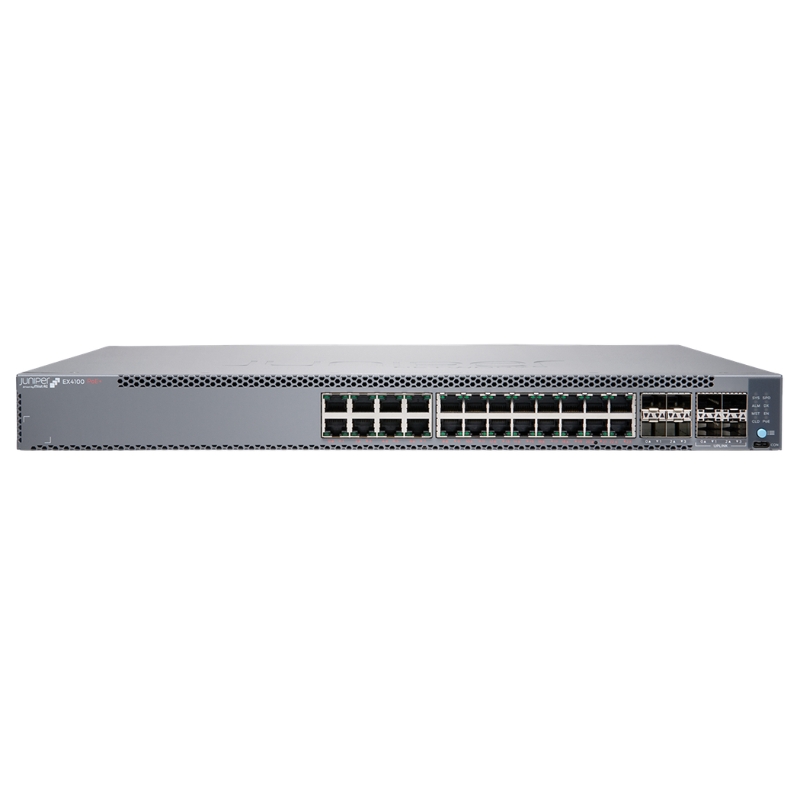


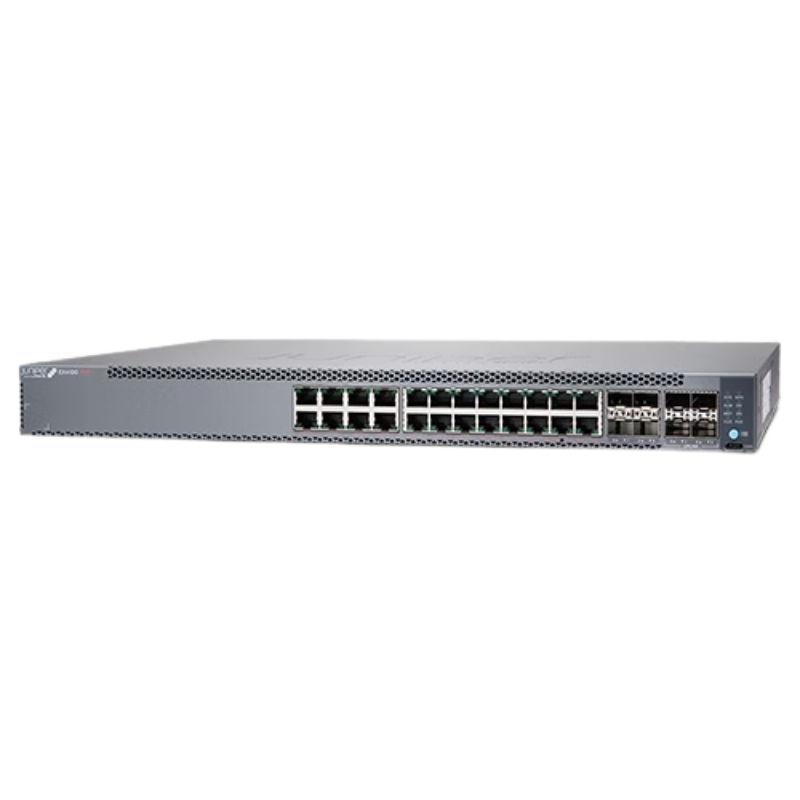
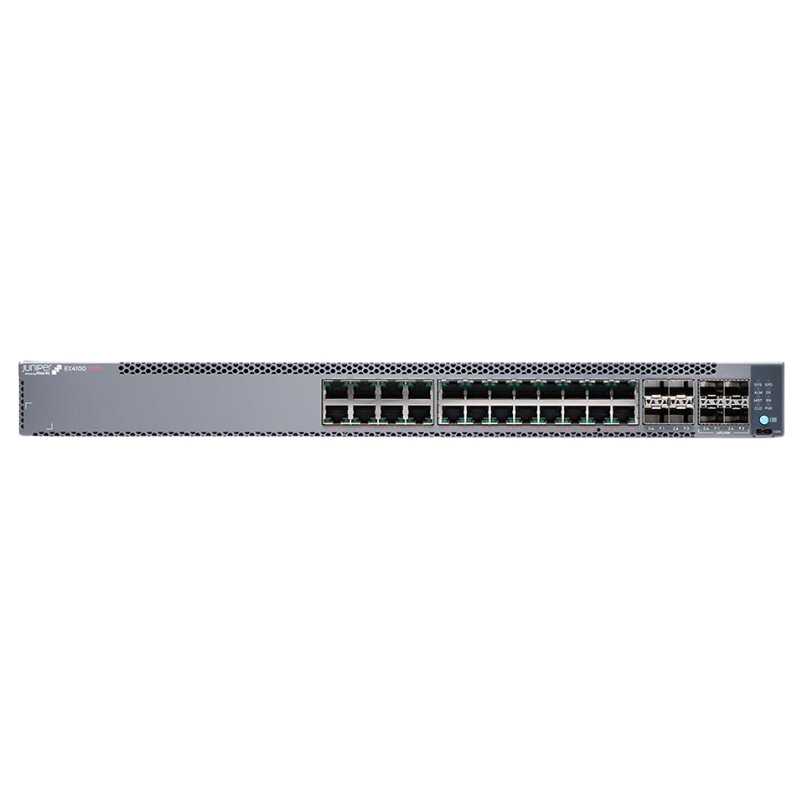
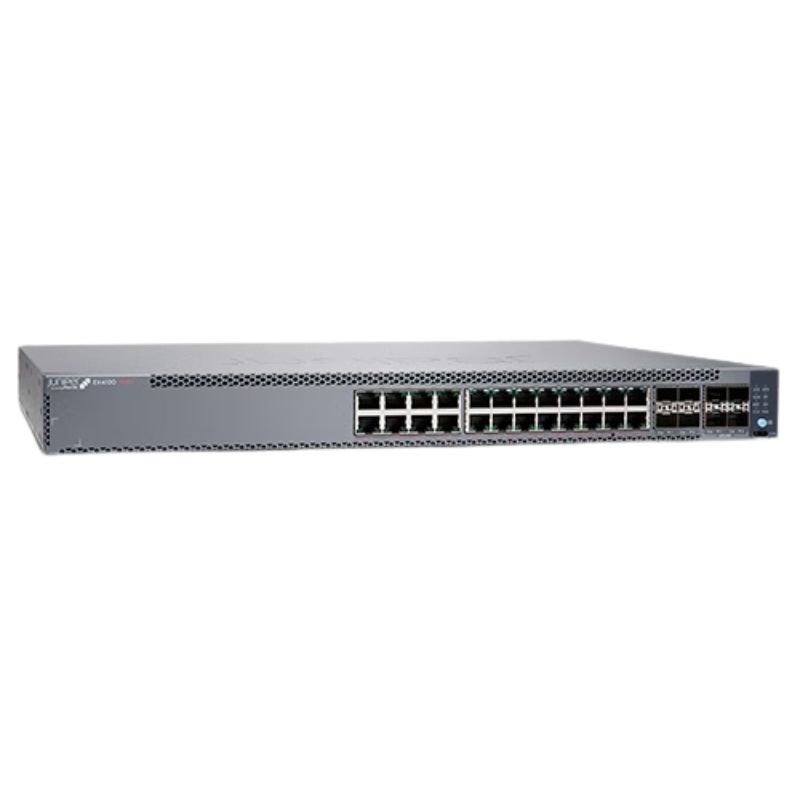
Juniper Networks EX4100-24P 24 Ports PoE 4 x 10GbE Uplink Ports + 4 x 25GbE Uplink Ports Layer 3 Managed 1U Rack Mountable Ethernet Switch. Factory-Sealed New in Original Box (FSB) with 3 Years Warranty
The Juniper Networks EX4100-24P represents a significant advancement in the access layer switching portfolio, designed specifically to meet the demands of modern enterprise networks, distributed campuses, and branch offices. As a 1U rack-mountable Ethernet switch, it seamlessly combines high-availability switching with robust Power over Ethernet (PoE+) capabilities. At its core, the EX4100-24P features 24 10/100/1000BASE-T PoE+ ports, making it an ideal solution for powering IP phones, wireless access points, security cameras, and IoT devices directly from the switch infrastructure.
The Juniper Networks EX4100-24P 24 Ports PoE Layer 3 Managed 1U Rack Mountable Ethernet Switch represents a high-performance access switching platform engineered for modern enterprise infrastructures requiring resilient connectivity, intelligent traffic handling, and scalable throughput. Designed with a compact 1U form factor, this switch delivers a dense port configuration while maintaining thermal efficiency and front-to-back airflow optimization for structured rack deployments. The architecture is built around a high-speed switching fabric that ensures wire-speed forwarding across all ports, enabling organizations to deploy latency-sensitive applications such as real-time communications, high-resolution video distribution, and virtual desktop environments without bottlenecks.
The internal switching engine is optimized for deterministic performance, allowing simultaneous data transmission across all 24 Gigabit Ethernet access ports and high-capacity uplink interfaces without frame loss. This architecture ensures consistent throughput even under heavy multicast, broadcast, or microburst traffic scenarios. Hardware-based forwarding tables accelerate packet classification and routing decisions, enabling rapid path selection and reducing CPU load. The design supports large MAC address tables and extensive routing entries, which are essential for segmented enterprise environments with numerous VLANs, subnets, and dynamic endpoints.
Cut-through switching technology minimizes packet delay by beginning frame forwarding before full packet reception, which is critical for voice, financial transaction, and control system traffic. Combined with deep packet buffers, the platform handles congestion gracefully, preventing dropped frames during peak utilization periods. This balance between speed and buffering efficiency allows the switch to sustain consistent application performance even when traffic patterns fluctuate.
The internal backplane bandwidth is engineered to support simultaneous bidirectional traffic across all interfaces, including the 10GbE and 25GbE uplink ports. This ensures that aggregated traffic from access devices can be transmitted upstream without oversubscription. The high-bandwidth backplane design is particularly valuable in environments where multiple high-throughput endpoints, such as wireless access points or IP cameras, operate concurrently.
The integrated Power over Ethernet functionality allows the switch to deliver electrical power directly through Ethernet cabling to connected devices. This capability eliminates the need for separate power adapters or dedicated electrical outlets, simplifying installation and reducing infrastructure costs. With 24 PoE-enabled ports, the switch can simultaneously power a wide range of network devices including wireless access points, IP telephones, surveillance cameras, access control readers, and IoT sensors. Intelligent power management ensures optimal distribution of available wattage across connected devices.
The platform automatically detects powered devices and negotiates power requirements using standardized protocols. It allocates wattage dynamically based on real-time device demands, ensuring efficient usage of the total PoE budget. When power demand approaches capacity, prioritization policies can be applied to guarantee that mission-critical endpoints remain powered while lower-priority devices may receive reduced allocation or be temporarily disabled.
Efficient power conversion circuitry minimizes heat generation during PoE delivery, preserving system stability and extending component lifespan. Intelligent fan speed control adjusts cooling levels based on temperature readings, maintaining optimal internal conditions without unnecessary noise or energy consumption. This makes the switch suitable for deployments in offices, classrooms, and control rooms where acoustic performance is important.
Built-in safeguards protect connected devices from power surges, short circuits, or voltage irregularities. Automatic fault detection isolates problematic ports to prevent cascading failures, ensuring that other connected devices remain operational. This reliability is essential for networks supporting security systems or communication infrastructure that must remain continuously active.
The EX4100-24P switch features four 10 Gigabit Ethernet uplink ports alongside four 25 Gigabit Ethernet uplink ports, enabling versatile connectivity to aggregation or core layers. This dual-speed uplink design allows network architects to tailor bandwidth allocation according to deployment scale, whether connecting to legacy 10GbE infrastructure or next-generation 25GbE backbones. The presence of multiple uplink interfaces also enables link aggregation, redundancy, and load balancing for enhanced throughput and fault tolerance.
Applications such as high-definition video streaming, large-scale file transfers, and virtualization platforms generate significant upstream traffic. The combined uplink capacity ensures that aggregated data from access ports can be transmitted without congestion, maintaining consistent performance for end users. The availability of 25GbE ports future-proofs the network by providing headroom for increasing traffic demands as organizations adopt higher-resolution media, cloud services, and data-intensive analytics platforms.
Multiple uplink interfaces can be grouped using link aggregation technologies to form logical high-capacity channels. This configuration increases bandwidth while also providing failover protection; if one physical link fails, traffic is automatically redistributed across remaining links without service interruption. Such redundancy is crucial for environments where network downtime could disrupt operations or lead to data loss.
The uplink ports support a variety of compatible transceivers, allowing deployment over fiber or copper media depending on distance and infrastructure requirements. Fiber modules enable long-distance connectivity across campuses or between buildings, while copper modules facilitate short-range high-speed links within data centers or equipment rooms. This adaptability simplifies network design and accommodates diverse physical layouts.
Integrated Layer 3 functionality enables the switch to perform advanced routing operations in addition to traditional switching tasks. This allows it to serve as both an access layer device and a distribution layer component, reducing the need for separate routing hardware. The platform supports dynamic routing protocols, static routing configurations, and policy-based forwarding, providing administrators with granular control over traffic flow between VLANs and subnets.
Hardware-accelerated routing ensures that communication between different network segments occurs at high speed without introducing latency. This capability is essential for environments where multiple departments or service groups must remain logically separated while still communicating efficiently. By offloading routing tasks from centralized routers, the switch improves overall network scalability and responsiveness.
Access control lists and traffic filtering mechanisms allow administrators to define rules governing which devices or protocols may traverse specific interfaces. These policies enhance security by restricting unauthorized communication paths and preventing malicious traffic from propagating across the network. Fine-grained filtering ensures that only legitimate data reaches sensitive resources.
Compatibility with standard routing protocols enables the switch to participate in larger routed topologies. It can exchange route information with upstream routers, automatically adapting to topology changes and selecting optimal paths. This dynamic behavior improves resilience and simplifies network management in complex environments with multiple routing domains.
The management framework is designed to streamline configuration, monitoring. Administrators can manage the switch through command-line interfaces, web-based dashboards, or centralized network management platforms. These options provide flexibility for both manual configuration and automated orchestration workflows. Real-time monitoring tools display interface statistics, traffic patterns, and system health metrics, allowing rapid detection of anomalies or performance issues.
Central management integration enables multiple switches to be configured simultaneously using standardized templates or scripts. This capability accelerates deployment in large networks and ensures consistent policy enforcement across all devices. Configuration rollback features allow administrators to revert to previous settings if changes produce unexpected results.
Streaming telemetry support allows the switch to export detailed performance data to analytics platforms. These insights provide visibility into bandwidth usage, latency trends, and application behavior, enabling proactive optimization and capacity planning. Continuous monitoring helps organizations anticipate bottlenecks before they affect users.
Automation interfaces support programmable configuration through APIs, allowing integration with orchestration tools and infrastructure-as-code frameworks. This capability reduces manual intervention and minimizes configuration errors, particularly in environments where network infrastructure must scale rapidly or be frequently reconfigured.
Security is embedded throughout the switch’s architecture to protect both infrastructure and connected endpoints. Authentication mechanisms verify device identities before granting network access, preventing unauthorized connections. Encryption support safeguards management traffic and sensitive data transmissions, ensuring confidentiality even across shared or untrusted links.
Administrators can define authentication requirements for each interface, enforcing identity verification through standards-based methods. This ensures that only authorized devices can connect to the network, reducing the risk of intrusion or unauthorized data access. Port security policies can also limit the number of devices permitted on a single interface.
Encrypted communication protocols protect administrative sessions from interception. Role-based access control ensures that only authorized personnel can modify configurations or view sensitive information. Audit logging records administrative actions, providing traceability and supporting compliance requirements.
The 1U rack-mountable chassis is optimized for space efficiency, allowing multiple units to be installed within standard equipment racks. Durable construction materials provide structural rigidity and electromagnetic shielding, ensuring reliable operation in data centers, wiring closets, or industrial environments. Front-panel port alignment simplifies cable management, while clearly labeled interfaces facilitate quick identification during installation or maintenance.
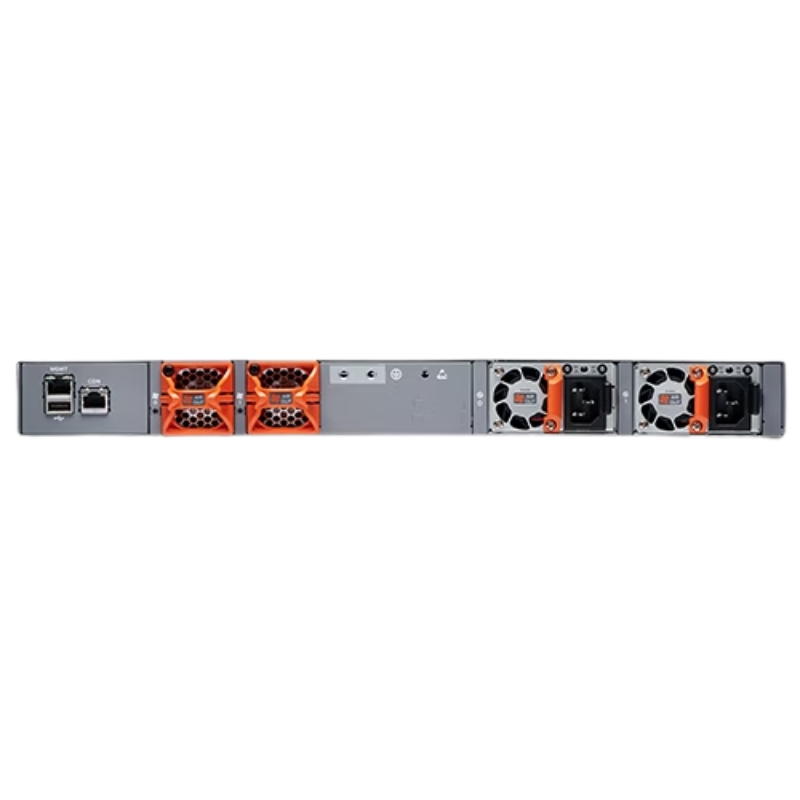
Strategically positioned ventilation channels and intelligent fan systems maintain stable internal temperatures even under heavy workloads. Variable fan speeds adjust automatically based on thermal conditions, balancing cooling efficiency with acoustic performance. This design supports continuous operation in environments where temperature fluctuations might otherwise affect electronic components.
The EX4100-24P switch incorporates a robust internal power supply designed for consistent voltage delivery and surge tolerance. Protection circuitry shields internal components from electrical disturbances, preserving operational stability. The power subsystem is engineered to support full PoE output and maximum throughput simultaneously without performance degradation.
Tool-less mounting options and clearly accessible connectors streamline installation. Status indicators on the front panel provide immediate visual feedback regarding link activity, power status, and system health. This visibility enables technicians to diagnose issues quickly without connecting diagnostic equipment.
The EX4100-24P switch is engineered to accommodate expanding network demands without requiring hardware replacement. Support for virtualization technologies and logical segmentation enables administrators to create multiple isolated networks on a single physical device. This capability is particularly useful for organizations that host multiple departments, tenants, or service environments within the same infrastructure.
VLAN and routing instance support allow traffic from different groups to remain logically separated while sharing the same switching hardware. Segmentation improves security and simplifies policy enforcement by isolating traffic flows. It also enables flexible network design where resources can be reassigned or reconfigured without physical rewiring.
Multiple switches can be interconnected to operate as a unified system, increasing port density and simplifying management. Stacking capabilities allow administrators to control several devices through a single interface while distributing traffic across the combined switching fabric. This approach provides scalability without increasing administrative complexity.
The inclusion of both 10GbE and 25GbE uplink ports ensures compatibility with evolving network standards. As backbone speeds increase, the switch can integrate seamlessly into higher-bandwidth infrastructures without requiring immediate replacement. This forward-compatible design protects investment and extends deployment lifespan.
The EX4100-24P switch is constructed with enterprise-grade components selected for durability and consistent performance. Extensive testing ensures that it can operate continuously under demanding conditions without degradation. Fault monitoring systems track internal parameters such as temperature, voltage, and fan speed, triggering alerts if values move outside acceptable ranges.
Protective circuits and firmware routines are designed to maintain operation even if certain subsystems encounter anomalies. Automatic recovery features restart affected modules without requiring manual intervention, minimizing downtime. These safeguards help maintain network availability for mission-critical services.
Hardware-level error checking verifies data integrity during transmission. Corrupted frames are identified and discarded before reaching destination devices, preventing propagation of faulty data. This mechanism enhances reliability for applications that require precise and accurate information exchange.
Component selection prioritizes longevity, allowing the switch to function reliably for extended deployment periods. Firmware updates can be applied to enhance functionality or address emerging requirements without replacing hardware. This adaptability ensures that the device remains aligned with evolving network standards and operational needs.


 Contact Us
 Information
 Catalog
 Solid State Drives (SSD)
 Network Switches
 Hard Disk Drives
 HBA & Controllers
 PC & Servers
 PC & Server Memory
 CPU & Processors
 Network Routers
 Power Supplies
 Tape Drives & Libraries
 Network Devices
 Computer & Network Cables