(7% discount is applied at checkout)
Cart is empty
Your go-to destination for cutting-edge server products
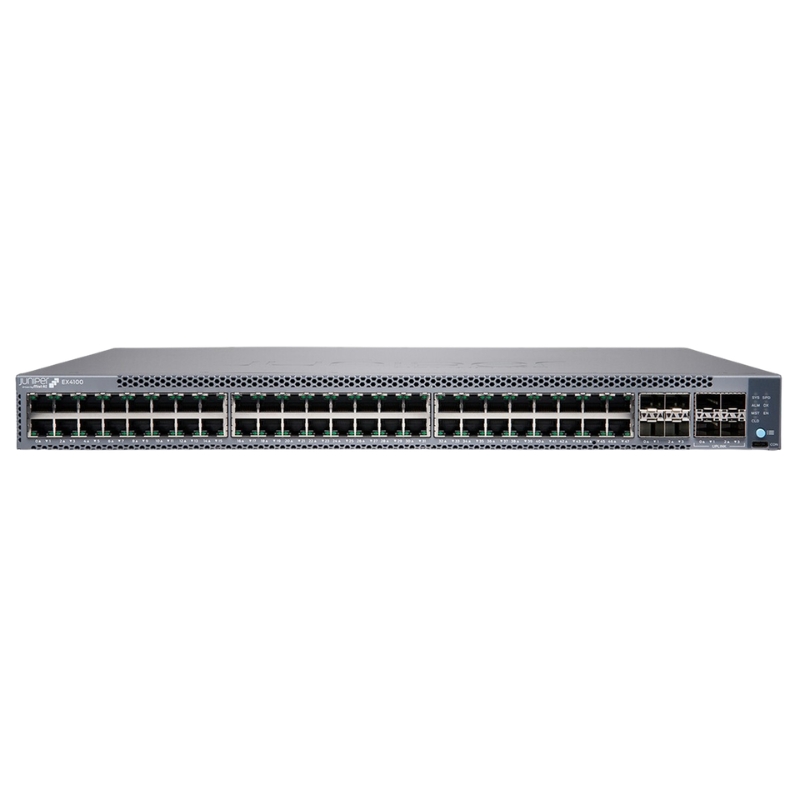


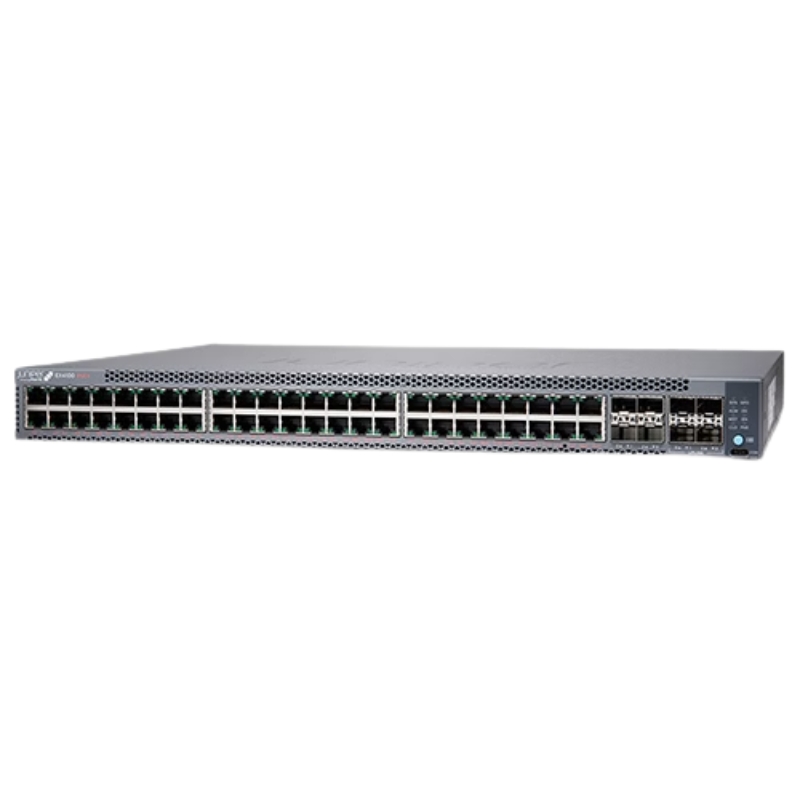
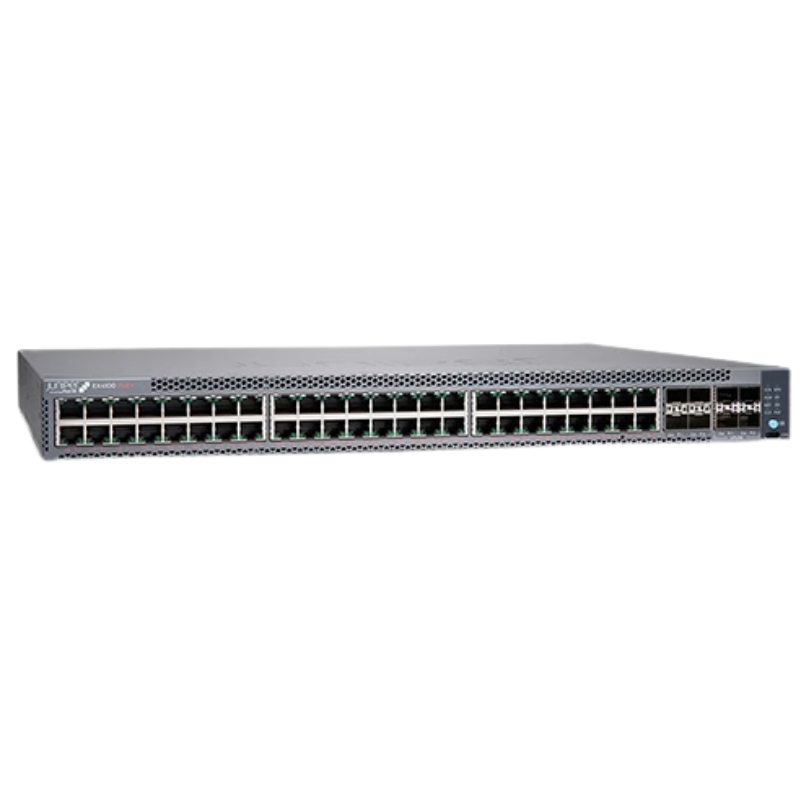
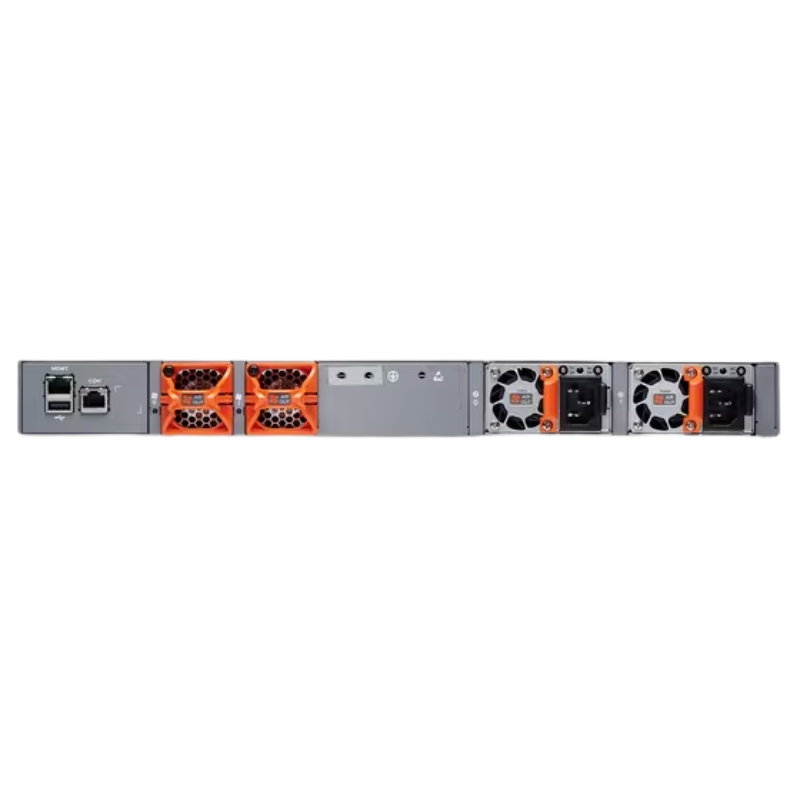
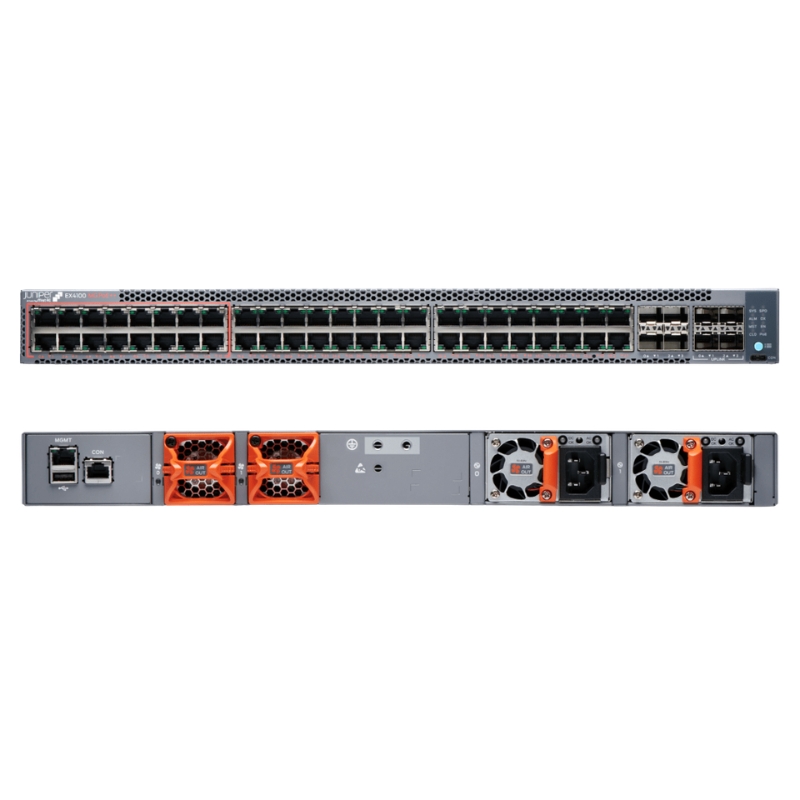
Juniper Networks EX4100-48P 48 Ports PoE 4x 10GbE Uplink Ports 4x 25GbE Stacking Layer 3 Managed 1U Rack Mountable Ethernet Switch. New Sealed with 1 Year Replacement Warranty
The Juniper Networks EX4100-48P represents a significant leap in enterprise access switching, designed to meet the escalating demands of modern converged networks. At its core, the EX4100-48P is a 48-port Power over Ethernet (PoE) switch that not only provides data connectivity but also electrical power to connected devices, simplifying infrastructure deployment. Its 1U rack-mountable form factor ensures seamless integration into standard data center or network closets, while its Layer 3 capabilities bring advanced routing and policy enforcement to the network edge.
The Juniper Networks EX4100-48P 48 Ports PoE 4x 10GbE Uplink Ports 4x 25GbE Stacking Layer 3 Managed 1U Rack Mountable Ethernet Switch is engineered for modern enterprise access deployments requiring high port density, advanced automation, intelligent power delivery, and scalable performance. Designed as part of a high-performance switching portfolio, this model integrates enterprise-class hardware architecture with software-defined intelligence, enabling organizations to deploy highly reliable access layer connectivity that supports converged data, voice, and video traffic across distributed infrastructures. Built in a compact 1U rack mountable chassis, the switch delivers consistent throughput, predictable latency, and deterministic packet handling suitable for campus networks, branch offices, and enterprise edge environments.
The internal architecture is based on a non-blocking switching fabric that ensures all 48 PoE-enabled Gigabit Ethernet ports can operate simultaneously at full line rate without congestion. This switching fabric is optimized for wire-speed forwarding and supports high packet-per-second performance, allowing latency-sensitive applications to maintain uninterrupted data flow. The hardware design incorporates enterprise-grade ASIC technology that accelerates Layer 2 and Layer 3 processing, enabling routing decisions to occur at hardware speed rather than relying on software processing.
The EX4100-48P switch is engineered with high forwarding capacity to support dense client environments where multiple endpoints simultaneously generate traffic. The architecture maintains consistent throughput even under heavy load conditions, ensuring real-time applications such as unified communications, video conferencing, and cloud-hosted services perform reliably. The internal buffering system dynamically allocates memory resources to active traffic flows, preventing packet loss during microbursts and sustaining performance stability.
The 48 integrated Gigabit Ethernet ports provide comprehensive connectivity for endpoint devices including IP phones, wireless access points, surveillance cameras, IoT sensors, and workstation systems. Each port supports Power over Ethernet, allowing both data and electrical power to be delivered over a single cable infrastructure. This simplifies deployments, reduces cabling complexity, and eliminates the need for external power supplies at device endpoints.
The PoE subsystem is engineered to support high-density device environments while maintaining efficient power allocation across all ports. Intelligent power management automatically detects connected device requirements and distributes wattage accordingly, preventing overload while maximizing available power capacity. The switch dynamically prioritizes power delivery to critical devices, ensuring essential infrastructure components remain operational even if total demand approaches the maximum power budget.
Dynamic allocation allows the switch to monitor real-time power consumption and adjust distribution across ports. When devices disconnect or reduce power draw, the system reallocates available power to newly connected endpoints. This capability enables administrators to deploy high-power devices without manual configuration, improving scalability and reducing operational complexity.
The integrated power management system incorporates efficiency mechanisms that reduce energy waste. Intelligent circuitry minimizes heat generation, while adaptive power scaling lowers consumption during periods of reduced network activity. These optimizations help maintain operational cost efficiency and contribute to environmentally responsible infrastructure design.
The switch features four 10 Gigabit Ethernet uplink ports designed to provide high-bandwidth connectivity to aggregation or core network layers. These uplinks support fiber or copper transceiver modules depending on deployment requirements, enabling flexible integration into existing infrastructures. High-speed uplinks prevent bottlenecks by ensuring aggregated traffic from access ports can be transmitted to upstream devices without performance degradation.
Link aggregation functionality enables multiple uplink ports to be combined into a single logical interface, increasing available bandwidth and providing redundancy. This ensures continuous connectivity even if one physical link fails. Aggregated uplinks improve throughput for high-demand environments and support scalable network architectures capable of handling increasing data loads.
Redundancy mechanisms allow the switch to maintain connectivity during link or module failures. Failover occurs automatically and seamlessly, preventing session interruptions and preserving active connections. This is critical for enterprise environments where uptime is essential for productivity and service availability.
Optimized uplink architecture minimizes transmission delay between access and aggregation layers. Reduced latency improves responsiveness for applications requiring real-time data exchange, including cloud computing platforms and virtual desktop environments.
The four dedicated 25 Gigabit Ethernet stacking ports enable multiple switches to be interconnected into a unified logical system. Stacking technology allows administrators to manage several physical switches as a single device, simplifying configuration and monitoring while increasing scalability. High-speed stacking links ensure inter-switch communication occurs at ultra-fast rates, allowing distributed switching resources to function cohesively.
Stacking capability supports expansion of port capacity by adding additional units without redesigning the network architecture. As organizational requirements grow, administrators can integrate additional switches into the stack, maintaining centralized control and consistent policy enforcement. This approach reduces management overhead while supporting future infrastructure growth.
Within a stacked configuration, one switch operates as the master control unit while others function as members. The unified control plane ensures consistent configuration across all stack members, eliminating configuration drift and simplifying deployment. Administrative changes propagate automatically throughout the stack, ensuring synchronized operation.
Resilient stacking topologies provide fault tolerance by maintaining communication paths even if one stacking link fails. Alternate paths ensure data continues to flow between stack members, preserving operational continuity and preventing network segmentation.
The integrated Layer 3 functionality allows the switch to perform routing between VLANs and subnets without requiring external routing hardware. Hardware-based routing ensures high-speed packet forwarding between network segments while maintaining low latency. This capability supports advanced network designs where segmentation, traffic isolation, and efficient path selection are required.
Inter-VLAN routing is processed directly within the switch ASIC, enabling high-speed communication between logically separated networks. This architecture eliminates the need for traffic to traverse external routers, improving efficiency and reducing network congestion.
The switch supports dynamic routing protocols that automatically exchange routing information with neighboring devices. This enables adaptive path selection, ensuring traffic is directed along optimal routes based on network conditions. Dynamic routing enhances scalability and simplifies network expansion.
Policy-based routing mechanisms allow administrators to define custom traffic paths based on source, destination, or application type. These granular controls enable optimization of bandwidth usage and ensure critical applications receive priority routing treatment.
The switch incorporates enterprise security mechanisms designed to protect network infrastructure from unauthorized access and malicious activity. Integrated security controls allow administrators to enforce authentication, restrict access, and monitor traffic for anomalies. These features help safeguard sensitive data and maintain network integrity.
Port-based authentication mechanisms verify device credentials before granting network access. This prevents unauthorized devices from connecting to the network and ensures only approved endpoints can communicate.
Filtering capabilities allow administrators to define rules that permit or deny traffic based on specific criteria. Inspection features analyze packets for suspicious patterns, helping identify potential threats before they impact the network.
Management interfaces are protected through encryption and authentication protocols, ensuring administrative access remains secure. This prevents interception of management traffic and protects configuration data from unauthorized modification.
The EX4100-48P switch is designed to support evolving network requirements through flexible expansion options and high-performance architecture. Its combination of high port density, stacking capability, and advanced routing ensures it can accommodate increasing device counts and bandwidth demands without requiring replacement.
Support for high-speed uplinks and stacking interfaces ensures the switch can integrate into next-generation network infrastructures. This future-ready design protects investment value and enables seamless adoption of higher-speed technologies as organizational requirements expand.
Stacking functionality allows administrators to scale port capacity incrementally by adding additional units. This modular expansion approach avoids disruptive infrastructure overhauls while maintaining centralized management.
Redundant links, failover capabilities, and resilient stacking topologies contribute to high availability operation. These features ensure continuous connectivity and minimize downtime, supporting mission-critical enterprise services that require constant network access.
The EX4100-48P switch is suitable for deployment in diverse enterprise scenarios including campus access layers, branch office networks, and high-density device environments. Its combination of PoE support, advanced routing, and scalable architecture allows it to serve as a versatile connectivity platform for organizations with varied networking requirements.
In campus deployments, the switch functions as a high-performance access layer device connecting user endpoints and wireless infrastructure. High-speed uplinks provide seamless connectivity to distribution and core layers, ensuring consistent performance across the network.
For remote or branch locations, the switch delivers enterprise-grade functionality in a compact form factor. Integrated Layer 3 routing eliminates the need for additional routing hardware, simplifying infrastructure while maintaining performance.
The combination of 48 PoE ports and intelligent power management allows the switch to support dense device deployments such as large office floors or IoT installations. Efficient resource allocation ensures stable operation even when numerous devices are connected simultaneously.


 Contact Us
 Information
 Catalog
 Solid State Drives (SSD)
 Network Switches
 Hard Disk Drives
 HBA & Controllers
 PC & Servers
 PC & Server Memory
 CPU & Processors
 Network Routers
 Power Supplies
 Tape Drives & Libraries
 Network Devices
 Computer & Network Cables