(7% discount is applied at checkout)
Cart is empty
Your go-to destination for cutting-edge server products
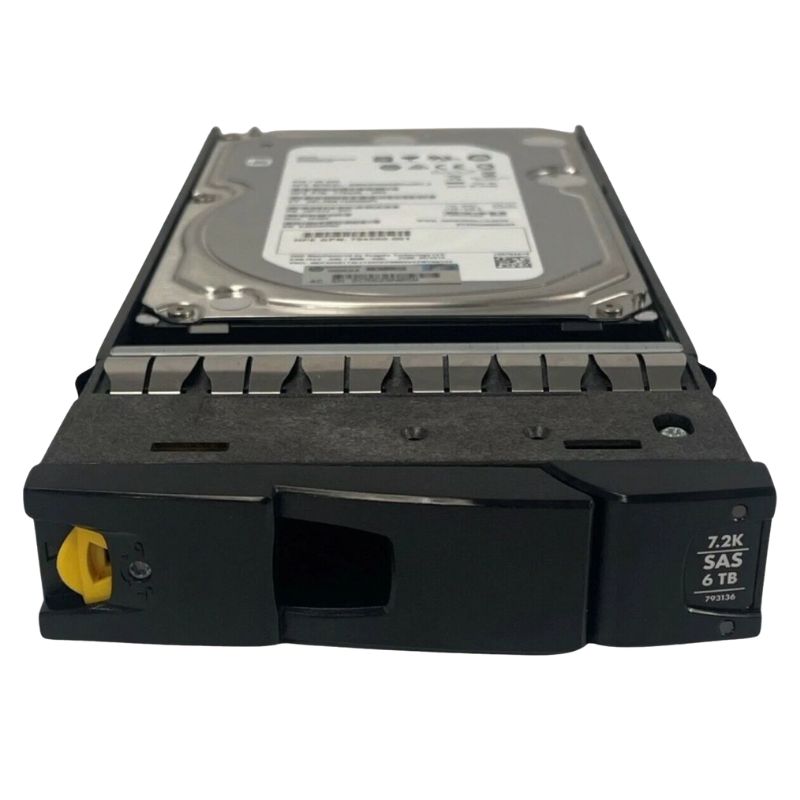


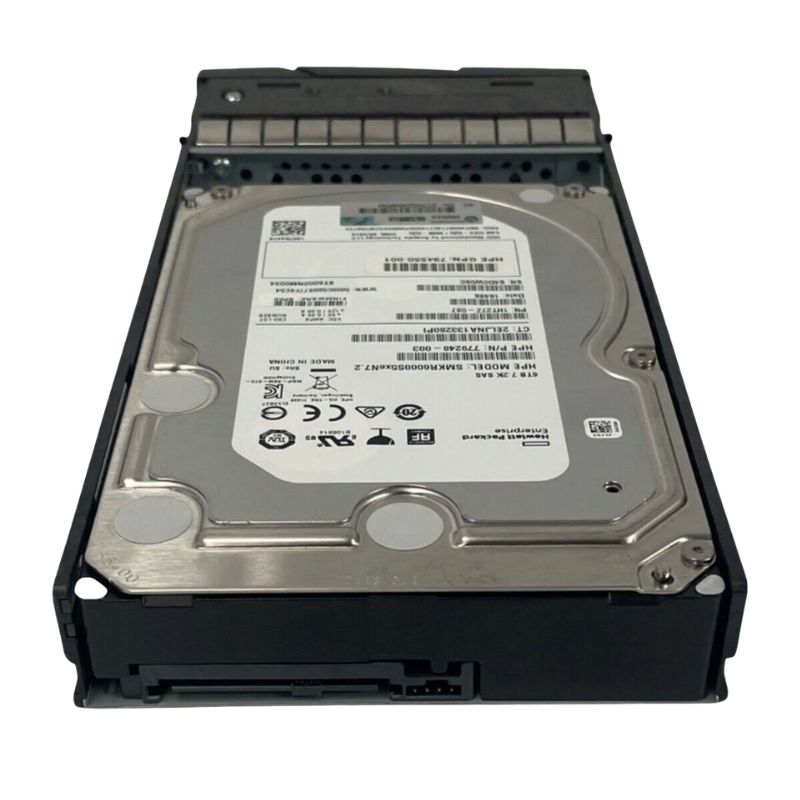
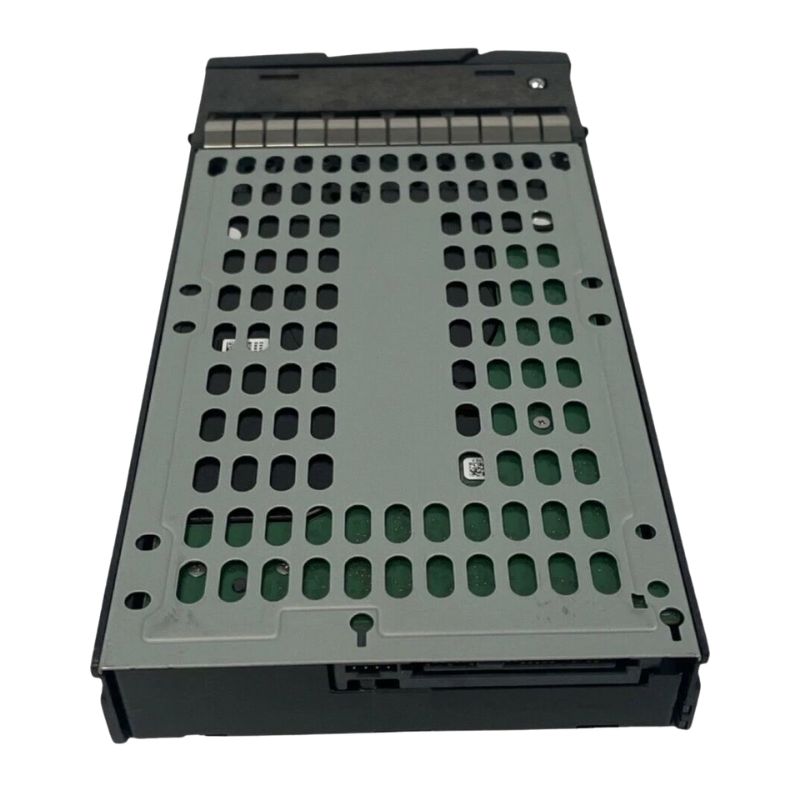
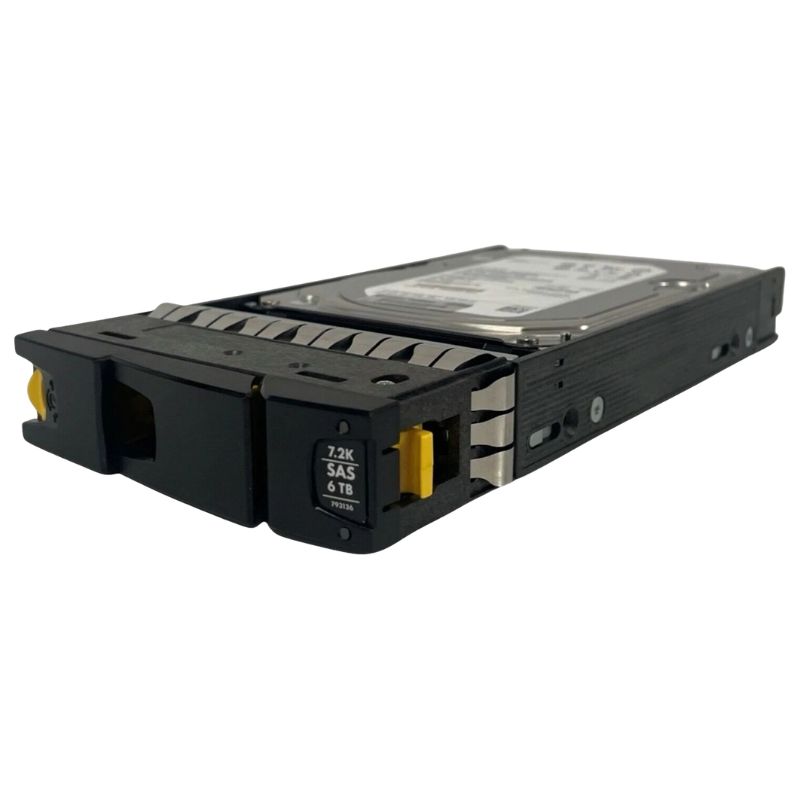
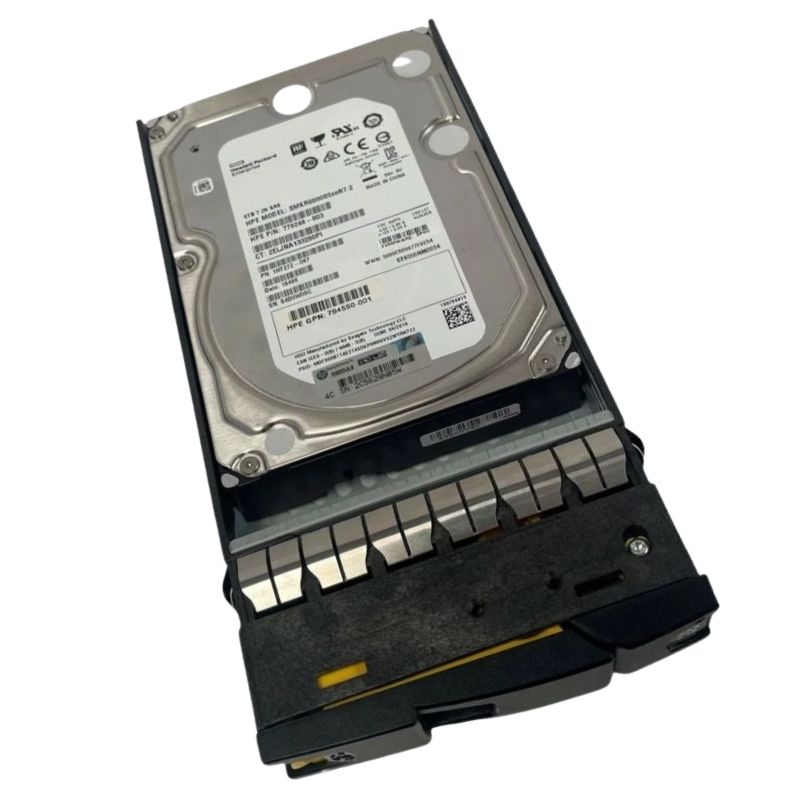
HPE K0F28A 6TB 7.2K RPM SAS 6GBPS Nearline 3.5-Inch for 3Par StoreServ M6720 Internal Hard Disk Drive. Excellent Refurbished with 1-Year Replacement Warranty
K0F28A — HPE 6TB 7,200 RPM SAS 6Gbps Nearline 3.5" Internal Hard Disk Drive
The K0F28A is an HPE-branded enterprise nearline internal hard disk drive engineered for capacity-centric storage tiers. With a 6 TB capacity, 3.5-inch form factor and a 7,200 RPM spindle, this SAS 6.0 Gbps drive balances high storage density with reliable throughput — ideal for archival, backup, and bulk data applications in HPE 3Par StoreServ M6720 environments.
Designed as a nearline serial-attached SCSI drive, the K0F28A provides steady sustained transfer rates suitable for large sequential workloads. The 7.2K RPM spindle delivers improved latency and higher sustained I/O compared with lower-speed nearline drives, making it a dependable option where cost-effective capacity and consistent performance are required.
This drive is built for plug-and-play integration with HPE storage platforms and is explicitly compatible with HPE 3Par StoreServ M6720 arrays. Its SAS 6Gbps interface supports robust multi-pathing and enterprise storage features when used in supported HPE controllers and backplanes.
As an HPE qualified component, the K0F28A is manufactured to enterprise standards and intended for 24/7 datacenter operation. Typical enterprise capabilities you should expect when deployed in HPE systems include:
The K0F28A is marketed specifically for HPE 3PAR StoreServ M6720 platforms. Validated drives deliver smoother firmware interactions with array controllers, predictable failure modes, and guaranteed support from HPE when part of a validated configuration. Using validated parts minimizes unexpected behavior during rebuilds, background scrubbing, and RAID scrubbing operations.
Nearline drives like the K0F28A excel at large-block sequential operations. Typical use cases where this drive will perform well include:
While acceptable for mixed workloads in tiered architectures, the K0F28A is not optimized for high IOPS random-access workloads. If your environment requires sustained high IOPS for databases or latency-sensitive applications, consider placing transactional data on SSD or faster SAS types while using the K0F28A for capacity-tier data.
Enterprise 7.2K SAS drives usually deliver modest random IOPS compared to 10K/15K HDDs and SSDs. Rebuild times for multi-terabyte spindles can be lengthy — planning RAID layouts and spare allocation is important to minimize exposure during rebuilds.
Monitoring SMART (Self-Monitoring, Analysis, and Reporting Technology) parameters through your array management software is recommended. Drive indicators to watch include reallocated sectors, spin-up time anomalies, and escalating CRC or read/write error counts. Proactive replacement on SMART anomalies reduces the risk of correlated failures during rebuild operations.
Choosing an appropriate RAID level balances performance, capacity efficiency, and rebuild exposure. For K0F28A drives in 3PAR StoreServ M6720 arrays, common configurations include:
Large nearline drives can take many hours to rebuild after a failure. Use redundancy strategies to reduce exposure:
Compared to SSDs, mechanical drives draw more power during spin-up and sustained operation, but modern 7.2K nearline models are optimized for lower idle power. Consider drive spin-down policies, drive sleep states if supported by the array, and power budgets per chassis when populating rows of drives.
Dense LFF drive shelves require proper airflow management. Follow these best practices:
K0F28A drives are ideal for backup targets, deduplicated repositories, and long-term archives. When used as part of a tiered storage design, they can store deduplicated backup sets or compressed archive objects that are infrequently accessed but must be retained for compliance.
Organizations dealing with large media files — video archives, imagery, and audio assets — will benefit from the sequential throughput of these drives. Streaming media from a nearline pool reduces the cost of storage while delivering acceptable playback performance when combined with caching layers.
Cloud-native or private object stores that implement lifecycle policies can move older objects to nearline pools backed by K0F28A drives for economical retention without sacrificing the SAS reliability layer.
Enterprise SSDs provide orders-of-magnitude better random IOPS and lower latency, but at a significantly higher cost per gigabyte. K0F28A is preferable where capacity cost dominates and the workload is not latency-sensitive.
Higher RPM HDDs (10K/15K) deliver improved random IOPS and reduced seek latency useful for transactional workloads. However, those drives often have lower capacities and higher power/heat and cost. For large-capacity cold tiers, the 6TB 7.2K is a strong choice.
SATA nearline drives may offer similar capacities at a lower purchase price, but SAS drives like the K0F28A bring enterprise-grade command sets, multipath reliability, and better manageability in enterprise arrays, justifying the premium for mission-critical deployments.
Avoid replacing many drives at once in the same array or updating all drives' firmware simultaneously. Staggered changes reduce correlated failures and allow monitoring for anomalies after each batch update.
For backup-target uses, periodically perform restores to validate integrity. A backup stored on nearline media is only as useful as its ability to be restored successfully after long retention intervals.
Some enterprise HDD SKUs may include self-encryption features. If regulatory compliance or data-at-rest encryption is required, verify whether the specific K0F28A SKU includes SED capability or whether encryption must be provided at the controller/array level.
Establish data sanitization procedures for decommissioning drives. For drives that leave secure environments, use NIST- or HPE-recommended secure erase methods. Maintain chain-of-custody records for sensitive datasets.
Follow HPE's official release notes and interoperability matrices when applying firmware upgrades to the 3PAR StoreServ M6720 and its drives. Firmware mismatches can cause degraded performance or unsupported operational modes.


 Contact Us
 Information
 Catalog
 Solid State Drives (SSD)
 Network Switches
 Hard Disk Drives
 HBA & Controllers
 PC & Servers
 PC & Server Memory
 CPU & Processors
 Network Routers
 Power Supplies
 Tape Drives & Libraries
 Network Devices
 Computer & Network Cables