(7% discount is applied at checkout)
Cart is empty
Your go-to destination for cutting-edge server products
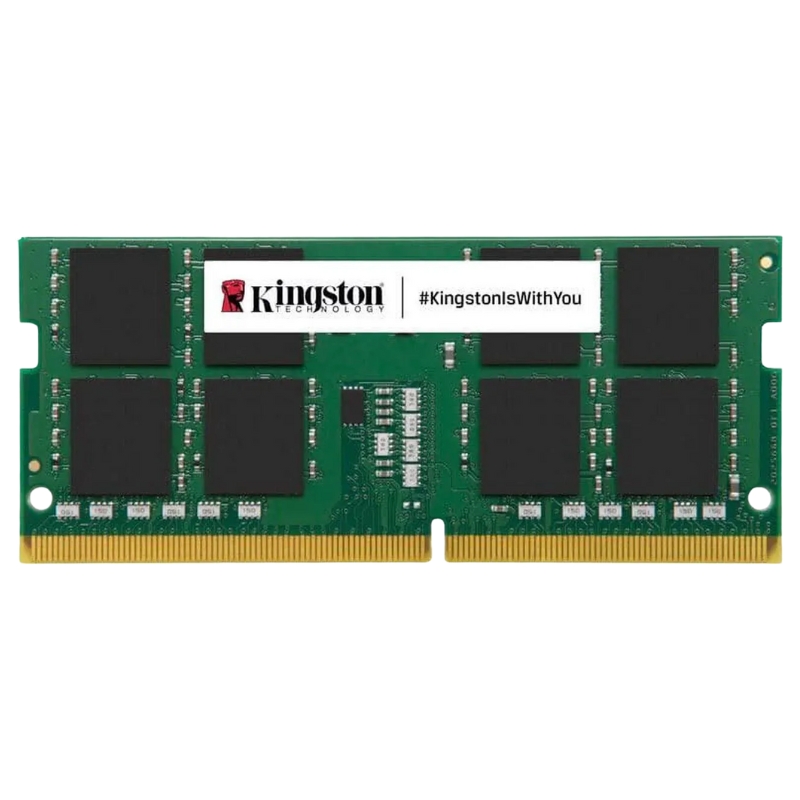


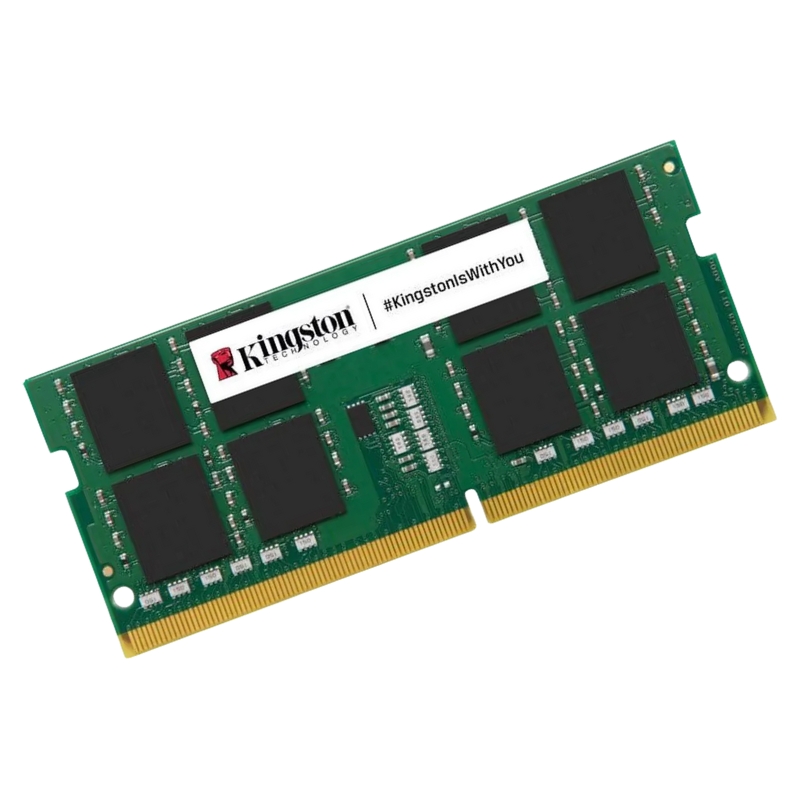
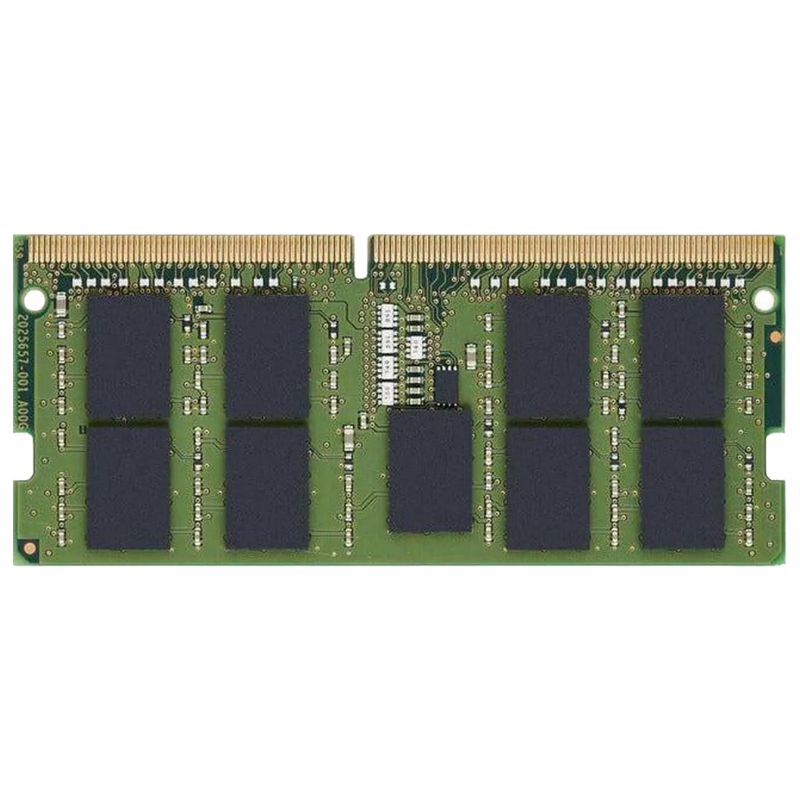
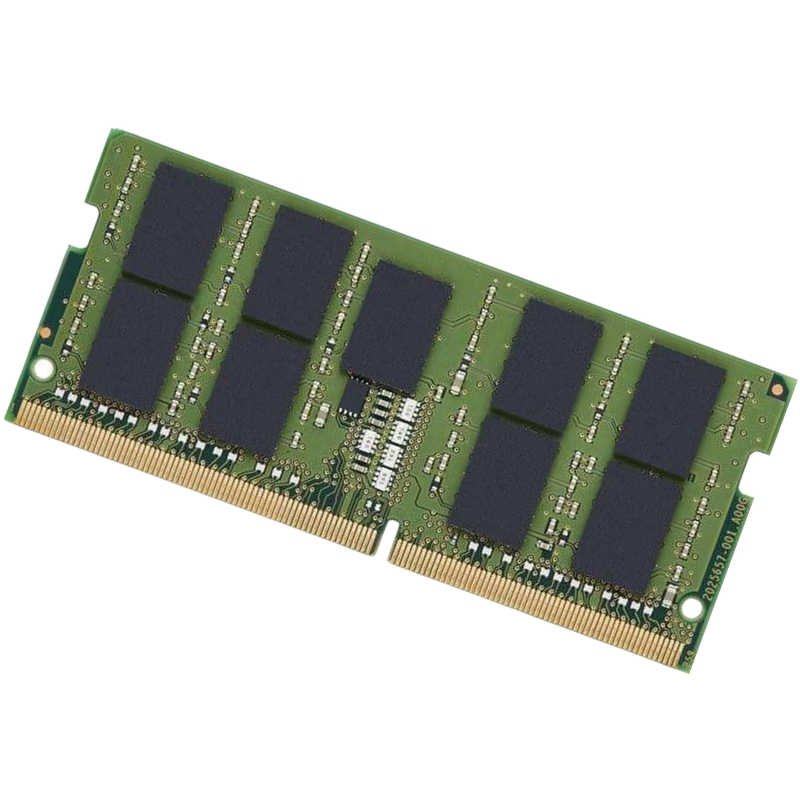
Kingston KSM32SED8/32HC 32GB PC4-25600 DDR4 3200MHz ECC Unbuffered CL22 260-Pin SODIMM 1.2V Dual Rank Memory Module. New Sealed with 1-Year Replacement Warranty
The Kingston KSM32SED8/32HC 32GB DDR4 SDRAM 3200MHz Memory Module is designed to deliver exceptional speed, stability, and efficiency for modern server environments. This high-capacity RAM ensures smooth multitasking and reliable performance for demanding workloads.
The Kingston KSM32SED8/32HC 32GB PC4-25600 DDR4 3200MHz ECC Unbuffered SODIMM belongs to a specialized category of enterprise-grade memory modules designed for compact computing platforms that require both high performance and data integrity. This category focuses on DDR4 ECC unbuffered SODIMM memory engineered for professional laptops, small form factor workstations, embedded systems, and entry-level servers where reliability is non-negotiable and physical space is limited. Unlike consumer-grade notebook memory, this class of modules integrates error correction technology while maintaining compatibility with systems that demand low power consumption and thermal efficiency.
As computing environments continue to evolve toward virtualization, edge computing, and always-on workloads, memory reliability has become as critical as raw capacity and speed. DDR4 ECC SODIMM memory fills a crucial gap between traditional desktop UDIMMs and server-focused RDIMMs, delivering enterprise stability without the size or power overhead of registered modules. The Kingston KSM32SED8/32HC exemplifies this category by combining a substantial 32GB capacity with DDR4-3200 bandwidth, dual-rank architecture, and strict adherence to JEDEC specifications.
DDR4 memory represents a significant advancement over previous DDR generations, particularly in terms of bandwidth efficiency, voltage reduction, and signal integrity. Modules rated as PC4-25600 operate at an effective data rate of 3200MHz, enabling theoretical bandwidths of up to 25.6GB/s per module. In the context of ECC SODIMM memory, this level of throughput ensures that compact systems can handle data-intensive tasks such as virtualization hosting, real-time analytics, and professional content creation without bottlenecks.
The PC4-25600 classification also reflects optimized memory timings and improved prefetch architecture inherent to DDR4 technology. With a burst length of eight and enhanced bank group organization, DDR4-3200 memory supports more efficient parallel access to data. This is especially beneficial in multi-core processors commonly used in mobile workstations and embedded servers, where memory concurrency directly impacts overall system responsiveness.
Operating at 3200MHz, this memory category delivers a balanced combination of speed and stability. In small form factor systems, higher frequencies must be carefully managed to avoid signal degradation and excessive power draw. Kingston’s DDR4-3200 ECC SODIMM modules are engineered to maintain stable signaling within the constraints of laptop and embedded system motherboard layouts, ensuring consistent performance even under sustained workloads.
The 3200MHz frequency also aligns with modern CPU memory controllers found in Intel Xeon E, Intel Core workstation-class processors, and AMD Ryzen Pro platforms that support ECC functionality. This alignment allows systems to operate at native memory speeds without downclocking, maximizing return on investment for professional-grade hardware deployments.
Applications that rely heavily on memory bandwidth, such as database caching, in-memory analytics, and real-time simulation, benefit directly from the PC4-25600 performance tier. ECC SODIMM modules in this category ensure that high-speed data transfers occur with built-in protection against single-bit errors, reducing the risk of corrupted datasets or system instability during mission-critical operations.
Error Correcting Code, commonly known as ECC, is a defining feature of this memory category. ECC memory detects and corrects single-bit memory errors and identifies multi-bit errors, preventing silent data corruption that could otherwise compromise system reliability. In professional and enterprise environments, even a single memory error can have cascading effects on applications, file systems, and virtual machines.
ECC SODIMM modules like the Kingston KSM32SED8/32HC integrate additional parity bits within the memory architecture, allowing the memory controller to perform real-time error checking. This process occurs transparently, without impacting application performance, making ECC memory an essential requirement for systems that operate continuously or handle sensitive data.
While ECC memory has traditionally been associated with large servers, its adoption in SODIMM form factors has expanded its benefits to mobile workstations and embedded platforms. These systems are often deployed in environments where uptime is critical, such as medical imaging equipment, industrial automation controllers, and remote edge servers. ECC SODIMM memory provides the same data integrity assurances as server DIMMs while fitting within the physical and power constraints of compact devices.
The Kingston KSM32SED8/32HC is specifically designed to support platforms with ECC-enabled memory controllers, ensuring full compatibility and proper error correction functionality. This makes it a reliable choice for professionals who require workstation-class stability in portable or space-constrained systems.
Single-bit errors can occur due to electrical interference, cosmic radiation, or natural wear of memory cells over time. ECC memory automatically corrects these errors before they reach the operating system or application layer. In systems equipped with ECC SODIMM modules, this proactive correction significantly reduces the likelihood of crashes, data corruption, and unexplained behavior that can disrupt productivity.
Unbuffered memory, often abbreviated as UDIMM or in this case unbuffered SODIMM, communicates directly with the system’s memory controller without the use of a register or buffer. This design results in lower latency compared to registered memory modules, making unbuffered ECC SODIMM memory ideal for systems that prioritize responsiveness alongside reliability.
The Kingston KSM32SED8/32HC leverages this unbuffered architecture to deliver fast access times while maintaining ECC functionality. This balance is particularly important in workstation and edge computing scenarios, where applications demand both quick memory access and protection against data errors.
With a CAS latency of CL22, this memory category offers stable and predictable performance at DDR4-3200 speeds. While CL22 is optimized for reliability rather than extreme overclocking, it aligns with JEDEC standards to ensure broad compatibility and consistent operation across supported platforms. In professional environments, predictable latency is often more valuable than marginal gains in raw speed.
CL22 timing also contributes to thermal stability, as the module operates within defined voltage and timing parameters. This helps maintain system longevity, particularly in always-on devices and mobile workstations that experience variable thermal conditions.
JEDEC compliance ensures that unbuffered ECC SODIMM modules adhere to industry-standard electrical, mechanical, and thermal specifications. This compliance simplifies system integration and reduces the risk of compatibility issues during deployment or future upgrades. Kingston’s strict adherence to JEDEC standards makes the KSM32SED8/32HC suitable for a wide range of OEM and custom-built systems.
The 260-pin SODIMM form factor is a hallmark of modern DDR4 laptop and compact system memory. This category of memory is specifically engineered to fit into smaller motherboard layouts without sacrificing performance or capacity. The Kingston KSM32SED8/32HC utilizes this form factor to deliver enterprise-grade memory capabilities in environments where standard DIMMs are impractical.
SODIMM modules are commonly used in laptops, mini PCs, network appliances, and embedded systems. By offering ECC functionality in this compact format, manufacturers can design systems that meet strict size requirements while still benefiting from advanced memory protection features.
The 260-pin interface provides sufficient signal pathways to support high-speed DDR4 operation, including ECC parity bits. Careful pin layout and signal routing are essential to maintain integrity at 3200MHz, particularly in densely packed system boards. Kingston’s engineering ensures that each module meets these requirements, supporting stable operation even in challenging physical environments.
The reduced height and length of SODIMM modules also contribute to improved airflow and thermal management within compact enclosures. This is especially important for systems deployed in confined spaces or fanless designs, where efficient heat dissipation directly affects reliability.
Professional-grade laptops and small workstations increasingly rely on high-capacity SODIMM memory to support demanding workloads. The availability of 32GB ECC SODIMM modules enables these systems to run multiple virtual machines, large datasets, and professional software suites without compromising stability or performance.
Dual rank memory architecture plays a significant role in maximizing memory density and performance. In a dual rank configuration, memory chips are organized into two logical ranks that can be accessed independently by the memory controller. This design allows for better utilization of memory channels and can improve effective bandwidth in supported systems.
The Kingston KSM32SED8/32HC features a dual rank layout, enabling its 32GB capacity within the SODIMM form factor. This makes it possible to achieve high total system memory capacity even in devices with limited memory slots.
Dual rank modules can offer performance advantages in certain workloads by allowing the memory controller to interleave accesses between ranks. This can reduce idle cycles and improve throughput, particularly in multi-threaded applications. When combined with ECC functionality, dual rank SODIMM memory delivers both performance efficiency and data protection.
Capacity scaling is another key advantage. Systems with two SODIMM slots can reach 64GB of ECC memory using dual rank 32GB modules, significantly expanding the capabilities of compact platforms without requiring larger form factors.
Modern CPUs are designed to support dual rank memory configurations and can take advantage of their architectural benefits. Ensuring compatibility between the memory module and the system’s memory controller is essential, and JEDEC-compliant dual rank ECC SODIMM modules like this one are validated to operate correctly within supported platforms.
Operating at a nominal voltage of 1.2V, DDR4 ECC SODIMM memory significantly reduces power consumption compared to earlier DDR generations. This low-voltage operation is particularly beneficial in mobile and embedded systems, where energy efficiency directly impacts battery life, thermal output, and overall system sustainability.
The Kingston KSM32SED8/32HC is designed to maintain stable performance at 1.2V, even under heavy workloads. This efficiency allows systems to operate cooler and quieter, which is essential for professional environments that demand both performance and comfort.
Lower operating voltage translates to reduced heat generation at the memory module level. This contributes to improved thermal conditions inside the system chassis, reducing stress on other components such as CPUs and power delivery circuits. Over time, these benefits support longer hardware lifespan and more consistent performance.
In always-on systems, such as edge servers and network appliances, energy-efficient memory helps minimize operational costs while maintaining enterprise-grade reliability.
Energy-efficient components play a growing role in sustainable IT strategies. By deploying low-voltage ECC SODIMM memory, organizations can reduce overall power consumption across distributed computing environments, supporting both cost efficiency and environmental responsibility.


 Contact Us
 Information
 Catalog
 Solid State Drives (SSD)
 Network Switches
 Hard Disk Drives
 HBA & Controllers
 PC & Servers
 PC & Server Memory
 CPU & Processors
 Network Routers
 Power Supplies
 Tape Drives & Libraries
 Network Devices
 Computer & Network Cables