(7% discount is applied at checkout)
Cart is empty
Your go-to destination for cutting-edge server products
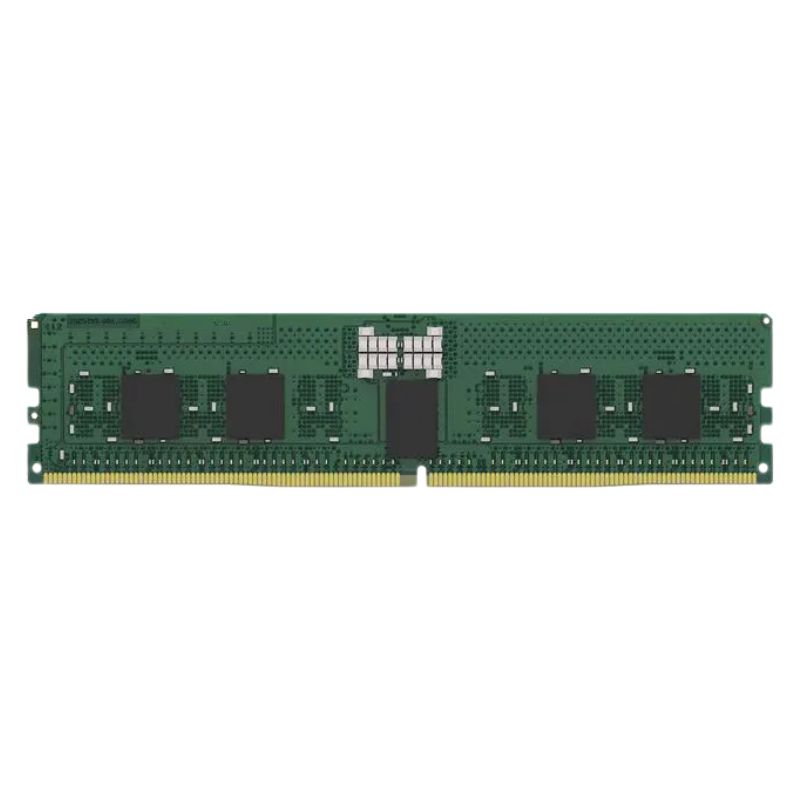


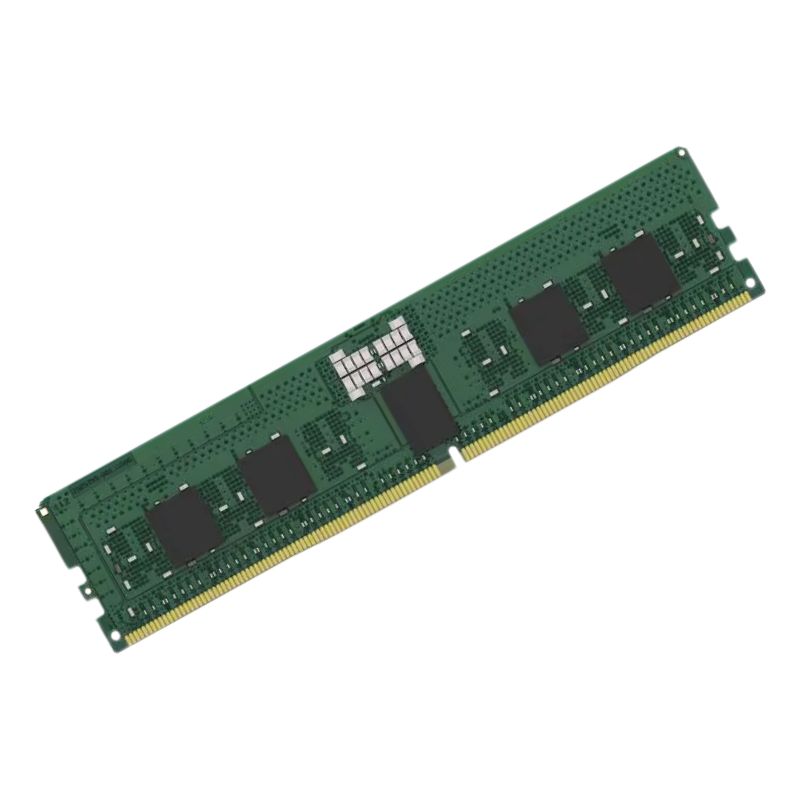
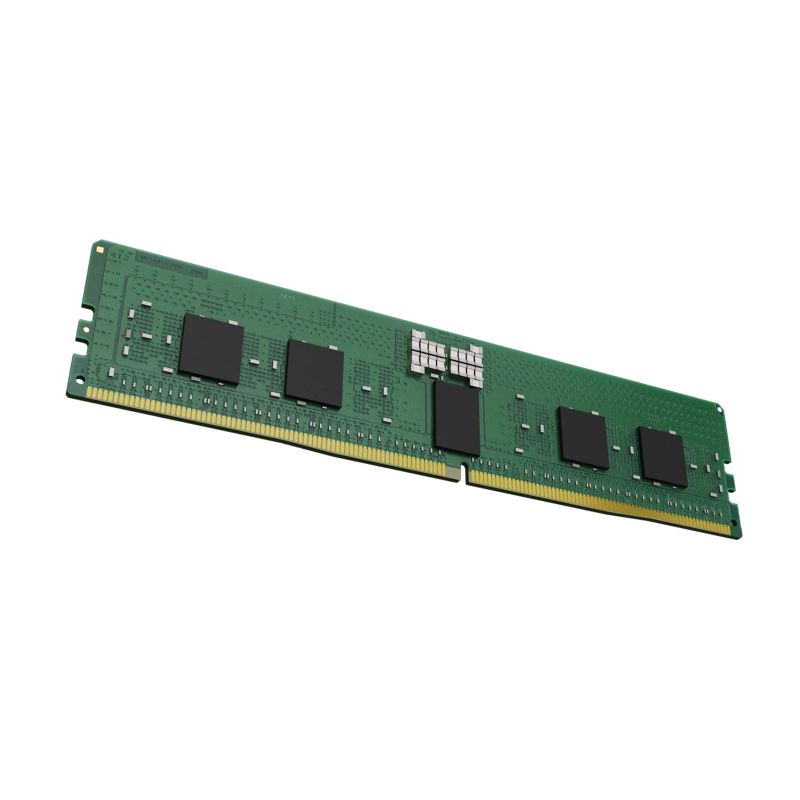
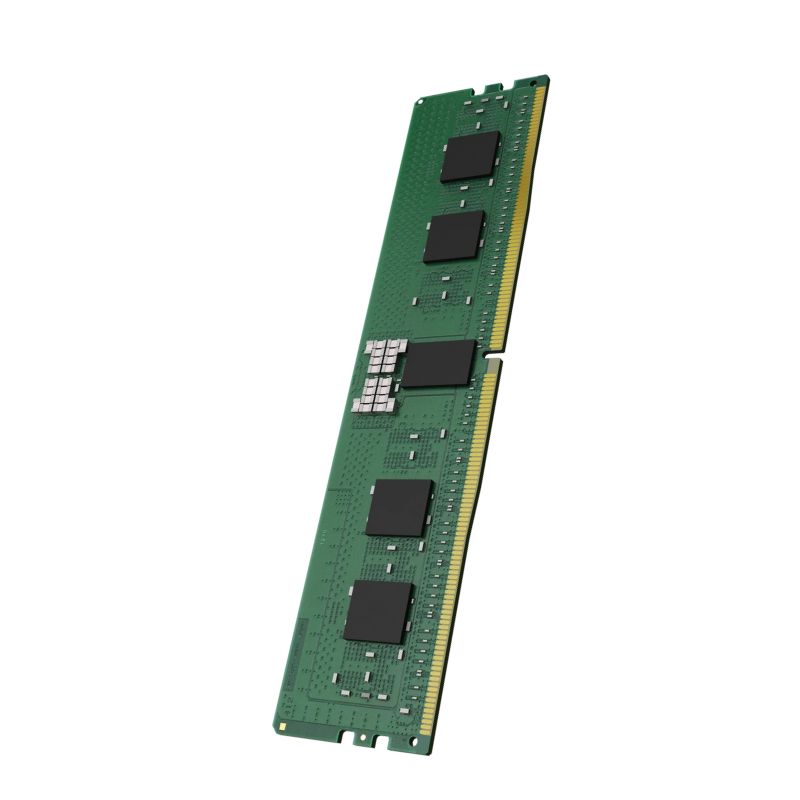
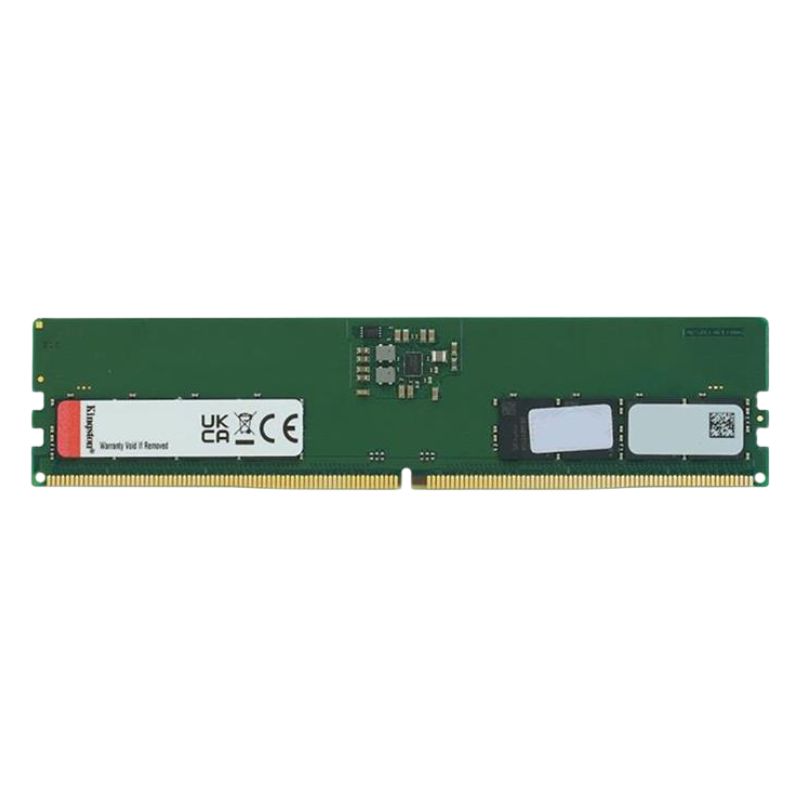
Kingston KSM48R40BS8-16HA 16GB DDR5-4800 ECC RDIMM PC5-38400 CL40 288-Pin Memory Module. New Sealed in Box (NIB) - Call
The Kingston KSM48R40BS8-16HA is a high-performance 16GB DDR5 SDRAM memory module designed to enhance server and workstation performance. With advanced features like ECC error correction and registered signaling, this memory module ensures data integrity and reliability for critical computing environments.
The Kingston KSM48R40BS8-16HA 16GB DDR5-4800 ECC RDIMM represents a foundational leap forward in server memory technology. Engineered for next-generation data centers, cloud infrastructure, and mission-critical workstations, this module is built upon the rigorous JEDEC standard specifications, offering unparalleled reliability, performance, and power efficiency. As an ECC RDIMM (Error-Correcting Code Registered Dual In-Line Memory Module), it is the workhorse of choice for system administrators and IT architects who prioritize data integrity and system stability above all else. Its design is not about pushing overclocking boundaries but about delivering consistent, rock-solid performance in 24/7 operational environments where downtime is not an option.
At its heart, the Kingston KSM48R40BS8-16HA is a meticulously engineered component designed for compatibility and stability. Let's delve into the architecture that defines this memory module.
This module features a single-rank design with a substantial 16GB capacity. This capacity per module is ideal for balancing memory density with signal integrity in multi-channel server platforms. Systems can be populated with multiple modules to achieve total memory configurations of 64GB, 128GB, 256GB, and beyond, depending on the server motherboard's capabilities. The single-rank design simplifies the memory controller's management, often allowing for higher speeds or more modules per channel in heavily populated systems.
A "rank" is a set of DRAM chips that operate together to form a 64-bit (or 72-bit with ECC) data width. The single-rank (1R) architecture of this module means the memory controller interacts with one complete set of chips at a time. This often enables better timing optimization and can allow for higher operational frequencies in systems with many installed DIMMs per channel compared to dual-rank modules, which place more electrical load on the memory subsystem.
Operating at a base frequency of 4800MT/s (Mega Transfers per second), this DDR5 module marks a significant performance increase over previous DDR4 generations, which typically capped at 3200MT/s for standard ECC modules. The PC5-38400 designation directly correlates to this speed: 4800 MT/s * 8 bytes = 38400 MB/s of theoretical peak bandwidth per module. In a typical server eight-channel memory configuration, aggregate bandwidth scales dramatically, eliminating bottlenecks for data-intensive applications like virtualization, in-memory databases, and scientific computing.
The "PC5" prefix unequivocally identifies this as a DDR5 module, following the lineage of PC4 (DDR4) and PC3 (DDR3). The number "38400" refers to the module's maximum theoretical transfer rate in megabytes per second (MB/s). This standardization allows for quick cross-referencing and compatibility checks against motherboard and system specifications that list supported memory types.
The module operates at a CAS Latency (CL) of 40 cycles at its 4800MT/s speed. While this number is numerically higher than typical DDR4 CAS latencies, it is critical to understand that due to the much higher clock speed of DDR5, the actual absolute time delay (in nanoseconds) is often similar or improved. The CL40 timing is part of an optimized JEDEC timing set (40-39-39-77 is typical for this spec) that ensures stable operation at the advertised frequency. In enterprise environments, consistent latency is frequently more valuable than ultra-tight timings, which can compromise stability.
Beyond raw speed, the defining characteristics of the Kingston KSM48R40BS8-16HA are the features engineered to protect data and ensure continuous operation.
ECC is non-negotiable for critical systems. This module includes an additional 8 bits for every 64-bit word, creating a 72-bit bus. The ECC logic can detect and automatically correct single-bit errors (soft errors caused by cosmic rays, alpha particles, or electrical noise) and detect multi-bit errors. This proactive correction prevents corrupted data from causing application crashes, system halts, or silent data corruption, safeguarding the integrity of financial transactions, customer databases, and research computations.
The ECC function is integrated with the module's registering clock driver (RCD). The RCD buffers the command, address, and clock signals, reducing the electrical load on the server's memory controller. This buffering, combined with the separate ECC logic, allows server platforms to support a much larger number of memory modules—often scaling to terabytes of total RAM—while maintaining signal integrity and error-checking capabilities across the entire memory array.
The "R" in RDIMM is paramount for scalable servers. Unlike unbuffered DIMMs (UDIMMs) that place a direct electrical load on the memory controller, RDIMMs use a register (the RCD) to buffer control signals. This enables several key advantages: higher memory capacities per channel, support for more DIMMs per channel, and improved signal integrity, especially at higher speeds like 4800MT/s. For any server with more than two memory modules per CPU, RDIMMs are the standard and required configuration.
In addition to traditional module-level ECC, DDR5 introduces On-Die ECC. This is an internal function within each individual DRAM chip on the module. ODECC constantly scrubs the data inside the chip itself, correcting minor bit errors that occur due to imperfections in the silicon or operational wear. This feature works in tandem with the module-level ECC to provide a two-tiered defense against data corruption, significantly enhancing chip longevity and reliability before errors even reach the system-level ECC.
The Kingston KSM48R40BS8-16HA utilizes a 288-pin edge connector, which is physically and electrically incompatible with DDR4's 288-pin design (the key notch is in a different position). The pin layout supports DDR5's doubled burst length, two independent 32-bit sub-channels per module, and the increased power management capabilities. The dense pin configuration is designed for reliable insertion and a secure connection in server sleds and motherboard slots.
The Kingston KSM48R40BS8-16HA is optimized for a broad spectrum of enterprise and professional workloads where reliability and consistent throughput are paramount.
For hypervisors like VMware vSphere, Microsoft Hyper-V, or KVM, memory is a critical, often limiting, resource. The high bandwidth of DDR5-4800 allows virtual machines to access data rapidly, while the large capacities per module enable dense VM consolidation. ECC protection is essential in these shared environments to prevent a memory error in one VM from affecting others or the host system.
Optimal performance in virtualization is achieved by populating all available memory channels on the server CPU(s). Using identical modules like the KSM48R40BS8-16HA across channels ensures balanced bandwidth and simplifies troubleshooting. The 16GB density offers flexibility for IT managers to scale total memory in increments that match licensing and workload requirements.
Platforms such as SAP HANA, Oracle Exadata, or Apache Spark thrive on massive, high-speed memory pools. The bandwidth of DDR5 accelerates data processing for real-time analytics, while ECC safeguards the integrity of the datasets being analyzed. The transition to DDR5 allows these in-memory computing solutions to process larger datasets faster and with greater confidence in result accuracy.
In computational fluid dynamics, finite element analysis, and genomic sequencing, workloads are often memory-bandwidth-bound. The aggregate bandwidth provided by multiple channels of DDR5-4800 RDIMMs can significantly reduce computation time. Furthermore, ECC is frequently a mandatory requirement in scientific computing to ensure the mathematical validity of long-running simulations that span days or weeks.
Modern storage arrays (SAN/NAS) and networking controllers use substantial RAM for caching, deduplication, and metadata management. The reliability of ECC RDIMMs is critical here to prevent filesystem corruption or cache errors. The performance of DDR5 also accelerates data serving speeds and reduces latency for connected clients.
The Kingston KSM48R40BS8-16HA is designed for compatibility with modern server platforms that support DDR5 memory. This includes, but is not limited to, systems based on the Intel Xeon Scalable Processors (Sapphire Rapids, Emerald Rapids, and later) and AMD EPYC Processors. It is imperative to consult the server or motherboard manufacturer's Qualified Vendor List (QVL) to confirm this specific module has been tested and validated for the specific system model.


 Contact Us
 Information
 Catalog
 Solid State Drives (SSD)
 Network Switches
 Hard Disk Drives
 HBA & Controllers
 PC & Servers
 PC & Server Memory
 CPU & Processors
 Network Routers
 Power Supplies
 Tape Drives & Libraries
 Network Devices
 Computer & Network Cables