(7% discount is applied at checkout)
Cart is empty
Your go-to destination for cutting-edge server products
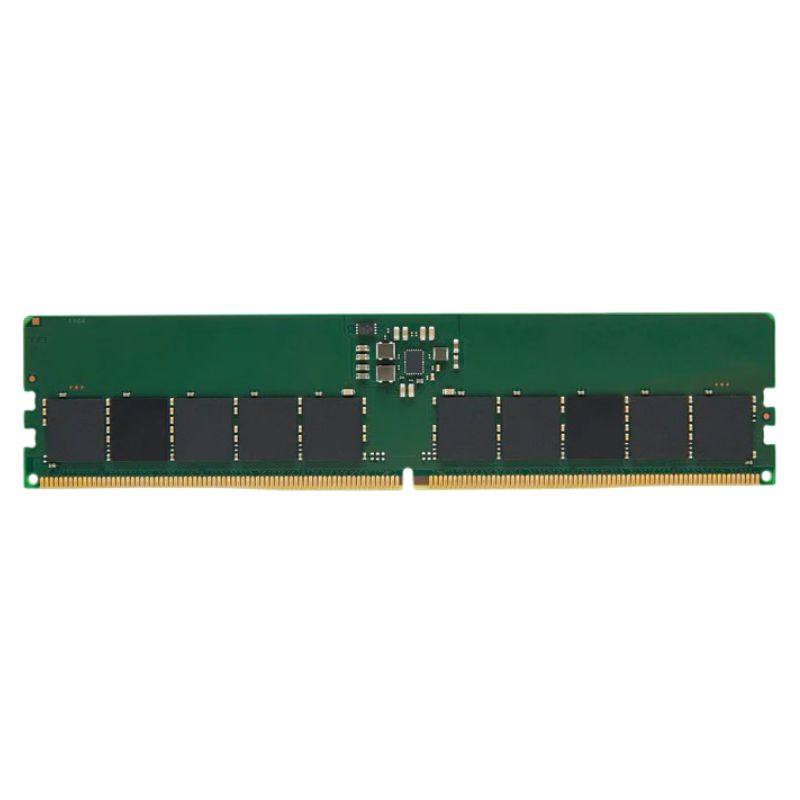


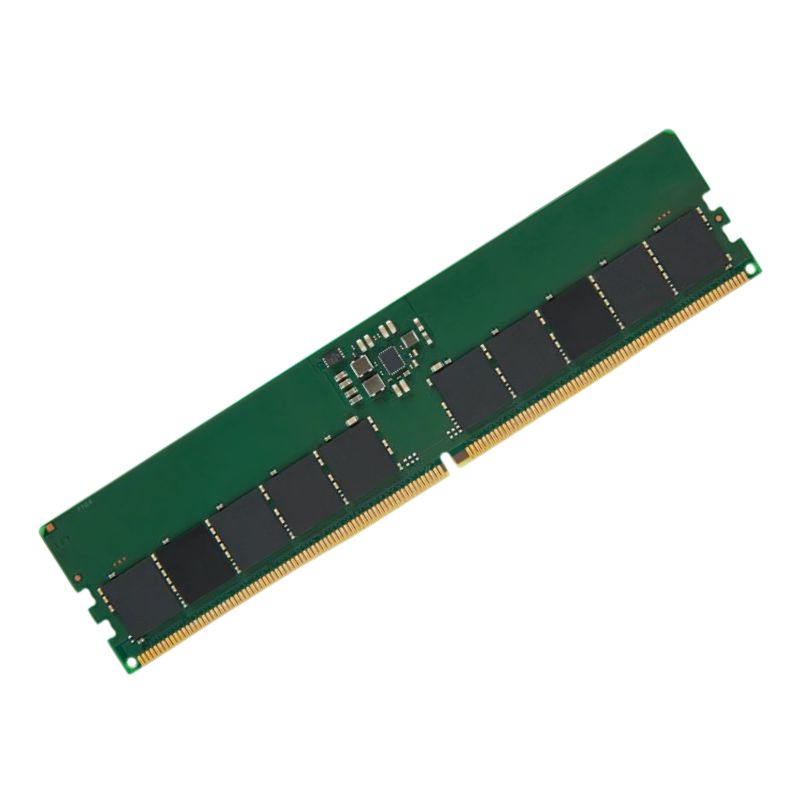
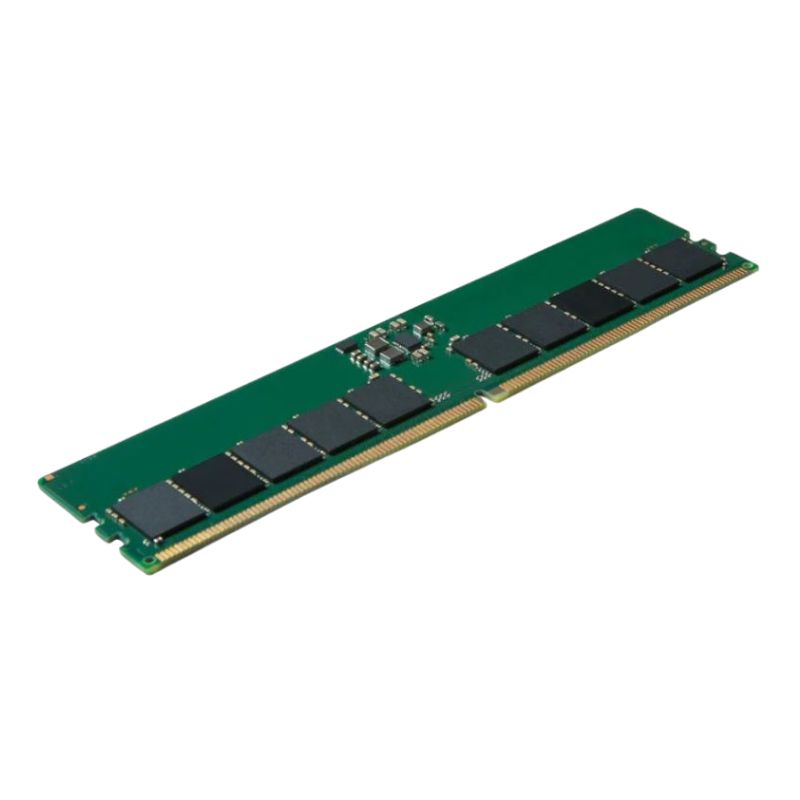
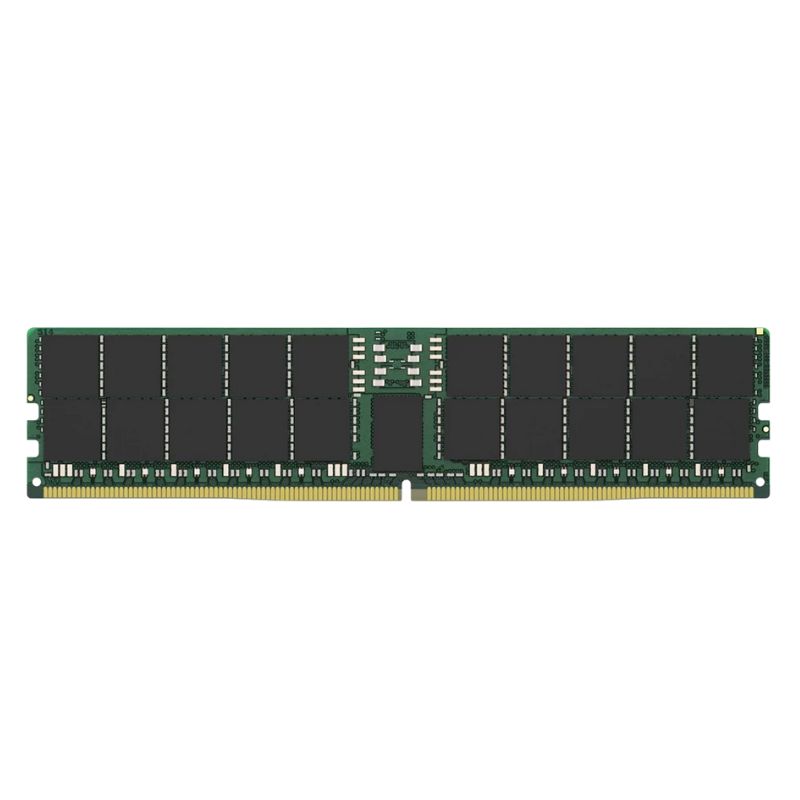
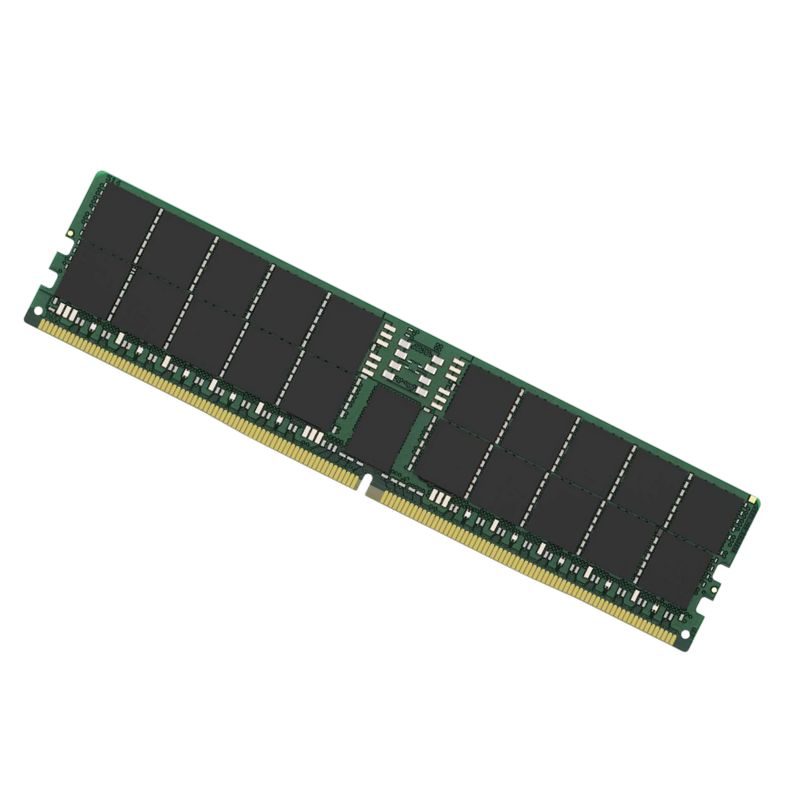
Kingston KSM56R46BD4PMI-64MDI 64GB 5600MT/s DDR5 ECC Registered CL46 DIMM 2Rx4 SDRAM 288-pin Memory Module. Factory-Sealed New in Original Box (FSB) with 3 Years Warranty
Kingston KSM56R46BD4PMI-64MDI is a high-performance 64GB DDR5 SDRAM memory module engineered for enterprise-class servers and workstations. Designed for reliability and speed, this registered DIMM combines DDR5-5600 (PC5-44800) throughput with on-die error correction and dual-rank architecture to deliver consistent, low-latency operation in memory-intensive environments.
The evolution of data center and enterprise server performance is intrinsically linked to advances in memory technology. At the forefront of this evolution is the DDR5 ECC Registered DIMM, a category of memory engineered for mission-critical stability, unparalleled data integrity, and breakthrough bandwidth. Modules like the Kingston KSM56R46BD4PMI-64MDI represent the pinnacle of this category, designed to power next-generation servers, high-performance computing (HPC) clusters, and demanding virtualized environments. Unlike standard consumer memory, these modules incorporate advanced error correction and signal buffering to maintain system stability under continuous, heavy loads, making them the foundational component for reliable enterprise infrastructure.
DDR5 memory represents a monumental leap over previous DDR4 generations, delivering not just incremental speed improvements but a fundamental architectural shift. For servers, this translates to transformative gains in processing throughput and efficiency, enabling faster data analytics, larger in-memory databases, and more responsive cloud services.
DDR5 introduces a dual sub-channel architecture within each module, effectively allowing the memory controller to address two 32-bit data channels per DIMM. This design increases overall efficiency and reduces latency for smaller, random access workloads common in server applications. Furthermore, DDR5 operates at a lower voltage (1.1V) than DDR4, contributing to significant power savings at scale—a critical consideration for large data center deployments where operational expenditure is paramount. The integration of Power Management ICs (PMICs) on the DIMM itself provides more stable and granular power delivery, improving signal integrity and overclocking potential for performance-optimized systems.
The "5600MT/s" specification denotes a data transfer rate of 5.6 Gigatransfers per second. This massive bandwidth, nearly 75% higher than mainstream DDR4-3200, drastically reduces bottlenecks for CPU-intensive tasks. In multi-processor servers equipped with numerous DIMMs per channel, this aggregate bandwidth ensures that modern multi-core CPUs from Intel (Xeon Scalable Processors) and AMD (EPYC Processors) are fed data at the rate necessary to maximize their computational potential, directly impacting application performance and user experience.
This specific memory module embodies the key characteristics required for enterprise-grade reliability and performance. Each specification is carefully chosen to ensure compatibility, stability, and optimal operation within supported server platforms.
The Kingston KSM56R46BD4PMI-64MDI is a meticulously engineered component. Its part number encodes its key attributes: KSM for Kingston Server Memory, 56 for 5600MT/s, R for Registered, 64 for 64GB capacity, and DI for the specific component and revision. It is built to meet or exceed the stringent requirements of server OEMs and is rigorously tested in target platforms for flawless performance.
The 64GB capacity provides an optimal balance between density and cost-effectiveness for a wide range of server applications. The "2Rx4" designation indicates the module's physical organization: it is a Dual Rank (2R) module with an x4 data width. Dual Rank means the memory chips are organized into two independent sets (ranks) that the memory controller can address alternately, improving efficiency over a single-rank design. The x4 data width refers to the internal organization of the individual DRAM chips and is crucial for supporting advanced error correction features like SDDC (Single Device Data Correction), which can correct a full chip failure. This configuration is standard and preferred for ECC Registered server memory.
Timing, expressed as CAS Latency (CL), is the number of clock cycles between a read command and data being available. The CL46 timing at 5600MT/s represents the inherent trade-off between ultra-high speed and latency; while the absolute latency in nanoseconds is often similar or better than slower-speed modules, the primary benefit of DDR5 is its colossal bandwidth. These JEDEC-standard timings (46-45-45) ensure broad system compatibility and rock-solid stability without manual tuning, which is essential in an enterprise environment where reliability is non-negotiable.
The "ECC Registered" portion of the module's description highlights its two most critical enterprise features. These technologies work in tandem to protect data and ensure system scalability far beyond the capabilities of unbuffered desktop memory.
ECC is a non-negotiable requirement for any server handling valuable or critical data. It works by adding extra bits (e.g., 8 bits for a 64-bit word) to every piece of data stored in memory. A dedicated algorithm constantly checks these bits. When a single-bit error occurs—a flipped 1 to 0 or vice-versa due to cosmic rays, electrical interference, or other factors—the ECC circuitry automatically detects and corrects it on the fly without any interruption to system operation. More advanced implementations, often enabled by x4-based DIMMs like this one, can also detect and correct multi-bit errors within a single chip, a feature known as Chipkill. This robust protection prevents silent data corruption, system crashes, and erroneous computational results.
A Registered DIMM (RDIMM) incorporates a register, or buffer, on the module itself. This register sits between the memory controller and the DRAM chips, buffering the command and address signals. This buffering reduces the electrical load on the memory controller, allowing it to support a significantly greater number of DIMMs per channel without signal degradation. This enables servers to be populated with large total memory capacities (often into the multiple terabytes) while maintaining signal integrity and system stability. The trade-off is a slight increase in latency (typically one clock cycle) due to the buffering process, a minor cost for the immense benefit in scalability and reliability.
Standardization of physical design ensures that memory modules can be installed across a wide range of server hardware, providing flexibility for system integrators and data center managers.
The Kingston KSM56R46BD4PMI-64MDI utilizes a 288-pin edge connector, the standard physical interface for DDR5 modules. It is crucial to note that the notch key position on a DDR5 DIMM is different from that of DDR4, making it physically impossible to insert a DDR5 module into a DDR4 slot, or vice versa. This prevents accidental damage due to incompatibility. The module is designed to be inserted into its corresponding socket at a slight angle and then gently pushed upright until the retaining clips on each end engage automatically.
This memory module is engineered for compatibility with modern server platforms that support DDR5-5600 ECC RDIMMs. This includes platforms based on Intel Xeon Scalable Processors (e.g., Sapphire Rapids and Emerald Rapids generations) and AMD EPYC 9004 Series (Genoa) and 8004 Series (Siena) processors. Kingston validates its server memory on a wide array of OEM platforms from leading manufacturers like Dell, HPE, Lenovo, Supermicro, and Cisco. This extensive compatibility testing ensures the module will perform as specified and will not cause boot issues or instability in validated systems. Users should always consult their system or motherboard manufacturer's Qualified Vendor List (QVL) for confirmed compatibility before purchase.
The combination of high density, high bandwidth, and robust reliability makes this category of memory ideal for the most demanding compute environments.
In large-scale virtualization and private cloud deployments, high memory density and bandwidth are critical for server consolidation. A single physical host running dozens of virtual machines (VMs) requires massive, fast, and error-free memory to allocate to those VMs. The 64GB capacity allows for efficient use of DIMM slots to achieve high per-socket memory totals, while ECC protection safeguards the data of all hosted workloads, from web servers to enterprise applications.
Scientific computing, financial modeling, and artificial intelligence training involve workloads that process enormous datasets. These applications are often memory-bandwidth-bound, meaning performance scales directly with the speed at which the CPU can access system RAM. The 5600MT/s bandwidth of these DDR5 RDIMMs directly accelerates simulation times, model training epochs, and analytical computations. ECC is equally critical here, as a single uncorrected memory error could invalidate days of computation or produce incorrect scientific results.
Technologies like SAP HANA, Oracle Exadata, and other in-memory database platforms store entire working datasets in system RAM to eliminate storage latency. For these systems, total memory capacity, bandwidth, and unwavering data integrity are the primary determinants of performance and uptime. Large 64GB modules enable the deployment of multi-terabyte in-memory databases on a single server node, while DDR5 bandwidth ensures queries are executed with minimal latency, delivering real-time business intelligence and transactional processing.


 Contact Us
 Information
 Catalog
 Solid State Drives (SSD)
 Network Switches
 Hard Disk Drives
 HBA & Controllers
 PC & Servers
 PC & Server Memory
 CPU & Processors
 Network Routers
 Power Supplies
 Tape Drives & Libraries
 Network Devices
 Computer & Network Cables