(7% discount is applied at checkout)
Cart is empty
Your go-to destination for cutting-edge server products
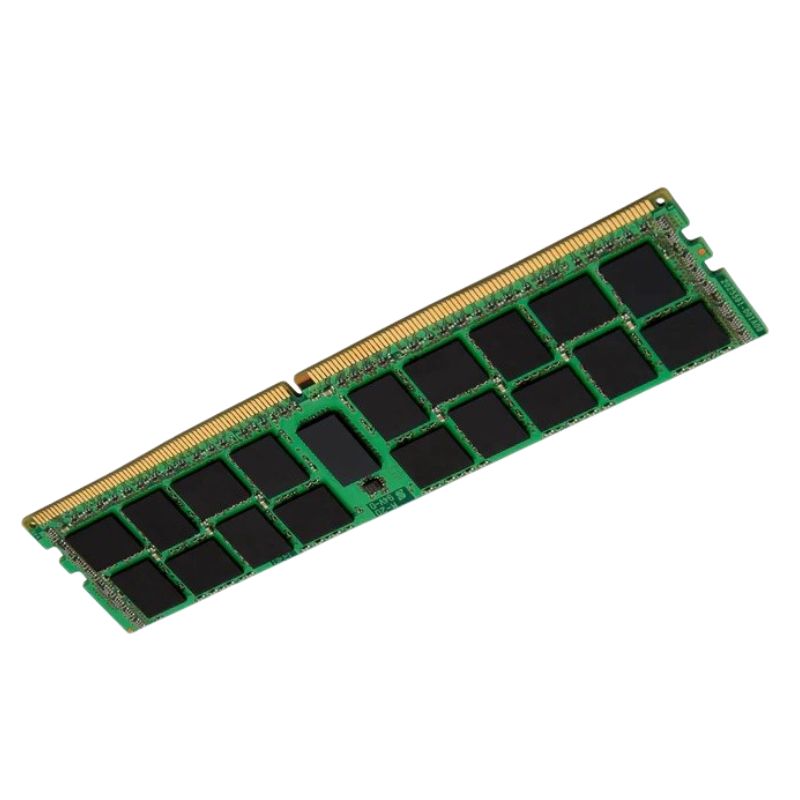


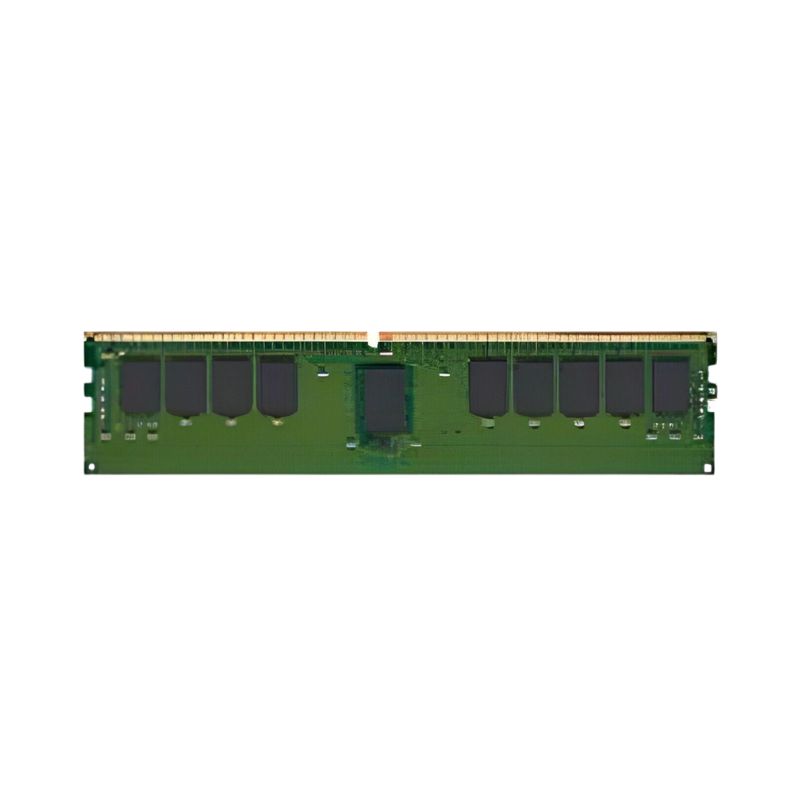
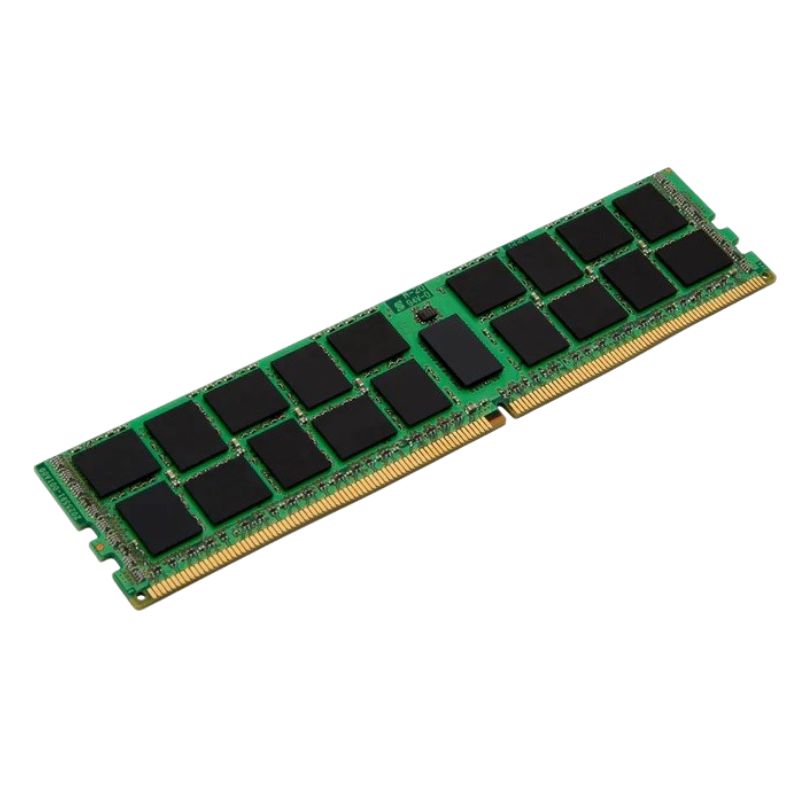
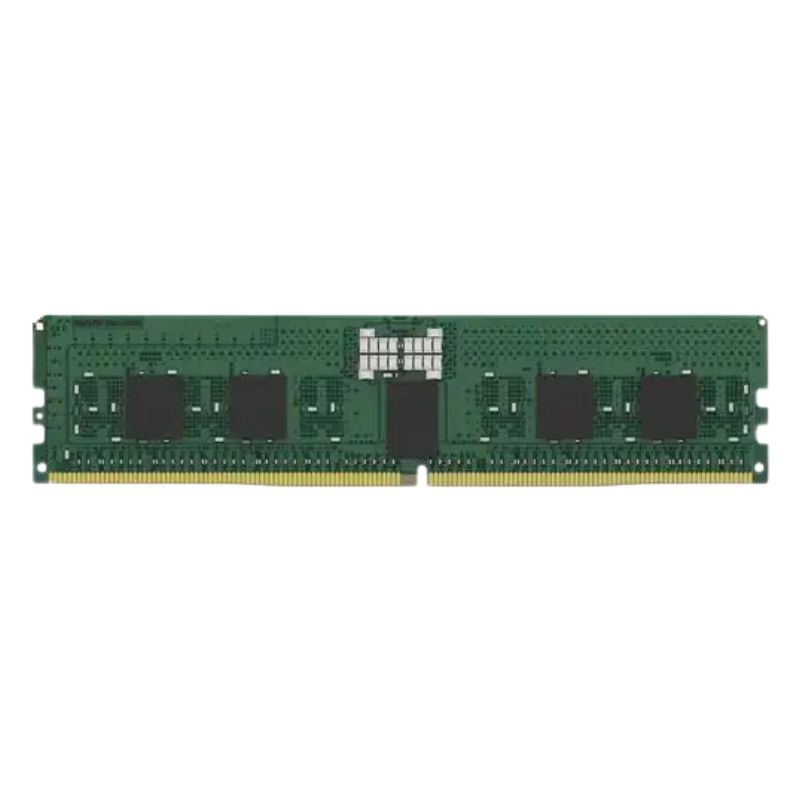
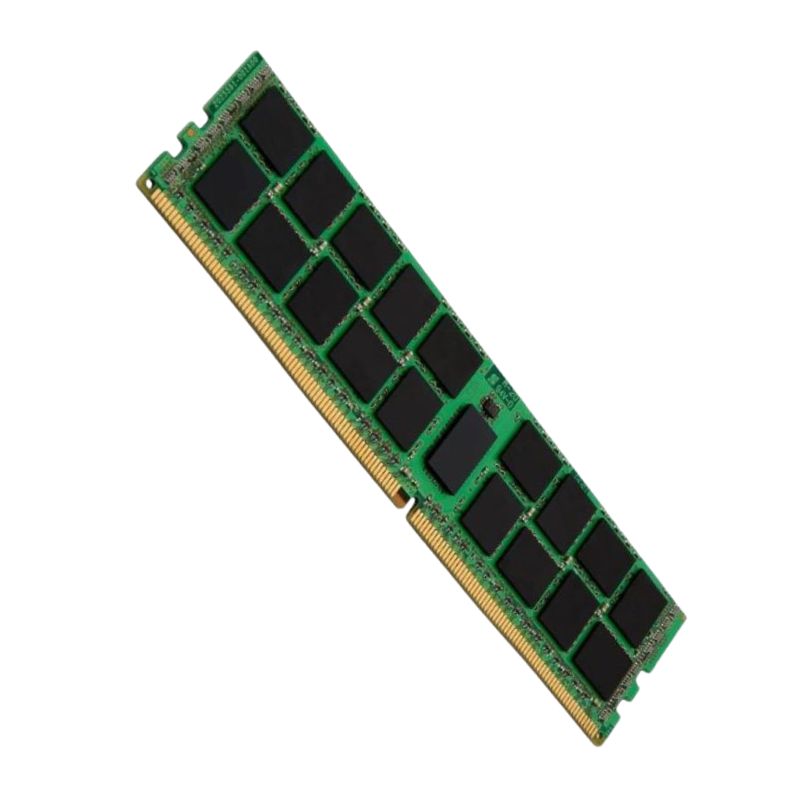
Kingston KSM56R46BS8-16MD 16GB 5600MT/s Pc5-44800 DDR5 ECC SDRAM 288-pin Memory Module. New Sealed in Box (NIB) with 3 Year Warranty
The Kingston KSM56R46BS8-16MD is a 16GB DDR5 Registered ECC memory module engineered for servers and workstations that demand consistent data integrity and high-bandwidth performance. Also listed as a PC5-44800 / 5600 MT/s module, this Registered ECC DIMM blends low-voltage efficiency (1.1V), reliable error protection, and modern DDR5 speed to support mission-critical systems and virtualization environments.
The Kingston KSM56R46BS8-16MD represents a pivotal advancement in server memory technology, engineered for next-generation data center and enterprise computing environments. This 16GB DDR5 ECC Registered DIMM module, operating at a swift 5600MT/s (MegaTransfers per second), is designed to deliver a substantial leap in bandwidth, reliability, and power efficiency over previous DDR4 generations. Built specifically for demanding workloads in servers, high-performance computing (HPC), and virtualized infrastructures, this module is a cornerstone for building robust, error-resilient systems.
At its heart, the KSM56R46BS8-16MD is defined by a set of specifications that translate directly into real-world system performance and stability. These parameters are critical for IT professionals and system integrators when selecting compatible and optimal memory for their server platforms.
The 16GB capacity per module offers an optimal balance for modern server configurations. It allows for substantial total memory footprints when installed in multi-channel, multi-socket systems (e.g., 512GB across 32 DIMM slots), crucial for memory-intensive applications like in-memory databases (e.g., SAP HANA), large-scale virtualization, and data analytics. This density is achieved using advanced DDR5 DRAM components.
The shift to DDR5 architecture from DDR4 brings fundamental improvements. DDR5 modules feature a dual 32-bit sub-channel architecture (from a single 64-bit channel in DDR4) for more efficient data handling. The Kingston KSM56R46BS8-16MD leverages this to reduce latency and improve concurrency. Furthermore, the power management integrated circuit (PMIC) is now located on the module itself, enabling better voltage regulation, improved signal integrity, and enhanced power efficiency—a key consideration for data center power budgets.
With a data rate of 5600 million transfers per second, this module provides a peak theoretical bandwidth significantly higher than standard DDR4-3200 modules. The increased speed accelerates data flow between the CPU and memory, reducing processing bottlenecks. This is quantified as PC5-44800, where "44800" refers to the module's bandwidth in MB/s (megabytes per second) per channel. The enhanced bandwidth directly benefits CPU-bound applications, scientific simulations, and high-transaction-rate databases.
While operating at high speeds, the module maintains optimized CAS latencies and other timing parameters (typically denoted in a series like CL46-45-45). These carefully engineered timings ensure that while massive amounts of data are moved (high bandwidth), the response time to initial requests (latency) is kept in check, providing a balanced performance profile essential for responsive server environments.
For enterprise and data center deployments, data integrity and system uptime are non-negotiable. The KSM56R46BS8-16MD incorporates multiple layers of technology to safeguard against data corruption and ensure continuous operation.
A key feature of DDR5 is the inclusion of On-Die Error Correction Code (ECC). This built-in mechanism corrects bit errors within the DRAM chip itself before data is sent to the system's main ECC logic. This addresses the increasing susceptibility to soft errors as process geometries shrink, providing an additional layer of internal data protection that was not present in standard DDR4 modules.
Beyond On-Die ECC, the module functions as a full Error-Correcting Code SDRAM (ECC SDRAM) DIMM. It utilizes a sideband ECC code word to detect and correct single-bit errors and detect multi-bit errors across the data bus. This system-level ECC works in conjunction with On-Die ECC to provide comprehensive end-to-end data integrity, a critical requirement for financial computing, scientific research, and archival storage systems.
The "R" in the part number denotes a Registered (or Buffered) DIMM (RDIMM). This design incorporates a register (or buffer) on the module to manage the electrical load of the DRAM chips from the server's memory controller. This allows for greater stability and support for higher memory capacities per channel and per system. RDIMMs are the standard for multi-DIMM, high-capacity server configurations, enabling the use of more modules without overloading the controller, thus ensuring reliable signaling at high speeds.
Kingston engineers these server modules with additional reliability enhancements. They undergo rigorous testing and validation on major server platforms. The modules support features like Command/Address Parity for improved reliability of the command bus and post-package repair capabilities. The robust 288-pin design ensures a secure physical connection within the server motherboard's DDR5 DIMM slot.
The module utilizes the industry-standard 288-pin Dual In-Line Memory Module (DIMM) form factor, specifically keyed for DDR5. It is physically incompatible with DDR4 slots due to a different notch position, preventing accidental misinstallation. The dimensions conform to standard server DIMM specifications, ensuring proper fit in heatsink and high-density server chassis.
DDR5 technology operates at a reduced voltage of 1.1V (VDD) compared to DDR4's 1.2V. This lower voltage contributes directly to lower power consumption and reduced heat output at the module level, which scales to significant energy savings across an entire server rack or data center. The on-module PMIC provides fine-grained voltage control for the various components (VDD, VDDQ, VPP), further optimizing power delivery and efficiency.
The combination of high bandwidth, large capacity, and robust ECC makes this memory module ideal for a spectrum of demanding computing scenarios.
In virtualized environments and private/public clouds, high-density, reliable memory is essential for hosting numerous virtual machines (VMs) and containers. The 16GB 5600MT/s modules allow for higher VM density, better performance for memory-allocated instances, and improved overall infrastructure efficiency with their lower power profile.
The high bandwidth of 5600MT/s DDR5 accelerates data feeding to powerful multi-core CPUs (like Intel Xeon Scalable or AMD EPYC processors), reducing compute cycle times and accelerating time-to-insight for researchers and data scientists.


 Contact Us
 Information
 Catalog
 Solid State Drives (SSD)
 Network Switches
 Hard Disk Drives
 HBA & Controllers
 PC & Servers
 PC & Server Memory
 CPU & Processors
 Network Routers
 Power Supplies
 Tape Drives & Libraries
 Network Devices
 Computer & Network Cables