
(7% discount is applied at checkout)
Cart is empty
Your go-to destination for cutting-edge server products
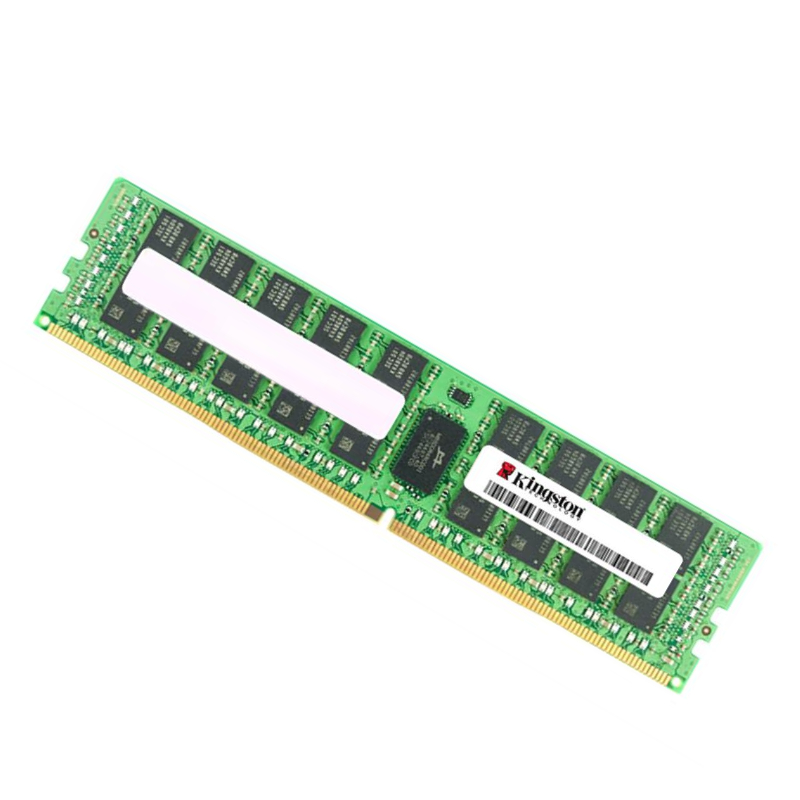
Kingston KTH-PL426/32G 32GB DDR4-2666MHz PC4-21300 Memory Module. New Sealed in Box (NIB) with 3 Year Warranty
The Kingston KTH-PL424/32G is a high-performance 32GB DDR4 SDRAM server memory module designed for enterprise-level servers and professional workstations. Built for reliability, stability, and long-term performance, this memory module is ideal for data centers, virtualization environments, cloud computing, and mission-critical applications.
The Kingston KTH-PL424/32G memory module is compatible with systems that support DDR4 Registered ECC (RDIMM) memory. It is not compatible with desktop PCs or laptops that require unbuffered (UDIMM) memory.
DDR4 memory modules designed for enterprise servers, professional workstations, and business-critical desktops form a specialized category within system memory. Products such as the Kingston KTH-PL426/32G 32GB DDR4-2666MHz PC4-21300 Memory Module represent this category by focusing on stability, compatibility, and predictable performance rather than experimental overclocking. This class of memory is commonly deployed in data centers, virtualization hosts, engineering workstations, database servers, and enterprise-grade PCs where uptime and reliability are more important than raw benchmark numbers.
The category emphasizes standardized speeds, controlled voltage levels, and strict manufacturing tolerances. Memory modules in this group are typically validated against specific motherboard chipsets, CPUs, and firmware versions, ensuring they operate within vendor-certified parameters. For businesses and professionals, this approach reduces the risk of compatibility issues, system crashes, and data corruption over long operational periods.
The Kingston KTH-PL426/32G 32GB DDR4-2666MHz PC4-21300 Memory Module exemplifies enterprise-grade DDR4 memory solutions. Within this category, the focus is on providing consistent 2666MHz data transfer rates, high-density capacity per module, and broad system compatibility. A 32GB capacity allows system builders and IT departments to scale memory efficiently without occupying excessive DIMM slots.
This category often targets systems that run multiple applications simultaneously, such as virtualization environments, in-memory databases, and content creation workflows. Memory modules like the KTH-PL426/32G are designed to integrate seamlessly into supported platforms, minimizing the need for manual tuning in BIOS or firmware.
PC4-21300 is the bandwidth designation associated with DDR4-2666 memory modules. In this category, bandwidth labeling helps system integrators quickly identify performance characteristics without diving into complex timing specifications. PC4-21300 indicates a theoretical maximum bandwidth of approximately 21.3 GB/s per module, which is sufficient for most enterprise workloads that depend on balanced memory throughput.
Memory modules in the PC4-21300 category are commonly paired with Intel Xeon and compatible AMD processors that officially support DDR4-2666 speeds. This ensures that systems operate within manufacturer-recommended limits, maintaining warranty compliance and long-term stability.
High-capacity memory modules are a defining feature of this category. A single 32GB DDR4 module allows servers and workstations to reach large total memory capacities while maintaining optimal DIMM population. This is particularly useful in dual- and quad-channel memory architectures, where balanced configurations are essential for peak performance.
In virtualized environments, 32GB modules enable administrators to allocate sufficient RAM to multiple virtual machines without exhausting physical memory resources. For professional applications such as CAD, 3D rendering, and scientific simulations, large memory pools reduce reliance on slower storage-based paging.
Using higher-capacity modules like 32GB DIMMs reduces the total number of memory sticks required. This category advantage improves airflow within server chassis and workstation cases, contributing to better thermal management. Fewer modules also mean fewer potential points of failure, aligning with enterprise reliability goals.
Memory categories centered around 32GB modules are designed with scalability in mind. IT planners can initially populate systems with fewer high-capacity DIMMs and later expand as workload demands grow. This approach simplifies upgrades and reduces downtime compared to replacing multiple lower-capacity modules.
The DDR4-2666MHz speed grade occupies a balanced position within the DDR4 memory ecosystem. This category prioritizes compatibility and efficiency over extreme frequencies. DDR4-2666 offers a practical blend of bandwidth and latency that aligns well with enterprise CPU memory controllers.
Systems running DDR4-2666 memory often experience consistent performance across diverse workloads, from transactional databases to multi-threaded compute tasks. This predictability is essential in business environments where performance consistency matters more than peak scores.
DDR4 memory modules typically operate at 1.2V, a reduction compared to previous DDR3 standards. This lower voltage contributes to reduced power consumption and heat output. Within this category, energy efficiency supports large-scale deployments where cumulative power savings can be significant.
Thermal stability is another benefit. Memory modules running at standard DDR4 voltages generate less heat, allowing systems to maintain stable operation even under continuous heavy loads.
The category encompassing the Kingston KTH-PL426/32G is suitable for a wide range of professional and enterprise applications. These memory modules are commonly deployed in systems that require high reliability, predictable performance, and long operational lifecycles.
Virtualization platforms benefit significantly from large memory capacities. Each virtual machine requires dedicated RAM allocation, and insufficient memory can lead to performance bottlenecks. 32GB DDR4 modules allow hosts to support more virtual machines or allocate more memory per instance.
In private cloud environments, memory density directly impacts consolidation ratios. Higher-capacity modules help maximize hardware utilization while maintaining performance isolation between workloads.
Databases and analytics engines often rely on in-memory caching to deliver fast query responses. Memory categories designed for enterprise use support sustained high throughput without stability issues. Large DDR4-2666 modules enable more data to reside in memory, reducing disk I/O and improving overall system responsiveness.
Enterprise memory categories often emphasize reliability features and strict quality control. While specific configurations may vary by platform, the overarching goal is to maintain data integrity and system stability over long periods of continuous operation.
Manufacturers subject these modules to extensive testing, including thermal cycling, voltage tolerance checks, and stress testing. This ensures consistent performance under demanding conditions.
The standard DIMM form factor is prevalent in this memory category, making modules compatible with a wide range of server and workstation motherboards. The physical design adheres to JEDEC specifications, ensuring consistent fit and electrical characteristics.
Heatsinks are often minimal or absent in enterprise DDR4 modules, as standard operating frequencies and voltages do not require aggressive cooling solutions. This design choice supports better airflow and compatibility with densely populated systems.
DDR4 memory modules use a 288-pin interface, which differs physically from earlier DDR standards. This prevents accidental installation in incompatible slots and ensures proper electrical connections. The category relies on this standardized interface for broad compatibility.
Modern CPUs support multi-channel memory architectures. Memory categories like DDR4-2666 32GB modules are designed to operate efficiently in dual-, quad-, or higher-channel configurations. Proper channel population improves bandwidth and reduces latency.
Using identical modules across channels ensures balanced performance. This is a key reason why enterprises often deploy memory modules from the same category and manufacturer.
Balanced memory configurations involve installing identical modules in corresponding slots across channels. This category supports such strategies by offering consistent specifications and availability. System builders can easily match modules to achieve optimal performance.
Power efficiency is a critical consideration in data centers and enterprise environments. DDR4-2666 memory modules consume less power than earlier generations, contributing to overall energy savings. When multiplied across hundreds or thousands of systems, these savings become substantial.
This category supports sustainability goals by reducing power draw and heat output, which in turn lowers cooling requirements.
Memory modules in this category are designed to integrate smoothly with enterprise hardware ecosystems, including server motherboards, CPU platforms, and management tools. Compatibility with monitoring and management features allows administrators to track system health effectively.
This integration supports proactive maintenance and helps identify potential issues before they impact operations.


 Contact Us
 Information
 Catalog
 Solid State Drives (SSD)
 Network Switches
 Hard Disk Drives
 HBA & Controllers
 PC & Servers
 PC & Server Memory
 CPU & Processors
 Network Routers
 Power Supplies
 Tape Drives & Libraries
 Network Devices
 Computer & Network Cables