(7% discount is applied at checkout)
Cart is empty
Your go-to destination for cutting-edge server products
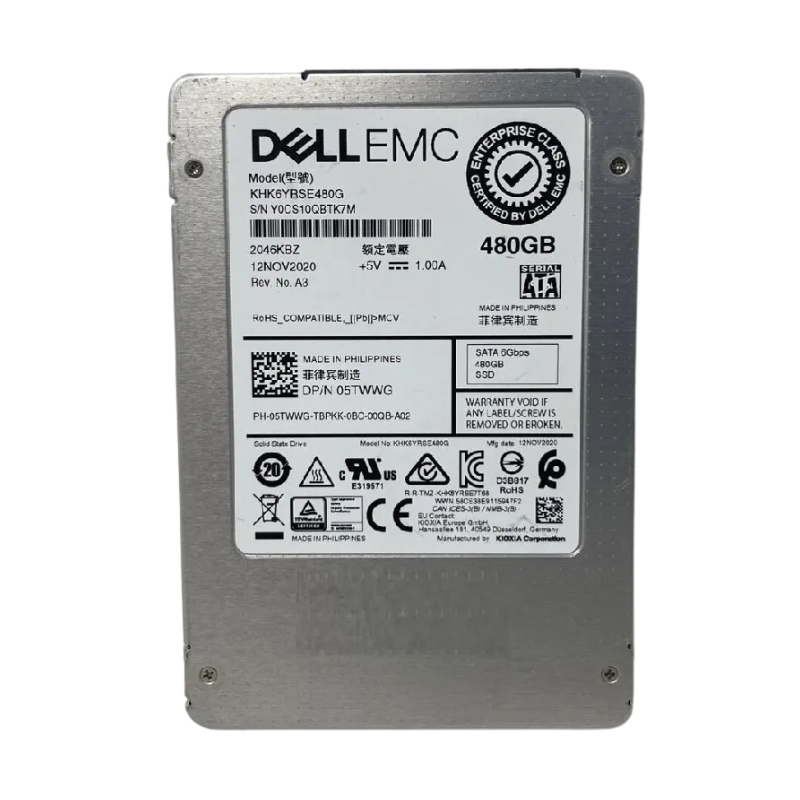


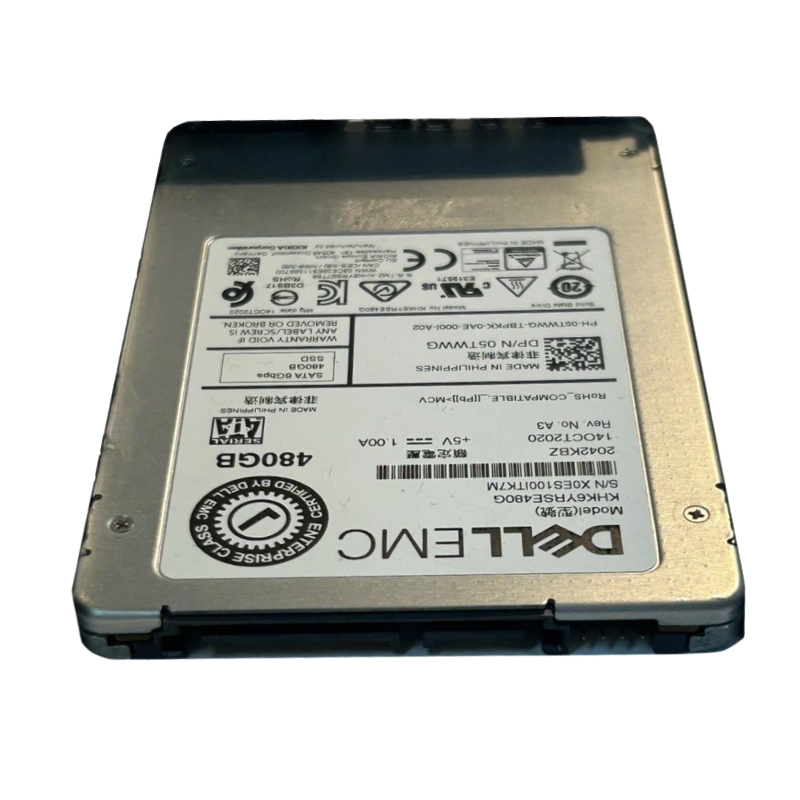
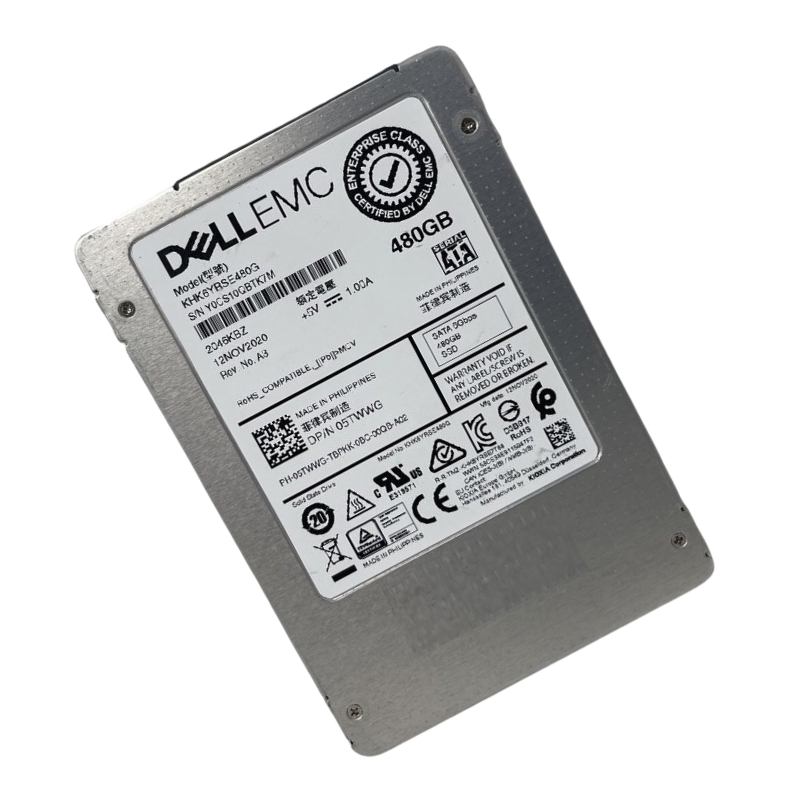
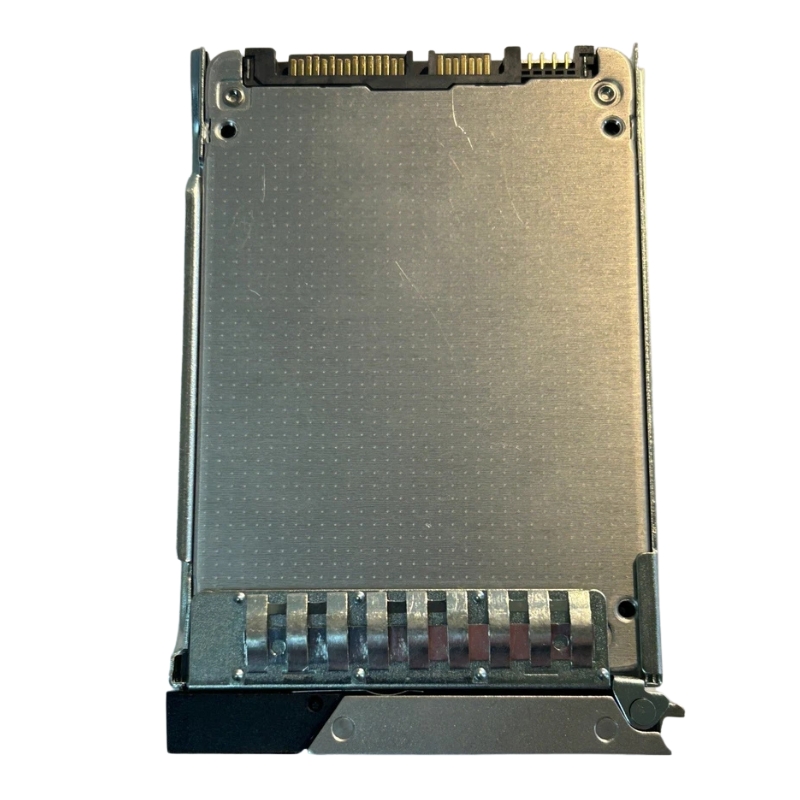
Kioxia KHK6YRSE480G 480GB SATA-6GBPS Read Intensive Solid State Drive. Excellent Refurbished with 1 year replacement warranty - Dell Version
The Kioxia KHK6YRSE480G is a high-performance internal solid-state drive designed for mainstream desktops and laptops that accept 2.5″ SATA storage. Offering a 480 gigabyte capacity and SATA III (6 Gb/s) connectivity, this drive combines dependable NAND technology with speed and endurance suited for everyday computing, multimedia editing, and light server duties.
Engineered to accelerate system responsiveness, the Kioxia 480GB SSD delivers class-leading sequential and random throughput for its category. These performance metrics translate into faster boot times, quicker application launches, and more responsive multitasking.
Reliability is a core focus of this Kioxia SSD. Designed for consistent operation under normal workloads, the drive offers a strong endurance rating and a long mean time between failures to maximize uptime.
The Kioxia KHK6YRSE480G is intentionally designed to be plug-and-play for systems that support SATA 6 Gb/s. Its 2.5″ footprint and SATA interface make it an easy drop-in upgrade for older laptops and desktops that need a modern speed boost without migrating to NVMe.
Compared to mechanical hard drives, this Kioxia SSD yields dramatic improvements in random I/O and system snappiness. Versus NVMe drives, the SATA SSD trades peak bandwidth for broader compatibility and often a lower price-per-gigabyte — making it a pragmatic choice for budget-conscious upgrades and mixed-environment deployments.
To extract consistent performance and ensure longevity, follow a few straightforward practices when deploying this SSD.
Although this entry-level SATA SSD focuses on performance and longevity, many deployment scenarios benefit from software-based encryption, image backups and periodic SMART monitoring to detect early signs of wear or failure.
Below is a compact, easy-to-scan summary of the drive’s core specifications — streamlined for quick comparison shopping.
The Kioxia KHK6YRSE480G is a 480GB, 2.5-inch, SATA III (6.0 Gb/s) Read-Intensive solid state drive (SSD) designed for scale-out data center workloads and read-dominant enterprise applications. Built on Kioxia's HK6-R family architecture and TLC NAND, this model focuses on predictable low-latency reads, efficient power usage, and data-center-friendly endurance characteristics that make it a reliable choice for cloud services, content delivery, and analytics platforms. :contentReference[oaicite:0]{index=0}
SSDs tuned for read-intensive workloads occupy a specific niche between mainstream consumer drives and high-endurance data center media. The KHK6YRSE480G is purpose-built for operations where:
For ops teams and system architects, read-optimized SSDs like the KHK6YRSE480G enable high-density server configurations that offer responsive user experiences without the price premium of write-optimized enterprise drives. :contentReference[oaicite:1]{index=1}
The HK6-R family — which includes the KHK6YRSE480G — targets low-latency, high-IOPS read workloads. Expect strong 4KB random read IOPS and healthy sequential read throughput suitable for SATA channel caps. Typical real-world benefits include faster cache warmup, quicker database query responses, and improved VM boot times in virtualized environments. The series' design focuses on read tail latency control, making performance more predictable at scale. :contentReference[oaicite:2]{index=2}
The KHK6YRSE480G uses triple-level cell (TLC) NAND optimized for a read-centric endurance profile. Typical product listings and reseller specifications indicate an endurance rating in the multi-hundreds of terabytes written (TBW) range for the 480GB capacity, and mean-time-between-failure (MTBF) figures designed for enterprise contexts. These endurance numbers reflect a design choice: trade a moderate write endurance for increased capacity efficiency and lower cost while maintaining enterprise-level reliability for read-heavy use cases. Always consult the official product brief for exact TBW/MTBF values for your firmware revision and manufacturing batch. :contentReference[oaicite:3]{index=3}
Read-intensive SSDs are an excellent fit for scale-out object stores and distributed filesystems where read requests greatly outnumber writes. When used as part of erasure-coded or replicated storage clusters, the KHK6YRSE480G provides low-latency reads that reduce tail latency for client-facing services and accelerate metadata lookups across many nodes. :contentReference[oaicite:5]{index=5}
For CDN edge nodes, media streaming caches, and high-hit-rate content caches, the combination of high random read IOPS and SATA compatibility makes the KHK6YRSE480G attractive. These environments benefit from a drive that offers predictable read performance without the premium of write-optimized enterprise flash. The result: lower acquisition cost per node while maintaining the responsiveness users expect. :contentReference[oaicite:6]{index=6}
When deployed as boot or image store for large fleets of stateless VMs or containers, read-optimized drives speed simultaneous VM startups and image fetches. In production fleets where images are read frequently but changed rarely, the drive's read-centric design offers excellent value. System designers should pair these SSDs with the right caching and write-back policies to protect against unexpected write storms. :contentReference[oaicite:7]{index=7}
Consumer SATA drives focus on balanced read/write performance and consumer firmware optimizations (TRIM, desktop power states, etc.). The KHK6YRSE480G is differentiated by firmware tuned for data-center behavior — prioritizing consistent read latency and telemetry for monitoring software. While raw sequential speeds may be similar to consumer SATA SSDs, the enterprise drive’s endurance rating, monitoring telemetry, and consistency under multi-tenant workloads make it more appropriate for server racks and cloud infrastructure. :contentReference[oaicite:8]{index=8}
NVMe write-optimized drives will outperform KHK6YRSE480G in write-heavy, I/O-intense transactional workloads due to lower protocol overhead and higher parallelism. However, NVMe also carries different cost and thermal profiles. The KHK6YRSE480G wins on price-per-GB for read-intensive deployments requiring SATA compatibility and simpler host-side integration. Use the HK6-R series in read-heavy tiers and reserve higher-end NVMe media for write-heavy or latency-sensitive transaction processing. :contentReference[oaicite:9]{index=9}
The drive uses a 2.5-inch 7mm form factor and the standard SATA power + data interface, making it compatible with most rack servers, blade enclosures with SATA backplanes, and many storage trays. For OEM and system integrators, confirm backplane and hot-swap tray compatibility; some vendors re-label and reconfigure firmware for their systems. The KHK6YRSE480G also appears in several reseller inventories as refurbished OEM-stock — be sure to verify warranty terms and firmware revision when purchasing from secondary markets. :contentReference[oaicite:10]{index=10}
Always use the vendor-recommended firmware and the latest host-side SATA controller drivers to ensure optimal compatibility and performance. Data-center drives often receive incremental firmware updates that improve wear-leveling, garbage collection, and power-loss behaviors; coordinate BIOS/UEFI and RAID controller firmware updates with drive firmware upgrades for smooth deployments. Monitor vendor release notes for any behavior changes that could affect system-level RAID rebuilds or cluster-level health checks. :contentReference[oaicite:11]{index=11}
While SATA SSDs typically run cooler than spinning media, enterprise drives under sustained load still generate heat. Ensure adequate airflow in server chassis (front-to-back) and observe manufacturer thermal limits; high ambient temperatures reduce endurance and can trigger thermal throttling. When densely populating sleds with mixed media, validate thermal profiles under expected workload to avoid unexpected performance degradation. :contentReference[oaicite:12]{index=12}
Integrate SMART monitoring and vendor telemetry into your standard observability dashboard. Track metrics such as media wear percentage, uncorrectable error counts, spare block availability, and power-cycle counts. These indicators allow proactive replacement before a node's performance or reliability is impacted. For large fleets, set automated alert thresholds and run periodic health sweeps to identify drives where endurance is approaching design limits. :contentReference[oaicite:13]{index=13}
When used in RAID arrays, account for rebuild times and the potential for increased background write activity during resilvering. Read-intensive drives reduce the chance of rapid wear during rebuilds, but architects should still ensure adequate redundancy levels (RAID6/erasure coding) and stagger rebuild operations to avoid correlated stress across many drives. Use SMART thresholds and predictive failure alerts to automate replacements prior to rebuild-triggering failures. :contentReference[oaicite:14]{index=14}
Plan capacity refresh cycles based on both TBW forecasts and observed telemetry. Because TLC-based read-intensive drives provide a cost-effective mix of capacity and endurance, they are ideal for multi-year deployments where read patterns dominate. Maintain a replacement policy that considers warranty terms, TBW limits, and the evolving needs of the workload (for instance, if a read-heavy workload becomes write-heavy over time, re-evaluate drive selection). :contentReference[oaicite:15]{index=15}


 Contact Us
 Information
 Catalog
 Solid State Drives (SSD)
 Network Switches
 Hard Disk Drives
 HBA & Controllers
 PC & Servers
 PC & Server Memory
 CPU & Processors
 Network Routers
 Power Supplies
 Tape Drives & Libraries
 Network Devices
 Computer & Network Cables