(7% discount is applied at checkout)
Cart is empty
Your go-to destination for cutting-edge server products
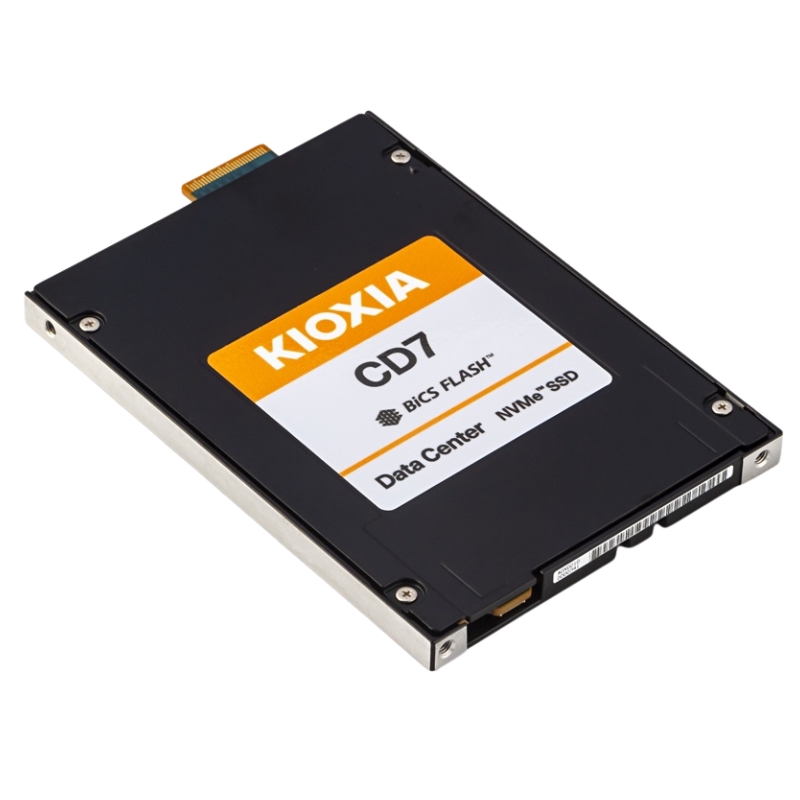


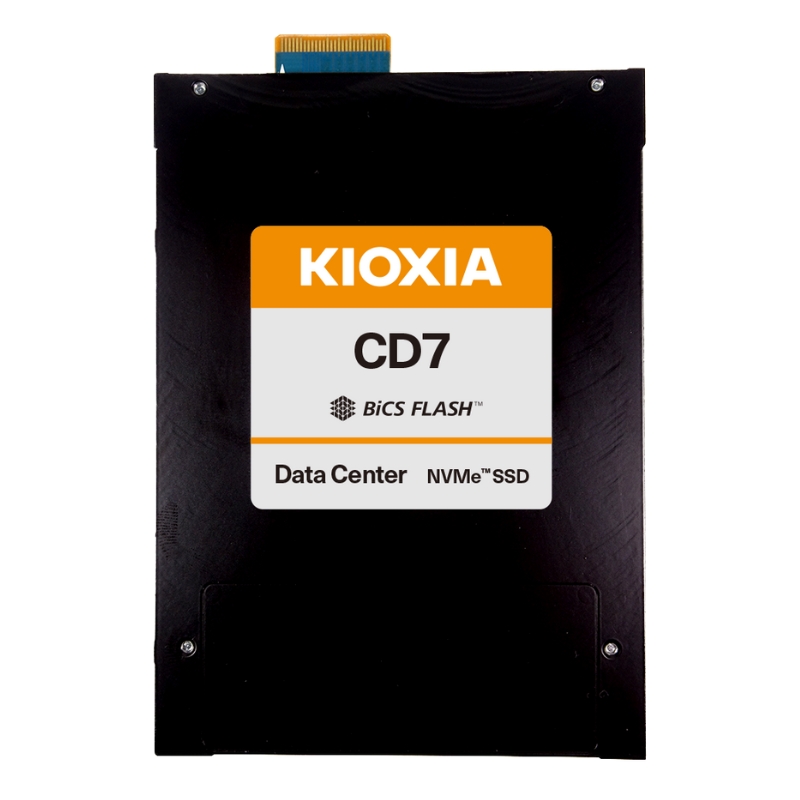
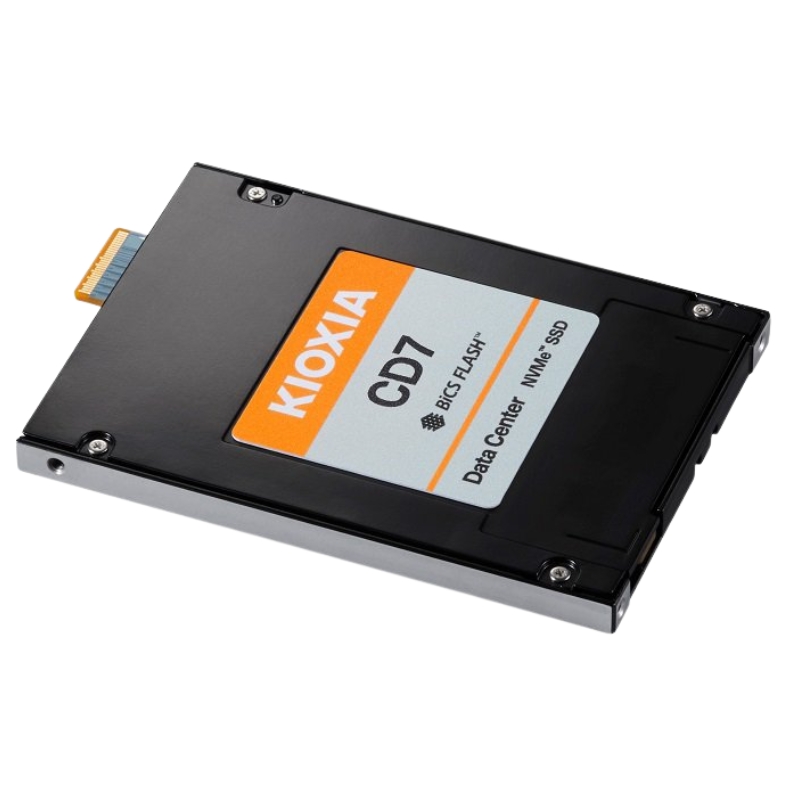
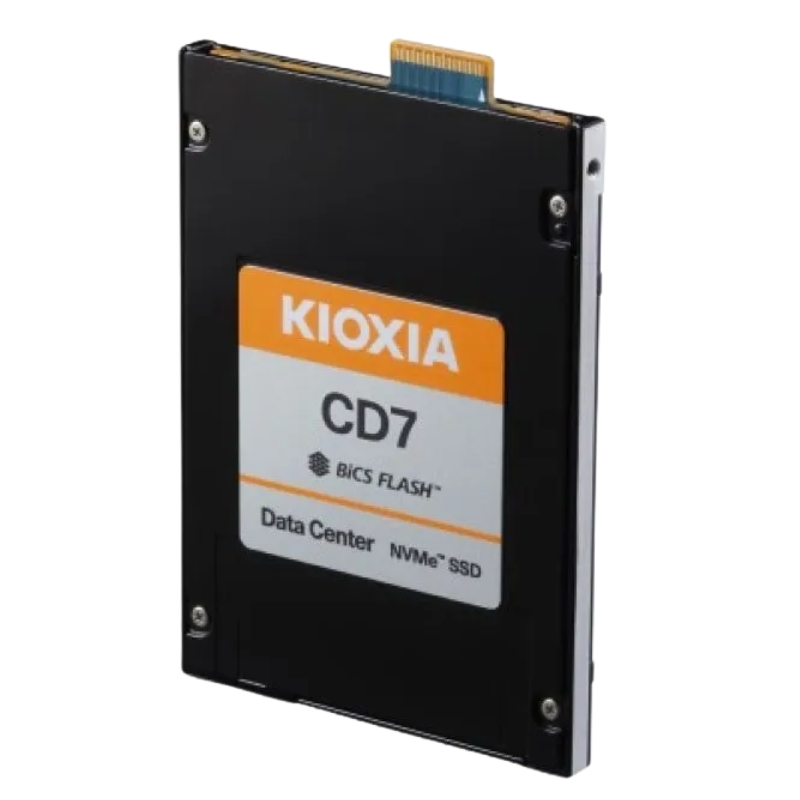
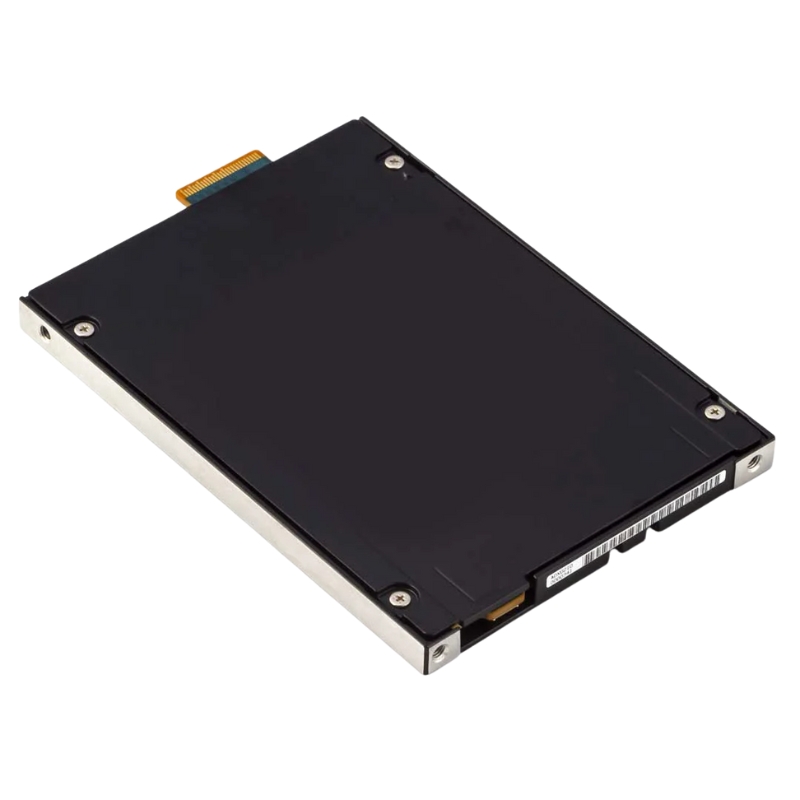
Kioxia SDF2B83CAB01T CD7-R 7.68TB Read Intensive E3.S PCI-E 5.0 NVMe Data Center Internal Solid State Drive. New Sealed with 1 year Replacement Warranty - HPE Version
The Kioxia CD7-R series represents a significant leap forward in data center storage architecture, specifically engineered for read-intensive workloads that dominate modern cloud and enterprise environments. At the heart of this series is the model SDF2B83CAB01T, a 7.68TB SSD that leverages the cutting-edge E3.S form factor and PCI Express 5.0 interface.
The Kioxia CD7-R series represents a strategic evolution in data center storage, specifically tailored for the demands of modern, read-centric applications. As a pivotal member of the E3.S form factor ecosystem, the SDF2B83CAB01T 7.68TB model delivers a potent combination of high sequential read throughput, exceptional latency consistency, and thermal efficiency. Built on the PCI Express 5.0 and NVMe 2.0 protocols, this drive is designed to alleviate bottlenecks in data delivery, ensuring that hot data is accessible with minimal delay for server and hyperscale environments where read operations dominate the I/O profile.
The adoption of the E3.S (EDSFF E3.Short) form factor is a cornerstone of the CD7-R's design philosophy. Moving beyond the traditional U.2 and M.2 footprints, E3.S is engineered for the next generation of high-density, thermally challenging servers.
The specific "E3.S 7.5mm" profile of this drive offers a slimmer design that enables remarkable storage density. This allows server OEMs to pack more terabytes per rack unit, directly addressing the space constraints in modern data centers. The form factor also features a more robust connector and a longer, more intelligently laid-out PCB, which improves signal integrity for high-speed PCIe 5.0 signaling and provides greater surface area for thermal management components.
Like its EDSFF counterparts, the SDF2B83CAB01T E3.S form factor supports full hot-plug functionality. This is critical for maintaining uptime in 24/7 operational environments. The drive can be inserted or removed from a compatible backplane without powering down the server, facilitating seamless maintenance, upgrades, and scaling of storage capacity with zero service interruption.
At the heart of the CD7-R's performance leap is its support for the PCI Express 5.0 interface and the NVMe 2.0 protocol. This combination forms the backbone of its data transfer capabilities.
With a PCIe 5.0 x4 lane configuration, the drive has a theoretical bandwidth ceiling of approximately 16 GT/s (Giga Transfers per second) per lane, or roughly 32 GB/s in a x4 configuration. While real-world performance is governed by NAND and controller limitations, this immense pipe ensures the SSD is never bottlenecked by the host interface, allowing it to fully saturate the link with sequential read operations and handle massive quantities of concurrent I/O requests.
The SDF2B83CAB01T NVMe 2.0 protocol suite introduces enhancements that benefit data center deployments. It includes improvements in command sets, support for larger namespaces (essential for high-capacity drives like the 7.68TB model), and provisions for better virtualization and multi-path I/O. This ensures the CD7-R can integrate efficiently into complex software-defined storage architectures and orchestration platforms like Kubernetes.
The "R" in CD7-R explicitly denotes "Read-Intensive," indicating its optimized endurance and performance characteristics for workloads where data retrieval significantly outweighs writes.
The Kioxia SDF2B83CAB01T CD7-R 7.68TB drive is engineered to deliver outstanding sequential read speeds, a key metric for data streaming, content delivery networks (CDNs), and booting large virtual machine images. While exact figures are model-specific, drives in this class typically offer sequential read performance in the range of 10,000 MB/s or higher. Sequential write speeds are robust but typically lower, aligned with its read-intensive design ethos, often in a range suitable for data ingestion and logging.
For database queries, web serving, and virtual desktop infrastructure (VDI), random read performance is paramount. The CD7-R leverages Kioxia's BiCS FLASH TLC NAND and a sophisticated controller to achieve high random read IOPS (Input/Output Operations Per Second), often reaching into the millions. More importantly, it focuses on delivering consistently low and predictable latency, with Quality of Service (QoS) metrics ensuring that 99.9% or 99.99% of I/O operations complete within a specified tight latency band, crucial for meeting service level agreements (SLAs).
While optimized for reads, the drive is fully capable of handling mixed workloads. Its performance under scenarios like 70% read/30% write remains strong, making it a versatile choice for general-purpose server storage that has a read-biased tilt, such as hosting application binaries, libraries, and frequently accessed reference data.
The underlying NAND flash memory and its rated endurance define the drive's lifespan and suitability for continuous operation.
The SDF2B83CAB01T utilizes Kioxia's proprietary BiCS FLASH 3D TLC (Triple-Level Cell) NAND. This 3D stacking technology increases density and reliability compared to planar NAND. TLC NAND provides an optimal balance of cost, capacity, and endurance for read-intensive applications, offering substantial write cycles while enabling the high capacity of 7.68TB in a single E3.S device.
Endurance is quantified by Terabytes Written (TBW) and Drive Writes Per Day (DWPD). For a read-intensive model, the CD7-R 7.68TB is typically rated at a fraction of a full drive write per day over its warranty period (e.g., 0.5 or 0.3 DWPD). This means the drive is guaranteed to endure having a significant percentage of its total capacity written to it every day for its entire warranty lifespan. The corresponding TBW rating for the 7.68TB model will be a figure in the thousands of terabytes written, ensuring long-term reliability for its intended use case.
Data center SSDs are built with robust RAS features to ensure data integrity and maximum uptime.
Integrated Power Loss Protection is a critical safety mechanism. The CD7-R includes onboard capacitors (or similar energy storage circuits) that, in the event of a sudden power failure, provide enough hold-up energy to complete any in-flight writes from the volatile DRAM cache to the non-volatile NAND flash. This prevents data corruption and ensures metadata consistency, a non-negotiable feature for enterprise storage.
The drive implements comprehensive data protection from the host interface to the NAND cells. This includes parity checks on the PCIe bus, cyclic redundancy checks (CRC) for data in the DRAM buffer, and advanced error correction codes (ECC) like LDPC (Low-Density Parity Check) for the NAND flash. This multi-layered approach safeguards against silent data corruption.
The E3.S form factor aids thermal design, and the CD7-R incorporates sensors and throttling algorithms to manage operating temperature. It typically supports multiple power states (e.g., Active, Idle, PS0 to PS4) as defined by the NVMe standard, allowing it to reduce power consumption during periods of low activity.
Enterprise manageability and security are integral to the drive's operation within a secure data center.
The drive supports the NVMe Management Interface over SMBus or PCIe VDM (Vendor Defined Messages). This allows out-of-band management by a Baseboard Management Controller (BMC), enabling system administrators to monitor drive health (SMART attributes), temperature, firmware versions, and perform updates or diagnostics without booting the host OS.
For decommissioning or repurposing drives, the CD7-R supports secure erase commands, including the NVMe Sanitize command (Block Erase and Crypto Erase). Crypto Erase is instantaneous when used with SED models, as it renders the data encryption key obsolete, making all stored data cryptographically inaccessible.
Its high density reduces the number of drives needed per rack, saving on procurement, power, and cooling costs. The read-intensive endurance rating is optimally matched to its workload, preventing over-provisioning of write endurance that a more expensive write-intensive drive would provide. Its energy efficiency and high performance-per-watt further contribute to a lower operational expenditure over its service life.
The specific performance and endurance profile of the CD7-R makes it ideal for a range of modern data center applications.
For CDN edge servers and high-traffic web servers, fast sequential and random read performance is key to delivering static content, images, videos, and web pages with low latency to end-users. The drive's high throughput ensures rapid data retrieval.
In analytics platforms, large datasets are often read repeatedly for query processing. The CD7-R can accelerate scan-heavy operations in data lakes and warehouses, where the working set of active data fits within a server's local NVMe tier.
In hyper-converged infrastructure (HCI) and virtualized environments, the drive can store VM images, container repositories, and host databases for platform services. Its consistent low latency improves VM boot times and application responsiveness for guest machines.


 Contact Us
 Information
 Catalog
 Solid State Drives (SSD)
 Network Switches
 Hard Disk Drives
 HBA & Controllers
 PC & Servers
 PC & Server Memory
 CPU & Processors
 Network Routers
 Power Supplies
 Tape Drives & Libraries
 Network Devices
 Computer & Network Cables