(7% discount is applied at checkout)
Cart is empty
Your go-to destination for cutting-edge server products
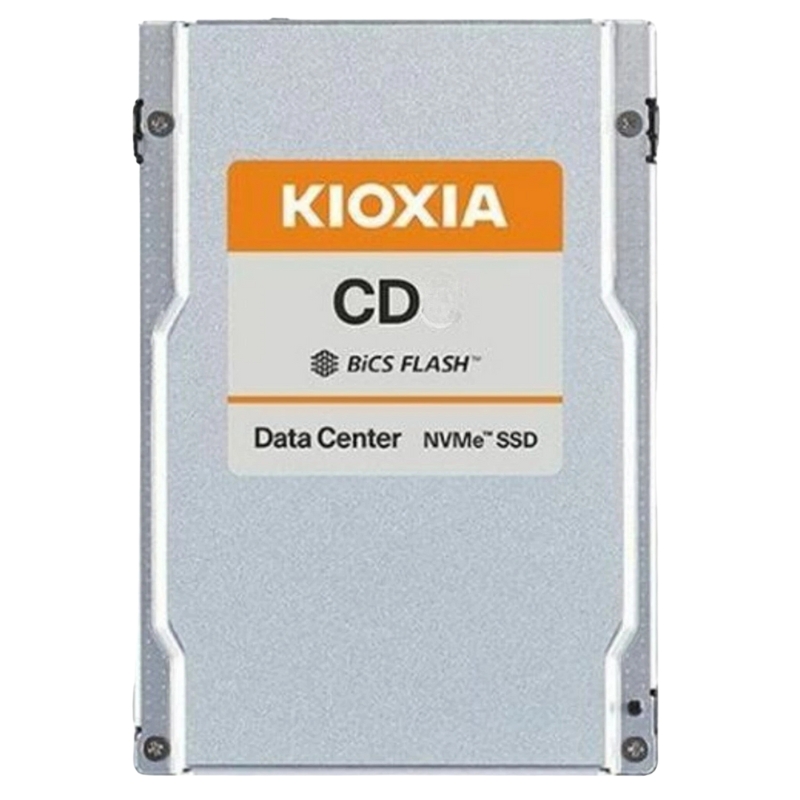


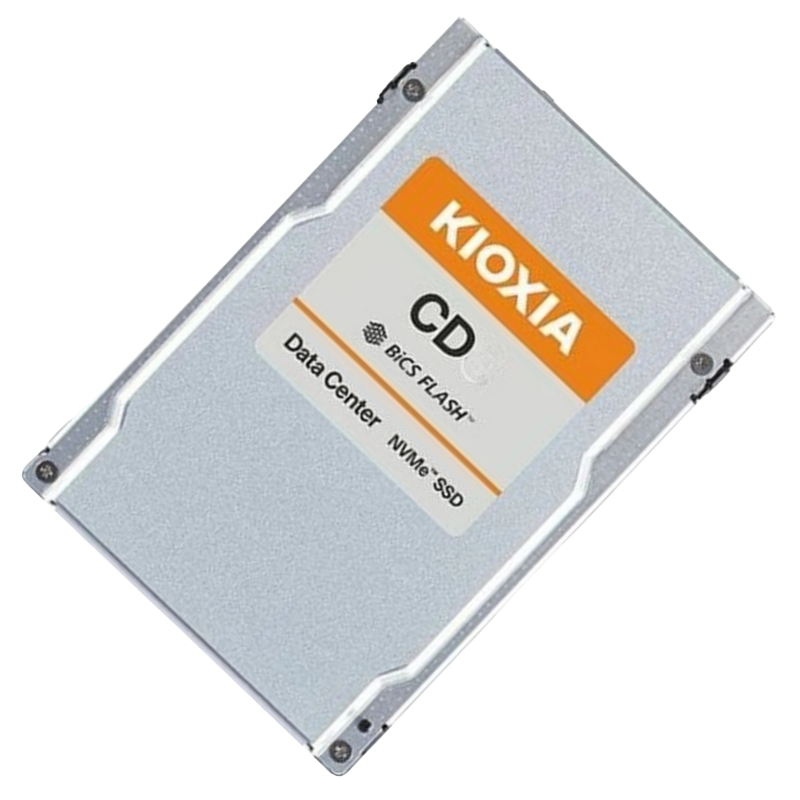
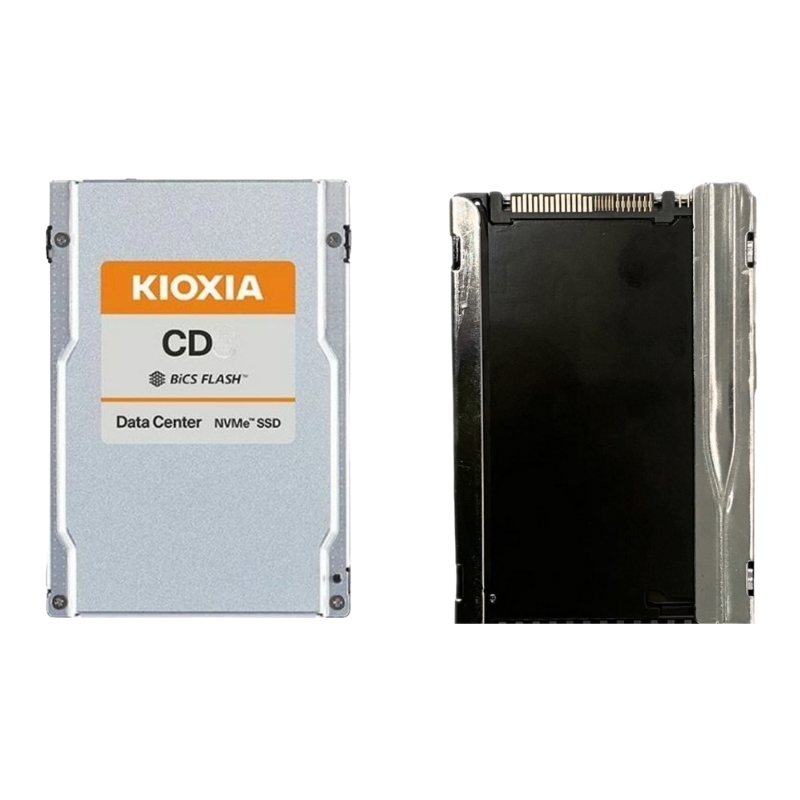
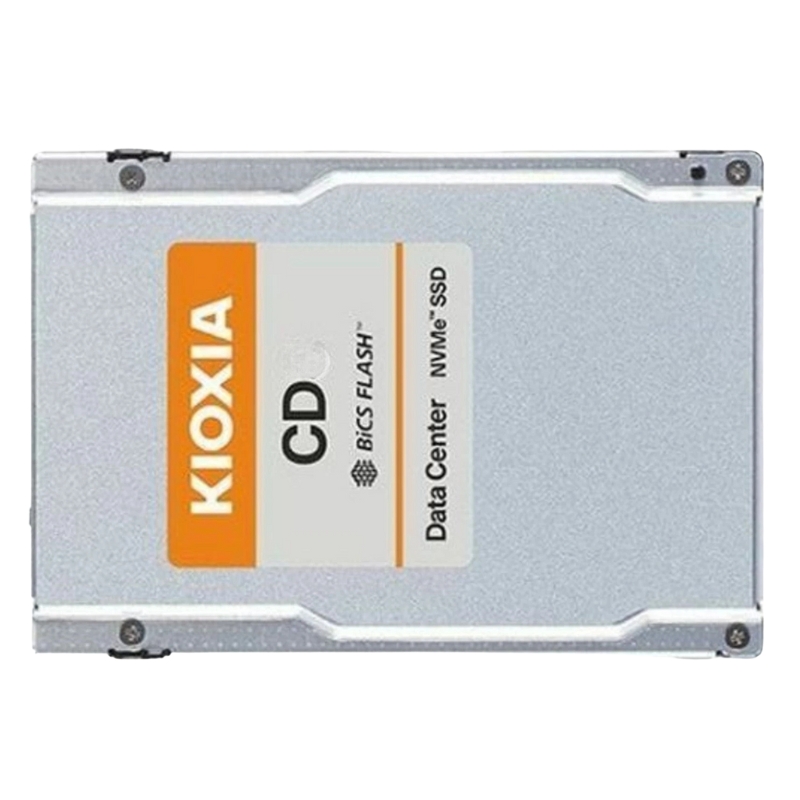
Kioxia SDF7241GEB01T 15.36TB CD8-R PCI Express NVMe SSD. New Sealed in Box (NIB) with 3 Years Warranty.
This high-capacity internal solid state drive is engineered for data centers requiring exceptional performance and reliability.
The Kioxia SDF7241GEB01T (CD8-R series) is a high-capacity, read-intensive NVMe SSD engineered for modern data center workloads that require massive storage density, consistent low-latency reads, and enterprise-class reliability. With a factory capacity of 15.36TB in a 2.5-inch, 15mm profile, this drive targets hyperscale cloud, CDN, streaming, analytics, and virtualization deployments where high density and predictable performance are more important than the absolute highest write endurance. The CD8-R platform is built on Kioxia’s BiCS FLASH 3D TLC technology and purpose-tuned controller firmware to deliver sustained read throughput, high random read IOPS, and features such as power-loss protection and enterprise security options. :contentReference[oaicite:0]{index=0}
The SDF7241GEB01T is presented in a 2.5-inch enterprise form factor with a 15mm height designed to fit U.2/U.3 bays and drive sleds commonly used in server chassis and storage platforms. This physical profile enables dense 2.5-inch arrays in blade and rack servers while supporting industry standard NVMe command sets and thermal management best practices.
Built for continuous data center operation, the CD8-R SSDs support a wide operating temperature range, rigorous vibration and shock specifications, and have a high MTBF (mean time between failures) rating suitable for enterprise SLAs. Typical thermal and mechanical specifics include operational ranges up to the mid-70°C region under controlled airflow, and anti-vibration designs compatible with server mounting. When specifying drives for a platform, confirm chassis airflow and sled compatibility to maintain thermal headroom at full sustained throughput.
The CD8-R family is optimized for read-intensive workloads—think object storage, caching layers, streaming media, and large dataset analytics—where predictable read latency and high sustained random read IOPS directly impact application responsiveness. In practice, these SSDs deliver very high random read IOPS (often cited up to ~1.25M IOPS for selected capacities in vendor literature) and robust sequential read throughput that scales with PCIe Gen4 host capability. This predictable read performance reduces tail-latency spikes and improves quality of service under heavy concurrent client loads.
Sequential performance on high-capacity CD8-R models is tuned to be strong for streaming and large block transfers, while random write IOPS are deliberately constrained compared to mixed-use or write-heavy enterprise drives in order to preserve cost-per-TB and endurance characteristics. Expect substantially higher read throughput than sustained write throughput; for mixed or write-heavy workloads, consider alternatives in Kioxia’s portfolio (or drives with higher DWPD) to avoid write bottlenecks.
One of the defining advantages of the CD8-R platform is consistent, low read latency even under heavy queue depths. This consistency is essential for scale-out services where latency variability translates into user-visible performance swings. The firmware includes optimizations for background housekeeping and garbage collection to minimize interference with foreground read I/O, preserving predictable QoS. Enterprises often place these SSDs behind NVMe-over-Fabric endpoints, caching layers, or as capacity-dense tiers where stable read latency matters most.
The SDF7241GEB01T is positioned as a read-intensive device and typically carries an endurance rating of approximately 1 DWPD — enough for workloads dominated by reads with occasional writes. Drive Writes Per Day is a conservative industry metric that expresses how many times the entire drive capacity can be written daily over the warranty period; for read-centric deployments this rating translates to years of practical life. For customers with write-heavy applications, Kioxia offers other families with higher DWPD values.
Enterprise data integrity features such as on-board power loss protection (PLP) and capacitive buffers are implemented to reduce the risk of data corruption on unexpected power events. In addition, firmware level protections and secure erase/SED (self-encrypting drive) options are available to help meet regulatory and data governance requirements for secure data handling and retirement. These protections are particularly helpful in multi-tenant cloud environments.
Expect enterprise grade MTBF figures and detailed SMART/telemetry reporting from the CD8-R family. These telemetry capabilities allow integrated monitoring systems to trigger pre-emptive replacement, capacity rebalancing, or rebuild tasks before failures impact SLAs. When designing operations runbooks, integrate drive telemetry into your existing alerting and predictive maintenance framework for best results.
The CD8-R series supports optional hardware-based encryption (SED) which enables administrators to use TCG Opal or vendor encryption features to protect data at rest without imposing a performance tax on read operations. Secure erase functions and cryptographic erase workflows simplify decommissioning or redeployment of drives in multi-tenant environments, helping meet compliance needs for data destruction and tenant isolation.
As with other enterprise SSDs, firmware lifecycle management is critical. Kioxia provides firmware images and tools for secure firmware updates; vendors typically sign updates and provide guidance for non-disruptive maintenance windows. Coordinate firmware update schedules with OEM server vendors and platform integrators to ensure compatibility with RAID controllers, NVMe drivers, and orchestration tools.
The SDF7241GEB01T leverages the NVMe protocol over PCIe Gen4 x4 lanes. Confirm that your server motherboard, HBA, or NVMe backplane supports PCIe Gen4 to realize the advertised throughput; Gen3 hosts will operate in Gen3 mode with reduced bandwidth. Many modern U.2 and U.3 NVMe backplanes and sleds are compatible, but verify firmware and BIOS/UEFI NVMe driver compatibility to avoid interoperability issues.
High sustained throughput translates into sustained power draw and thermal dissipation. Ensure adequate airflow and chassis cooling design to keep SSD junction temperatures inside manufacturer recommended ranges—some deployments require front-to-back directed fans or additional heatsinking on drive sleds. The platform’s power budget should also account for peak SSD active power and standby modes to avoid power delivery constraints.
Work with your server and OS vendor to certify firmware and NVMe drivers. Kioxia provides product briefs and firmware release notes that explain recommended host settings, power states, and tuning knobs. For large scale deployments, use vendor tooling for mass firmware updates and telemetry ingestion to minimize operational friction.
Integrate NVMe SMART and vendor telemetry into your monitoring stack to track host-level indicators (temperature, media health, bit error rates, reserved spare availability, etc.). Predictive alerts enable graceful data migration and reduced risk of unplanned downtime. Use the manufacturer’s utilities to decode vendor-specific logs and to perform non-disruptive firmware updates where supported.
Because the CD8-R is capacity dense, plan for capacity growth, spare drive pools for rebuilds, and the impact of garbage collection on usable capacity over time. Techniques such as overprovisioning, workload shaping, and using compression/deduplication at higher storage layers can extend usable life and delay costly refresh cycles. Include replacement drives in inventory planning to keep spare pools ready for rapid swaps.


 Contact Us
 Information
 Catalog
 Solid State Drives (SSD)
 Network Switches
 Hard Disk Drives
 HBA & Controllers
 PC & Servers
 PC & Server Memory
 CPU & Processors
 Network Routers
 Power Supplies
 Tape Drives & Libraries
 Network Devices
 Computer & Network Cables