(7% discount is applied at checkout)
Cart is empty
Your go-to destination for cutting-edge server products
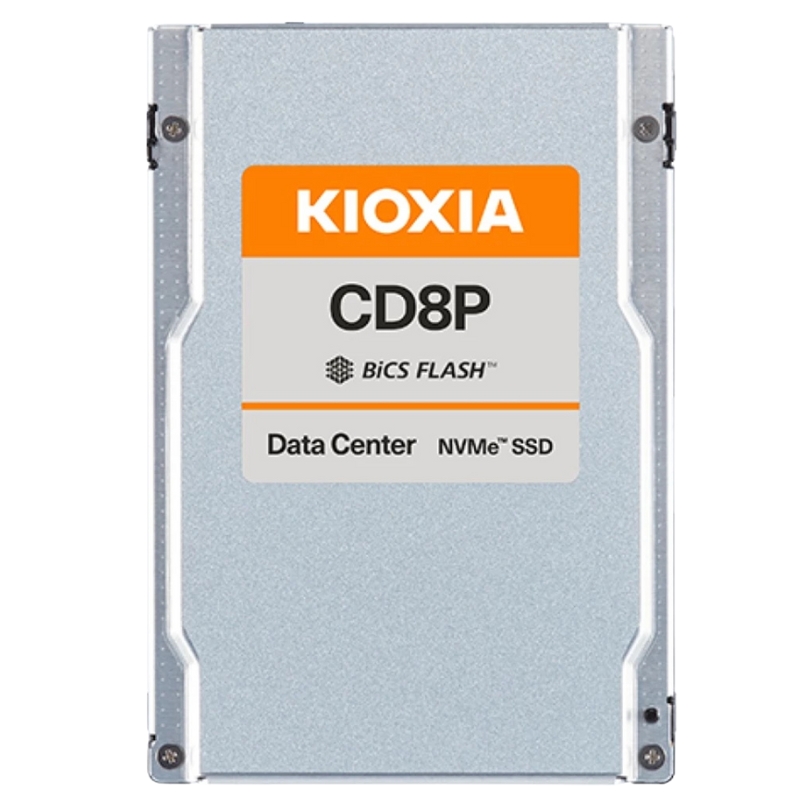


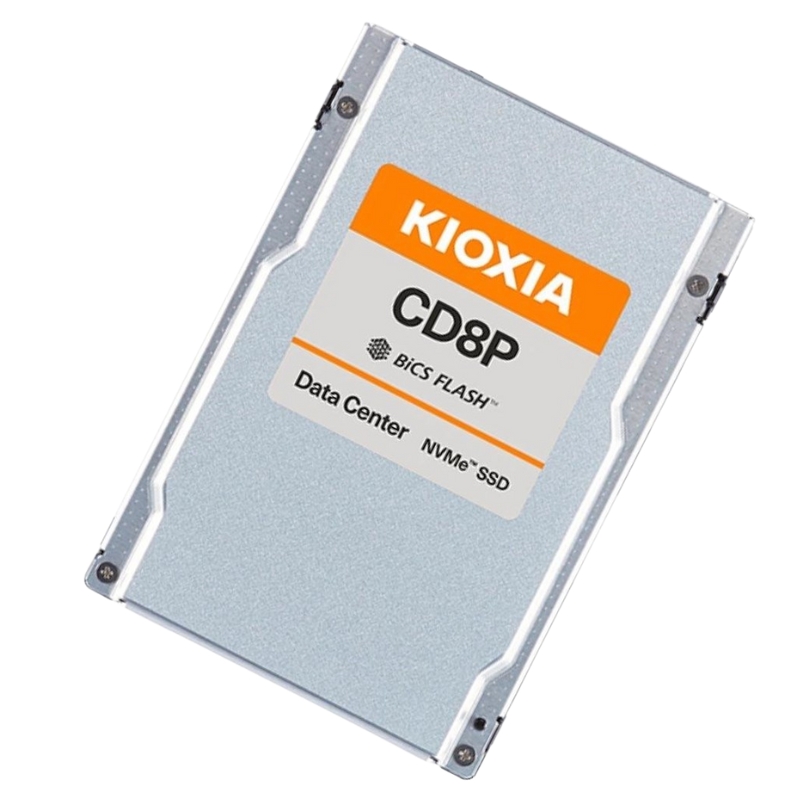
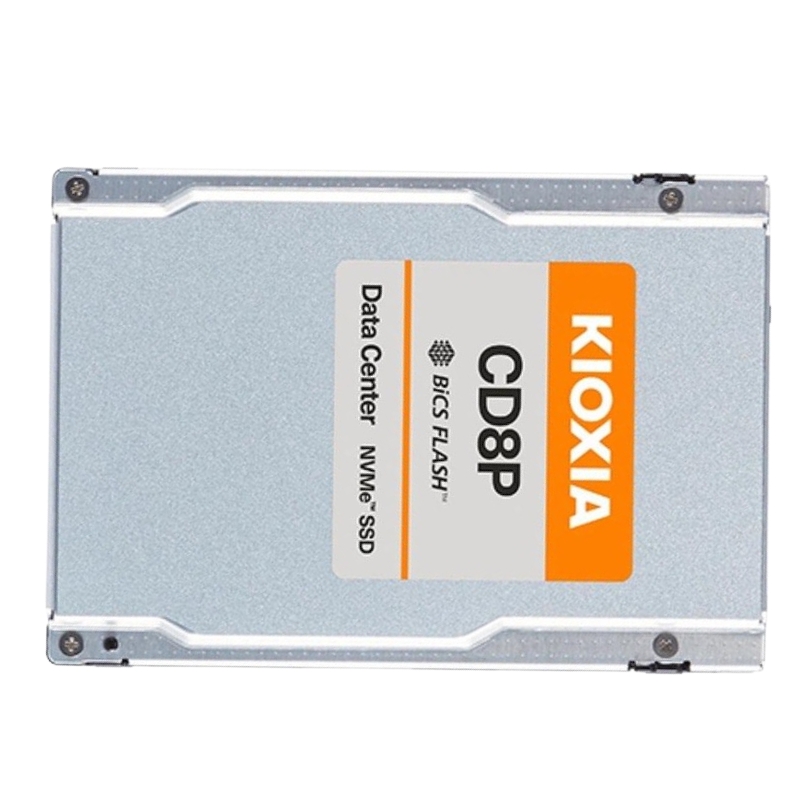
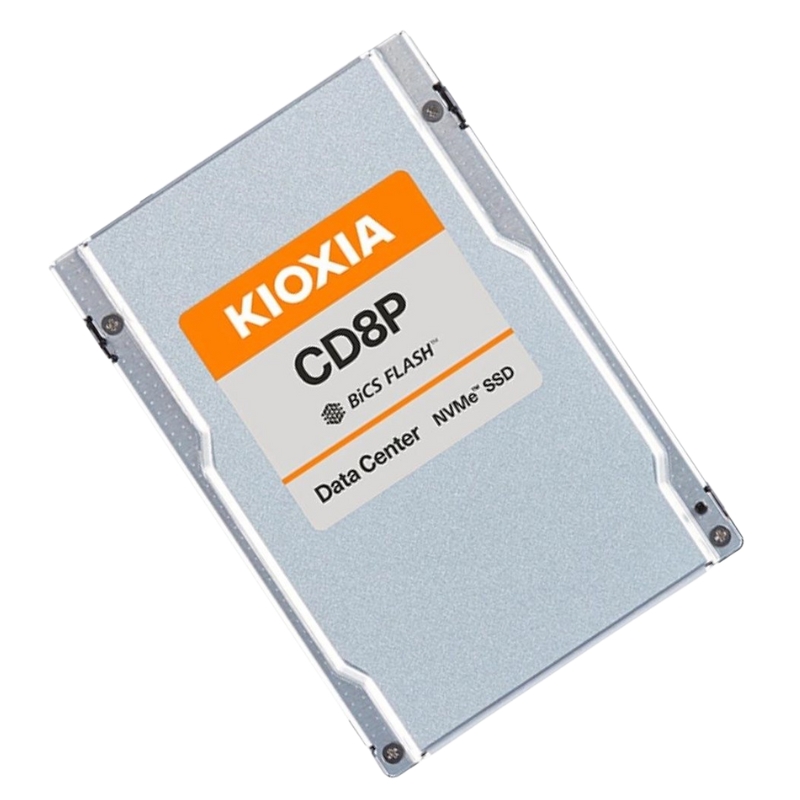
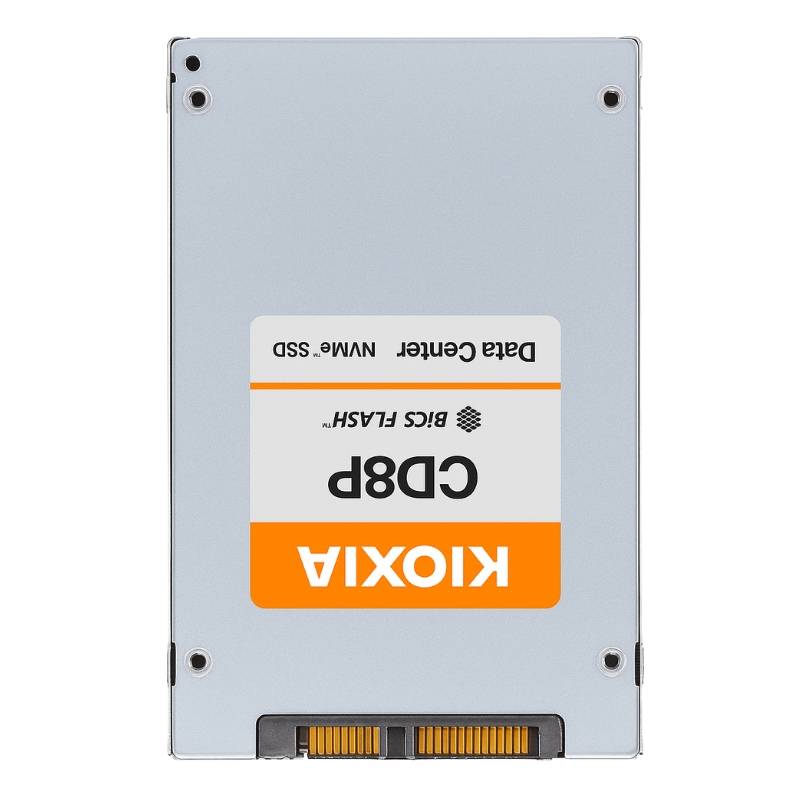
Kioxia SDF7284GEB91T 3.84TB PCIE RI CD8PR NVME SSD. Excellent Refurbished with 1 year replacement warranty
Engineered for data centers requiring exceptional throughput, this internal solid-state drive leverages cutting-edge PCIe 5.0 technology to deliver a new echelon of speed and efficiency for enterprise storage solutions.
Providing a substantial 3.84 terabytes of storage space, this drive is housed in a standardized 2.5-inch form factor, ensuring broad compatibility with existing server and storage infrastructure.
The drive utilizes a PCI Express 5.0 x4 NVMe interface, maximizing bandwidth for blistering data transfer rates. It is constructed with next-generation BiCS FLASH™ TLC NAND, offering an optimal balance of density, endurance, and cost-effectiveness.
Rated for 1 full drive write per day (DWPD), this SSD is built for consistent, heavy use. Its reliability is underscored by a formidable Mean Time Between Failures (MTBF) of 2.5 million hours, guaranteeing long-term operational stability.
Designed with energy efficiency in mind, the drive operates at a typical active power draw of 19 watts. During idle or ready states, consumption is reduced to a mere 5 watts, contributing to lower total cost of ownership.
It supports standard supply voltages of 12V ±10% and 3.3V ±15%.
The unit performs reliably within an operational temperature spectrum of 0°C to 73°C and can withstand non-operating temperatures from -40°C to 85°C. Operating humidity is permitted between 5% and 95% relative humidity.
Built to endure challenging conditions, it can resist operational vibration levels up to 21.27 m/s² (2.17 GRMS) from 5 to 800 Hz and withstand operational shocks of 9.8 km/s² (1,000 G) for a duration of 0.5 milliseconds.
The Kioxia SDF7284GEB91T is a 3.84 TB entry in Kioxia’s CD8P-R family of Data Center NVMe™ Read-Intensive (RI) SSDs. These 2.5-inch, 15 mm drives are optimized for hyperscale and cloud service workloads where very high read throughput and predictable random read latency matter more than heavy write endurance. The CD8P-R line leverages PCIe® 5.0 x4 electrical lanes and modern BiCS FLASH™ TLC to deliver a combination of high sequential bandwidth, multi-tenant random read IOPS, and practical capacity for cache, object and metadata tiers.
Interface: PCI Express 5.0 (32 GT/s) x4 with full NVMe™ 2.x support; Form factor: 2.5-inch, 15 mm (U.2/U.3 backing possible depending on vendor sleds). The Gen5 electrical interface substantially raises per-lane throughput compared to Gen4 devices, enabling the drive to scale sequential bandwidth and random I/O headroom for modern server architectures.
Nominal usable capacity for this model is approximately 3.84 TB, positioned within the Read-Intensive (RI) endurance class. CD8P-R drives typically offer a DWPD (Drive Writes Per Day) rating around 1 DWPD, making them financially attractive for read-dominant workloads while still providing enough write endurance for typical metadata updates and occasional background processes.
Representative peak performance for the 3.84 TB CD8P-R SKU includes very high sequential throughput and industry-leading random read IOPS for the class — published sequential reads above 11 GB/s and sequential writes in the ~5.3 GB/s range, with random 4 KiB reads scaling into the multi-million IOPS range in optimized host conditions. These characteristics make the drive suitable for workloads that require consistent high read bandwidth (large object delivery, streaming, large dataset analytics) while supporting high concurrency at low latency.
CD8P-R devices are typically delivered with enterprise features such as power-loss protection (PLP), end-to-end data path protection, internal ECC/CRC mechanisms, and drive telemetry via NVMe log pages and SMART attributes. These elements help keep in-flight data safe and provide the telemetry needed for fleet health management.
The CD8P-R family is built on Kioxia’s BiCS FLASH™ generation TLC (3-bit per cell) technology. TLC 3D NAND balances raw density and cost while providing acceptable endurance for read-heavy applications. The controller and firmware tune write amplification, background management (GC, wear leveling) and read disturb mitigation specifically for an RI operating profile; this tuning favors long-term performance stability under heavy read mixes and moderate write activity.
The drive controller implements NVMe command handling, multiple submission/completion queue pairs, and advanced flash management algorithms. Firmware for CD8P-R is optimized for read latency stability — reducing the variability of read response times under concurrent loads — and for maintaining high sequential throughput when the host issues large streaming I/O. Enterprise firmware also includes reliability features such as internal parity across channels, scrub operations and reclamation scheduling that try to keep steady performance over long uptimes.
The advertised 3.84 TB is raw or formatted capacity depending on vendor listing; effective usable capacity will be reduced by reserved overprovisioning (OP) and any vendor provisioning. Systems using RAID, erasure coding or replication must budget additional overhead; factor in OP and redundancy when sizing arrays to achieve required endurance and rebuild performance targets.
When connected to a PCIe 5.0 host with adequate CPU/PCIe topology, the CD8P-R 3.84 TB drive shows very high sustained sequential reads (reports commonly cite ~11.7 GB/s) and sequential writes around the 5.3–5.5 GB/s region for sustained large transfers. These sustained metrics assume appropriate system tuning and that host controllers are not oversubscribed. For sequential streaming workloads — video delivery, large file restores or sequential analytics ingest — a single drive can deliver throughput that previously required multiple Gen4 devices.
Random 4 KiB read IOPS numbers scale very well; vendor material for Gen5 CD8P-R SKUs shows random reads up to ~1.9M IOPS for the 3.84 TB class and random writes up to ~200k IOPS under test conditions with high queue depth. Real-world random performance will depend on queue depth, host CPU/core affinity, NVMe driver stack, and multi-tenant contention — but the drive is tuned to keep read latency low even at high concurrency.
Typical active power numbers for this 2.5" Gen5 device are in the mid-teens to low-20s watt range during heavy sustained transfers (vendor numbers often list active power ≈ 19 W typical for some SKUs). Idle or ready power states fall to single-digit watts. Because PCIe 5.0 and high bandwidth operation increase thermal density, plan for adequate airflow, sled heatsinking and drive thermal monitoring to avoid throttling that can reduce throughput under prolonged transfers.
CD8P-R drives are ideal as a hot tier for object stores and CDNs where frequent reads dominate. Deploying 3.84 TB drives as cache nodes or read replicas allows architects to hold more hot objects local to compute, reduce network egress load from colder layers and increase responsiveness for end users.
Metadata, indices, and small random-read-heavy datasets benefit from the device’s strong random read IOPS and low read latency. Consolidating multiple index shards onto high IOPS Gen5 drives can decrease query latency and reduce the number of nodes required for a given level of concurrency.
In stateless or containerized cloud fleets, a read-optimized SSD can store OS images and container layers, enabling fast concurrent boots and high VM density per host during scale events. The drive’s balance of capacity and read throughput supports large image catalogs without excessive hardware count.
Analytics jobs that stage large slices of referenced data for repeated reads (e.g., iterative machine learning training, map/reduce read phases) can be accelerated by placing dataset partitions on Gen5 CD8P-R devices to exploit high sequential and random read throughput.
To benefit from Gen5 bandwidth, the host must provide direct PCIe 5.0 lanes to the drive. Avoid sharing root complexes or oversubscribing lanes with other heavy devices in the same PCIe fabric. On platforms without PCIe 5.0 support the drive falls back to lower Gen modes and will still operate but with reduced peak numbers.
Verify U.2/U.3 backplane compatibility, sled clearances and power pinouts. Some chassis vendors require specific sleds or adapter brackets for optimal cooling and mechanical retention. Confirm mechanical fit (15 mm height) and connector mapping before large-scale procurement.
Keep NVMe drivers and OS kernel stacks current to ensure full NVMe 2.x capabilities and vendor telemetry support. Firmware management at scale requires controlled staging, testing and rollback capabilities; request vendor guidance and release notes when scheduling firmware updates for production fleets.
Monitor NVMe SMART attributes, temperature, media wear percent, corrected/uncorrectable error trends, and NVMe log pages. Establish alerts for rising error counts, abnormal thermal excursions or rapid wear increases. Telemetry is the first line of defense for predictive replacements and avoiding rebuild storms that affect availability.
Match drive endurance class to workload write intensity. For predominantly read workloads, CD8P-R provides an excellent cost/performance balance. If your application performs sustained high-volume writes (e.g., heavy logging, write-back caches), consider mixed-use (MU) or write-intensive (WI) classes to avoid premature media exhaustion. Model DWPD, RAID overhead and rebuild time when calculating fleet capacity and refresh cadence.
Use canary/staging groups to evaluate firmware updates with production-like load patterns. Validate telemetry before rolling updates wide, and ensure rollback procedures are in place. Maintain a schedule for routine health checks and a documented RMA process for failed devices.
Many data center SSDs in this class support hardware-based encryption and self-encrypting drive (SED) modes compliant with NVMe standards or TCG Opal profiles. Confirm cryptographic support and key lifecycle integration with your enterprise key management system to meet compliance and data sanitization requirements.
Ensure the drive model supports secure erase and zeroization operations that integrate with your decommissioning workflows. For cloud providers and hyperscalers, quick and provable data sanitization is essential when returning or repurposing media.


 Contact Us
 Information
 Catalog
 Solid State Drives (SSD)
 Network Switches
 Hard Disk Drives
 HBA & Controllers
 PC & Servers
 PC & Server Memory
 CPU & Processors
 Network Routers
 Power Supplies
 Tape Drives & Libraries
 Network Devices
 Computer & Network Cables