(7% discount is applied at checkout)
Cart is empty
Your go-to destination for cutting-edge server products
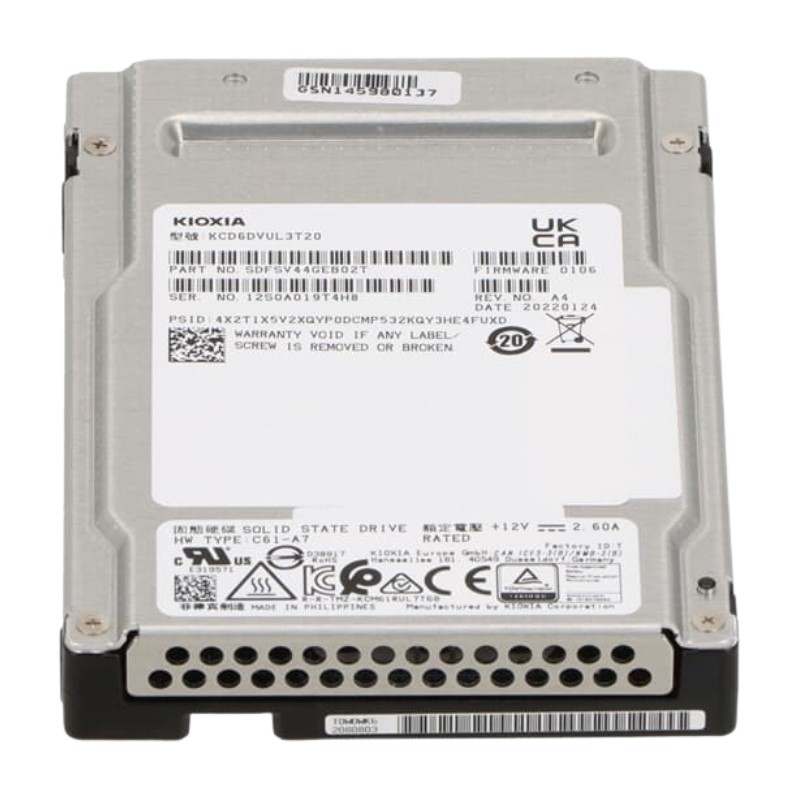


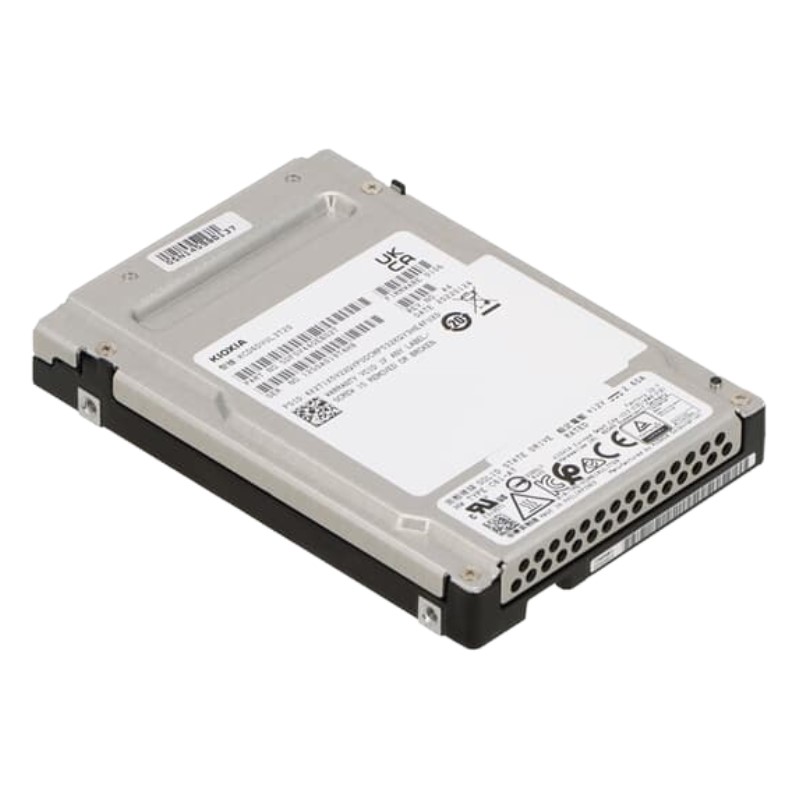
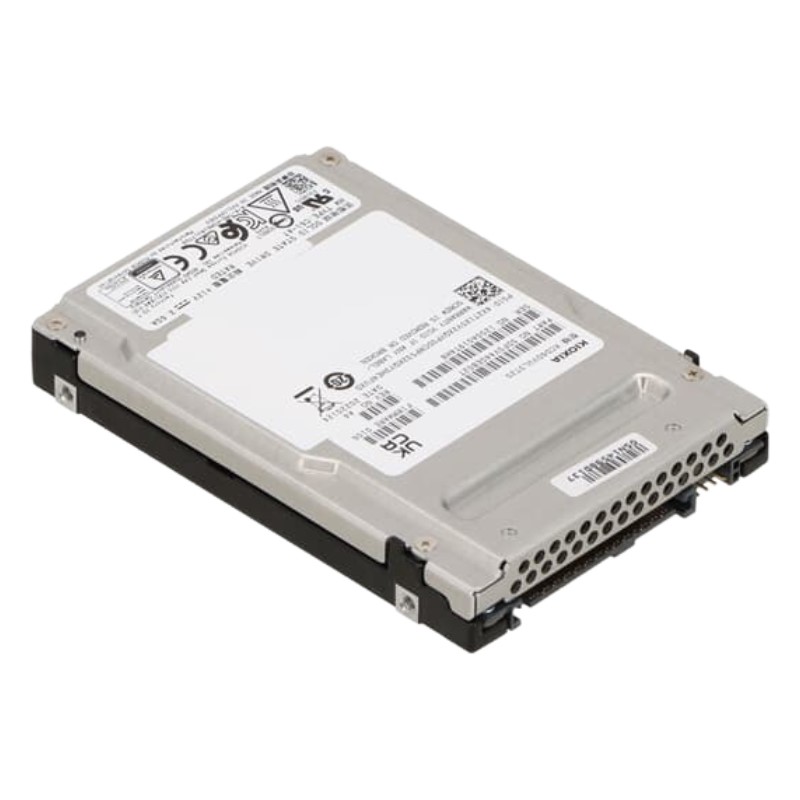
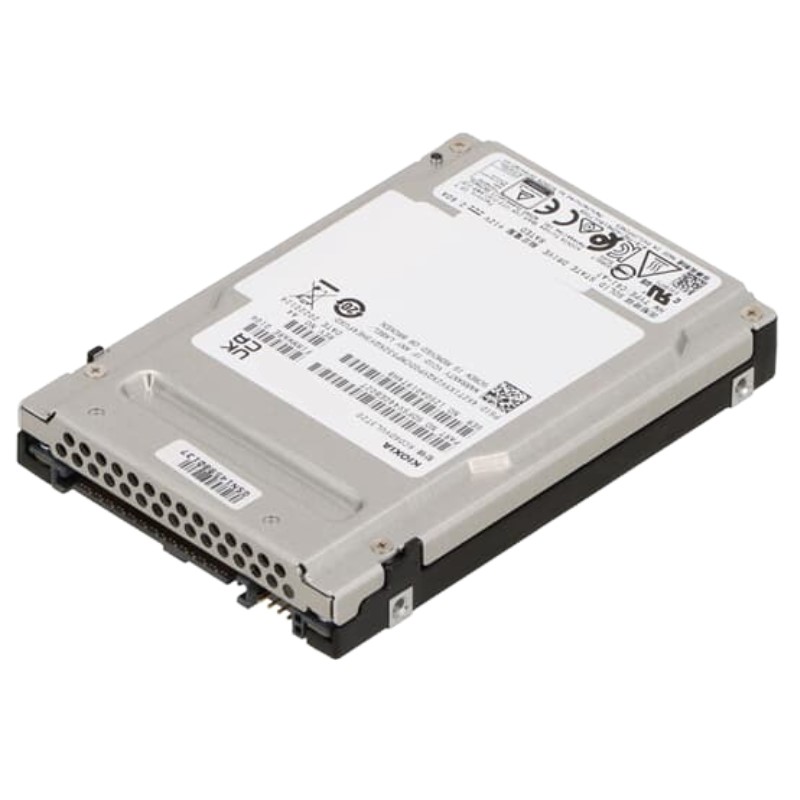
Kioxia SDFUY85DHB01T 1.6TB SAS 24GBPS Pm7-v Series Mixed Use Bics Flash TLC 2.5 Inch Enterprise Internal Solid State Drive. Excellent Refurbished with 1 year replacement warranty - Dell Version
| SKU/MPN | Warranty | Price | Condition | You save |
|---|---|---|---|---|
| SDFUY85DHB01T | 1 Year Warranty | $1,458.00 | New Sealed in Box (NIB) | You save: $510.30 (26%) |
| SDFUY85DHB01T | 1 Year Warranty | $1,092.00 | Excellent Refurbished | You save: $382.20 (26%) |
The Kioxia SDFUY85DHB01T is a high-performance, enterprise-grade internal solid state drive (SSD) built for mixed-use workloads. Featuring a robust 1.6TB storage capacity, fast data transfer rates, and superior endurance, this 2.5-inch SFF SAS drive is ideal for data centers and mission-critical systems.
The category of enterprise mixed‑use SAS solid‑state drives encompasses devices engineered to handle a broad spectrum of workloads where both read and write operations are significant, including database applications, virtualization, caching, streaming delivery, and web services. These drives sit between read‑intensive and write‑heavy designs, offering a balance of throughput, latency, endurance and reliability. They typically adopt the 2.5‑inch small form factor (SFF), utilise BiCS FLASH™ TLC memory, and employ high‑speed SAS interfaces such as SAS 24 Gb/s to deliver enterprise‑class performance and durability.
In contrast to consumer‑grade SSDs or mainstream SATA/NVMe drives, enterprise mixed‑use SAS SSDs are built for 24×7 operation in data centre environments. They provide stronger endurance metrics (for example, multiple drive‐writes‐per‐day) and longer mean time to failure ratings. Compared to pure read‑intensive models, they support heavier write workloads while avoiding the cost, over‑engineering and power overhead of extreme write‑endurance drives used in heavy logging or transactional systems. The result is a sweet‑spot storage tier that supports a wide variety of mission‑critical workloads.
Within this category, typical use cases include server caching pools, tiered storage layers in high‑density systems, virtual desktop infrastructures (VDI), online transaction processing (OLTP), streaming media distribution, and cloud service back‑ends. The architecture of mixed‑use SAS SSDs supports the demands of sustained mixed read/write access, random I/O operations, and sequential bulk transfers, making them versatile components in modern enterprise storage arrays.
One defining feature of this category is the SAS interface, often operating at 24 Gb/s (sometimes referenced as “SAS 24 Gbps”), which provides dual‑port reliability, hot‑plug capabilities and enterprise‑grade signalling. The 2.5‑inch SFF form factor remains common, particularly because it allows high density in server storage trays while maintaining compatibility with existing backplanes and racks. In many mixed‑use SAS models the height is 15 mm to maximise thermal headroom and capacity within the drive bay.
These mixed‑use SSDs almost universally deploy 3D TLC (Triple‑Level Cell) flash memory—such as the BiCS FLASH™ design developed by Kioxia—which strikes a balance between cost, density and endurance. The use of BiCS FLASH™ TLC ensures that the drives can deliver high capacity at enterprise price points while still meeting endurance ratings (for example, multiple DWPD) and long MTTF values. The internal controller and firmware are finetuned to support the mixed‑workload profile: combining sustained sequential transfers, high random I/O, and consistent latency under load.
A mixed‑use SSD must deliver strong sequential transfer rates—important for large block moves, streaming and migrations—while also offering high random IOPS for services such as databases and virtual machines. In this category, sequential transfer speeds are typically measured in the multiple gigabytes per second range (e.g., ~4 000 MB/s and above) and random I/O capabilities often reach hundreds of thousands of IOPS. These metrics are critical to ensure responsiveness, low latency and predictable behaviour under mixed read/write workloads.
Endurance is expressed as DWPD (Drive Writes Per Day) and indicates how many times the drive’s capacity may be overwritten each day over the warranty period. In the mixed‑use SAS category, DWPD ratings of 3 or more are common, which demonstrates the drive’s capability to handle moderate to heavy write workloads reliably. Reliability is emphasised via MTTF (Mean Time To Failure) values typically in the order of 2.5 million hours, and the design often includes power‑loss protection, end‑to‑end data path integrity and enterprise‑grade components. These features combine to offer high service life, consistent performance and data integrity in demanding environments.
Mixed‑use SAS SSDs are designed for continuous 24x7 operation, high density deployments and integration with server and storage infrastructure. Thermal management, firmware stability, error‑correction mechanisms and compatibility with RAID/storage controllers are paramount. Proper deployment also entails ensuring that the host system supports the SAS 24 Gb/s interface, uses dual‑port capabilities for redundancy where needed and configures the drive within an architecture that leverages its strengths—such as high random I/O, quick failover, and mixed workload resilience.
In modern data centres, mixed‑use SAS SSDs are often deployed in arrays either as tier‑1 or tier‑2 storage options. They may serve as front‑end cache drives for spinning‑disk systems, underpin virtualised clusters, or act as high‑performing storage for hyper‑converged infrastructure. Their flexible performance profile enables administrators to consolidate storage tiers, reduce total cost of ownership (TCO) and simplify architecture by using a single device class for a variety of workloads rather than having separate devices for read‑intensive and write‑heavy tasks.
The SDFUY85DHB01T specification lists a mean time to failure (MTTF) of approximately 2.5 million hours and a drive writes per day (DWPD) rating of 3. These values align with the broader category expectations of mixed‑use enterprise SSDs, ensuring that the drive can withstand sustained operation in demanding data centre environments. The high endurance rating means that the drive can reliably handle heavier write traffic than lower‑end enterprise models, without requiring frequent replacement or suffering performance degradation.
As a 2.5‑inch SFF SAS device (with a height of 15 mm and a width of 69.85 mm and length of 100.45 mm according to documentation), the drive integrates seamlessly into standard server chassis and storage shelves designed for enterprise drives. The 15 mm height provides additional space for thermal dissipation, which supports consistent behaviour under sustained load. Additionally, the SAS 24 Gb/s interface ensures the drive can be used in existing SAS infrastructure without requiring a shift to NVMe, simplifying deployment and compatibility.
Given the performance and endurance attributes, this drive is especially suited for workloads that require a solid balance between reads and writes and benefit from high throughput and random I/O. Examples include virtualised server farms where multiple virtual machines issue random I/O, relational or non‑relational database systems with mixed query and transaction loads, high‑density caching layers, media ingestion and streaming platforms, and tiered storage systems where the SSD serves as a fast layer feeding larger bulk‑storage devices. The model’s SAS interface also makes it a practical choice for organizations that remain invested in SAS infrastructure, providing a path to high performance without full re‑architecture.
At the core of mixed‑use SAS SSDs is a specialized controller and firmware stack designed to optimise flash memory behaviour over a wide range of I/O patterns. The controller manages wear‑leveling, error correction (ECC), garbage collection and background operations with minimal performance impact. The choice of BiCS FLASH™ TLC memory provides the right trade‑off between density, cost and durability. Together, these components deliver predictable performance across sustained workloads rather than merely peak bursts. In the case of the PM7‑V series, this design philosophy is evident in the high random IOPS and sequential throughput numbers cited above.
The endurance management systems embedded in such drives monitor and optimise block‑erasures, spare‑area utilisation, and wear distribution to ensure maximal lifespan and consistent performance. Enterprise features often include power‑loss protection capacitors, end‑to‑end data path protection, redundant data structures and firmware designed for stability under heavy I/O load. In a mixed‑use SAS SSD category, these features ensure that performance remains consistent even under mixed read/write storms, which is critical for environments such as cloud infrastructure, database clusters or storage arrays.
One of the advantages of the mixed‑use SAS SSD category is scalability. Because these drives fit into standard server trays and storage shelves and can leverage existing SAS backplanes, data‐centre architects can deploy high–density arrays without redesigning rack infrastructure. The relatively high capacity (for example 1.6 TB and higher) combined with fast I/O and moderate endurance means that such drives can serve as primary storage for large server farms, or as performance tiers feeding bulk storage tiers. The category thus supports growth, consolidation and cost‑effective scaling of enterprise storage.
While many mixed‑use SAS SSDs today support SAS 24 Gb/s, future designs may migrate to even higher‑speed interfaces or alternative protocols such as NVMe over U.2, U.3 or EDSFF. As flash memory technology advances—such as higher layer counts in BiCS FLASH™ or faster transition to newer node sizes—drive capacities will increase and cost per gigabyte will decline. Form factor evolution might see adoption of slimmer heights (10 mm, 7 mm) or alternative mechanical dimensions for higher density rack infrastructure.
The category is also influenced by emerging workloads such as hyper‑converged infrastructure (HCI), edge data centres, real‑time analytics platforms and high‑performance computing clusters. These environments require both speed and endurance, but often within constrained physical and power budgets. Mixed‑use SAS SSDs will continue to evolve to serve as the bridge between traditional HDD arrays and ultra‑high‑end NVMe SSDs, enabling hybrid storage architectures that deliver performance where needed and capacity where affordable.


 Contact Us
 Information
 Catalog
 Solid State Drives (SSD)
 Network Switches
 Hard Disk Drives
 HBA & Controllers
 PC & Servers
 PC & Server Memory
 CPU & Processors
 Network Routers
 Power Supplies
 Tape Drives & Libraries
 Network Devices
 Computer & Network Cables