(7% discount is applied at checkout)
Cart is empty
Your go-to destination for cutting-edge server products


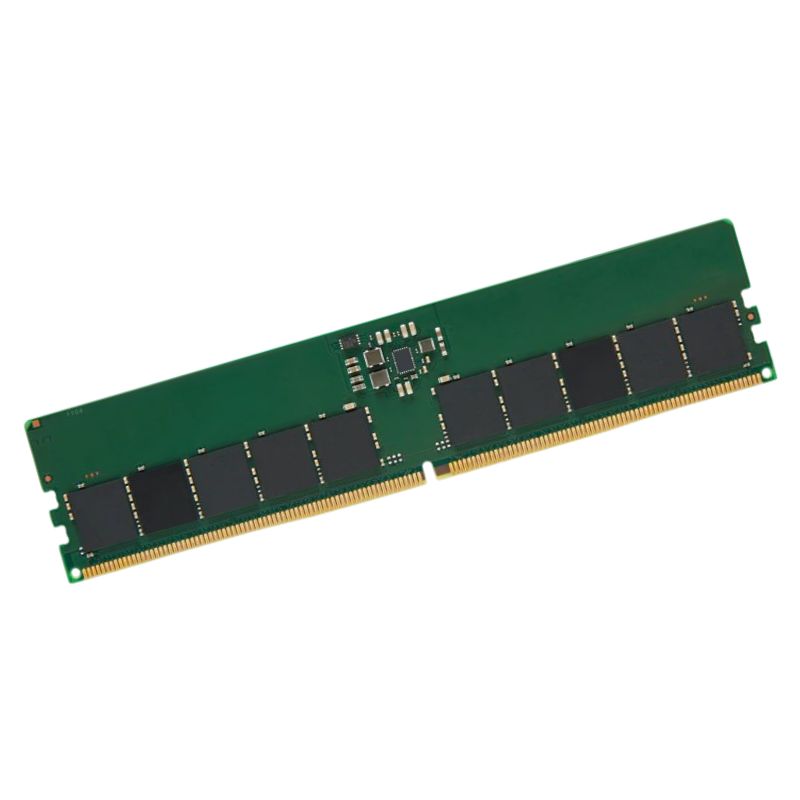
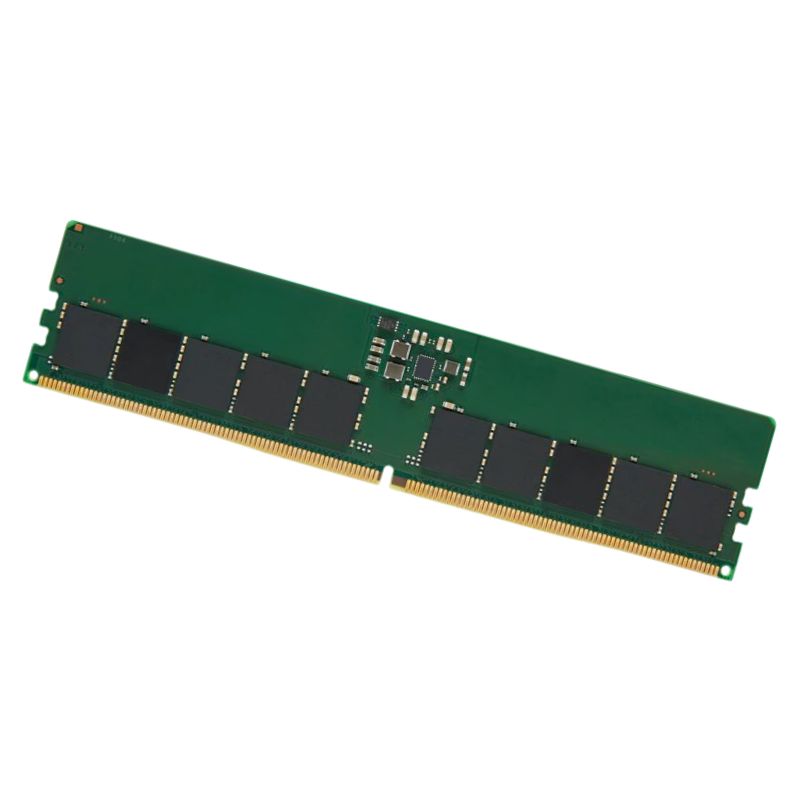
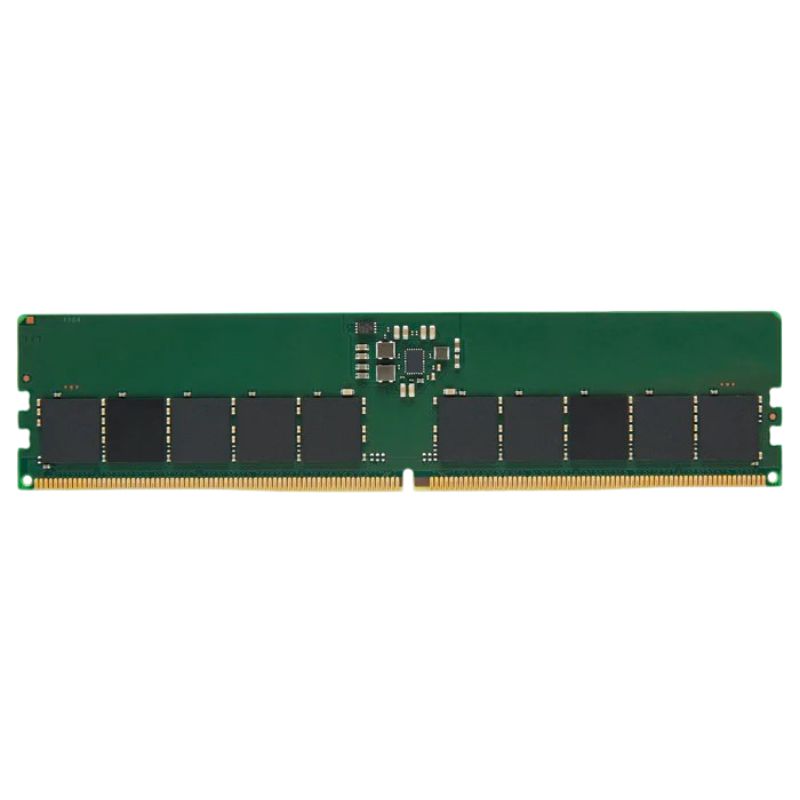
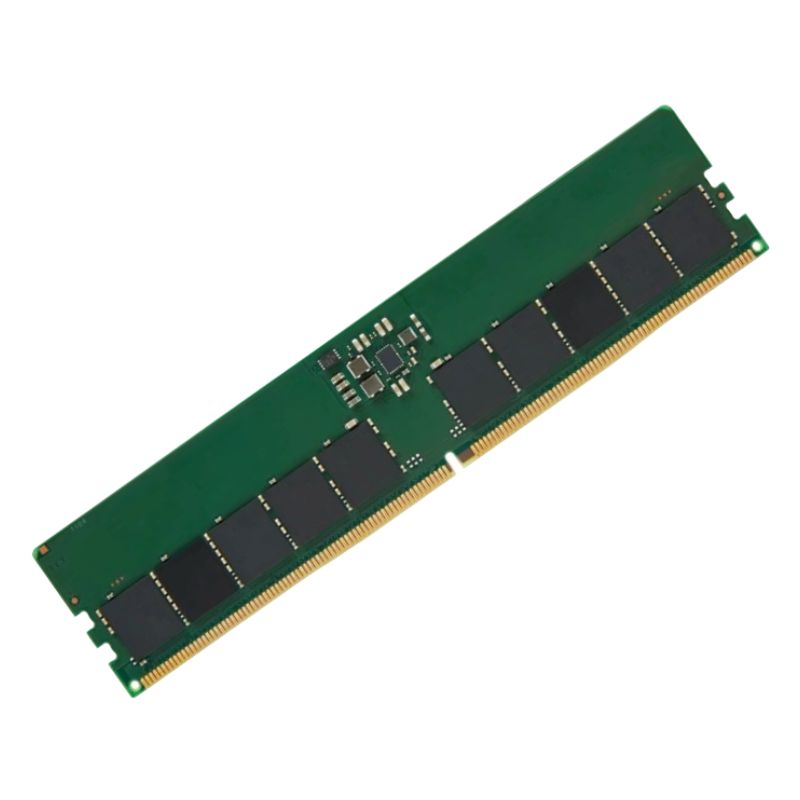
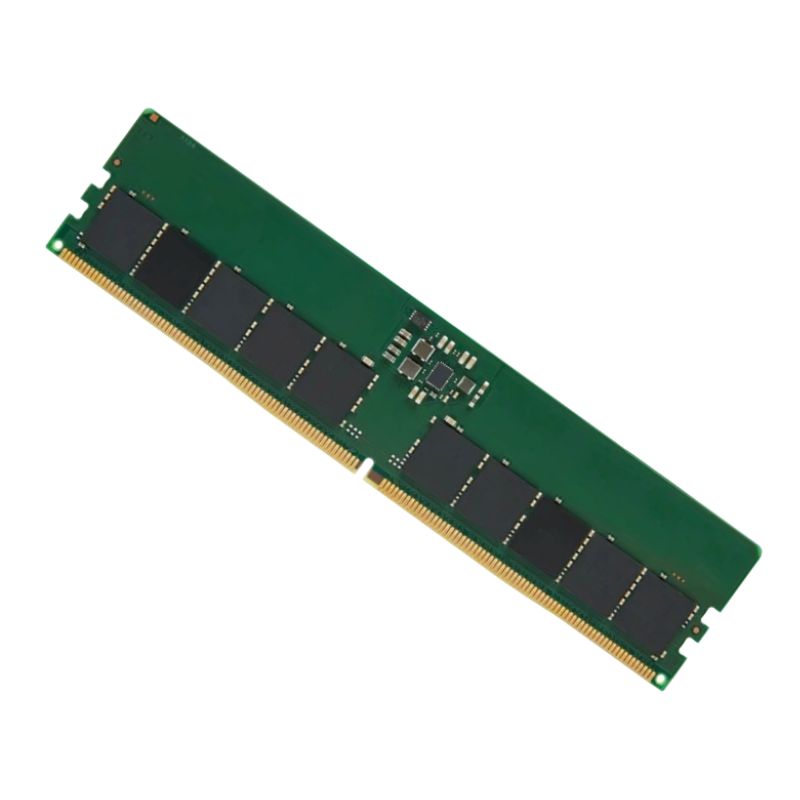
Kingston KSM48R40BD8TMI-32HAI 32GB 4800mt/s PC5-38400 CL40 ECC Dual Rank DDR5 SDRAM 288-Pin RDIMM Memory Module. Factory-Sealed New in Original Box (FSB) with 3 Year Warranty
The Kingston KSM48R40BD8TMI-32HAI represents a significant leap forward from DDR5 technology, featuring a doubled burst length of 16 compared to DDR4's 8, and a prefetch of 16n versus DDR4's 8n. This architectural improvement enables more efficient data transfer cycles and higher overall bandwidth utilization, making it ideal for data-intensive server applications.
DDR5 RDIMM (Registered Dual In-Line Memory Module) represents the fifth generation of double data rate synchronous dynamic random-access memory, specifically engineered for server and workstation environments. The Kingston KSM48R40BD8TMI-32HAI exemplifies this advanced memory technology with its 32GB capacity and 4800MT/s data rate, providing significant improvements over previous DDR4 generations in bandwidth, power efficiency, and reliability for enterprise computing systems.
DDR5 architecture introduces fundamental changes that differentiate it from DDR4 technology. The memory module features a burst length of 16, compared to DDR4's burst length of 8, effectively doubling the data transfer per operation. Additionally, DDR5 incorporates two independent 40-bit subchannels (32 data bits with 8 ECC bits each) per module, allowing for more efficient data handling and reduced latency in memory access patterns common in server workloads.
The Kingston KSM48R40BD8TMI-32HAI implements on-die ECC (Error Correction Code), which corrects bit errors within the DRAM chips themselves before data is transmitted to the system. This internal error correction works in conjunction with the traditional sideband ECC available on RDIMMs, providing an additional layer of data integrity and reliability for mission-critical server applications where data corruption is unacceptable.
The Kingston KSM48R40BD8TMI-32HAI is configured as a 32GB registered ECC DDR5 module operating at 4800 million transfers per second (MT/s). This translates to a peak bandwidth of 38,400 MB/s (PC5-38400) when operating in dual-channel configurations. The module utilizes a dual-rank architecture with x4 DRAM organization, optimizing signal integrity and capacity while maintaining stable operation at the specified data rate.
This memory module operates with CAS Latency (CL) of 40 cycles at the 4800MT/s data rate. The complete timing parameters are specified as 40-39-39 at 1.1V operating voltage. These carefully engineered timings balance performance with stability, ensuring reliable operation in server environments where continuous uptime is essential. The command rate is configured for 2T (two clock cycles) to maintain signal integrity across the memory bus.
DDR5 technology introduces a significant architectural change by moving the power management integrated circuit (PMIC) from the motherboard to the memory module itself. The Kingston KSM48R40BD8TMI-32HAI incorporates an onboard PMIC that efficiently distributes the 1.1V VDD voltage, improving power integrity and signal stability. This distributed power architecture allows for better power delivery optimization and more granular power management compared to previous memory generations.
The module conforms to the standard 288-pin DDR5 RDIMM form factor with dimensions of approximately 133.35mm x 31.25mm (5.25" x 1.23"). The printed circuit board utilizes a 1.0mm thickness with carefully engineered signal layers and power planes to maintain signal integrity at high data rates. The module is specifically designed for compatibility with Intel Xeon Scalable Processors (Sapphire Rapids and Emerald Rapids platforms) and AMD EPYC 7004 series processors that support DDR5 memory technology.
Error Correction Code is a critical feature in server memory that detects and corrects the most common types of data corruption. The Kingston KSM48R40BD8TMI-32HAI implements single-bit error correction and double-bit error detection, providing protection against soft errors caused by alpha particles, cosmic rays, and electrical interference. This capability is essential for maintaining data integrity in financial transactions, scientific computations, database operations, and other enterprise applications where data accuracy is paramount.
As an RDIMM (Registered DIMM), this memory module incorporates register chips (or buffers) that sit between the memory controller and the DRAM chips. These registers buffer command, address, and control signals, reducing the electrical load on the memory controller and enabling higher module capacities and better signal integrity in systems with large memory configurations. This makes RDIMMs ideal for servers supporting multiple processors and high-density memory configurations exceeding 1TB per system.
The dual-rank configuration of the Kingston KSM48R40BD8TMI-32HAI allows the memory controller to access two sets of DRAM chips alternately, increasing memory bandwidth utilization and improving overall system performance. While single-rank modules can potentially achieve slightly higher data rates in some configurations, dual-rank modules provide better performance in memory-intensive workloads by maximizing concurrent access opportunities and improving overall memory subsystem efficiency.
Operating at 4800MT/s (mega transfers per second), the Kingston KSM48R40BD8TMI-32HAI delivers a data rate of 4.8 billion transfers per second. With a 64-bit data bus (comprised of two independent 32-bit subchannels), the theoretical peak bandwidth per module is calculated as 4800 MT/s × 64 bits/8 bits per byte = 38,400 MB/s. This substantial bandwidth enables faster data processing in memory-intensive applications such as in-memory databases, virtualization, and high-performance computing workloads.
DDR5 memory provides approximately a 50% increase in bandwidth compared to DDR4-3200, which operates at 3200MT/s with peak bandwidth of 25,600 MB/s. Additionally, DDR5's dual subchannel architecture provides more efficient memory access patterns, particularly for workloads that don't fully utilize the complete 64-bit bus width. The improved bank group architecture with 8 bank groups (compared to DDR4's 4 bank groups) further enhances parallelism and reduces access contention.
While the theoretical bandwidth of DDR5-4800 is significantly higher than DDR4-3200, real-world performance gains depend on the specific workload characteristics. Memory bandwidth-sensitive applications such as scientific simulations, financial modeling, and video encoding typically show the most substantial improvements. The higher data rate also benefits latency-sensitive applications when paired with modern processors that feature larger CPU caches and improved memory controllers.
The Kingston KSM48R40BD8TMI-32HAI is validated for use with Intel Xeon Scalable Processors (Sapphire Rapids and Emerald Rapids code names) and compatible server platforms. These processors feature memory controllers specifically designed for DDR5 technology with support for up to 8 memory channels per socket. The module is also compatible with AMD EPYC 7004 series processors (Genoa and Bergamo code names) that support DDR5 memory with 12 memory channels per socket, providing exceptional memory bandwidth for demanding server workloads.
Kingston utilizes carefully selected DRAM components that undergo extensive testing and validation to ensure compatibility and reliability in server environments. The memory modules are subjected to rigorous testing procedures including full-temperature range testing, signal integrity validation, and compatibility testing with major server platforms. This comprehensive validation process ensures stable operation in 24/7 server environments where system uptime is critical to business operations.
The Kingston KSM48R40BD8TMI-32HAI supports advanced Reliability, Availability, and Serviceability (RAS) features including post-package repair, adaptive voltage scaling, and error management capabilities. These features work in conjunction with server operating systems and management controllers to predict potential failures, correct errors transparently, and maintain system availability even in the event of correctable memory errors. The modules also provide comprehensive telemetry data to system management controllers for proactive monitoring and maintenance.
The Kingston KSM48R40BD8TMI-32HAI is ideally suited for data center deployments including cloud computing infrastructure, virtualization hosts, database servers, and enterprise applications. The combination of high bandwidth, large capacity, and ECC protection makes these modules particularly valuable for applications requiring high levels of data integrity and consistent performance under heavy workloads. Typical implementations include SQL database servers, virtualization platforms like VMware vSphere and Microsoft Hyper-V, and large-scale containerized application deployments.
In technical and scientific computing environments, the increased bandwidth of DDR5-4800 memory accelerates simulations, modeling, and analytical processing. Applications in computational fluid dynamics, finite element analysis, weather modeling, and genomic sequencing benefit from the improved memory performance. The module's ECC capabilities are especially critical in these applications where computational accuracy is essential and processing times can extend for days or weeks.
The DDR5 memory architecture in the Kingston KSM48R40BD8TMI-32HAI features a sophisticated bank structure with 64 banks (32 banks per bank group) compared to DDR4's 16 banks. This increased bank count reduces bank conflicts and improves parallelism, allowing the memory controller to schedule more concurrent operations. The two independent subchannels (each with 32 data bits) can operate simultaneously, effectively increasing memory efficiency for workloads that don't require full 64-bit accesses.
DDR5 implements several signal integrity improvements including Decision Feedback Equalization (DFE) on the data receivers, which helps compensate for channel losses and inter-symbol interference at high data rates. The Kingston KSM48R40BD8TMI-32HAI incorporates these advanced signal integrity features to maintain data eye margins and ensure reliable operation at 4800MT/s, even in systems with fully populated memory configurations where electrical loading is highest.


 Contact Us
 Information
 Catalog
 Solid State Drives (SSD)
 Network Switches
 Hard Disk Drives
 HBA & Controllers
 PC & Servers
 PC & Server Memory
 CPU & Processors
 Network Routers
 Power Supplies
 Tape Drives & Libraries
 Network Devices
 Computer & Network Cables