(7% discount is applied at checkout)
Cart is empty
Your go-to destination for cutting-edge server products
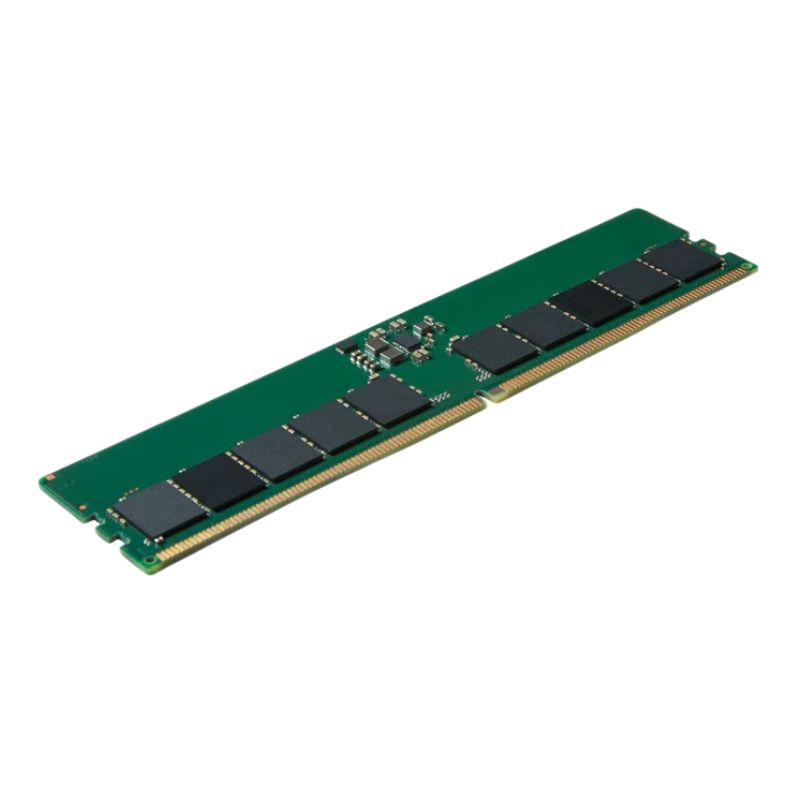


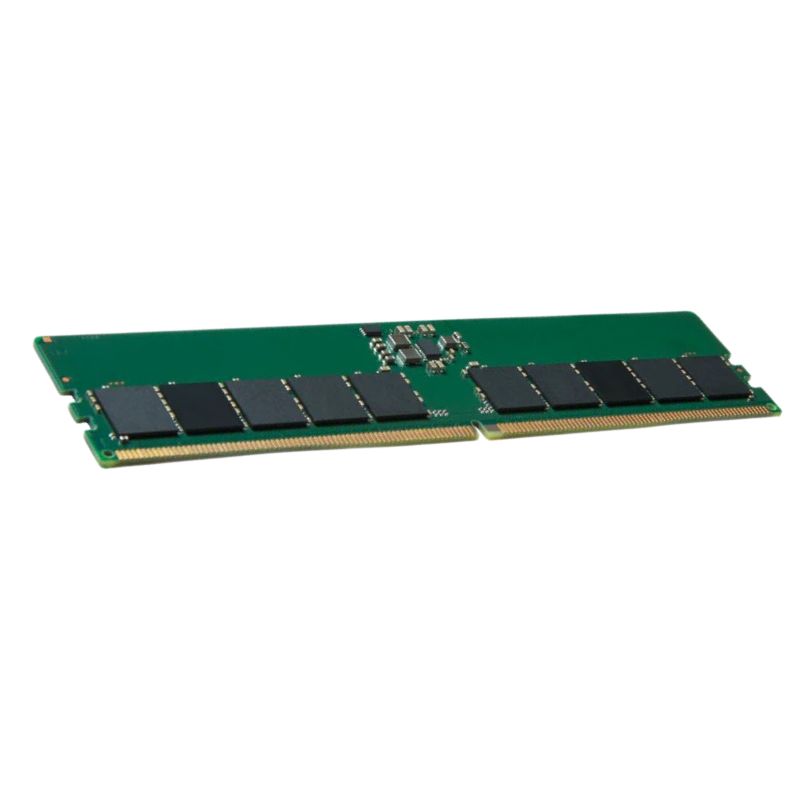
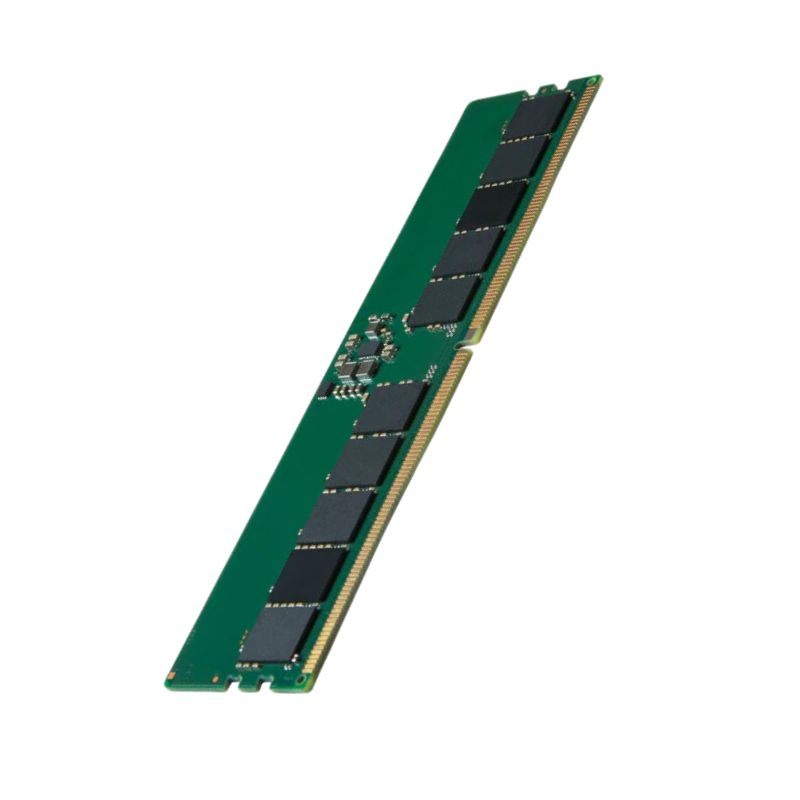
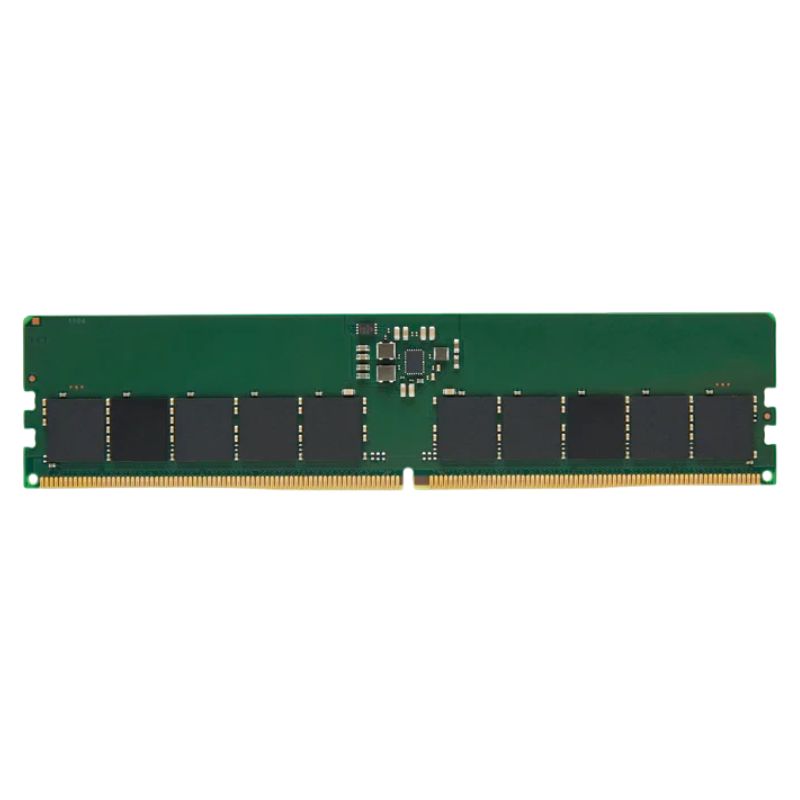
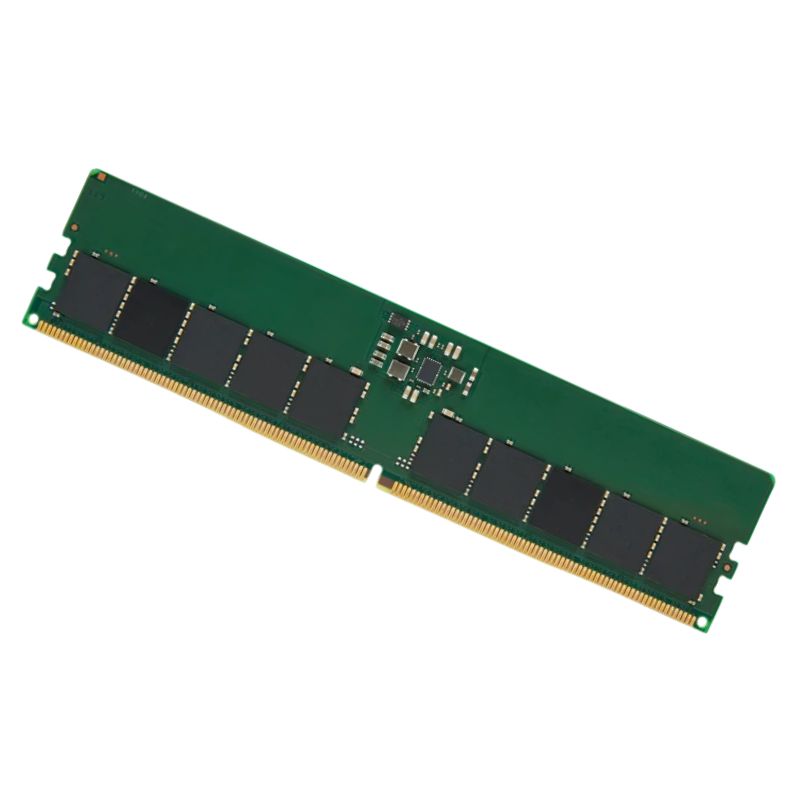
Kingston KSM52E42BS8KM-16HA 16GB DDR5 5200/Pc5-41600 5200 Mt/s Ecc 288-pin Dimm SDRAM Memory Module. New Sealed in Box (NIB) with 3 Year Warranty
The Kingston KSM52E42BS8KM-16HA is a high-performance 16GB DDR5 SDRAM memory module designed for server applications. With blazing speeds and advanced reliability features, this module ensures optimal server performance, data integrity, and enhanced multitasking capabilities.
The Kingston KSM52E42BS8KM-16HA represents a pivotal advancement in server memory technology, belonging to the Kingston Server Premier family of DDR5 ECC DIMMs. Designed explicitly for next-generation data center, enterprise server, and high-performance computing (HPC) environments, this module is built upon the transformative DDR5 architecture. It delivers significant leaps in bandwidth, power efficiency, and data integrity over previous DDR4 generations. This 16GB module operates at a base speed of 5200 Megatransfers per second (MT/s), providing the foundational performance required for modern workloads such as virtualization, in-memory databases, AI/ML data processing, and large-scale cloud services. The integration of Error-Correcting Code (ECC) is not merely an optional feature but a core requirement, ensuring that single-bit errors are detected and corrected on-the-fly, safeguarding critical data and maintaining uninterrupted system uptime.
Understanding the detailed specifications of the KSM52E42BS8KM-16HA is crucial for system architects and procurement specialists to ensure compatibility and optimal performance. This module is defined by a precise set of JEDEC-standard parameters that govern its operation within a server ecosystem.
The module offers a capacity of 16 Gigabytes (GB). This capacity is engineered using high-density, server-grade DRAM components arranged on a 288-pin printed circuit board (PCB). The 16GB density is a versatile sweet spot, ideal for populating systems in flexible configurations—from entry-level single-socket servers with a few modules to multi-socket systems with maximum DIMM-per-channel populations—to achieve total system memory capacities ranging from 64GB to several Terabytes.
Operating at a data rate of 5200 MT/s, this DDR5 module doubles the data transfer rate per pin compared to standard DDR4-3200. The resulting peak theoretical bandwidth is substantial. Calculated as (5200 MT/s * 64-bit data bus) / 8 bits per byte, a single module can provide up to 41.6 GB/s of bandwidth. When installed in multi-channel architectures (typical servers utilize 8 or 12 memory channels per CPU), the aggregate system bandwidth scales dramatically, eliminating bottlenecks for memory-intensive applications.
The module adheres to JEDEC standard timings for DDR5-5200. The primary timing configuration is denoted as CL42, indicating a CAS Latency of 42 clock cycles. While the absolute latency in nanoseconds is comparable to high-performance DDR4, the vastly increased bandwidth of DDR5 provides superior overall throughput. These JEDEC-standard timings guarantee stability and interoperability across a wide range of qualified server platforms from major OEMs.
The KSM52E42BS8KM-16HA utilizes the 288-pin Dual In-Line Memory Module (DIMM) form factor. Crucially, the DDR5 DIMM pinout is physically and electrically incompatible with DDR4 slots, featuring a different key notch position to prevent accidental installation in an incorrect motherboard. The module is designed in a standard height profile to ensure compatibility with mainstream server chassis and heat-spreader clearance.
A revolutionary feature of DDR5 is the relocation of the power management integrated circuit (PMIC) from the motherboard to the memory module itself. This onboard PMIC provides superior voltage regulation, converting the 12V system supply to the required lower voltages (VDD, VDDQ, VPP) with greater efficiency and less noise. This leads to improved signal integrity, better overclocking headroom for registered modules, and more stable power delivery, especially in dense server configurations where power noise can be a concern.
Error-Correcting Code (ECC) is the defining characteristic that separates consumer-grade memory from enterprise-grade server memory like the Kingston Server Premier line. In an environment where data corruption is unacceptable, ECC provides a hardware-level safety net.
DDR5 introduces a foundational layer of error correction with On-Die ECC. Each DRAM chip on the module has its own internal ECC engine that corrects bit errors within the chip itself before data is sent to the memory controller. This handles the most common type of errors arising from minor internal imperfections or alpha particle interference, significantly improving the reliability of the raw DRAM silicon and reducing the error load on the system-level ECC.
The Kingston KSM52E42BS8KM-16HA is a standard ECC module, often referred to as ECC Unbuffered DIMM (UDIMM) in the DDR4 era, though DDR5 nomenclature typically uses "ECC DIMM." It utilizes sideband ECC, where extra DRAM chips are present on the module to store ECC code words. For a 64-bit data word, an additional 8 bits are used for ECC, creating a 72-bit bus. The memory controller calculates the ECC bits for data written to memory and checks them upon reading. This allows the module to detect and correct single-bit errors (Single Error Correction, or SEC) and detect (but not correct) multi-bit errors (Double Error Detection, or DED) within the same data word, providing end-to-end protection across the entire data path.
Ensuring seamless integration into existing and new server infrastructures is paramount. The KSM52E42BS8KM-16HA is designed for broad platform compatibility but requires specific system support.
This memory module is engineered for servers powered by the latest Intel Xeon Scalable processors (code-named Sapphire Rapids, Emerald Rapids, and beyond) and AMD EPYC 9004 Series "Genoa" and 8004 Series "Siena" processors. These platforms natively support DDR5 memory technology, including the required ECC functionality. It is essential to verify compatibility with the specific server model from OEMs such as Dell, HPE, Lenovo, Supermicro, and Cisco, as BIOS and firmware play a critical role in stability.
The transition to DDR5 from DDR4 delivers tangible benefits that directly address the demands of contemporary data centers.
DDR5 doubles the burst length from 8 (BL8) to 16 (BL16), meaning 64 bytes of data are transferred per column access command, which is the exact size of a typical CPU cache line. This improves efficiency. Furthermore, DDR5 increases the number of bank groups, which allows for more concurrent operations within the memory chip, dramatically improving parallelism and reducing access contention, a key advantage for multi-threaded server applications.
The DDR5 architecture features two independent 32-bit sub-channels within each 64-bit DIMM. While these sub-channels share command and address lines, they allow for finer-grained memory access, reducing latency by enabling more efficient command queueing and execution compared to the single 64-bit channel in DDR4. This makes memory access patterns more efficient, especially for workloads that don't always require full 64-bit data fetches.
The Kingston KSM52E42BS8KM-16HA is deployed in a vast array of business-critical computing scenarios where data integrity and performance are non-negotiable.
In virtualization hosts running VMware vSphere, Microsoft Hyper-V, or KVM, high memory capacity and reliability are essential for consolidating multiple virtual machines (VMs). ECC memory prevents silent data corruption that could compromise entire VMs or the hypervisor itself, ensuring the stability of the entire virtualized workload environment.
Platforms like SAP HANA, Oracle Database In-Memory, and Redis hold entire datasets in RAM for ultra-low latency transaction processing and analytics. In these systems, memory is the primary data store, making ECC protection absolutely critical to prevent database corruption. The high bandwidth of DDR5-5200 accelerates query performance and data ingestion rates.
Scientific computing, financial modeling, and machine learning training involve massive datasets and iterative calculations running across thousands of CPU cores. These workloads are highly memory-bandwidth sensitive. The aggregate bandwidth provided by channels of DDR5-5200 memory directly reduces computation time, while ECC safeguards the integrity of computational results, which is vital for research and financial accuracy.
Large-scale applications like SAP S/4HANA, Oracle E-Business Suite, and Salesforce run the core operations of global enterprises. The servers supporting these applications require maximum uptime and data consistency. ECC DDR5 memory provides the stable, high-performance foundation needed for these transaction-heavy, mission-critical environments.


 Contact Us
 Information
 Catalog
 Solid State Drives (SSD)
 Network Switches
 Hard Disk Drives
 HBA & Controllers
 PC & Servers
 PC & Server Memory
 CPU & Processors
 Network Routers
 Power Supplies
 Tape Drives & Libraries
 Network Devices
 Computer & Network Cables