(7% discount is applied at checkout)
Cart is empty
Your go-to destination for cutting-edge server products


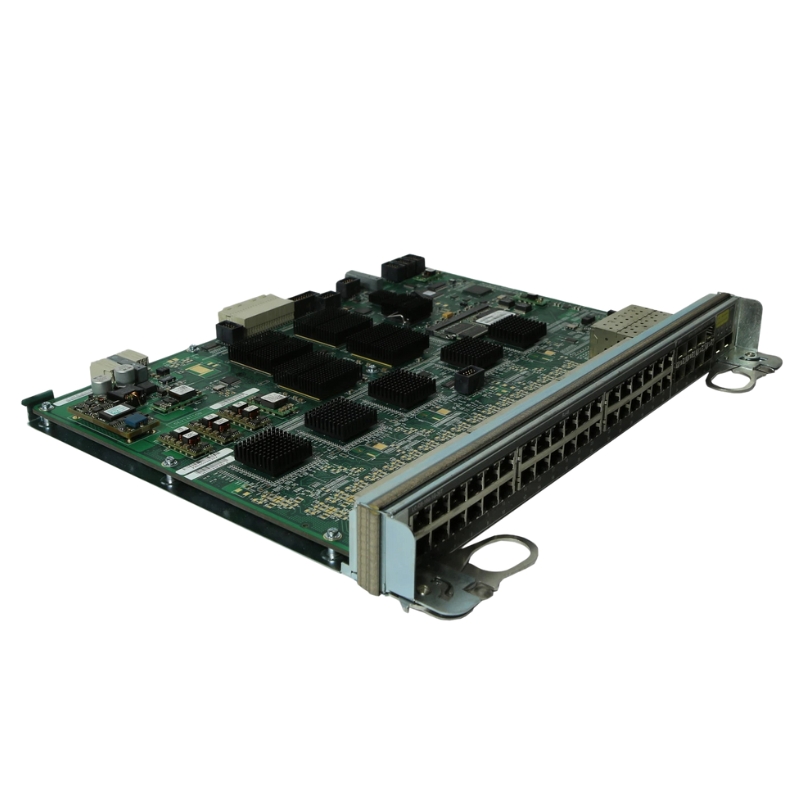
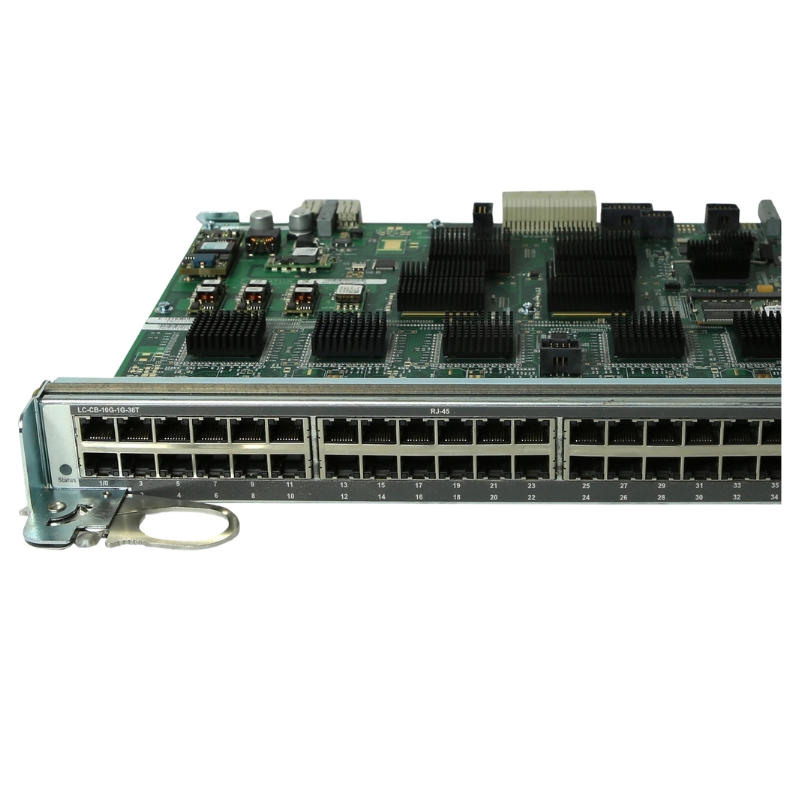
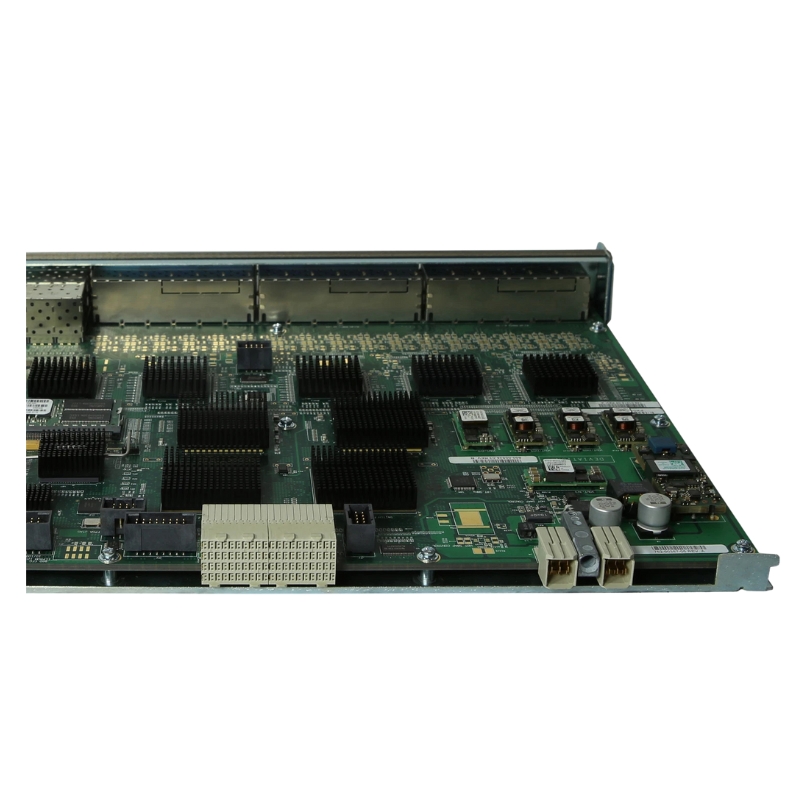
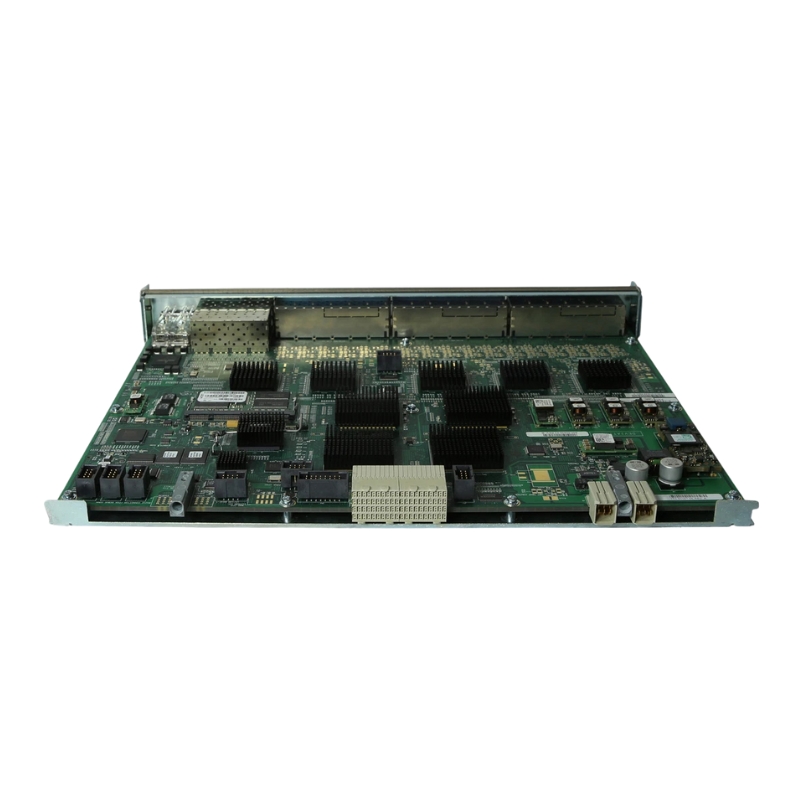
Dell LC-CB-10G-1G-36T 36 Ports Non-Poe Flexmedia Card. Excellent Refurbished with 1 year replacement warranty. Call
The Dell LC-CB-10G-1G-36T 36-Port Non-PoE FlexMedia Card is a high-performance expansion module engineered to increase network capacity, improve bandwidth, and support demanding enterprise environments. Designed for seamless integration with compatible Dell networking hardware, this expansion card delivers reliable connectivity while enabling organizations to scale their infrastructure efficiently.
The Dell LC-CB-10G-1G-36T 36 Ports Non-PoE FlexMedia Card belongs to a specialized category of high-density enterprise networking hardware designed for scalable data center switching environments, modular switch architectures, and flexible port expansion systems. This category of networking components is engineered to support organizations that require reliable, high-throughput connectivity across mixed-speed Ethernet infrastructures, particularly where 1G and 10G interfaces must coexist within a unified switching platform. The focus of this product category is not only raw performance but also adaptability, modularity, and long-term infrastructure efficiency in enterprise-grade deployments.
Within modern IT ecosystems, this category represents a bridge between legacy Gigabit Ethernet networks and more advanced 10 Gigabit Ethernet backbones. It is commonly deployed in environments where gradual migration is necessary, allowing organizations to extend the lifecycle of existing infrastructure while still enabling high-speed communication for critical workloads. The non-PoE configuration further refines its use case toward environments where power delivery over Ethernet is not required, prioritizing data throughput and port density instead.
The Dell LC-CB-10G-1G-36T FlexMedia card occupies a strategic role in modular switch systems where expansion flexibility is essential. It is typically integrated into chassis-based switching platforms that support interchangeable line cards or media modules. This allows network architects to tailor infrastructure precisely according to workload requirements, traffic segmentation, and future scaling plans.
As enterprise workloads become increasingly distributed, the demand for adaptable switching components has grown significantly. This category supports hybrid workloads such as virtualization clusters, storage area networks, cloud edge nodes, and high-density aggregation layers. The ability to manage both 1G and 10G connections within a single module simplifies network design while improving operational efficiency.
Hybrid speed environments are increasingly common in enterprise networking, especially in organizations transitioning from traditional Gigabit Ethernet to higher-speed 10G backbones. The Dell LC-CB-10G-1G-36T category supports this transition by enabling seamless interoperability between devices operating at different speeds. This eliminates the need for separate switching hardware for each speed tier, reducing infrastructure complexity and operational overhead.
In such environments, servers, storage systems, and edge devices may operate at varying network speeds depending on their generation and workload requirements. The flexibility of this category ensures that both legacy and modern systems can coexist without performance bottlenecks at the switching layer.
The architecture of the Dell LC-CB-10G-1G-36T category is built around modularity, high port density, and efficient traffic management. The design philosophy prioritizes scalable expansion while maintaining consistent performance across all active ports. Each module is engineered to integrate seamlessly into compatible Dell chassis systems, forming part of a larger distributed switching fabric.
A key design consideration is thermal efficiency, as high-density port configurations generate significant heat under sustained load. The FlexMedia architecture incorporates optimized airflow pathways and hardware-level thermal balancing mechanisms that ensure stable operation even in data-intensive environments. This is critical in data centers where uptime and hardware reliability are essential performance indicators.
The FlexMedia concept refers to a modular networking approach where physical interfaces can be dynamically expanded or reconfigured based on deployment needs. In the context of the Dell LC-CB-10G-1G-36T category, this means administrators can scale port availability without replacing the entire switching system.
This modularity provides a significant advantage in long-term infrastructure planning. Organizations can begin with a base configuration and progressively increase port density as network demand grows. This reduces initial capital expenditure while ensuring future scalability. It also enhances lifecycle management by decoupling hardware expansion from full system replacement cycles.
Operational flexibility is a defining feature of this category. Network administrators can allocate ports dynamically to different VLANs, workloads, or traffic segments depending on business requirements. This supports a wide range of applications, including segmented enterprise networks, multi-tenant environments, and isolated development clusters.
The ability to manage both 1G and 10G interfaces within the same module further enhances flexibility. It allows for mixed deployment scenarios where high-performance servers operate on 10G links while peripheral devices remain on 1G connections, all within a unified switching framework.
One of the defining characteristics of the Dell LC-CB-10G-1G-36T category is its high-density 36-port configuration. Port density is a critical factor in modern data center design, as it directly impacts rack utilization, cable management complexity, and overall infrastructure efficiency.
By consolidating a large number of network interfaces into a single module, this category reduces the physical footprint required for switching infrastructure. This is particularly beneficial in environments where rack space is limited or where energy efficiency is a priority.
High-density port configurations also improve airflow management within racks by minimizing the number of discrete switching devices required. This contributes to better cooling efficiency and more predictable thermal performance across the data center environment.
Performance within this category is defined by throughput consistency, low-latency switching, and efficient packet forwarding across mixed-speed interfaces. The architecture is optimized for enterprise workloads that require stable and predictable network behavior under sustained traffic conditions.
The non-PoE design allows all available power and hardware resources to be dedicated entirely to data processing and forwarding operations. This improves overall efficiency in environments where power delivery to endpoint devices is handled separately or not required at all.
Bandwidth aggregation is a central performance feature in this category. By supporting multiple high-speed connections simultaneously, the Dell LC-CB-10G-1G-36T FlexMedia card enables large-scale data movement across distributed systems. This is particularly important in virtualization environments, where multiple virtual machines may compete for network resources on shared physical infrastructure.
Throughput efficiency is maintained through intelligent traffic handling mechanisms that balance load across available switching paths. This ensures that no single port or pathway becomes a bottleneck during peak usage periods.
In data center environments, the Dell LC-CB-10G-1G-36T category is commonly used to support server clusters, storage networks, and high-performance computing nodes. Its high port density and mixed-speed support make it ideal for environments where multiple server generations coexist.
It also supports scalable cloud infrastructure deployments where workload distribution and dynamic resource allocation are critical. The ability to manage large numbers of connections within a single module reduces infrastructure complexity while improving operational visibility.
In enterprise campus networks, this category supports backbone and distribution layer switching functions. It enables high-speed interconnectivity between departments, buildings, and remote office segments while maintaining centralized control over network traffic.
The modular nature of the system allows IT administrators to expand network capacity as organizational needs grow without redesigning the entire network architecture. This makes it a cost-effective solution for long-term infrastructure planning.
Virtualized environments place significant demands on network infrastructure due to the high volume of east-west traffic between virtual machines. The Dell LC-CB-10G-1G-36T category is well-suited for such environments due to its ability to handle multiple simultaneous high-speed connections efficiently.
Cloud infrastructure deployments also benefit from the scalability and redundancy features inherent in modular FlexMedia systems. These systems help maintain service continuity even in the event of high traffic loads or partial hardware failures.
The Dell LC-CB-10G-1G-36T category is designed to integrate seamlessly into the broader Dell networking ecosystem, which includes chassis-based switches, management software, and enterprise-grade monitoring tools. This integration ensures consistent performance, simplified configuration, and unified network management.
Compatibility with modular chassis systems is a core design principle of this category. It allows the FlexMedia card to function as part of a larger switching infrastructure where multiple modules work together to form a unified network fabric. This enables seamless expansion and redundancy configuration.
Management integration is a key advantage in enterprise environments. The category supports centralized monitoring systems that provide real-time visibility into port utilization, traffic patterns, and system health. This enables proactive network management and reduces downtime risks.
Cabling architecture plays a crucial role in maintaining signal integrity and minimizing latency. High-density port configurations require structured cabling strategies that reduce congestion and simplify maintenance. Proper labeling and physical organization of connections contribute to improved operational efficiency.
Port planning involves aligning network interfaces with workload distribution requirements. This ensures that high-demand applications receive sufficient bandwidth while maintaining balanced utilization across the system.
Scalability is a defining advantage of this category. Organizations can incrementally expand network capacity by adding additional FlexMedia modules without disrupting existing operations. This supports long-term infrastructure evolution and reduces the need for large-scale hardware replacements.
Future expansion strategies often involve forecasting bandwidth requirements and aligning hardware deployment accordingly. The modular nature of this category allows for adaptive scaling in response to evolving business demands.


 Contact Us
 Information
 Catalog
 Solid State Drives (SSD)
 Network Switches
 Hard Disk Drives
 HBA & Controllers
 PC & Servers
 PC & Server Memory
 CPU & Processors
 Network Routers
 Power Supplies
 Tape Drives & Libraries
 Network Devices
 Computer & Network Cables