(7% discount is applied at checkout)
Cart is empty
Your go-to destination for cutting-edge server products


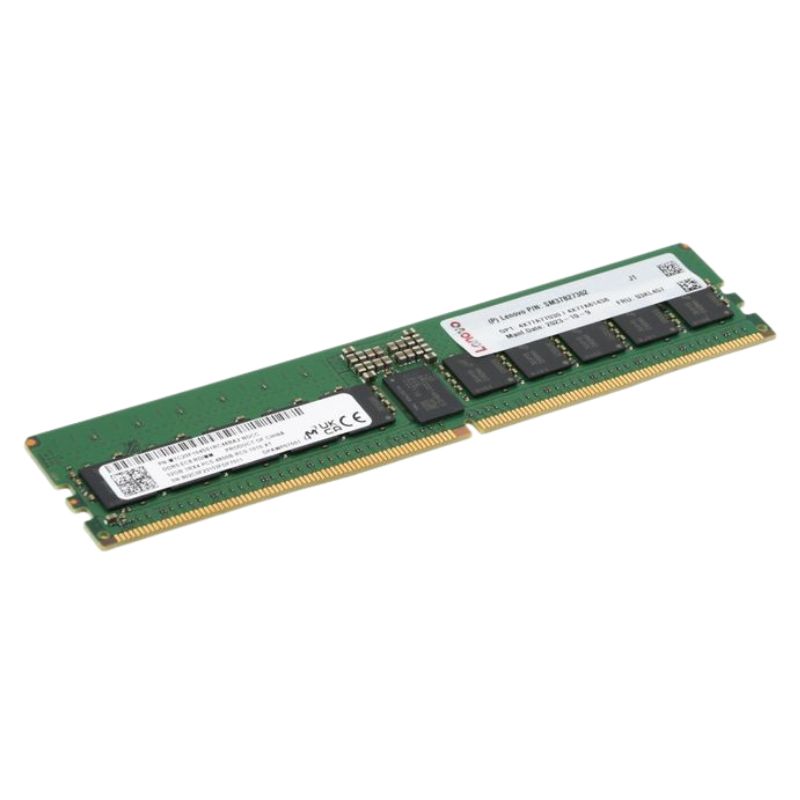
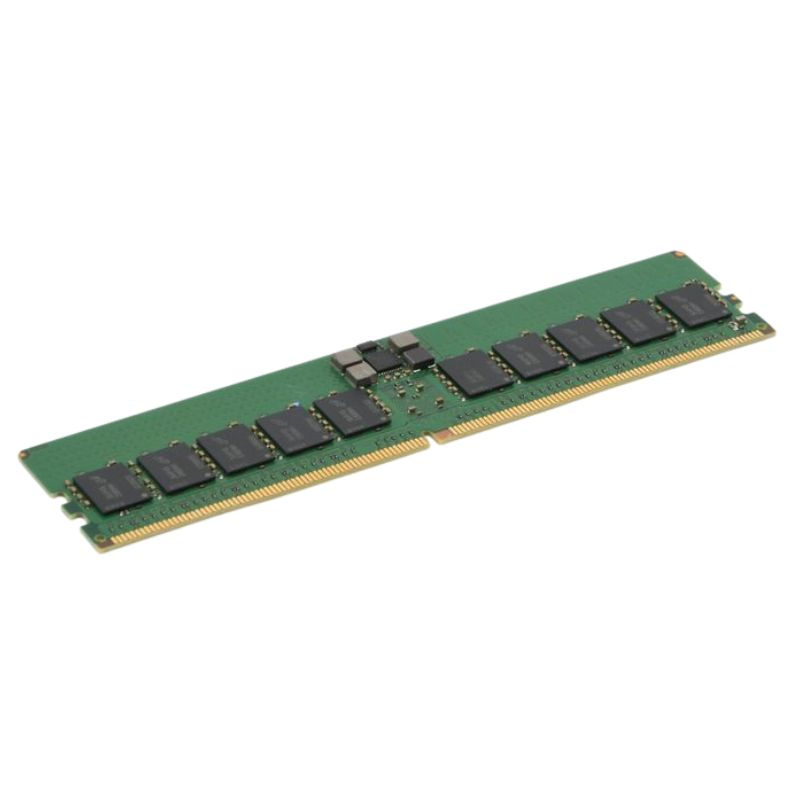
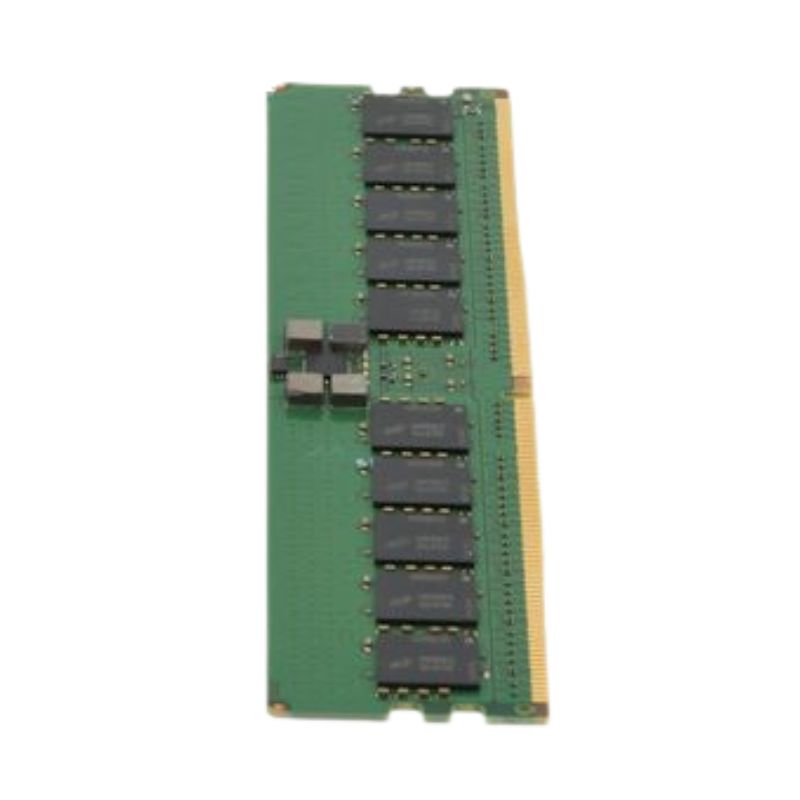
Lenovo 03KL457 32GB DDR5-4800 Registered DDR5 RDIMM 1Rx4 Rdimm ECC Server Memory Module. New Sealed in Box (NIB) with 3 Years Warranty
Lenovo 03KL457 32GB DDR5-4800 ECC Memory
The Lenovo 03KL457 32GB DDR5 RDIMM is engineered to support demanding server environments where stability, throughput, and reliability are non-negotiable. Designed specifically for enterprise and data center workloads, this registered DDR5 memory module delivers consistent performance while maintaining data integrity across continuous operations.
The 32GB capacity offers a substantial density per module, allowing for high total memory configurations in servers with limited DIMM slots. This is crucial for memory-intensive applications like virtualization, large databases, and in-memory analytics. DDR5-4800 refers to the data rate of 4800 Megatransfers per second (MT/s), a substantial increase over standard DDR4-3200. This higher speed translates directly to increased peak bandwidth per module, reducing potential bottlenecks for CPU-to-memory communication and accelerating data processing across cores.
The terms Registered and RDIMM (Registered Dual In-Line Memory Module) are central to its server-grade designation. This module incorporates a register (or buffer) on the DIMM itself, which sits between the memory controller and the DRAM chips. This register reduces the electrical load on the controller, enabling more stable signaling and allowing systems to support a significantly greater number of memory modules per channel—essential for populating large-scale servers with terabytes of RAM. The 1Rx4 descriptor indicates a "Single Rank" module with an internal organization where each rank uses x4 DRAMs. This x4 configuration is vital for supporting advanced reliability features like ECC and SDDC.
DDR5 architecture introduces On-Die ECC (Error-Correcting Code). This is an internal mechanism where each DRAM chip can detect and correct minor bit errors within itself before they are accessed. This proactive correction handles common, small-scale errors at the silicon level, improving the overall robustness of the raw memory components. Beyond On-Die ECC, the module supports full ECC at the channel level. The memory controller uses additional data bits stored on dedicated ECC chips on the DIMM to detect and correct single-bit errors and detect multi-bit errors across the entire data word. More importantly, for x4-based DIMMs like the 03KL457, this extends to SDDC (Single Device Data Correction), also known as Chipkill. SDDC can correct an entire DRAM chip failure (a multi-bit error from a single chip). This is a cornerstone of enterprise server resilience, protecting against complete chip failures that would cause a system crash in non-ECC or even standard ECC memory.
The transition to DDR5, exemplified by modules like the Lenovo 03KL457, is not just about speed. It involves a fundamental redesign of the memory subsystem to boost efficiency and performance. A key innovation in DDR5 is the migration of voltage regulation from the motherboard to the memory module itself via an onboard PMIC. This allows for more precise and stable power delivery to the DRAM chips. For data center operators, this leads to improved power distribution scalability and can contribute to enhanced power efficiency at the rack level.
DDR5 doubles the burst length and prefetch to 16, compared to 8 in DDR4. This means the module can fetch and transmit larger chunks of data in a single operation, improving efficiency and effective bandwidth utilization, especially for sequential data access patterns common in servers.
Each DDR5 DIMM is organized as two independent 32-bit sub-channels (with ECC bits, making them 40-bit). While a single sub-channel is narrower than a DDR4 channel, this architecture allows the memory controller to handle two concurrent, smaller access commands simultaneously. This increases overall command efficiency and can reduce latency for certain workloads by minimizing queue times.
This module is extensively validated and qualified for use in Lenovo's Think System server portfolio. It is crucial to always consult the specific server's Product Guide (P/N: 03KL457) and Memory Configuration Tool to ensure compatibility with models like the SR650 V2, SR670 V2, SD650 V2, and many others. Using Lenovo-certified memory guarantees performance, triggers Lenovo's support diagnostics, and maintains system warranty coverage.
Using non-qualified, generic DDR5 modules in enterprise servers can lead to system instability, boot failures, and performance degradation. Lenovo-qualified modules like the 03KL457 undergo rigorous testing for thermal, signal integrity, and timing compatibility, ensuring they meet the stringent requirements of 24/7 operation. The combination of high density, high bandwidth, and robust ECC makes the 03KL457 suitable for a wide array of demanding workloads. High memory capacity and reliability are paramount for hypervisors (like VMware vSphere, Microsoft Hyper-V) hosting dozens of virtual machines. The 32GB density allows for ample allocation to VMs, while ECC/SDDC ensures the stability of the entire consolidated environment.
The advertised 4800 MT/s speed is the maximum capability of the module. The actual operating speed is determined by the server platform, the capabilities of the specific CPUs installed (which integrate the memory controllers), and the number of DIMMs populated per channel. Systems with a higher number of DIMMs per channel may run at a lower speed (e.g., 4400 MT/s) to maintain signal integrity. This is normal and accounted for in platform design.
A rank is a set of DRAM chips that work together to respond to a command from the memory controller. module has one such set. 03KL457 module has two independent sets, which can allow for some interleaving and performance benefits in certain scenarios. However, single-rank modules are often easier for a memory controller to drive at higher speeds, especially with high DIMM counts. The choice between 1R and 2R is often dictated by the server's optimization goals—maximum speed vs. maximum capacity or a specific balance.
DDR5 is the starting point for a new generation of memory technology. The standard is designed to scale from its initial 4800 MT/s offerings to speeds exceeding 8400 MT/s in future iterations. Deploying DDR5-capable servers and memory today establishes a platform that can accept higher-speed, higher-capacity DDR5 modules in the future, protecting the hardware investment and simplifying upgrades. Modern server platforms from Intel (Xeon Scalable Processors) and AMD (EPYC Processors) are architected with DDR5 memory controllers. The Lenovo 03KL457 is designed to unlock the full memory performance potential of these CPUs, ensuring that the system is not bottlenecked by legacy DDR4 memory bandwidth as core counts continue to rise dramatically.


 Contact Us
 Information
 Catalog
 Solid State Drives (SSD)
 Network Switches
 Hard Disk Drives
 HBA & Controllers
 PC & Servers
 PC & Server Memory
 CPU & Processors
 Network Routers
 Power Supplies
 Tape Drives & Libraries
 Network Devices
 Computer & Network Cables