
(7% discount is applied at checkout)
Cart is empty
Your go-to destination for cutting-edge server products
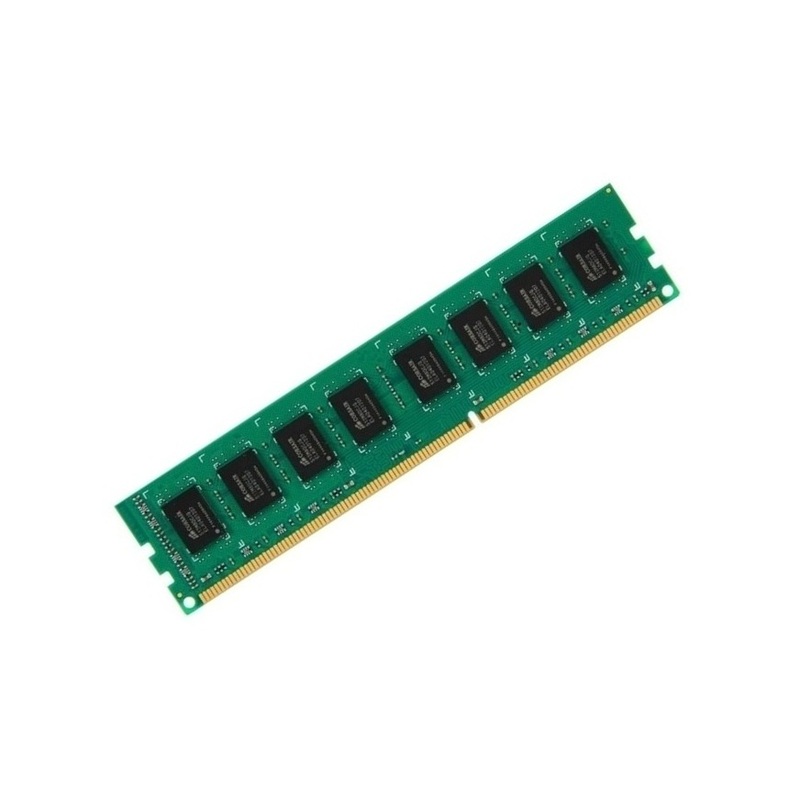
Lenovo 46W0835 32GB 1X32GB DDR4 SDRAM PC4-19200 Cl17 Ecc Registered Dual Rank 1.2v 2400MHZ 288-Pin Dimm Memory. New Sealed in Box (NIB) with 3 Years Warranty
| SKU/MPN | Warranty | Price | Condition | You save |
|---|---|---|---|---|
| 46W0835 | 1 Year Warranty | $344.00 | New (System) Pull | You save: $120.40 (26%) |
| 46W0835 | 1 Year Warranty | $354.00 | New (System) Pull | You save: $123.90 (26%) |
| 46W0835 | 1 Year Warranty | $470.00 | New Sealed in Box (NIB) | You save: $164.50 (26%) |
Upgrade your server performance with the Lenovo 46W0835 memory module — a 32GB DDR4 Registered ECC DIMM engineered for reliability, low latency and sustained throughput. Ideal for enterprise servers and workstations that require error-correcting, fault-tolerant memory.
In the realm of enterprise computing and data center operations, server memory is not merely a component; it is the critical backbone that determines system stability, data integrity, and overall performance. Unlike standard consumer-grade memory, server memory is engineered with robust features to handle relentless, mission-critical workloads. The category of DDR4 ECC Registered memory, exemplified by the Lenovo 46W0835 32GB module, represents a specific class of memory designed for reliability and scalability in server environments. This memory type is a cornerstone for servers requiring high-capacity, fault-tolerant operation, making it essential for applications ranging from large databases and virtualization to cloud infrastructure and high-performance computing.
Every detail in a server memory part number conveys critical information about its capabilities and compatibility. Breaking down the Lenovo 46W0835 provides a clear blueprint of its function and intended use case.
This module offers a substantial 32GB of memory capacity in a single stick. The "1x32GB" designation confirms it is a single module, not a kit. This high density is ideal for maximizing a server's total memory capacity without consuming all the available DIMM slots, providing headroom for future expansion. For instance, a dual-processor server with 16 memory slots could theoretically be populated with 512GB of RAM using 32GB modules, a common configuration for memory-intensive applications.
The "Dual Rank" specification refers to how the memory chips are organized on the module. A rank is a set of DRAM chips that work together to provide a 64-bit data block. In a Dual Rank module, there are two of these sets. This architecture allows the memory controller to access one rank while the other is preparing for the next access, improving overall efficiency and throughput compared to a Single Rank module of the same capacity. It strikes an excellent balance between performance, capacity, and cost for general server workloads.
DDR4 SDRAM (Double Data Rate 4 Synchronous Dynamic Random-Access Memory) is the fourth generation of DDR technology, succeeding the widely used DDR3. It represents a significant evolutionary step, offering higher speeds, increased efficiency, and greater capacities.
The module operates at a clock speed of 2400MHz. However, because it is "Double Data Rate," it performs two data transfers per clock cycle, resulting in an effective data rate of 2400 MT/s (MegaTransfers per second). This data rate is also expressed as PC4-19200. The "PC4" denotes a DDR4 module, and the "19200" refers to the peak transfer rate in megabytes per second (MB/s). Calculating this: 2400 MHz * 8 bytes (64-bit bus) = 19,200 MB/s. This high bandwidth is crucial for ensuring that CPUs are fed with data without bottlenecks.
CAS Latency (CL), in this case CL17, is a measure of the delay between the memory controller requesting data and the moment it is available. It is counted in clock cycles. A lower number generally indicates faster response time. However, CL must always be considered in the context of the clock speed. While a DDR3 module might have a lower CL (e.g., CL11), its significantly lower clock speed means its actual latency in nanoseconds can be higher than a DDR4 module with a higher CL. The CL17 timing at 2400MHz is a standard and well-balanced latency for this class of server memory.
This is where server memory truly diverges from its consumer counterparts, incorporating features essential for 24/7/365 operation.
ECC is a fundamental requirement for any server handling critical data or applications. Cosmic rays, electrical interference, and other factors can cause random bits of memory to "flip" (a 1 becomes a 0 or vice versa), leading to silent data corruption, application crashes, or system instability. ECC memory includes extra bits (e.g., 8 bits for a 64-bit word) that allow the memory controller to detect and correct single-bit errors on the fly. It can also detect, though not correct, multi-bit errors. This proactive error correction is invisible to the operating system but is vital for maintaining data integrity and system uptime.
When data is written to an ECC DIMM, the memory controller calculates a checksum based on the data and stores it in the extra ECC bits. When the data is read, the controller recalculates the checksum and compares it to the stored value. If a single-bit error is detected, it is corrected before being sent to the CPU. This process happens continuously, safeguarding against the soft errors that accumulate over thousands of server-hours.
As introduced earlier, a Registered DIMM (RDIMM) incorporates a register (or buffer) for the Command and Address signals sent from the memory controller. This buffer reduces the electrical load on the controller, enabling systems to support more DIMMs per channel and higher total memory capacities. While this adds a minimal amount of latency (typically one clock cycle), the benefit of vastly improved stability and scalability in a multi-DIMM configuration is paramount. The Lenovo 46W0835 is a quintessential RDIMM, designed for servers where capacity and reliability trump the need for the absolute lowest latency.
The physical form factor and electrical requirements are standardized to ensure compatibility with server motherboards.
All DDR4 modules, whether UDIMM, RDIMM, or LRDIMM, use a 288-pin layout. This is a physical and electrical specification distinct from the 240-pin design of DDR3. The pin count, notch position, and overall dimensions prevent accidental insertion into an incompatible motherboard slot.
DDR4 operates at a lower voltage of 1.2v compared to DDR3's 1.5v (or 1.35v for low-voltage versions). This 20% reduction in power consumption is a critical advantage in data centers where power and cooling costs are major operational expenses. Lower voltage also contributes to reduced heat output, enhancing long-term reliability.
Understanding the specifications is only half the battle; applying them to real-world compatibility and deployment scenarios is key.
The Lenovo 46W0835 is a genuine Lenovo part, ensuring optimal compatibility and performance in Lenovo server platforms like the System x, ThinkSystem, and Flex System families. It is crucial to always consult the specific server's Product Guide (PG) or Technical Product Specification (TPS) to verify compatibility. These documents list all tested and supported memory modules, their valid population rules, and performance specifications. Using an unsupported or untested module can lead to boot failures, performance degradation, or system errors.
This category of memory is not for gaming or desktop use. It is engineered for enterprise and data center workloads where uptime and data integrity are paramount.
Servers running hypervisors like VMware vSphere, Microsoft Hyper-V, or Proxmox VE are notoriously memory-hungry. Each virtual machine (VM) consumes a portion of the host's physical RAM. A 32GB RDIMM allows for dense VM consolidation, enabling more workloads to run on a single physical server, thereby improving hardware utilization and reducing total cost of ownership.
Relational database management systems (RDBMS) like Microsoft SQL Server, Oracle Database, and MySQL perform significantly better when large portions of the active dataset can be held in memory (the buffer pool). ECC protection is absolutely critical here to prevent silent data corruption that could compromise the entire database.
Workloads involving financial modeling, genomic sequencing, and scientific simulations process massive datasets. The high capacity and bandwidth of 32GB DDR4 RDIMMs, combined with the stability offered by ECC, make them a foundational component for compute clusters tackling these complex problems.
Large-scale web hosting platforms and public/private cloud infrastructures rely on thousands of standardized server nodes. The reliability, scalability, and manageability of ECC RDIMMs are essential for maintaining service level agreements (SLAs) and ensuring a consistent user experience.


 Contact Us
 Information
 Catalog
 Solid State Drives (SSD)
 Network Switches
 Hard Disk Drives
 HBA & Controllers
 PC & Servers
 PC & Server Memory
 CPU & Processors
 Network Routers
 Power Supplies
 Tape Drives & Libraries
 Network Devices
 Computer & Network Cables