
(7% discount is applied at checkout)
Cart is empty
Your go-to destination for cutting-edge server products
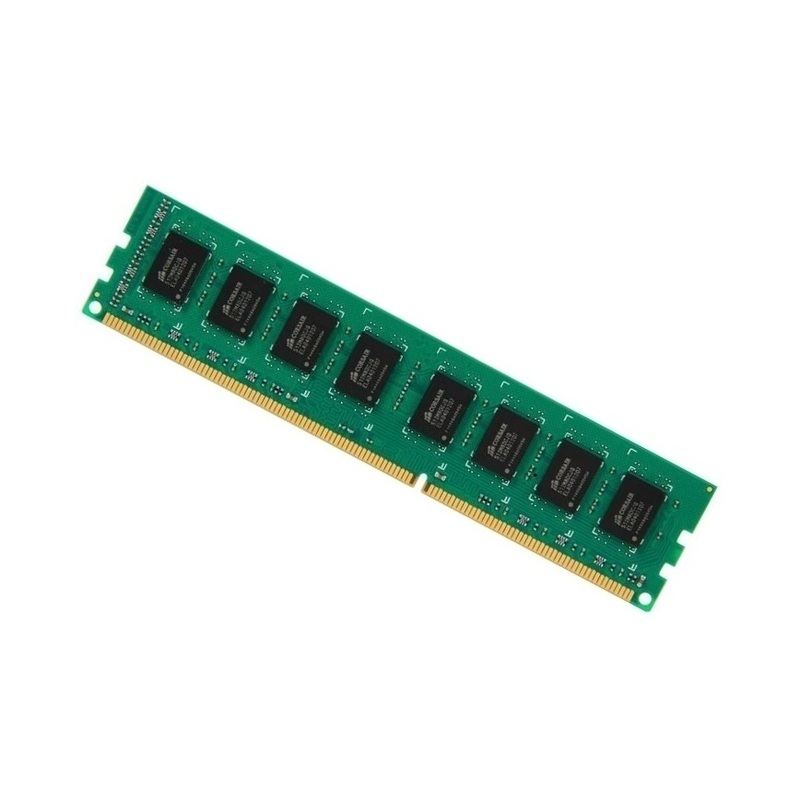
32GB Memory PC4-19200 CL17 ECC Registered DDR4 SDRAM 288-Pin Lenovo 46W0833. New Sealed in Box (NIB)
| SKU/MPN | Warranty | Price | Condition | You save |
|---|---|---|---|---|
| 46W0833 | 1 Year Warranty | Contact us for a price | New (System) Pull | |
| 46W0833 | 1 Year Warranty | $165.00 | New (System) Pull | You save: $57.75 (26%) |
| 46W0833 | 1 Year Warranty | $299.00 | New Sealed in Box (NIB) | You save: $104.65 (26%) |
High-performance Lenovo memory stick engineered for servers and workstations. This 32GB DDR4 SDRAM module (part number 46W0833) delivers reliable, error-correcting memory at 2400MHz (PC4-19200) with CL17 timings — ideal for mission-critical systems and data-centre environments.
Optimize stability, increase throughput, and reduce downtime with server-grade RAM designed for demanding workloads.
Enterprise server environments demand higher levels of reliability and stability than typical consumer computing. The Lenovo 46W0833 represents a specific class of memory designed explicitly for these demanding applications. ECC (Error-Correcting Code) memory includes additional bits and specialized circuitry to detect and correct common types of internal data corruption. Unlike standard memory that might crash or produce corrupted results when errors occur, ECC memory automatically corrects single-bit errors and detects double-bit errors, significantly improving system reliability and reducing downtime.
ECC memory works by adding extra memory bits to store encrypted codes. When data is written to memory, the ECC algorithm calculates a code based on the data and stores this code alongside the data. When the data is read back, the algorithm recalculates the code and compares it to the stored code. If a single-bit error has occurred, the system can identify which bit is wrong and correct it automatically. For more severe multi-bit errors, the system can detect the problem and halt operations before corrupted data propagates through the system.
The "Registered" designation (sometimes called "buffered") indicates that the memory modules include register chips between the memory controller and the RAM chips themselves. These registers buffer the command and address signals, reducing the electrical load on the memory controller. This allows servers to support significantly higher memory capacities and more memory modules than would be possible with unbuffered memory. While registered memory typically adds a small amount of latency (usually one clock cycle), the benefits for server scalability and stability make this trade-off worthwhile in enterprise environments.
The Lenovo 46W0833 provides 32GB of memory capacity per module, making it suitable for memory-intensive server applications. This substantial per-module capacity allows organizations to achieve high total memory configurations without consuming all available memory slots. For example, a dual-processor server with 16 memory slots could support up to 512GB of total memory using these modules, while still leaving room for future expansion.
This 32GB module utilizes high-density memory chips organized to provide optimal performance while maintaining compatibility with Lenovo server platforms. The specific chip configuration ensures proper communication with the memory controller and maintains signal integrity across all data lines.
Operating at 2400MHz (PC4-19200), this memory module offers a solid balance of speed and reliability for server workloads. The "PC4-19200" designation refers to the peak transfer rate of 19,200 MB/s per module. With a CAS Latency (CL) of 17, this memory provides responsive performance for a wide range of enterprise applications while maintaining the stability requirements of 24/7 operation.
The CL17 timing indicates that there are 17 clock cycles between when a memory controller requests data and when that data becomes available. While higher-speed memory with lower latency exists, the 2400MHz CL17 specification represents an optimal balance for server environments where stability and error correction often take precedence over absolute maximum speed.
The Lenovo 46W0833 is engineered specifically for compatibility with Lenovo's enterprise server portfolio. This includes various models from the ThinkSystem and System x families that require 2400MHz DDR4 ECC Registered memory. Specific compatible systems include the ThinkSystem SR650, SR850, ST550, and various System x3650 M5 models, among others. Always consult your server's documentation or use Lenovo's compatibility tools to verify compatibility with your specific configuration.
This memory is particularly well-suited for memory-intensive enterprise applications including virtualization platforms, database servers, high-performance computing, and business-critical applications requiring maximum uptime. The ECC protection makes it ideal for financial applications, scientific computing, and any scenario where data integrity is paramount.
In virtualized environments, each virtual machine requires dedicated memory space. The 32GB capacity of the Lenovo 46W0833 allows for substantial memory allocation to multiple virtual machines while maintaining the error correction necessary for stable operation. This makes it an excellent choice for VMware, Hyper-V, and other hypervisor platforms.
Database management systems like Microsoft SQL Server, Oracle Database, and MySQL benefit significantly from both the capacity and reliability features of this memory. The ECC protection helps prevent database corruption, while the 32GB capacity allows large portions of databases to be cached in memory for dramatically improved performance.
Genuine Lenovo memory modules like the 46W0833 are specifically engineered, tested, and validated for use in Lenovo servers. This ensures optimal performance, compatibility, and reliability compared to generic or third-party memory alternatives. Lenovo conducts extensive testing across their server portfolio to guarantee that these modules will perform as expected under all supported operating conditions.
Server memory modules generate heat during operation, and improper thermal management can lead to premature failure or system instability. The Lenovo 46W0833 is designed with thermal characteristics that align with Lenovo server cooling systems, ensuring proper heat dissipation even under continuous heavy loads. Additionally, the module operates at standard DDR4 voltage levels while delivering excellent power efficiency.
DDR4 memory represents a significant advancement over the previous DDR3 standard. Key improvements include higher module densities, lower operating voltage (1.2V compared to DDR3's 1.5V), and increased data transfer rates. The bank architecture was redesigned in DDR4 to improve efficiency, and the physical interface was changed to a curved-edge design to facilitate better signal integrity at higher speeds.
DDR4 introduces bank groups that allow for more efficient memory access patterns. This architectural change enables certain operations to occur in different bank groups simultaneously, improving overall memory efficiency. The prefetch architecture remains at 8n (same as DDR3), but the bank group implementation provides effective performance improvements.


 Contact Us
 Information
 Catalog
 Solid State Drives (SSD)
 Network Switches
 Hard Disk Drives
 HBA & Controllers
 PC & Servers
 PC & Server Memory
 CPU & Processors
 Network Routers
 Power Supplies
 Tape Drives & Libraries
 Network Devices
 Computer & Network Cables