
(7% discount is applied at checkout)
Cart is empty
Your go-to destination for cutting-edge server products
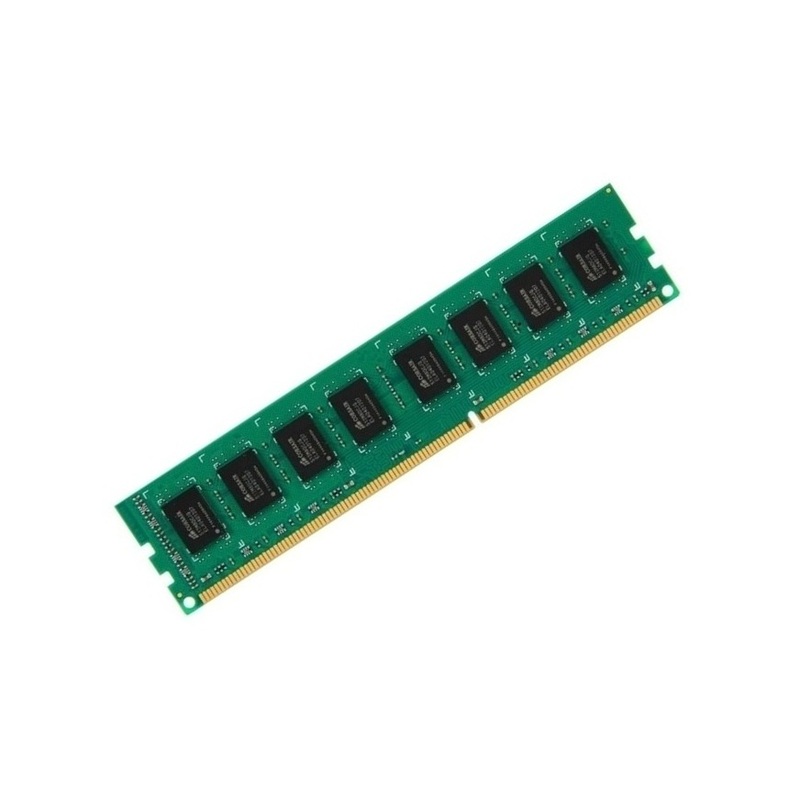
Lenovo 46W0835 32GB 1X32GB DDR4 SDRAM PC4-19200 Cl17 Ecc Registered Dual Rank 1.2v 2400MHZ 288-Pin Dimm Memory. New (System) Pull with 1 year replacement warranty - Samsung Version
| SKU/MPN | Warranty | Price | Condition | You save |
|---|---|---|---|---|
| 46W0835 | 1 Year Warranty | $344.00 | New (System) Pull | You save: $120.40 (26%) |
| 46W0835 | 1 Year Warranty | $354.00 | New (System) Pull | You save: $123.90 (26%) |
| 46W0835 | 1 Year Warranty | $470.00 | New Sealed in Box (NIB) | You save: $164.50 (26%) |
Upgrade your server or workstation with the Lenovo 46W0835, a high-performance 32GB DDR4 SDRAM memory module. This server-grade RAM module delivers reliable, error-correcting memory with registered signaling and dual-rank architecture for improved stability and throughput in enterprise systems.
This Lenovo 32GB registered ECC module is tailored for server platforms and enterprise motherboards that support DDR4 RDIMM modules. Typical deployments include:
In the realm of enterprise computing and data centers, server memory is a critical component that directly impacts system performance, stability, and capacity for handling workloads. The Lenovo 46W0835 represents a specific class of memory designed for reliability and error-free operation in demanding server environments. This 32GB DDR4 module is engineered to meet the rigorous requirements of Lenovo servers, ensuring compatibility and optimal performance.
Unlike standard desktop memory, server memory incorporates advanced technologies to maintain data integrity during continuous operation. The 46W0835 module is part of Lenovo's certified components portfolio, meaning it has undergone extensive testing within Lenovo server platforms to guarantee seamless integration and operation. For IT administrators and system builders, selecting the correct memory like this 32GB DIMM is paramount for maintaining system health and achieving service level agreements.
DDR4 (Double Data Rate 4) SDRAM represents a significant generational leap from its predecessor, DDR3. The Lenovo 46W0835 leverages this technology to deliver higher performance, improved efficiency, and greater reliability. The transition to DDR4 brought about several architectural changes that are crucial for modern server infrastructure.
The core advantages of DDR4 memory, as exemplified by the 46W0835 module, stem from its redesigned architecture.
Operating at a data rate of 2400MT/s (Mega Transfers per second), this module is classified as PC4-19200. The "PC4" designation indicates a DDR4 module, while the "19200" refers to the peak transfer rate in megabytes per second (MB/s). This is calculated as 2400 MHz * 8 bytes (64-bit bus) = 19,200 MB/s. This higher speed allows for faster data access for the CPU, reducing bottlenecks in memory-intensive applications like databases, virtualization, and data analytics.
DDR4 modules operate at a lower voltage of 1.2V compared to DDR3's 1.5V or 1.35V. This 20% reduction in power consumption is critical in server environments where dozens or even hundreds of memory modules may be deployed. The lower voltage translates directly into reduced energy costs and lower heat output, contributing to overall data center efficiency and cooling requirements.
The DDR4 interface features a bank group architecture that allows for more efficient memory access patterns. By separating memory banks into groups, the memory controller can access different bank groups simultaneously, improving overall concurrency and effective bandwidth. This is a key factor in the performance of the 2400MHz 46W0835 module under multi-threaded server workloads.
Two of the most critical features that distinguish server memory from consumer-grade memory are ECC (Error-Correcting Code) and Registered (or Buffered) design. The Lenovo 46W0835 incorporates both technologies to ensure maximum data integrity and system stability.
ECC is a method for detecting and correcting the most common types of data corruption in memory. In mission-critical server applications, even a single-bit error can cause application crashes, data corruption, or system instability.
ECC memory includes extra memory bits (typically 8 bits for every 64 bits of data) that store a special code. When data is written to memory, the ECC code is calculated and stored alongside the data. When the data is read, the code is recalculated and compared to the stored code. If a single-bit error is detected, it is automatically corrected before being sent to the CPU. Multi-bit errors are detected (though not always correctable) and reported to the operating system.
For servers running financial transactions, database management systems, scientific computations, or virtualized environments, ECC is not a luxury but a necessity. The 46W0835's ECC capability ensures that these sensitive operations are protected from soft memory errors that can occur due to cosmic radiation, electrical interference, or other factors. This protection maintains data accuracy and prevents silent data corruption that could go undetected without ECC.
The "Registered" aspect of the Lenovo 46W0835 refers to its use of memory registers, which differentiate it from Unbuffered DIMMs (UDIMMs) commonly used in desktop computers.
Registered DIMMs contain a register (or buffer) between the memory controller and the DRAM chips. This register buffers the command, address, and control signals, reducing the electrical load on the memory controller. By isolating the memory controller from the direct electrical load of all the DRAM chips on the module, the register enables the system to support a greater number of memory modules and higher memory capacities.
The primary benefit of RDIMMs like the 46W0835 is their ability to support higher memory capacities in multi-socket server systems. Without registered memory, the electrical load on the memory controller would limit the number of DIMMs that could be installed. This makes RDIMMs essential for servers that require large amounts of memory, such as those used for in-memory databases, high-performance computing, or extensive virtualization hosts. It's important to note that this buffering does introduce a slight latency penalty (typically one clock cycle), but this is negligible compared to the stability and capacity benefits in server applications.
To fully understand the capabilities and appropriate applications for this memory module, it's essential to examine its technical specifications in greater detail.
The "1x32GB" designation indicates this is a single module with a 32-gigabyte capacity. The "Dual Rank" specification refers to how the memory chips are organized on the module.
A memory rank is a set of DRAM chips that work together to respond to a memory access request. In a dual-rank module like the 46W0835, there are two sets of chips that share the same data path. The memory controller can access one rank while preparing the other for the next access, improving efficiency through interleaving. Compared to single-rank modules, dual-rank DIMMs generally offer better performance in most server workloads due to this interleaving capability, though they present a slightly higher electrical load to the memory controller.
The speed and latency characteristics of memory are crucial for performance-sensitive applications.
The module operates at a base clock speed of 1200MHz, but because DDR (Double Data Rate) transfers data on both the rising and falling edges of the clock cycle, the effective data rate is 2400MT/s (Mega Transfers per second). This correlates to the PC4-19200 classification, indicating a peak theoretical bandwidth of 19,200 MB/s per module.
The CL17 timing refers to Column Address Strobe (CAS) Latency, which is the number of clock cycles between the memory controller requesting data and when the first piece of data becomes available. A CAS Latency of 17 at 2400MHz represents a balance between speed and responsiveness. While higher-speed memory might have higher CAS latencies (e.g., CL19 at 2666MHz), the actual absolute latency in nanoseconds is often similar or better due to the faster clock speed. For the 46W0835 at CL17 and 2400MHz, the absolute CAS latency is approximately 14.17 nanoseconds.
The physical characteristics of the module ensure proper fit and compatibility with server hardware.
The Lenovo 46W0835 utilizes a 288-pin Dual In-Line Memory Module (DIMM) form factor, which is standard for DDR4 memory. This pin count is different from DDR3's 240-pin design, preventing accidental insertion into incompatible motherboards. The module also features a single notch in the connector, with its position different from DDR3 to enforce compatibility.
Like all server-grade memory, this module includes an SPD chip that contains information about the module's size, speed, timing, and other characteristics. The system BIOS uses this information during boot to properly configure the memory controller for optimal and stable operation with the installed modules.
When installing the Lenovo 46W0835 or any server memory, several configuration rules must be followed to ensure optimal performance and stability.
Servers have specific guidelines for memory population, including which slots to fill first and how to balance memory across processors. Most servers require memory to be installed in pairs or specific sets per processor. The 46W0835 should be installed according to the server's technical manual, typically starting with the lowest-numbered slots for each CPU.
While it's generally recommended to use identical memory modules throughout a server, mixing modules with the same specifications (size, speed, type, and rank) is often supported. However, when different modules are mixed, the memory controller will typically operate all modules at the speed and timings of the slowest module installed. For best performance, use identical part numbers like the 46W0835 across all slots in a system.
While the memory hardware itself is independent of the operating system, it's important to ensure that the OS can address the total amount of installed memory. Modern 64-bit server operating systems like Windows Server, Linux distributions, and VMware ESXi can fully utilize the 32GB capacity of this module and the total memory capacity of supported servers.
The Lenovo 46W0835 32GB DDR4 RDIMM is suited for a wide range of server applications where reliability, capacity, and performance are paramount.
Server virtualization platforms like VMware vSphere, Microsoft Hyper-V, and Proxmox VE are memory-intensive applications. Each virtual machine requires dedicated memory space, and higher memory density allows for greater virtual machine consolidation. The 32GB capacity of the 46W0835 enables IT departments to maximize the number of VMs per physical host, improving hardware utilization and reducing total cost of ownership.
Database management systems (e.g., Microsoft SQL Server, Oracle Database, MySQL) often benefit significantly from large memory allocations. More memory allows for larger database buffer pools and caches, reducing disk I/O and improving query performance. The ECC protection of this module is particularly important for databases to prevent data corruption.
Scientific computing, financial modeling, and big data analytics workloads often process massive datasets that benefit from being held in memory. The 2400MHz speed of the 46W0835 provides the necessary bandwidth for these memory-bound applications, while the ECC functionality ensures computational accuracy.
For public and private cloud deployments, as well as high-traffic web hosting environments, server memory is a key resource that directly impacts the number of concurrent users or tenants that can be supported. The reliability of ECC RDIMMs is essential for maintaining service level agreements (SLAs) in these multi-tenant environments.


 Contact Us
 Information
 Catalog
 Solid State Drives (SSD)
 Network Switches
 Hard Disk Drives
 HBA & Controllers
 PC & Servers
 PC & Server Memory
 CPU & Processors
 Network Routers
 Power Supplies
 Tape Drives & Libraries
 Network Devices
 Computer & Network Cables