
(7% discount is applied at checkout)
Cart is empty
Your go-to destination for cutting-edge server products
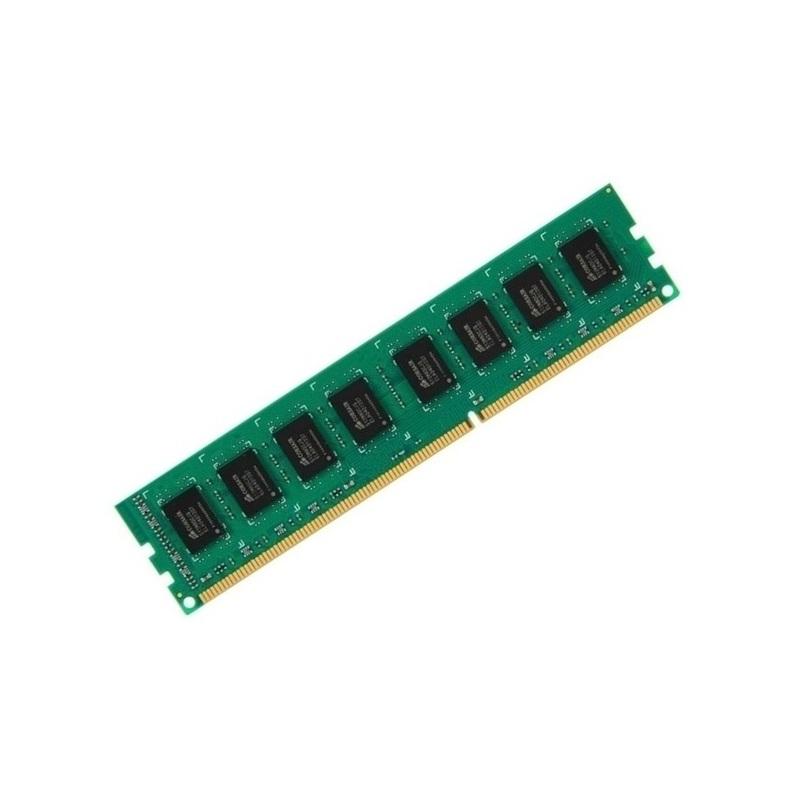
Lenovo 46W0835 32GB 1X32GB DDR4 SDRAM PC4-19200 Cl17 Ecc Registered Dual Rank 1.2v 2400MHZ 288-Pin Dimm Memory.. New (System) Pull with 1 year replacement warranty
| SKU/MPN | Warranty | Price | Condition | You save |
|---|---|---|---|---|
| 46W0835 | 1 Year Warranty | $344.00 | New (System) Pull | You save: $120.40 (26%) |
| 46W0835 | 1 Year Warranty | $354.00 | New (System) Pull | You save: $123.90 (26%) |
| 46W0835 | 1 Year Warranty | $470.00 | New Sealed in Box (NIB) | You save: $164.50 (26%) |
High-reliability server RAM: 32GB DDR4 SDRAM module, ECC registered (RDIMM), optimized for enterprise servers and data centers. Ideal for workloads requiring error correction and stable multi-rank performance.
Server memory represents a critical component in modern computing infrastructure, designed specifically for the demanding environments of data centers, enterprise servers, and high-availability systems. Unlike standard desktop memory, server memory incorporates advanced features to ensure data integrity, system stability, and continuous operation. The Lenovo 46W0835 32GB DDR4 module exemplifies these specialized requirements through its engineered specifications and reliability-focused design.
The Lenovo 46W0835 is built to withstand the continuous operational demands of server environments. With typical server deployments running 24/7/365, these memory modules undergo rigorous testing and validation to ensure consistent performance under constant load conditions that would quickly degrade lesser components.
Understanding the complete technical profile of the Lenovo 46W0835 memory module requires examining each specification in detail and recognizing how these parameters interact within a server ecosystem.
The 32GB capacity represents a balanced configuration for modern server workloads. This density allows system administrators to populate servers with substantial total memory while maintaining flexibility in slot utilization and future expansion capabilities.
As a single 32GB module, the 46W0835 provides building-block flexibility for creating optimized memory configurations. Systems can be populated with multiple identical modules to achieve the desired total memory capacity while maintaining proper channel balancing for optimal performance.
When deploying multiple 46W0835 modules, considerations include channel interleaving, rank sparing, and NUMA (Non-Uniform Memory Access) optimization. Proper population following the server manufacturer's guidelines ensures maximum memory bandwidth and system stability.
DDR4 (Double Data Rate 4) Synchronous Dynamic Random Access Memory represents the fourth generation of DDR technology, offering significant improvements over previous generations in performance, power efficiency, and reliability.
The transition to DDR4 introduced several key architectural improvements including higher data rates, reduced operating voltage, enhanced signal integrity, and increased bank groups. These advancements collectively contribute to the 46W0835's performance profile while maintaining compatibility with DDR4 server platforms.
The PC4-19200 designation indicates the module's peak transfer rate of 19,200 MB/s, while the 2400MHz refers to the data rate in megatransfers per second. This specification places the module in the mid-range of DDR4 performance, balancing speed with power consumption and compatibility.
While higher-frequency modules exist, the 2400MHz operating frequency provides excellent performance for most server workloads while maintaining broad compatibility across server platforms. The actual performance impact varies depending on the specific application memory access patterns and the processor's memory controller capabilities.
CAS Latency (CL) represents the number of clock cycles between a read command and when the data becomes available. The CL17 timing of the 46W0835 represents a balanced latency specification for server-grade DDR4 memory at 2400MHz.
Server applications exhibit different sensitivities to memory latency and bandwidth. Database applications often benefit from lower latency, while virtualization and high-throughput computing may prioritize bandwidth. The CL17 timing provides an optimal balance for mixed-workload environments.
Error Correcting Code (ECC) represents one of the most critical differentiators between server and consumer memory. The 46W0835 incorporates ECC technology to detect and correct single-bit memory errors automatically, preventing data corruption and system crashes.
ECC functionality works by adding extra bits (typically 8 bits for every 64 bits of data) that enable the memory controller to detect and correct single-bit errors automatically. This protection occurs transparently without performance penalties or administrator intervention, maintaining data integrity across all memory operations.
While ECC primarily corrects single-bit errors, it also detects multi-bit errors, allowing the system to initiate protective shutdown procedures before data corruption can spread. This capability is particularly valuable in mission-critical applications where data accuracy is paramount.
The 46W0835 utilizes Registered DIMM technology, which incorporates a register (or buffer) between the memory controller and the DRAM chips. This architecture reduces electrical load on the memory controller, enabling higher memory capacities and more stable operation in multi-module configurations.
Unlike unbuffered DIMMs (UDIMMs) used in desktop systems, RDIMMs include a register that buffers command, address, and control signals. This buffering introduces a minimal latency penalty (typically one clock cycle) but provides significant benefits in signal integrity and capacity scaling for server environments.
The dual-rank configuration indicates that the memory module contains two independent sets of DRAM chips that share the same interface but cannot be accessed simultaneously. This architecture improves memory efficiency by allowing interleaving between ranks.
Dual-rank modules can improve performance through rank interleaving, where memory accesses are alternated between the two ranks. This technique can hide precharge and activation delays, resulting in better overall memory bandwidth utilization compared to single-rank modules of the same specification.
The 1.2V operating voltage represents a significant reduction from previous DDR generations (DDR3 operated at 1.5V), contributing to lower power consumption and reduced heat generation. This efficiency is particularly important in dense server deployments where power and cooling constraints directly impact operational costs.
DDR4 modules incorporate advanced power management capabilities including programmable fine-grain power down modes and self-refresh options. These features allow servers to optimize memory power consumption based on workload demands, contributing to overall energy efficiency.
The 288-pin DIMM form factor represents the physical and electrical standard for DDR4 memory modules. The increased pin count over DDR3's 240-pin design accommodates additional signals for enhanced functionality while maintaining mechanical compatibility with DDR4 slots.
DDR4 modules feature a different keying notch position compared to DDR3, preventing accidental insertion into incompatible slots. This physical safeguard ensures that only appropriate memory technologies can be installed in DDR4-equipped servers.
The Lenovo 46W0835 is engineered for compatibility with specific Lenovo server platforms that support its technical specifications. Understanding compatibility requirements is essential for successful deployment and optimal performance.
This memory module is validated for use in various Lenovo server families including System x, ThinkSystem, and Flex System platforms. Specific compatibility should be verified against the server's memory configuration guide to ensure proper operation.
Different server platforms may have specific requirements regarding memory population, mixing with other modules, and performance optimization. Consulting the technical documentation for the target server ensures proper configuration and avoids potential compatibility issues.
While identical modules are always recommended for optimal performance, understanding the rules for mixing different memory specifications is important for expansion scenarios.
When adding memory to existing configurations, critical specifications including data rate, latency, voltage, and module type should match to ensure stable operation. Mixing modules with different specifications typically causes all modules to operate at the lowest common denominator.
Server manufacturers provide specific guidelines for memory population sequences, channel configurations, and slot priorities. Adhering to these guidelines ensures proper memory interleaving, channel balancing, and optimal performance characteristics.
The technical characteristics of the Lenovo 46W0835 make it suitable for specific server workloads and deployment scenarios where its balance of capacity, performance, and reliability provides optimal value.
Virtualization platforms benefit substantially from the 46W0835's combination of capacity and reliability. The 32GB module size allows for efficient memory allocation across multiple virtual machines while ECC protection ensures guest OS stability.
In virtualized environments that employ memory overcommitment technologies, the reliability features of the 46W0835 become particularly valuable. ECC protection helps prevent host crashes that could affect multiple virtual machines simultaneously.
Database management systems heavily utilize memory for caching, query processing, and transaction management. The 46W0835's ECC functionality provides critical protection against data corruption in database buffers and cache areas.
For in-memory database platforms where the entire dataset resides in RAM, the data integrity features of ECC memory are non-negotiable. The 46W0835 provides the necessary reliability for these demanding implementations.
While HPC applications often prioritize memory bandwidth over capacity, the balanced specifications of the 46W0835 make it suitable for many computational workloads where both capacity and reliability are important considerations.
Applications in scientific computing, engineering simulation, and financial modeling benefit from the 46W0835's error correction capabilities, which prevent computational errors that could invalidate results or crash long-running calculations.
Traditional enterprise applications including ERP systems, mail servers, and collaboration platforms benefit from the stability and reliability offered by the 46W0835's server-optimized design.
For systems that form the backbone of business operations, the enhanced reliability of ECC RDIMMs helps maintain system availability and data integrity, reducing downtime and associated business impacts.
Maximizing the performance and reliability of the Lenovo 46W0835 requires understanding optimal configuration practices and performance tuning opportunities specific to server memory subsystems.
Modern server platforms typically feature multi-channel memory architectures that significantly impact performance. Proper configuration ensures maximum memory bandwidth utilization.
Memory interleaving distributes memory accesses across multiple physical modules, channels, or ranks to improve parallelism and hide memory latency. The 46W0835's dual-rank architecture supports rank-level interleaving for improved efficiency.
Server BIOS settings typically offer control over interleaving granularity and scope. Understanding these options allows administrators to optimize memory performance for specific workload characteristics.
Different operating systems and versions may implement varying memory management strategies that can impact the effectiveness of server memory configurations.
In multi-socket servers with NUMA architectures, application performance can be significantly impacted by memory locality. NUMA-aware applications and operating systems can optimize performance by allocating memory from the local NUMA node.
Server operating systems provide tools for configuring memory and process affinity to NUMA nodes. Proper configuration ensures that processes access local memory, reducing latency and improving performance.
Server memory modules incorporate specialized features beyond basic ECC functionality to enhance system reliability, maintain availability, and simplify serviceability in enterprise environments.
Reliability, Availability, and Serviceability (RAS) features represent a collection of technologies designed to maximize system uptime and data integrity in server environments.
Server DIMMs including the 46W0835 often support SDDC (Single Device Data Correction) for x4 DRAM architectures and DDDC (Double Device Data Correction) for enhanced error correction capabilities that can handle complete DRAM device failures.
Advanced memory controllers implement patrol scrubbing (background scanning and correction of memory errors) and demand scrubbing (correction of errors as they occur) to maintain memory integrity proactively.
Rank sparing reserves a memory rank to automatically replace a failed rank transparently. This technology maintains system operation without administrator intervention when correctable errors exceed thresholds.


 Contact Us
 Information
 Catalog
 Solid State Drives (SSD)
 Network Switches
 Hard Disk Drives
 HBA & Controllers
 PC & Servers
 PC & Server Memory
 CPU & Processors
 Network Routers
 Power Supplies
 Tape Drives & Libraries
 Network Devices
 Computer & Network Cables