(7% discount is applied at checkout)
Cart is empty
Your go-to destination for cutting-edge server products
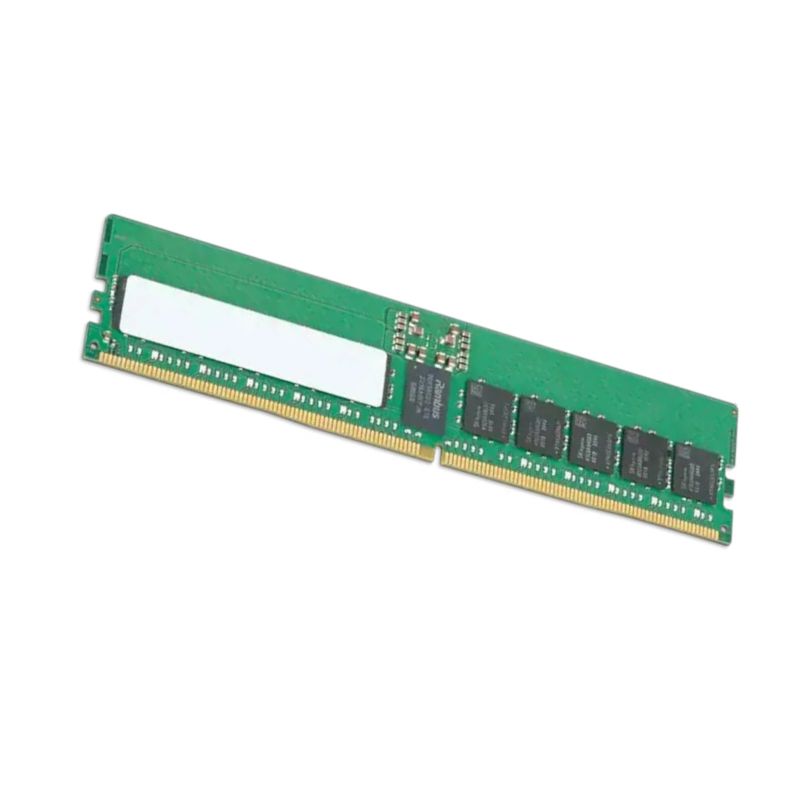


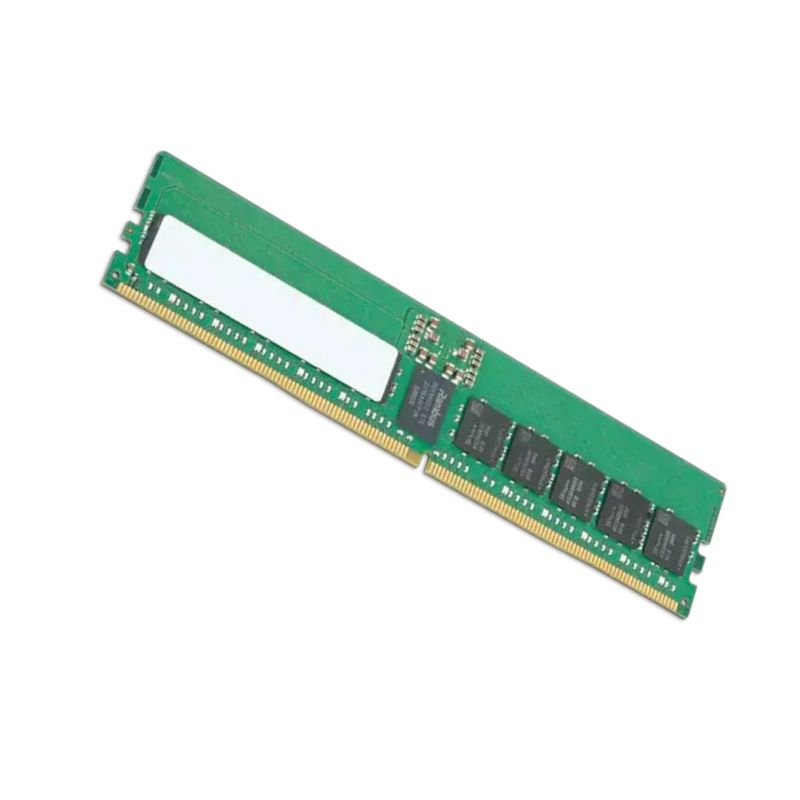
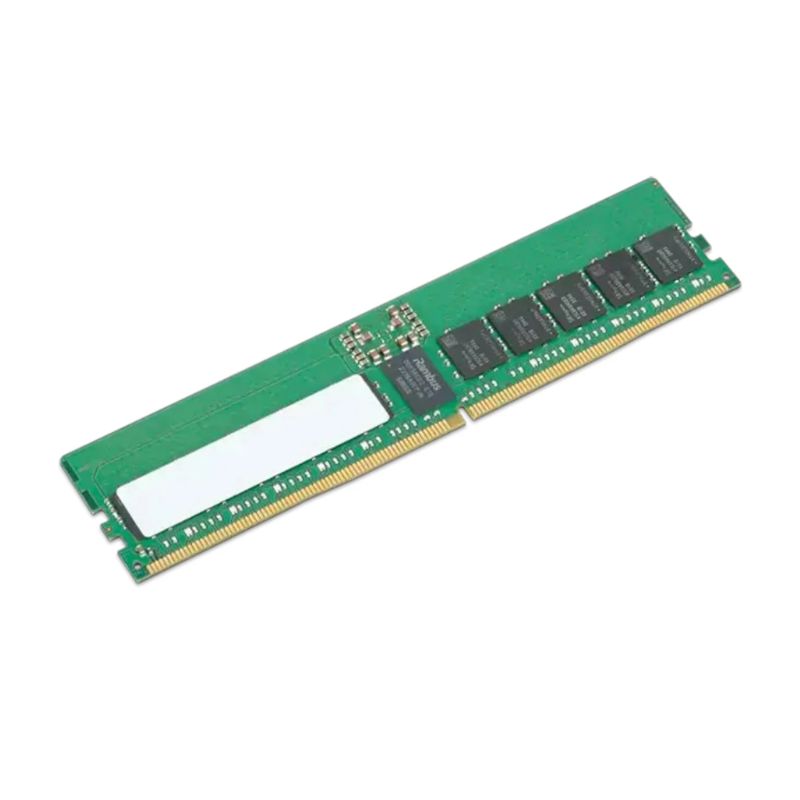
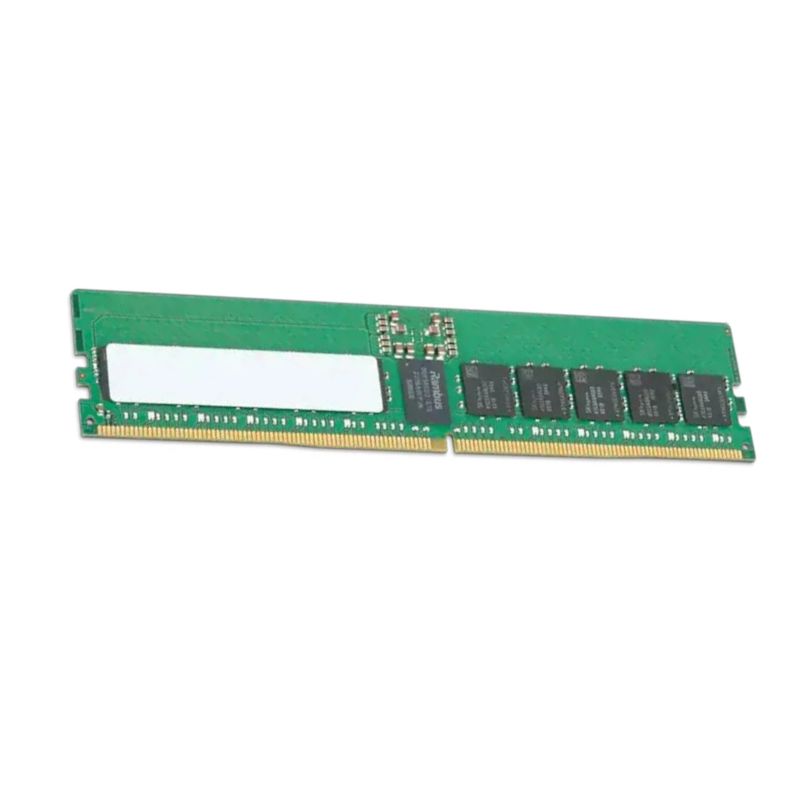
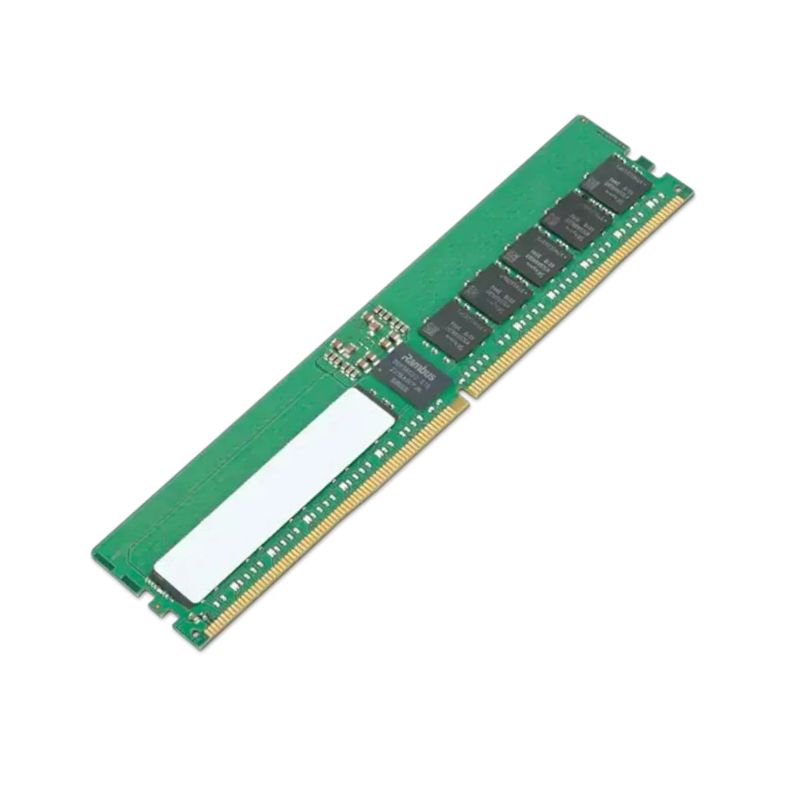
Lenovo 4X77A90991 32GB 5600Mhz Pc5-44800 DDR5 SDRAM 288-pin Rdimm Memory Module For Server. New Sealed in Box (NIB) with 3 Year Warranty. Hynix Version
| SKU/MPN | Warranty | Price | Condition | You save |
|---|---|---|---|---|
| 4X77A90991 | 1 Year Warranty | $1,862.00 | New Sealed in Box (NIB) | You save: $651.70 (26%) |
| 4X77A90991 | 1 Year Warranty | $2,112.00 | New Sealed in Box (NIB) | You save: $739.20 (26%) |
The Lenovo 32GB 5600MHz PC5-44800 DDR5 SDRAM 288-pin RDIMM RAM Module for Server is a high-performance memory solution designed to meet the demanding needs of modern data centers, enterprise environments, and servers. This DDR5 memory module offers exceptional speed, capacity, and reliability, making it an ideal choice for upgrading or building powerful server systems that require intensive memory capabilities. Below, we will explore the technical specifications, key features, compatibility, installation tips, and performance advantages of this Lenovo RAM module in great detail.
Technical Feature of RAM
The 4X77A90991 module is purpose-built for workload-intensive server environments. Its DDR5 architecture increases per-channel bandwidth, while the RDIMM registration and ECC support provide robust data integrity under sustained load. Below are performance and reliability benefits that make this module suitable for enterprise deployments.
Operating at 1.1 V, this DDR5 module reduces power draw compared to legacy DDR generations at higher voltages. Lower operating voltage helps reduce overall server power usage and thermal load, which is particularly valuable in dense rack deployments and energy-sensitive data centres.
Before purchasing, verify motherboard and platform support for DDR5 RDIMMs and specific speeds. LENOVO’s part number 4X77A90991 is primarily targeted at Lenovo server platforms but may also be compatible with other vendors’ servers that accept DDR5 RDIMM ECC modules — provided the platform firmware and memory training routines support the module’s speed and rank configuration.
Enterprise modules such as the 4X77A90991 typically undergo strict manufacturing and testing processes to meet server reliability standards. While specific compliance marks vary by vendor and batch, look for manufacturing test records and vendor warranties when procuring for critical environments.
The fifth generation of Double Data Rate Synchronous DRAM, delivering increased bandwidth, improved power efficiency and new on-die features compared to DDR4.
Registered Dual Inline Memory Module — uses a register to buffer command and address lines, improving signal integrity for high-density server configurations.
Error-Correcting Code — a memory technology that detects and corrects certain types of memory errors to prevent data corruption.
Million Transfers per second — commonly used to express effective DDR memory speed (e.g., 5600 MT/s).
Column Address Strobe latency — the number of clock cycles between a command and the availability of data; lower numbers mean fewer cycles, but effective throughput depends on the combination of latency and clock rate.
Before purchasing, verify compatibility with your server platform and CPU memory controller. DDR5 RDIMM support depends on the server's chipset and the CPU generation. Lenovo branded modules such as the 4X77A90991 are tested for specific Lenovo ThinkSystem servers and OEM platforms, but they also typically conform to JEDEC standards that make them compatible with a wider range of validated OEM server models—provided the platform supports RDIMM DDR5, 5600 MT/s operating points and registered memory topologies.
Modules expose SPD (Serial Presence Detect) parameters which the platform BIOS uses to set default timings and voltages. Servers commonly provide XMP-like profiles or platform tuned memory profiles; confirm your server BIOS version supports 5600 MT/s timing profiles for dual rank RDIMMs. Updating BIOS/firmware may be necessary to unlock higher speeds or improved stability.
Memory population rules differ by server. Follow the motherboard/server vendor’s memory population guidelines to balance channels and ranks. Proper population ensures optimal interleave and maximizes memory bandwidth. For many dual-socket servers, populate equivalent DIMM capacities across CPU sockets to maintain balanced NUMA performance.
Avoid mixing JEDEC-standard RDIMMs with modules that have different voltages, ranks, or non-registered (UDIMM) modules in the same channel. Mixing can cause the system to down-clock to the slowest module’s speed, or prevent booting entirely. For best reliability and predictable performance, match capacity, rank, speed and manufacturer where possible.
Lenovo-branded server memory undergoes enterprise testing that typically includes burn-in, signal integrity verification, parity/ECC validation and thermal cycling. This category emphasizes modules designed for 24/7 availability with error detection and correction mechanisms critical for business continuity.
ECC in RDIMM modules corrects single-bit errors and detects multi-bit errors. In enterprise environments, ECC reduces silent data corruption and helps preserve database and filesystem integrity. Paired with registered buffering, ECC supports large memory configurations that would otherwise compromise signal quality.
Lenovo memory modules often include enterprise warranties and support entitlements, such as limited lifetime or multi-year warranties, and options to exchange failed modules through OEM support channels. For organizations that require guaranteed SLAs, purchasing genuine Lenovo modules from authorized channels ensures access to vendor support and firmware compatibility guarantees.
Memory modules use SPD data to convey configuration; ensure firmware patches are applied to server platforms to mitigate any SPD spoofing or configuration issues. While memory modules themselves are passive, firmware controls can ensure correct timing and secure boot compatibility.
Enterprise memory should comply with environmental and regulatory standards (RoHS, WEEE where applicable) and often comes with manufacturer declarations. For procurement teams, confirm compliance certifications if required for tender responses or corporate sustainability reports.
Common causes include incompatible DIMM type (UDIMM vs RDIMM), mismatched ranks, incorrect population order, or unsupported speed for CPU/motherboard. Revert to prior configuration, update BIOS, and ensure identical modules populate symmetric channels.
Occasional corrected ECC errors can be expected in active datacenter environments; however, frequent corrected errors may signal a marginal module, a failing DIMM slot, or electrical/interference issues. Track error trends—replace modules with consistent corrected errors and validate chassis airflow and power stability.
If the system runs modules at a lower frequency, the cause is typically either the memory controller limiting speed for stability or the presence of a slower mixed module. Ensure BIOS settings are configured for highest JEDEC/XMP profile and verify all populated DIMMs support the target speed.
Upgrading existing servers with 32GB DDR5 RDIMMs can significantly increase virtual machine density or database cache while avoiding full server replacement. Use balanced population to maximize bandwidth and maintain NUMA symmetry in dual-socket deployments.
For fleet upgrades, standardize on a single validated SKU such as Lenovo 4X77A90991 to simplify inventory, supportability and lifecycle management. Pre-validation, burn-in and vendor support contracts are recommended for large deployments.
In HA pairs or clusters, identical memory across nodes minimizes variability and reduces risk of subtle performance differences that complicate troubleshooting. For mission critical systems, prefer OEM modules covered by vendor SLAs.


 Contact Us
 Information
 Catalog
 Solid State Drives (SSD)
 Network Switches
 Hard Disk Drives
 HBA & Controllers
 PC & Servers
 PC & Server Memory
 CPU & Processors
 Network Routers
 Power Supplies
 Tape Drives & Libraries
 Network Devices
 Computer & Network Cables