(7% discount is applied at checkout)
Cart is empty
Your go-to destination for cutting-edge server products
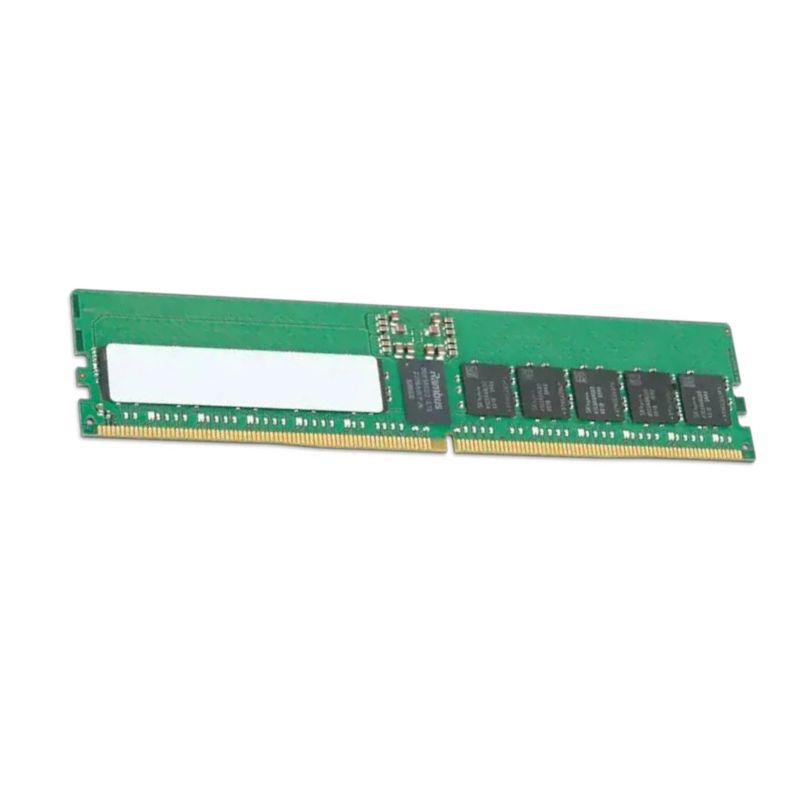


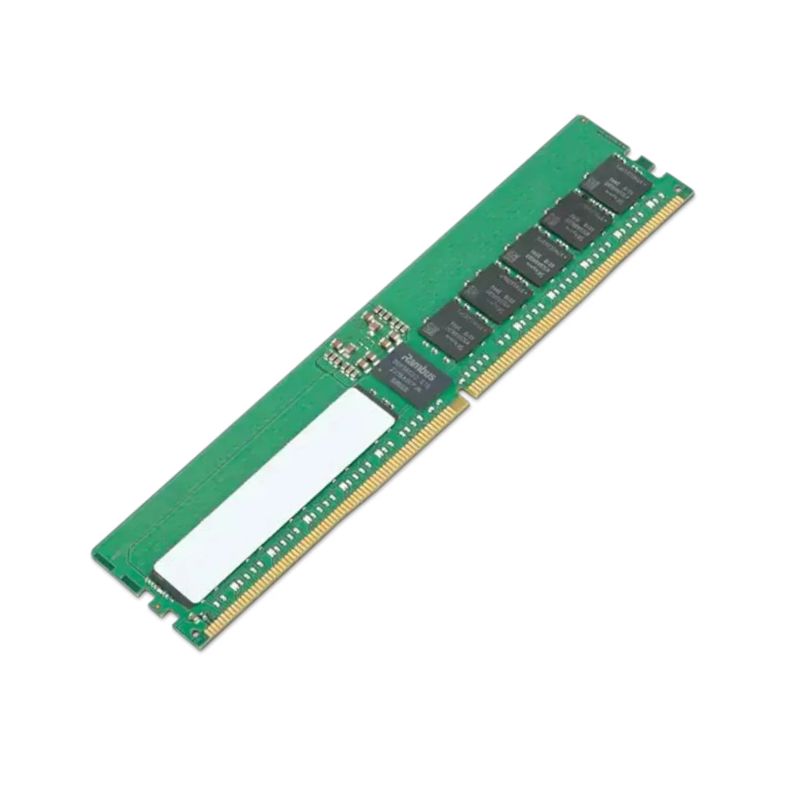
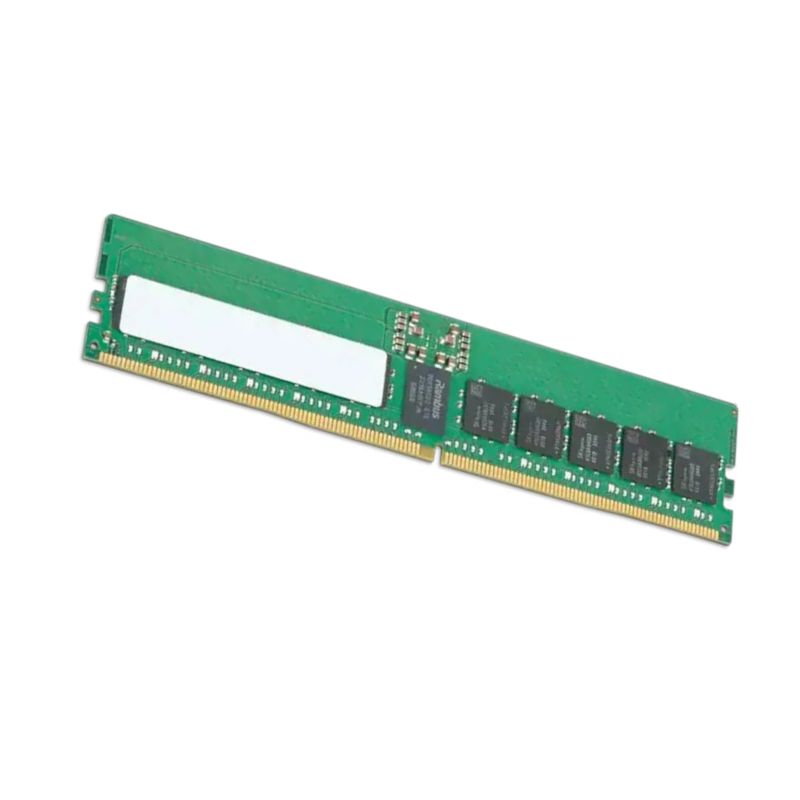
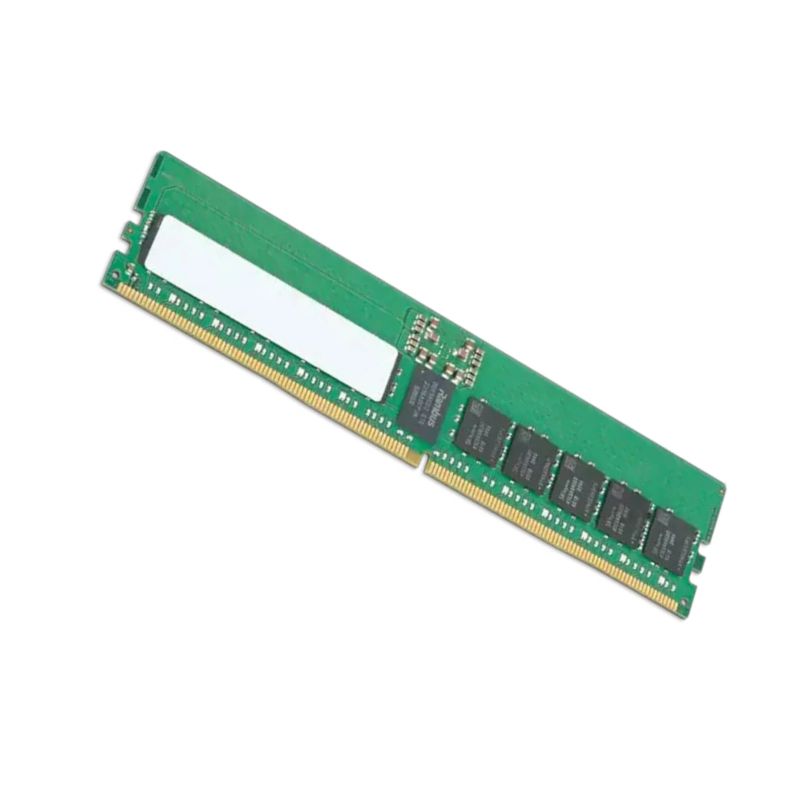
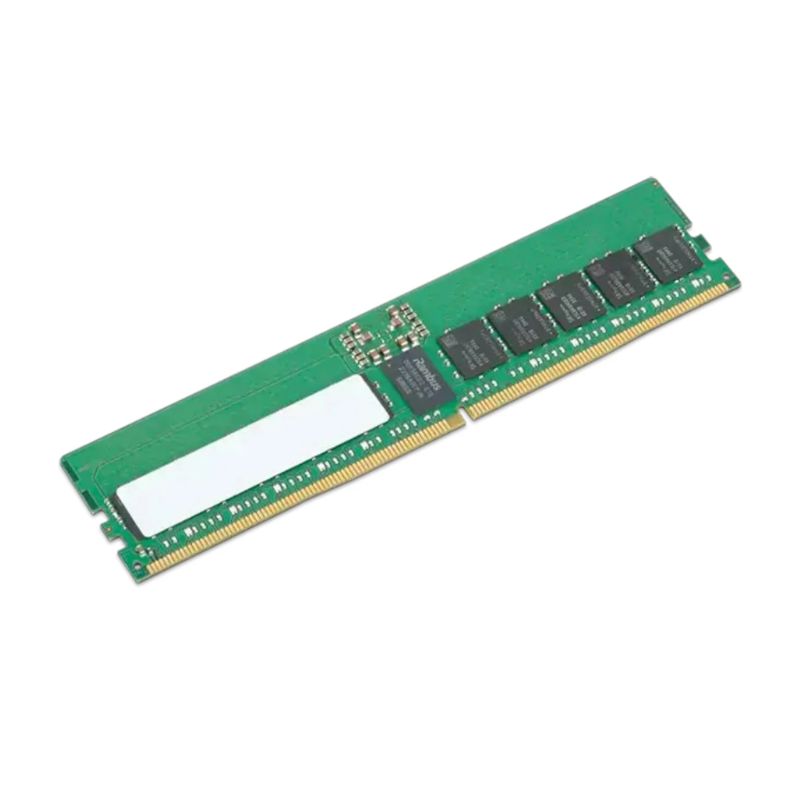
Lenovo 4X77A92112 128GB DDR5 5600mhz Pc5-44800 288-pin Dimm Truddr5 Server Memory Module. New Sealed in Box (NIB) with 3 Years Warranty - Hynix Version
| SKU/MPN | Warranty | Price | Condition | You save |
|---|---|---|---|---|
| 4X77A92112 | 1 Year Warranty | $6,144.00 | New (System) Pull | You save: $2,150.40 (26%) |
| 4X77A92112 | 1 Year Warranty | $8,160.00 | New Sealed in Box (NIB) | You save: $2,856.00 (26%) |
High-density server memory built for modern datacenter workloads: the LENOVO 4X77A92112 is a single-module 128GB DDR5 RDIMM engineered to deliver sustained throughput, lower power draw, and enterprise-grade stability. Designed as a system-specific upgrade, this TruDDR5 memory module is ideal for memory-intensive applications, virtualization hosts, and database servers.
This module couples high frequency with stacked-die architecture to provide exceptional bandwidth while maintaining energy efficiency. Below are the performance traits and practical implications:
Running at an effective 5600 MHz, the 4X77A92112 boosts data transfer rates relative to earlier DDR4 modules. The CAS latency of CL46 represents the column access delay; when paired with higher clock speed and modern server CPUs, overall memory subsystem responsiveness improves for large-scale workloads.
Quad-rank modules present four logical ranks that increase capacity per DIMM. When combined with 3DS registered (three-dimensional stacking with register) organization, the result is:
The module uses x4 chips, which are commonly employed in high-capacity server DIMMs. x4 organization supports advanced error detection and correction schemes and is well-suited to ECC (Error-Correcting Code) operation in mission-critical environments.
Though marketed as a LENOVO system-specific upgrade, the 4X77A92112 is compatible with server platforms that explicitly list support for DDR5 RDIMMs with 3DS quad-rank modules. Compatibility depends on BIOS/firmware support and motherboard memory topology.
Designed to meet enterprise-class expectations, this RDIMM supports ECC functionality and register-based buffering to ensure data integrity under intensive, continuous operation.
DDR5 advances include improved power management; at 1.1 volts, the module reduces power draw compared with legacy alternatives at comparable throughput. Nevertheless, high-capacity, stacked-die RDIMMs produce measurable thermal output under sustained load.
Here’s a targeted view of workloads that will see the biggest gains when equipped with high-density DDR5 RDIMMs like this LENOVO module:
The Lenovo 4X77A92112 128GB DDR5 5600MHz PC5-44800 TRUDDR5 server memory module is a high-density, high-performance registered DIMM (RDIMM) engineered for modern enterprise servers, data centers, and mission-critical applications. Built as a 3DS (three-dimensional stacking) quad-rank (x4) memory device with Error-Correcting Code (ECC) support and operating at a low 1.1V supply, this module targets system reliability, maximum memory capacity per channel, and improved memory bandwidth for next-generation workloads.
This module conforms to DDR5 JEDEC signaling conventions for PC5-44800, delivering an effective data rate of 5600 MT/s. Operating at 1.1 volts, the module balances performance and power efficiency. Latency timings (for this spec class) are commonly represented in CAS latency (CL) numbers appropriate to DDR5-5600; vendors may list CL46 for x4 quad-rank implementations. The RDIMM design includes an on-module register to offload command/address loads from the memory controller.
Physically the Lenovo 4X77A92112 module is a 288-pin DDR5 RDIMM form factor designed to fit standard server DIMM slots. The module’s PCB, heatspreader (when present), and component layout are optimized for server airflow patterns and thermal performance in rackmount and tower server environments. Confirm server compatibility with manufacturers' qualified memory lists, as quad-rank 3DS modules impose different density and topology constraints on motherboard memory channels and BIOS/firmware.
While the physical 288-pin DDR5 RDIMM form factor is standardized, compatibility with specific server models depends on platform memory controller firmware, BIOS-level support for 3DS and quad-rank devices, and the server vendor’s Qualified Vendor List (QVL). Lenovo and other OEMs certify particular SKUs of memory for specific servers; using certified parts ensures the best performance and support entitlement. Always check the target server’s memory population rules — many dual-socket or multi-socket servers impose limits on the number of quad-rank DIMMs per channel or per socket.
Quad-rank modules present a heavier electrical load and higher logical rank counts than single- or dual-rank DIMMs. As a result, populating many quad-rank modules across channels may force memory controllers into different training behaviors or alter the effective speed. When planning configurations, balance capacity needs with performance goals — sometimes a mix of lower-rank higher-frequency DIMMs yields better latency-sensitive performance, while quad-rank high-capacity DIMMs favor payload and consolidation.
DDR5-5600 provides significant bandwidth improvements over comparable DDR4 configurations, but higher density and rank count can influence effective latency. ECC and register buffering add minimal overhead compared to the gains in stability and capacity. For latency-sensitive applications—such as high-frequency trading or certain HPC kernels—benchmarking with your specific workload is essential to evaluate whether maximum single-thread latency or aggregate throughput better serves your needs.
DDR5 modules generally support JEDEC standard timings at guaranteed speeds and may provide vendor-specific profiles for enhanced performance. Lenovo-branded server memory typically adheres closely to JEDEC for stability; server BIOS may expose limited tuning options compared to consumer motherboards. Where available, validate memory training and XMP-like enhancements (if present) under controlled testing to ensure stability.
Registered ECC memory is a cornerstone of server reliability. The Lenovo 4X77A92112 module’s ECC capabilities detect and correct single-bit errors and detect multi-bit errors, significantly reducing silent data corruption risk. For mission-critical systems handling sensitive transactions or long-running compute jobs, ECC is non-negotiable.
High-capacity DDR5 modules may run warmer than lower-density counterparts due to denser die stacking and increased power draw at scale. In rack environments with many populated DIMM slots, ensure adequate front-to-back airflow, confirm server fan policies, and monitor DIMM temperatures during vendor acceptance testing (VAT). If the module includes a heatspreader, ensure it does not interfere with server air ducts or adjacent components.
In many real-world cases, third-party memory that meets the same JEDEC specs performs equivalently. However, differences can emerge during system initialization, training, and edge-case workloads. Always test sample modules in representative systems and verify support terms, RMA procedures, and cross-compatibility before large orders.
Investing in higher-capacity RDIMMs reduces the number of physical servers required for the same memory footprint, potentially lowering licensing, power, and rack-space costs. Factor in memory module cost-per-GB, support terms, and expected server lifetime when calculating TCO. For many customers, using fewer, higher-capacity modules simplifies infrastructure management and reduces long-term capital expenditures.
For single-socket servers used as database hosts or virtualization densification nodes, deploying multiple 128GB modules provides large aggregate memory without occupying all DIMM slots. This is useful in platforms that scale per-socket memory aggressively but limit DIMM counts.
In dual-socket servers, symmetry matters. Install matched Lenovo 4X77A92112 modules across both sockets to ensure balanced NUMA node topologies and predictable memory latency. Maintain equal rank and capacity per channel to prevent odd behavior or asymmetric performance that may complicate scheduling and NUMA-aware software.
When pairing CPU hosts with GPUs, FPGAs, or NPUs, maximize host memory to reduce offload latency and avoid frequent PCIe transfers. High-capacity DDR5 RDIMMs allow larger datasets to remain in host memory, improving pipeline throughput to accelerators.
Modern servers may support platform memory encryption and secure boot features that interact with memory subsystems. While the DIMM itself is passive from a cryptographic standpoint, ensure that memory selection does not conflict with platform security policies or encryption solutions. For regulated environments, track firmware levels and procurement provenance as part of compliance audits.
When decommissioning servers or retiring memory modules, follow approved data sanitization guidelines. While volatile memory does not persist data when powered off, assume worst-case scenarios for highly sensitive data; follow organizational policies regarding hardware disposal and possible forensic sanitization or destruction when required.


 Contact Us
 Information
 Catalog
 Solid State Drives (SSD)
 Network Switches
 Hard Disk Drives
 HBA & Controllers
 PC & Servers
 PC & Server Memory
 CPU & Processors
 Network Routers
 Power Supplies
 Tape Drives & Libraries
 Network Devices
 Computer & Network Cables