(7% discount is applied at checkout)
Cart is empty
Your go-to destination for cutting-edge server products
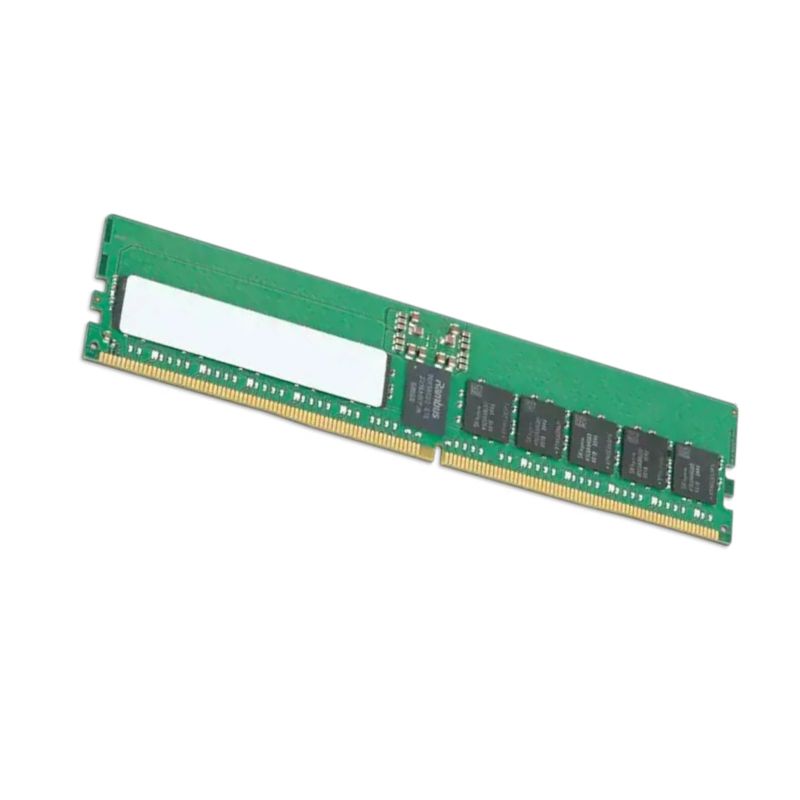


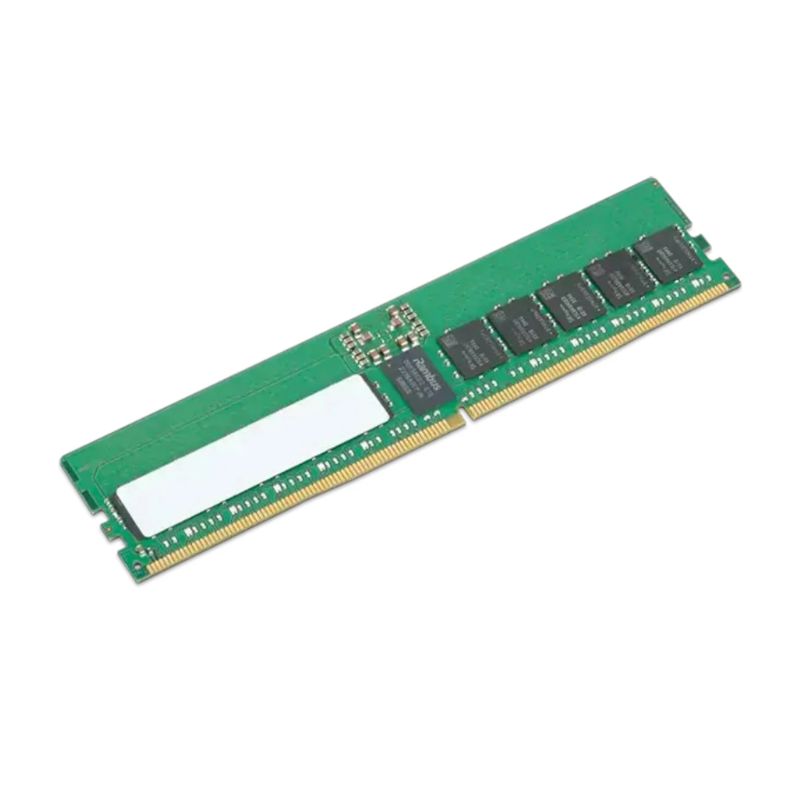
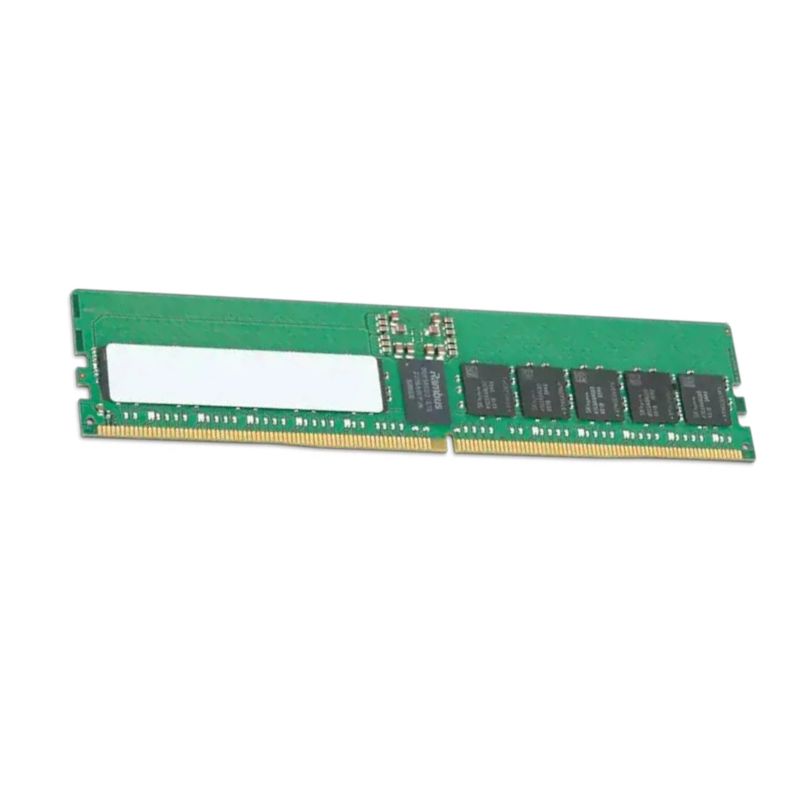
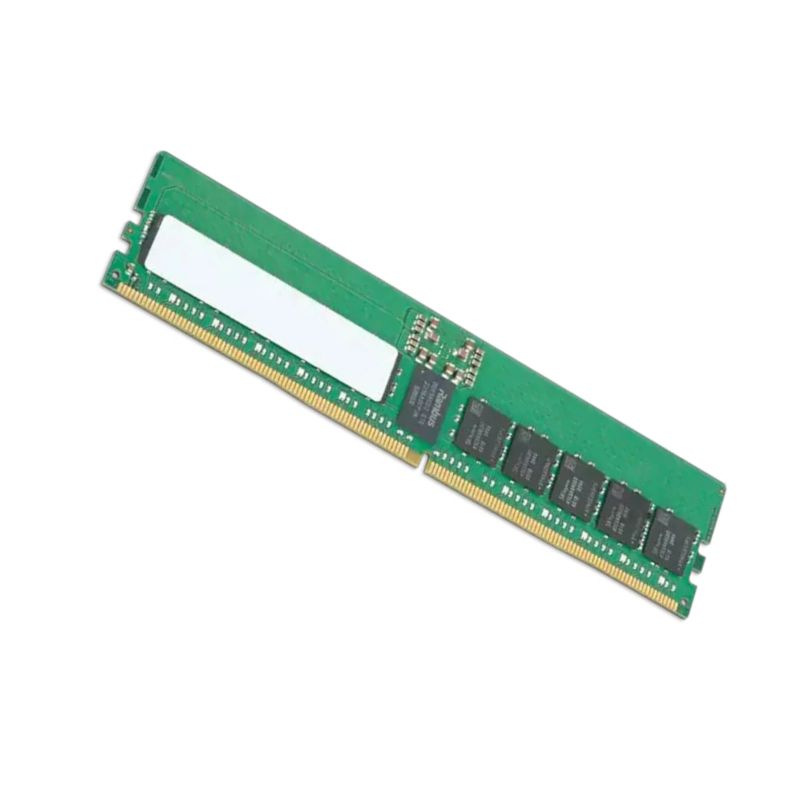
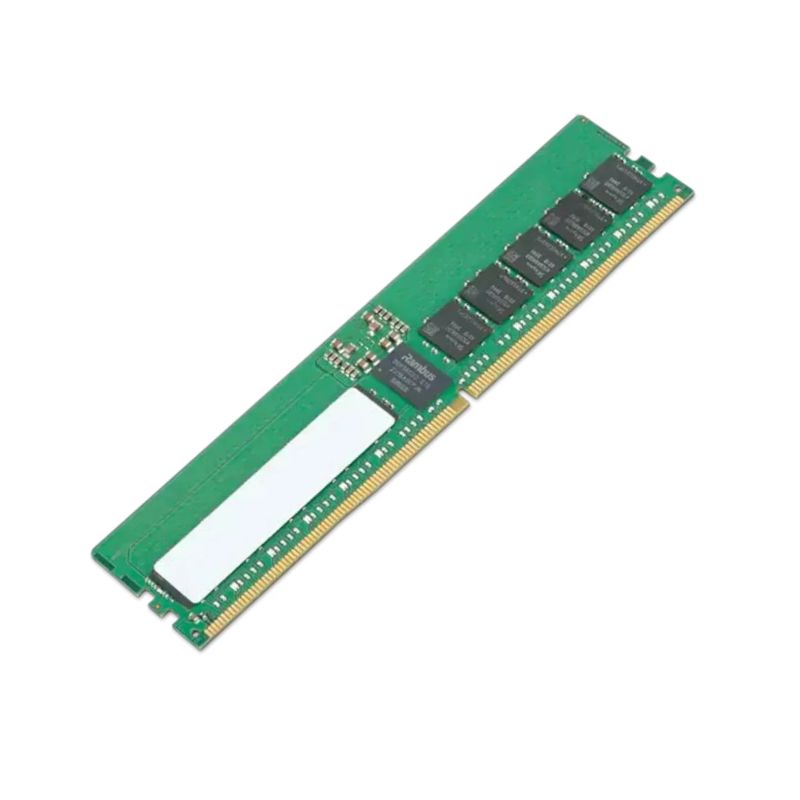
Lenovo 4X77A96982 128GB DDR5 5600mhz Pc5-44800 Registered 288-pin Dimm Truddr5 Server Memory Module. New Sealed in Box (NIB). Samsung Version
The Lenovo 4X77A96982 is a high-capacity 128GB TruDDR5 RDIMM module designed for data-intensive workloads, offering superior speed, efficiency, and stability for enterprise-level systems. Built to deliver exceptional performance, this server-grade module ensures optimal reliability for mission-critical applications.
This Lenovo DDR5 memory module enhances overall system throughput, ensuring reduced latency and higher bandwidth. By leveraging the benefits of TruDDR5 technology, it optimizes server workloads such as virtualization, databases, and real-time analytics.
The 128GB single-module configuration provides unmatched memory density, allowing IT departments to maximize server performance while maintaining fewer physical modules installed. Its dual-rank design ensures optimized memory access paths for faster and smoother operation.
With a memory clock speed of 5600 MHz and CL46 latency, the module enables responsive performance, critical for workloads requiring constant data movement and rapid transactions.
Operating at just 1.1V, this DDR5 Registered DIMM reduces overall power consumption without compromising performance. The registered signal buffering ensures improved stability across high-capacity multi-DIMM configurations.
Designed as a system-specific upgrade, the Lenovo 4X77A96982 module is fully compatible with Lenovo enterprise servers. It is engineered to deliver seamless integration, making it an ideal solution for IT administrators looking to expand memory capacity without compatibility concerns.
This category covers the Lenovo-branded 4X77A96982 memory module: a 128GB DDR5 Registered (RDIMM) server memory module engineered for modern enterprise servers and data centers. The product is specified as DDR5-5600 (also marketed as PC5-44800), Registered ECC, CL46, dual-rank X4 organization, operating at 1.1 volts, and using the 288-pin DIMM form factor commonly required by contemporary x86 and some RISC server platforms. Pages in this category focus on technical specification, compatibility matrices, deployment best practices, performance behavior, and procurement considerations tailored for system administrators, procurement specialists, and IT architects seeking reliable high-capacity server memory.
"DDR5-5600" denotes memory with an effective data rate of 5600 MT/s (megatransfers per second). "PC5-44800" is the bandwidth classification representing 44,800 MB/s theoretical peak per module for single-channel transactions under ideal conditions. This high bandwidth is suitable for memory-bound server workloads such as in-memory databases, analytics, virtualization platforms, and HPC tasks.
The physical footprint is a standard 288-pin DDR5 DIMM. This ensures mechanical and electrical compatibility with servers and motherboards that explicitly support DDR5 RDIMM modules. Note: physically similar modules can be present in different electrical types (UDIMM, RDIMM, LRDIMM); always verify supported memory types in the server vendor's qualified hardware list.
Registered ECC includes a register/buffer between the memory controller and DRAM chips and supports ECC (Error Correcting Code) to detect and correct single-bit errors and detect multi-bit errors. RDIMM modules are optimized for large configurations and enterprise reliability. ECC reduces the risk of silent data corruption — a critical attribute for mission-critical servers.
"Dual rank" means the module behaves like two separate sets (ranks) of memory accessible by the controller, enabling higher density and often better parallelism versus single-rank modules. "X4" indicates each DRAM chip has a 4-bit data width; X4 chips are common in high-density server modules and can provide improved yield for large-capacity configurations. Understanding rank and chip organization is important when planning memory population to preserve optimal channel and interleaving behavior.
CAS latency 46 specifies the number of clock cycles between a READ command and when data begins to be available. With DDR5 the raw CL number must be considered together with the transfer rate (MT/s) to evaluate true latency in nanoseconds. DDR5's higher frequencies compensate for larger cycle counts; end-to-end system latency depends on memory controller, NUMA topology, interleaving, and BIOS settings.
This module is specified to operate at 1.1 volts, consistent with DDR5 standard nominal voltages. Lower nominal voltages help reduce power draw at scale in dense server installations, which is beneficial for power/cooling budgets.
Lenovo's 4X77A96982 is designed primarily for Lenovo server platforms (ThinkSystem and System x lines where applicable) that list this SKU or equivalent JEDEC-compliant DDR5 RDIMM part numbers in their Qualified Vendor List (QVL). Beyond Lenovo systems, many OEM and whitebox servers built around Intel Xeon Scalable (4th gen or later) and AMD EPYC 7004/9004 series (and select future-compatible platforms) will accept DDR5 RDIMMs, provided the vendor's firmware and memory training support RDIMM and high-density modules.
When you install high-density DDR5 RDIMMs, BIOS/UEFI performs memory training on first boot. Ensure your server firmware is up to date to maximize stability and correct training for dual-rank X4 modules at 5600 MT/s. Firmware updates may add support for higher density, new training algorithms, and improved signal integrity handling — always consult Lenovo release notes and the server QVL before purchase and installation.
DDR5-5600 increases peak throughput significantly compared to preceding DDR4 generations. However, absolute latency (in ns) depends on clock cycle counts and actual operating frequency. For workloads that are throughput-bound (e.g., streaming analytics, large-scale caching), the higher bandwidth of PC5-44800 will deliver clear benefits. Latency-sensitive workloads (low-latency trading platforms, some OLTP databases) require tuning, NUMA-aware placement, and careful core-to-memory alignment to minimize round-trip delays.
Maximizing performance requires properly populating memory channels per processor socket. Dual-rank modules can provide improved interleaving because the controller can interleave across ranks and channels to hide row activation times. Consult server population guides to distribute modules across channels evenly — e.g., populate channel A, then B, then C, and so forth to preserve symmetric access and avoid single-channel bottlenecks.
Benchmarks vary by CPU, chipset, and workload. Expect higher sequential memory throughput in synthetic tests (STREAM-like workloads) when compared with DDR4 equivalents; real-world application speedup is workload-dependent. Applications with large memory footprints or heavy multi-threaded memory access patterns (virtualization, in-memory caches, data analytics) typically show the greatest gains.
Large-capacity 128GB RDIMMs enable high VM density per socket and better consolidation ratios for public and private cloud hosts. ECC and registered buffering deliver the reliability needed for multi-tenant environments and sustained 24/7 operation.
In-memory databases (Redis, Memcached, SAP HANA, in-memory options of DBMSs) benefit from large memory modules to cache larger datasets in RAM, reducing disk I/O and improving query latency. The high bandwidth and density of DDR5-5600 RDIMMs accelerate bulk data movement and large scans.
Scientific simulations and HPC kernels frequently require high aggregate memory throughput and large memory capacity. Dual-rank RDIMMs provide a balance between density and parallel access for processes that demand continuous high memory bandwidth.
Typical RDIMM ECC uses Single-Error Correction, Double-Error Detection (SECDED) to automatically correct single-bit errors and detect double-bit errors. Lenovo modules are designed with ECC support to reduce silent data corruption risk in enterprise workloads. Some modern platforms and memory subsystems implement additional scrubbing and refresh policies to proactively detect and correct drifting errors.
Rising corrected ECC events can indicate marginal signal quality, aging components, or environmental noise. Run hardware diagnostics, check thermal/power conditions, and consider reseating modules. Persistent or increasing uncorrected ECC events require immediate module replacement.
LRDIMM (Load-Reduced DIMM) uses an isolation buffer to reduce electrical load, enabling higher density and larger configurations at the cost of slightly higher latency and complexity. RDIMMs typically suffice for many deployments, but if maximum per-socket capacity is the priority, LRDIMM options may be considered (ensure platform support).
To approximate CAS latency in nanoseconds: Latency (ns) ≈ (CAS cycles / bus clock frequency). For DDR5-5600, the base clock is 2800 MHz (effective doubled); CAS46 corresponds to approximate latency: 46 cycles ÷ (5600 MT/s / 2) — practically latency assessments should consider actual memory controller timing and platform behavior. This illustrates why raw CAS numbers alone are insufficient; frequency and controller behavior are required for accurate comparison.
PC5-44800 equals ~44.8 GB/s theoretical peak per module under optimal conditions. In multi-channel systems, aggregate bandwidth scales with channel count and how modules are populated across channels (e.g., a dual-socket system with 8 channels per socket can approach very high aggregate memory throughput when all channels are populated).


 Contact Us
 Information
 Catalog
 Solid State Drives (SSD)
 Network Switches
 Hard Disk Drives
 HBA & Controllers
 PC & Servers
 PC & Server Memory
 CPU & Processors
 Network Routers
 Power Supplies
 Tape Drives & Libraries
 Network Devices
 Computer & Network Cables