(7% discount is applied at checkout)
Cart is empty
Your go-to destination for cutting-edge server products
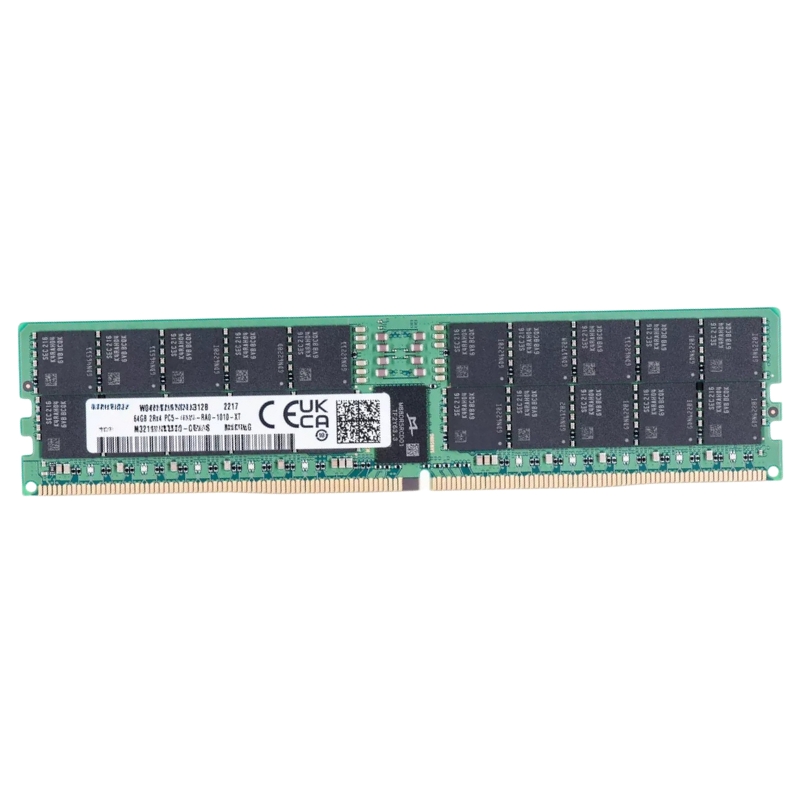


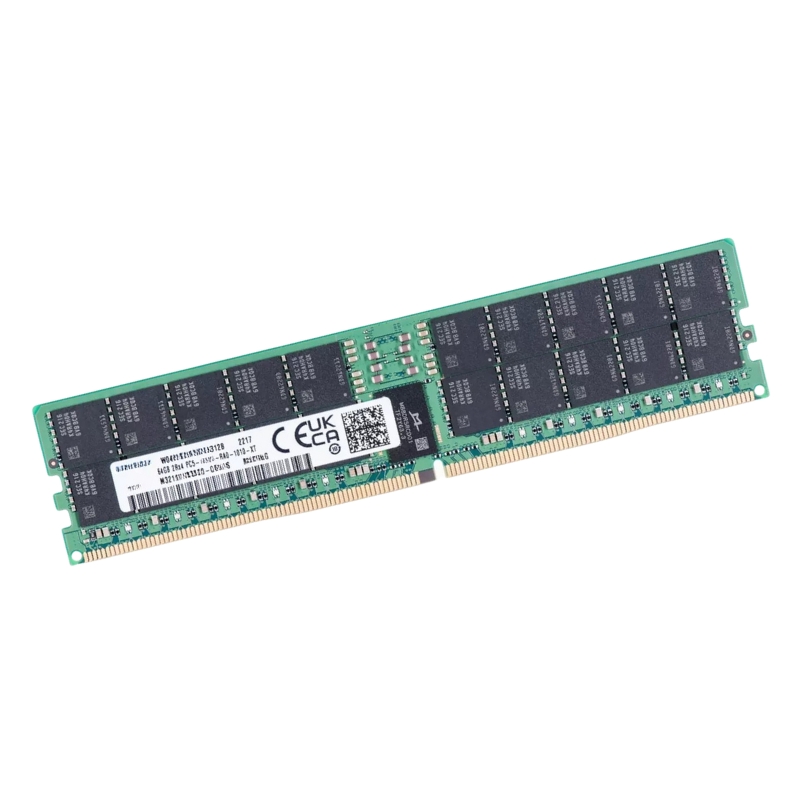
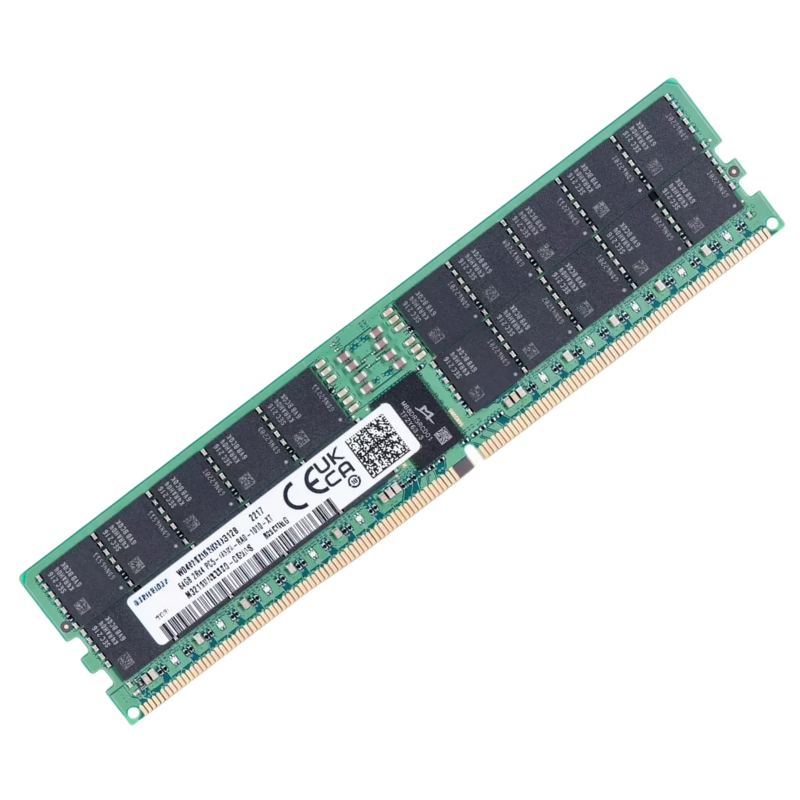
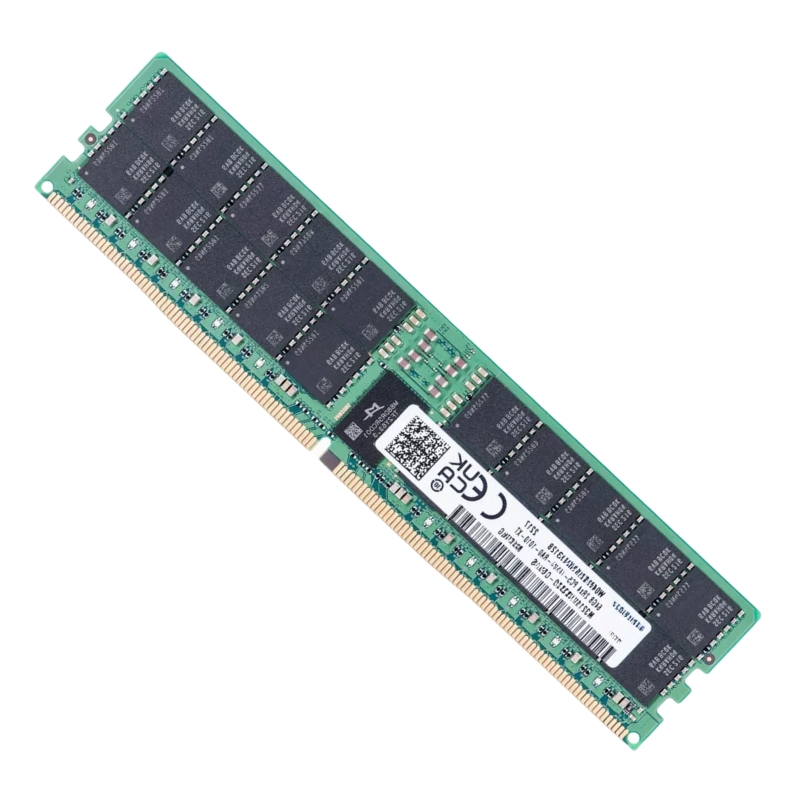
Lenovo SM37A88581 64GB 4800Mhz PC5-38400 Cl40 DDR5 SDRAM ECC Registered 2RX4 RDIMM Memory Module. New (System) Pull with 1 year replacement warranty. Samsung Version
The Lenovo SM37A88581 64GB 4800MHz PC5-38400 CL40 DDR5 SDRAM ECC Registered 2Rx4 RDIMM memory module represents a modern, high-density building block for data centers, enterprise servers, virtualization hosts, and high-throughput computing clusters. Engineered to the DDR5 specification and optimized for reliability, availability and serviceability (RAS), this module pairs large capacity with Registered (RDIMM) buffering and Error-Correcting Code (ECC) protection to deliver consistent performance under heavy multi-threaded and I/O-bound workloads. Its 4800MT/s nominal data rate (PC5-38400) and CL40 timing profile balance the high bandwidth DDR5 provides with the stability required for mission-critical systems. Use this module to scale system memory, consolidate virtual machines, accelerate in-memory databases, and support memory-intensive analytics and AI inference tasks while maintaining error detection and correction at the hardware level.
This 64GB module adheres to the PC5-38400 designation (which corresponds to 38400 MB/s theoretical peak per module lane at DDR5-4800), and the JEDEC DDR5 standard. The "CL40" CAS latency specification indicates the column access delay in cycles; while latency numbers appear larger than DDR4 CL values, DDR5's increased clock rate and architectural improvements often compensate by delivering far greater effective throughput. The module is registered (RDIMM) and 2R x4 (two-rank, x4 device configuration), which has implications for memory channel loading and platform compatibility — many server platforms benefit from the predictable signaling and electrical load provided by RDIMM technology when populating multiple memory slots.
Manufacturer & Product Identification
Produced by the globally recognized technology firm Lenovo, this module carries the specific manufacturer part designation SM37A88581, guaranteeing authenticity and compatibility.
A 64GB capacity DDR5 SDRAM memory module configured as a single RDIMM unit.
Boasts a substantial 64-gigabyte storage capacity utilizing advanced DDR5 SDRAM technology. The configuration involves a single module for streamlined installation and scalability.
Operates at a swift 3200MHz base clock speed, which translates to an effective data rate of PC5-4800 (38.4 GB/s), facilitating rapid access to stored information.
Incorporates Error Correcting Code (ECC) for enhanced data integrity and utilizes a Registered (Buffered) signal processing design to stabilize data signals in memory-intensive applications.
Designed with a 2Rx4 rank architecture and operates at a CAS Latency timing of CL40, optimizing the module for efficient command processing.
Constructed using a standardized 288-pin layout, ensuring correct insertion and reliable connectivity within compatible server motherboards.
The unit is delivered with compact dimensions, measuring 1.00 inch in height and 6.75 inches in depth. The total shipping weight is a minimal 0.20 pounds.
Virtualized environments demand both high memory capacity and predictable performance. The 64GB RDIMM modules enable administrators to load more VMs per physical host while preserving the ECC protections necessary for long-running workloads. RDIMM buffering improves signal integrity across densely populated memory channels, making them ideal for hyperconverged nodes and blade servers where multiple DIMMs are often installed per channel.
Databases — from relational OLTP systems to in-memory NoSQL stores and columnar analytic engines — benefit from DDR5's increase in sustained memory bandwidth. When working with large in-memory datasets, having 64GB modules reduces the number of modules required to reach a target capacity (e.g., 256GB or 512GB), which simplifies memory population plans and preserves DIMM slots for future upgrades.
Many HPC and inference workloads are memory bandwidth sensitive. The PC5-38400 rating provides a better data pipeline between CPU and RAM for parallel workloads, matrix operations and streaming data transformations. These modules are an excellent match for CPU-focused clusters where maximizing node memory bandwidth is critical to overall throughput.
ECC Registered RDIMMs such as the Lenovo SM37A88581 include multiple RAS-oriented design choices that reduce the likelihood of system errors and increase uptime. ECC corrects single-bit errors and detects multi-bit errors, BIOS and firmware routines can log corrected errors for proactive maintenance, and the registered buffer reduces electrical loading on the memory controller — improving signal integrity, especially in fully-populated systems.
In production server environments, ECC provides silent correction of transient bit-flips caused by electrical noise or cosmic rays, while reporting counts of corrected errors through system telemetry and management interfaces. Administrators can monitor ECC event counters to schedule preventive maintenance before uncorrectable errors affect application availability. The RDIMM architecture aids predictability: by presenting a standardized register to the memory controller, platforms can enforce stricter timing and error handling policies.
For mission-critical deployments, pair ECC monitoring with a robust out-of-band management platform. Regular firmware and BIOS updates, combined with logged ECC readouts, will help identify aging modules or marginal motherboard traces sooner. When corrected error counts grow over time, plan for controlled DIMM replacement during maintenance windows rather than reacting to sudden system failures.
Although the physical 288-pin DDR5 RDIMM form factor is standardized, platform compatibility depends on the server's memory controller, BIOS validation, and Lenovo hardware certification. This module is designed to work with Lenovo systems that list DDR5 RDIMM support in their memory configuration guides, particularly Lenovo ThinkSystem and ThinkAgile families or other Lenovo enterprise lines that specify support for DDR5 RDIMM 2Rx4 modules at 4800MT/s. Confirming motherboard and firmware compatibility is essential when mixing ranks, device widths (x4 vs x8), and speeds.
Best practice is to populate memory channels with matched modules: same capacity, same speed rating, and preferably the same part number or vendor qualification. Mixing a 64GB 2Rx4 RDIMM with modules of different ranks or JEDEC speed ratings can force the memory controller into a lower common speed or different timing regime. In heterogeneous upgrades, plan capacity by rank — for instance, two 64GB dual-rank modules per channel vs four single-rank modules — to predict overall system capacity and performance.
DDR5 modules ship with SPD (Serial Presence Detect) data that declares JEDEC-compliant timing and voltage parameters, plus vendor-specific XMP/SpeedStep entries when applicable. Ensure server BIOS interprets SPD entries correctly; many Lenovo server platforms include memory training routines to tune timing during POST. When upgrading to DDR5 RDIMMs, apply the latest platform firmware that contains memory training and compatibility updates for DDR5 4800MT/s operation and for 2Rx4 device handling.
DDR5 introduces power management improvements over DDR4, including on-die ECC in DRAM and power management integrated onto DIMMs. Although RDIMMs typically run within standard server thermal envelopes, densely populated racks and continuous high-memory-bandwidth workloads can raise module and DIMM-slot temperatures. Proper airflow, rack-cooling strategies and chassis cable routing are important to preserve module longevity and signal reliability.
Install RDIMMs carefully: use anti-static precautions, install modules in matched channel pairs or groups per the system memory population rules, and torque retention clips to their natural click position. On many Lenovo platforms, memory channels are color-coded or keyed; refer to the vendor memory population guide to achieve optimum interleaving and balance across channels. After installation, run system memory tests and burn-in utilities to validate stability under expected load.
Run extended memory tests such as memtest variants, vendor-provided diagnostics, and workload-driven stress tests. Long-duration memory stress (4–24 hours depending on criticality) helps reveal marginal timing issues or thermal-induced errors that short POST checks might miss. Capture ECC logs and validate that the system reports the new DIMMs at correct speed and capacity.
While DDR5-4800 provides significant bandwidth increases over earlier generations, getting optimal application performance often requires system-level tuning: enabling memory interleaving, matching NUMA configurations and updating platform firmware to ensure memory training sequences complete successfully. For latency-sensitive workloads, evaluate trade-offs between raw bandwidth and CAS latency — application profiling can reveal whether higher memory throughput or lower latency provides better real-world gains.
When planning for VM density, calculate total memory requirements including OS overhead, buffer/cache behavior and guest ballooning policies. Higher frequency modules reduce time-to-data but might be constrained by the memory controller when all channels are populated. A common approach is to measure baseline workload memory footprint, then size using 20–30% headroom per host to reduce swap and ballooning events.
When buying modules for clusters, procure in matched lots to minimize inter-batch variations. Maintain asset tags and store unused modules in ESD-safe packaging in a climate-controlled inventory. Implement an update cadence for firmware and platform BIOS that aligns with maintenance windows to preserve compatibility and security without disrupting production workloads.
Upgrading to the Lenovo SM37A88581 64GB DDR5 RDIMM from DDR4 systems provides bandwidth and efficiency improvements, but it also requires platform support for DDR5 RDIMM and potentially new CPUs/motherboards. For existing DDR5-capable platforms, consider whether upgrading to higher capacity modules (e.g., 64GB vs 32GB) yields better consolidation and lower total cost of ownership by reducing the number of DIMMs and simplifying memory population.


 Contact Us
 Information
 Catalog
 Solid State Drives (SSD)
 Network Switches
 Hard Disk Drives
 HBA & Controllers
 PC & Servers
 PC & Server Memory
 CPU & Processors
 Network Routers
 Power Supplies
 Tape Drives & Libraries
 Network Devices
 Computer & Network Cables