(7% discount is applied at checkout)
Cart is empty
Your go-to destination for cutting-edge server products
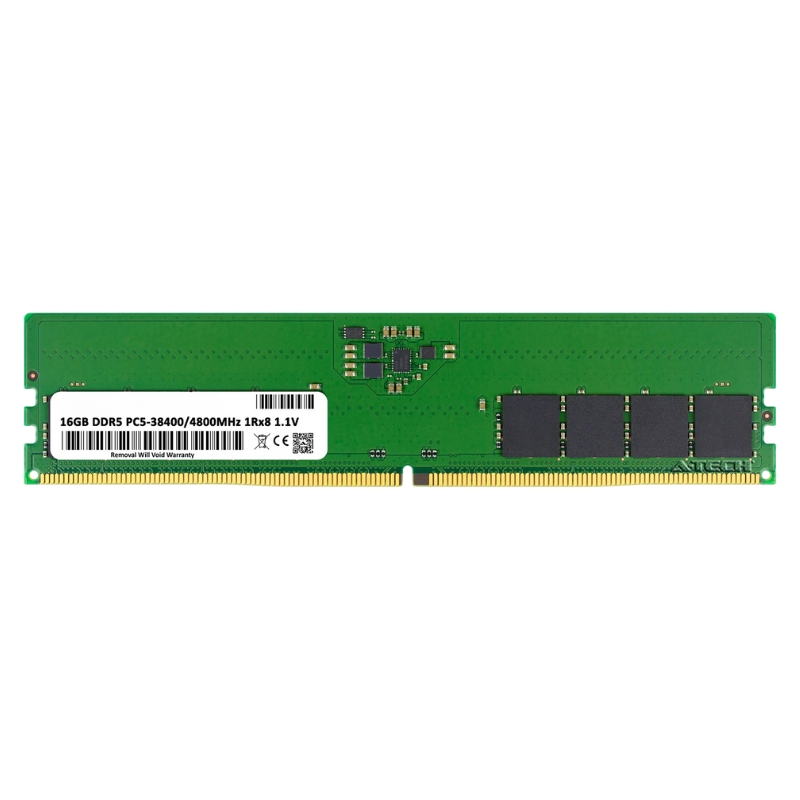


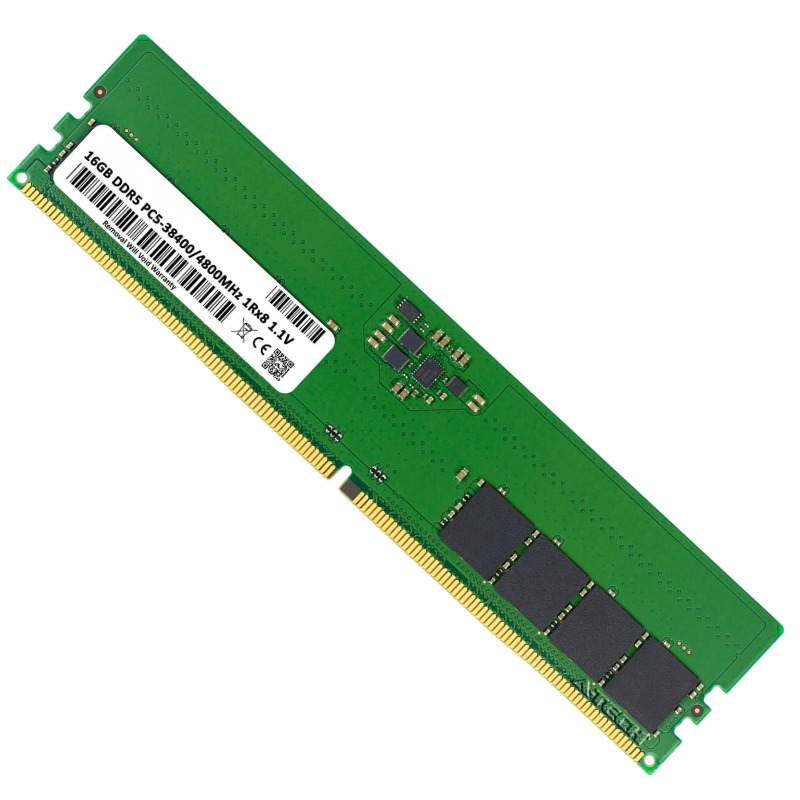
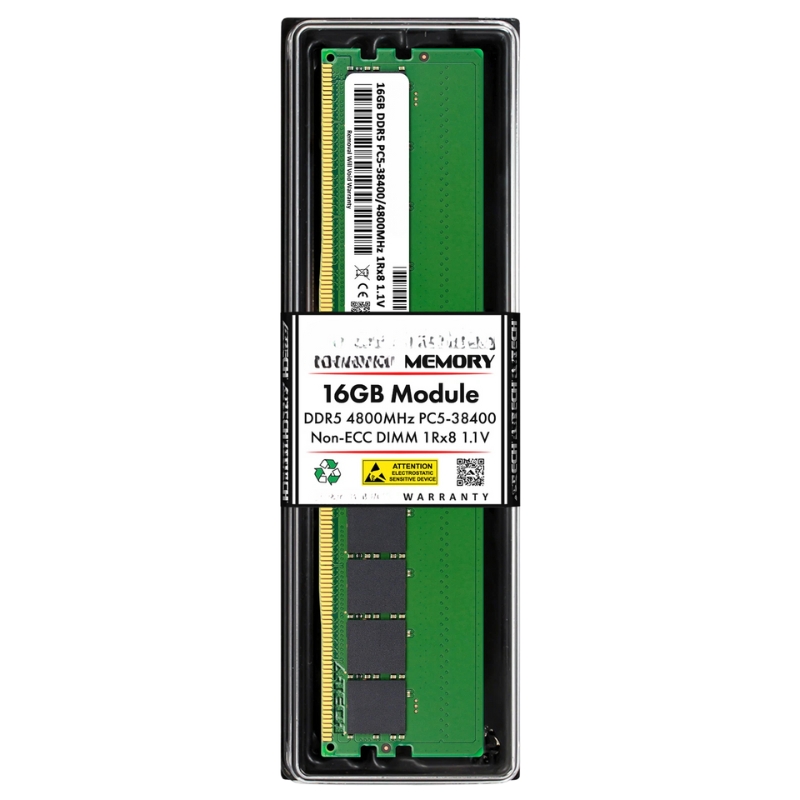
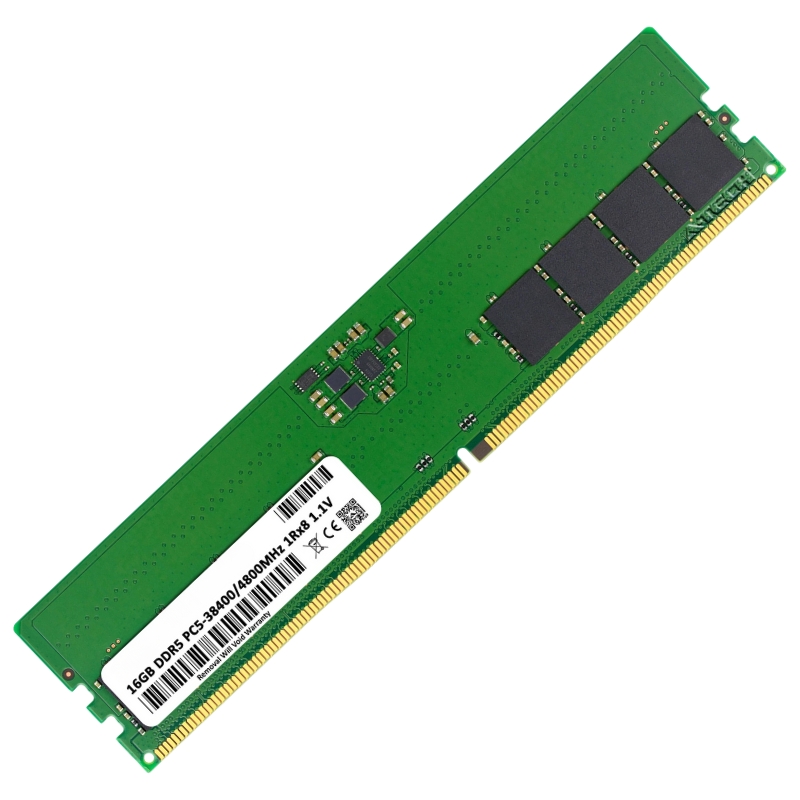
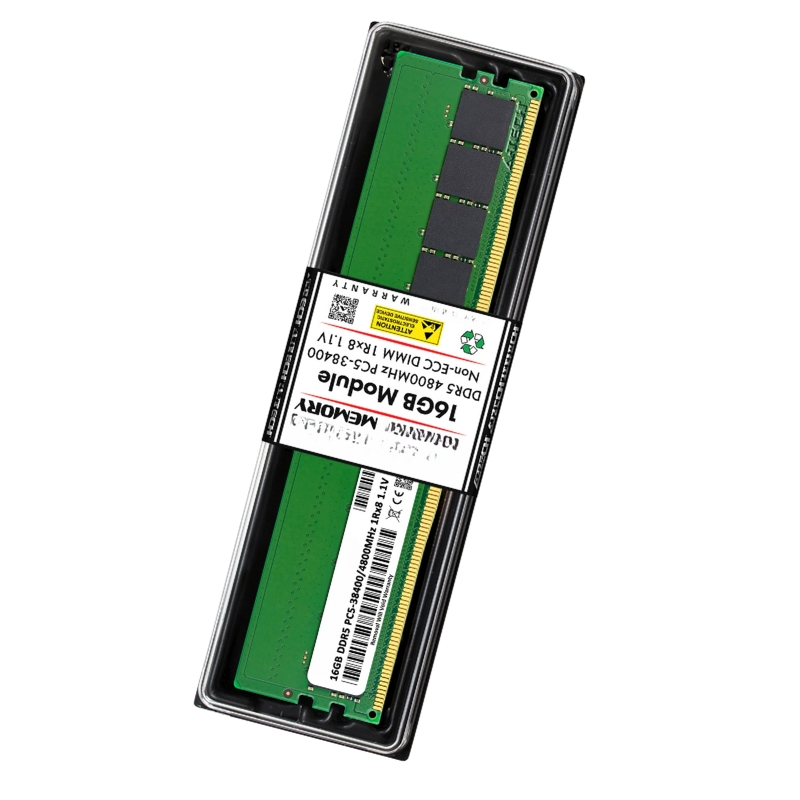
Lenovo SM37B03162 16GB 4800Mhz PC5-38400 Single Rank X8 DDR5 SDRAM 288-Pin RDIMM ECC Memory. New (System) Pull with 1 year replacement warranty
This high-performance memory component is engineered for enterprise-grade computing systems, delivering exceptional data transfer rates and enhanced reliability for demanding server workloads.
Produced by the globally recognized technology firm Lenovo, this module carries the specific manufacturer part designation SM37B03162. It is a crucial component for expanding the capabilities of designated server platforms.
This memory is validated and guaranteed to function seamlessly within the Lenovo ThinkSystem SD650 V3 Neptune DWC Server. It is imperative to verify compatibility with other systems prior to purchase.
The module is constructed on a 288-pin RDIMM printed circuit board (PCB). This industry-standard form factor is specifically tailored for server installation, ensuring a secure and proper fit within the corresponding memory slots.
The Lenovo SM37B03162 16GB 4800MHz PC5-38400 Single Rank X8 DDR5 SDRAM 288-Pin RDIMM ECC memory module is engineered for modern enterprise and workstation platforms that demand fast data throughput, consistent latency, and server-grade reliability. Built on the DDR5 standard and delivered as an RDIMM with integrated ECC, this module combines higher bandwidth per pin with enhanced power efficiency, robust on-die error correction, and a registered buffer architecture to maintain signal integrity under heavy, multi-channel loads. Its single-rank, x8 organization optimizes compatibility across a wide range of Lenovo servers and professional desktops that support 288-pin DDR5 RDIMM memory.
With an effective data rate of 4800 megatransfers per second (MT/s) and a theoretical peak bandwidth of 38.4 GB/s per module (PC5-38400), the SM37B03162 raises headroom for virtualization, data analytics, CAD/CAM workloads, content creation pipelines, high-frequency trading applications, and memory-intensive database operations. The module’s ECC capability reduces the probability of silent data corruption, while the register (buffer) helps stabilize the command and address signals for multi-DIMM population, improving system uptime and predictability in mission-critical scenarios.
Nominal capacity is 16GB in a single RDIMM. The Single Rank (1R) layout paired with x8-wide DRAM devices supports strong compatibility and lower rank-to-rank switching overhead, which can translate into more consistent latency characteristics when channels are fully populated. The 1Rx8 topology is widely adopted in server and workstation platforms, simplifying mixed-capacity and mixed-rank expansion strategies when building balanced memory configurations.
The rated speed is DDR5-4800 (PC5-38400). Under qualified platform firmware and CPU IMC (integrated memory controller) support, the module targets 4800 MT/s per pin, yielding 38.4 GB/s of theoretical peak bandwidth per DIMM via 64-bit data width plus ECC. This elevated throughput aids sequential and random workloads alike: large-block streaming for video transcode and scientific simulations, and small, latency-sensitive transactions for OLTP databases and microservices.
Error-Correcting Code (ECC) memory continuously monitors and corrects single-bit memory errors and detects multi-bit errors, reducing application crashes and data corruption risks. As a Registered DIMM (RDIMM), the module includes a register that buffers command and address lines, easing electrical loading on the CPU memory controller. This is essential for platforms that deploy many DIMMs per channel (DPC), where signal integrity and timing margins become more challenging.
The module conforms to the 288-pin DDR5 RDIMM form factor. The keyed notch and mechanical specifications prevent insertion into incompatible DDR4 slots. Electrical and timing parameters follow JEDEC DDR5 RDIMM standards, ensuring predictable behavior on validated Lenovo platforms that specify 1Rx8 16GB DDR5-4800 RDIMM memory.
DDR5 reduces core operating voltage versus prior generations while introducing on-module power management ICs (PMICs) to regulate and monitor power rails more precisely. The transition contributes to better energy proportionality at the rack level and can reduce heat density when compared to equivalent DDR4 configurations at similar workloads. Proper airflow, DIMM spacing, and chassis fan curves remain important to maintain thermal headroom in multi-DIMM, multi-CPU deployments.
Compared with DDR4, DDR5 introduces architectural refinements that enhance parallelism and efficiency at the channel and sub-channel level. These updates enable higher effective utilization under mixed I/O, improving overall system responsiveness during memory-intensive operations such as indexing, AI inference on CPU, and real-time analytics.
While traditional ECC on RDIMMs corrects errors at the DIMM level, DDR5 DRAM ICs also include on-die ECC that helps maintain internal cell data integrity. This multilayer approach—on-die error mitigation plus module-level ECC—supports higher density DRAM with fewer soft errors, beneficial for installations operating at scale or in environments where uptime targets are strict.
DDR5 relocates key power regulation to the DIMM through a PMIC. This aids voltage regulation close to the load, improving stability during transient bursts and enabling finer control over power states. For IT teams, PMIC-assisted regulation can simplify power planning and may reduce variance across heavily populated memory channels.
Hypervisor clusters and container orchestrations benefit from higher per-socket memory bandwidth. The SM37B03162 at 4800 MT/s allows more VMs or pods to sustain performance without oversubscribing the memory subsystem. Reduced contention yields smoother vMotion, faster container cold-start times, and better tail-latency profiles under bursty, multi-tenant loads.
Relational and NoSQL databases gain from sustained bandwidth and lower average memory access times. Columnar in-memory analytics platforms, caching layers, and key-value stores can utilize the additional throughput to serve more parallel queries, speed up joins and aggregations, and shrink maintenance windows for compaction or reindex jobs.
Finite element analysis, CFD, EDA, and scientific computing benefit from steady bandwidth. When paired with multi-channel memory controllers and balanced DIMM populations, the SM37B03162 can help reduce wall-clock time for simulations that spill across multiple nodes or require frequent checkpointing to ensure result integrity.
Deployment requires a server or workstation motherboard that explicitly supports DDR5 RDIMMs and ECC functionality. Motherboards designed for DDR4 or UDIMM memory are not compatible. Consult Lenovo server QVLs, firmware notes, and CPU memory controller specifications to confirm support for 1Rx8 16GB DDR5-4800 RDIMM modules across the intended DIMM slots.
For optimal performance, populate memory channels symmetrically. Matching capacity, rank, and speed across channels improves interleaving efficiency and reduces performance asymmetries. The single-rank x8 profile makes channel balancing straightforward, especially when creating even totals such as 64GB, 128GB, or 256GB across multi-channel CPUs.
Memory speed may down-bin as DPC increases depending on CPU IMC limits and firmware policies. When planning upgrades, verify achievable speeds at 1DPC and 2DPC configurations to maintain the 4800 MT/s target where possible. RDIMM buffering provides additional electrical margin compared to UDIMMs, improving stability as DPC scales.
The 16GB building block can be combined with other DDR5 RDIMM capacities if the platform allows mixed configurations; however, best results typically come from uniform DIMM sets that share capacity, rank, and speed. Uniformity simplifies troubleshooting and ensures predictable NUMA and interleaving behavior.
ECC detects and corrects single-bit errors on the fly, logging events through system firmware and operating system tools. Administrators can monitor error rates per DIMM to perform preemptive maintenance, reducing unplanned downtime. If multi-bit errors are detected, the system can alert operators or automatically remove the affected memory range, depending on platform capabilities.
Chassis airflow tuned to DDR5 RDIMM thermal envelopes preserves longevity. Employ front-to-back airflow management, blanking panels for unused bays, and correct fan profiles. Elevated ambient temperatures or obstruction of airflow can lead to throttling or correctable-error spikes. Smart placement and routine dust management mitigate these risks.
On multi-socket systems, memory is segmented into NUMA nodes. Aligning workloads with local memory reduces cross-socket traffic and latency. Pinning VM memory or configuring container placements to favor local channels improves performance predictability, especially for real-time analytics and latency-sensitive microservices.
Channel and bank interleaving distribute memory accesses, minimizing hot spots. Populate identical RDIMMs across channels and enable appropriate interleaving in firmware to ensure even traffic. The SM37B03162’s single-rank profile is well suited for balanced interleaving patterns that prevent bottlenecks during parallel workloads.
Enable patrol scrubbing to proactively detect and correct latent errors. While scrubbing introduces low-level background activity, the protective value for long-running systems outweighs the overhead. Schedule deep scrubs during maintenance windows on nodes that run latency-critical tasks.
Clustering relies on repeatable performance across nodes. Standardizing on DDR5-4800 1Rx8 RDIMM modules simplifies capacity planning and ensures consistent JVM heap sizing, container memory limits, and database buffer pool targets. Predictable per-node memory throughput yields smoother autoscaling curves.
Edge servers that process telemetry, video streams, or ML inference benefit from ECC-protected RDIMMs for resilience in less-controlled environments. The 16GB capacity allows lean nodes to remain cost-efficient while inheriting the speed and stability advantages of DDR5 RDIMMs, aiding local decision-making before data aggregation in regional data centers.
Data protection strategies start with trustworthy memory. ECC reduces silent corruption that could otherwise compromise datasets, logs, model parameters, or cryptographic material. When combined with secure boot, firmware attestation, and storage checksums, ECC RDIMMs strengthen the end-to-end integrity chain.
BMC and BIOS should be restricted to authorized administrators. Since modern platforms expose fine-grained memory controls, role-based access ensures that training parameters, voltage settings, and PMIC-related options are not altered outside policy, preserving validated operating envelopes for the SM37B03162.
High-layer PCBs with controlled impedance traces and carefully tuned stub lengths are required to sustain 4800 MT/s signaling. The registered buffer minimizes controller loading, while consistent via design and connector plating ensure reliable insertion cycles across service events. Quality assurance processes help maintain uniform electrical characteristics across production lots.
DDR5 ICs selected for 4800 MT/s operation undergo binning to meet timing and power targets. Module-level validation then verifies timing closure, ECC functionality, and PMIC behavior across temperature and voltage corners. For data-center rollouts, this results in modules that behave reliably across a range of realistic environmental conditions.
Handle DIMMs by the edges and store them in antistatic packaging until installation. Use ESD protection when working inside the chassis. Avoid touching contacts or DRAM packages to prevent contamination and latent faults.
Follow the motherboard’s slot population diagram to maximize channel utilization. Primary slots should be filled first to unlock interleaving and rated speeds. Labeling DIMMs and documenting which slots correspond to each NUMA node simplifies future upgrades and troubleshooting.
After installation, run platform diagnostics and memory tests during burn-in. Monitor error logs and thermal sensors through the BMC. Confirm negotiated speed and rank detection within system firmware to validate that the 4800 MT/s target and 1Rx8 organization are recognized.
A single-socket workstation with four DDR5 channels can pair four SM37B03162 modules for a total of 64GB at 4800 MT/s, suitable for 4K editing, code compilation, and light virtualization.
An entry rack server with eight DIMM slots can scale to 128GB using eight 16GB RDIMMs. This configuration provides a good balance of cost and per-core memory, supporting dozens of low-to-moderate VMs with ECC-backed stability.
To maximize buffer cache effectiveness on a modest budget, populate 12–16 SM37B03162 modules across available channels for 192–256GB while preserving 4800 MT/s where IMC/DPC rules allow, enhancing transaction throughput and reducing disk I/O.
As memory bandwidth scales, power draw must remain manageable. DDR5’s lower core voltages and PMIC-assisted regulation help deliver favorable performance-per-watt metrics. In dense racks, consistent module efficiency contributes to lower cooling costs and improved PUE.
When scaling to high DIMM counts, model worst-case thermal envelopes. Ensure rack-level airflow budgets accommodate the additional heat load without throttling adjacent components like CPUs, NICs, and NVMe drives.
Assess working-set sizes of applications to avoid swapping. For virtualization, target 4–8GB per vCPU for general workloads, adjusting upward for memory-intensive services. For analytics, align DIMM counts with the number of channels to minimize channel underutilization.
Performance profiles may adjust memory training strategies and power curves. Where stability is paramount, select profiles that prioritize ECC logging and conservative timings; for benchmark-driven environments, ensure profiles still adhere to vendor-supported envelopes to maintain warranty coverage.
At 4800 MT/s, signal timing becomes unforgiving. The registered buffer re-drives command and address signals, reducing load on the IMC and improving timing closure at higher DIMM counts. This is essential when aiming for both capacity and speed on enterprise platforms.
Racks frequently scale DPC to increase capacity per node. RDIMMs enable this without sacrificing as much speed as UDIMMs might at equivalent DPC, keeping throughput closer to platform maxima even as memory footprints grow.
Leverage OS and hypervisor tooling to track ECC events, temperature, and bandwidth utilization. Export metrics into observability stacks to anticipate issues and tune configurations. Trends in correctable errors can signal airflow problems or slot-specific hardware concerns before they impact workloads.
Dashboards that expose per-NUMA node headroom help operators schedule memory-heavy jobs on the most suitable hosts. Combined with autoscaling policies, this keeps clusters responsive while avoiding swaps or throttling.
Standardizing on 1Rx8 16GB DDR5-4800 RDIMMs simplifies inventory management. Uniform spares reduce mean-time-to-repair (MTTR), keep nodes consistent after maintenance, and help automation tools assume predictable memory timings and rank counts.
Deploying 16GB modules across all channels allows high aggregate bandwidth while enabling incremental growth. When budgets permit, scaling via channel fill before moving to higher-density DIMMs can yield better performance-per-dollar due to maintained clock rates and interleaving benefits.
Some platforms expose configurable ECC behaviors such as patrol intervals and error thresholds. Align these with workload criticality: transactional databases may favor aggressive scrubbing, while batch analytics can schedule scrubbing during off-peak hours to minimize interference.
For real-time bidding, telemetry ingestion, or control systems, verify that firmware latency optimizations are enabled and memory channels remain fully symmetric. The SM37B03162’s single-rank design helps maintain consistent timing across threads competing for memory.
Start with matched sets across channels—e.g., 4×16GB or 8×16GB—and scale by filling secondary slots. Maintain identical part numbers where possible to avoid mixed SPD profiles. As needs evolve, move to higher-density DDR5 RDIMMs while keeping channels evenly populated.
Adopt multi-hour burn-in using memory stress tools that exercise full address ranges and ECC logic. Capture thermal and ECC metrics to establish a baseline for future comparison. Validate with production-like I/O patterns to ensure stability under realistic workloads.
Document memory configuration changes via tickets, including DIMM serials, slot mapping, and firmware revisions. Post-change validation should confirm negotiated speeds, error-free training, and stable thermal behavior during performance tests.
Bandwidth scales with active channels. Populate every memory channel available to the CPU to maximize achievable throughput. The 16GB capacity allows cost-effective full-channel population without overspending on density early in the lifecycle.
DDR5-4800 speed with 38.4 GB/s theoretical per-module bandwidth for faster data movement across diverse workloads.
ECC error correction plus DDR5 on-die ECC enhances data integrity and uptime across mission-critical services.
Registered design supports higher DIMM counts per channel without compromising training stability, enabling balanced growth paths.
Lower operating voltages and PMIC-driven regulation help achieve better performance-per-watt at the node and rack level.
Serial Presence Detect (SPD) stores module parameters used by firmware during memory training. Consistency in SPD profiles across modules minimizes boot time variability and improves the predictability of negotiated timings, particularly at high speeds like DDR5-4800.
High-speed training requires clean power, up-to-date firmware, and proper slot population. If a platform struggles to train at 4800 MT/s under 2DPC, consider reducing DPC or verifying that the latest microcode includes training improvements specific to DDR5 RDIMMs.
Eight SM37B03162 modules deliver 128GB with full channel symmetry on many dual-channel-per-socket platforms. This arrangement balances cost, capacity, and sustained throughput for general virtualization and application servers.
Populate all primary slots with 16GB modules to reach a stable baseline, then expand secondary slots as scene complexity grows. Maintain matched part numbers to keep interleaving efficient and ensure consistent render times across the farm.
Track correctable errors per billion device hours as a normalized metric. Rising rates localized to a slot often point to thermal or seating issues, while distributed increases may indicate environmental changes.
Monitor DIMM temperature deltas against vendor specifications. Sustained operation close to the thermal threshold can predispose systems to timing stress and intermittent correctable errors.
Export per-node memory bandwidth stats to identify hotspots and guide workload placement or node scaling decisions.
Create SOPs for memory upgrades that include ESD handling, firmware checks, slot population order, validation steps, and rollback plans. Incorporate a quick-reference table mapping each slot to its physical location for rapid field service.
Maintain up-to-date asset records with module part numbers, firmware baselines, and installation dates. Accurate records expedite RMA processes and fleet-wide updates, keeping performance uniform across clusters.
NVMe and storage-class memory tiers benefit from faster main memory, reducing stalls during metadata operations and small-block I/O amplification. DDR5-4800 helps keep CPU pipelines fed when storage bursts occur, sustaining throughput during mixed workload phases.
As core counts rise, memory bandwidth per core becomes critical. Populating channels with SM37B03162 modules helps maintain favorable bandwidth-per-core ratios, preserving performance as sockets scale up.


 Contact Us
 Information
 Catalog
 Solid State Drives (SSD)
 Network Switches
 Hard Disk Drives
 HBA & Controllers
 PC & Servers
 PC & Server Memory
 CPU & Processors
 Network Routers
 Power Supplies
 Tape Drives & Libraries
 Network Devices
 Computer & Network Cables