(7% discount is applied at checkout)
Cart is empty
Your go-to destination for cutting-edge server products
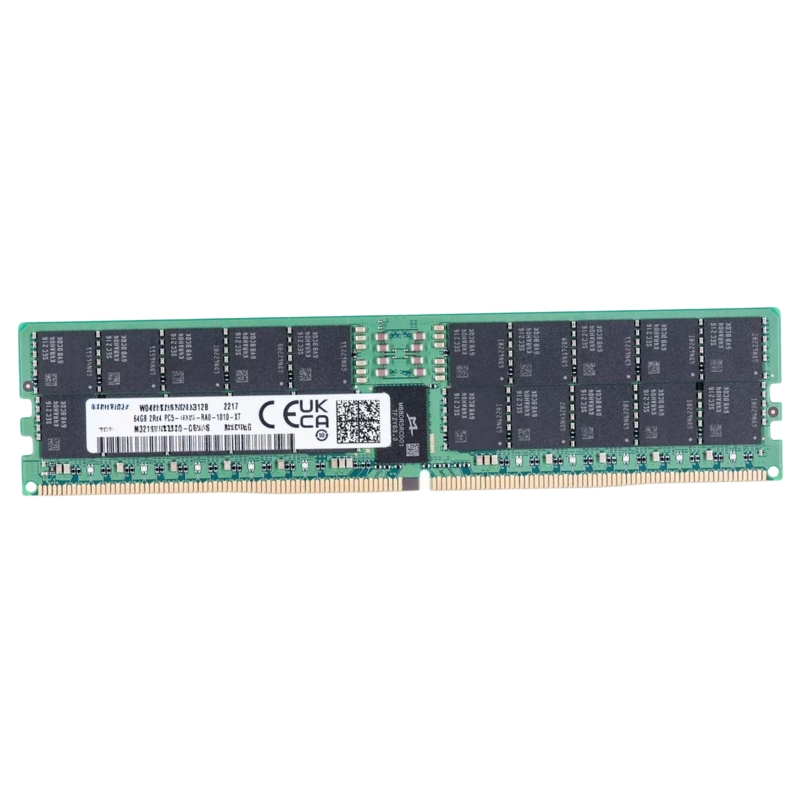


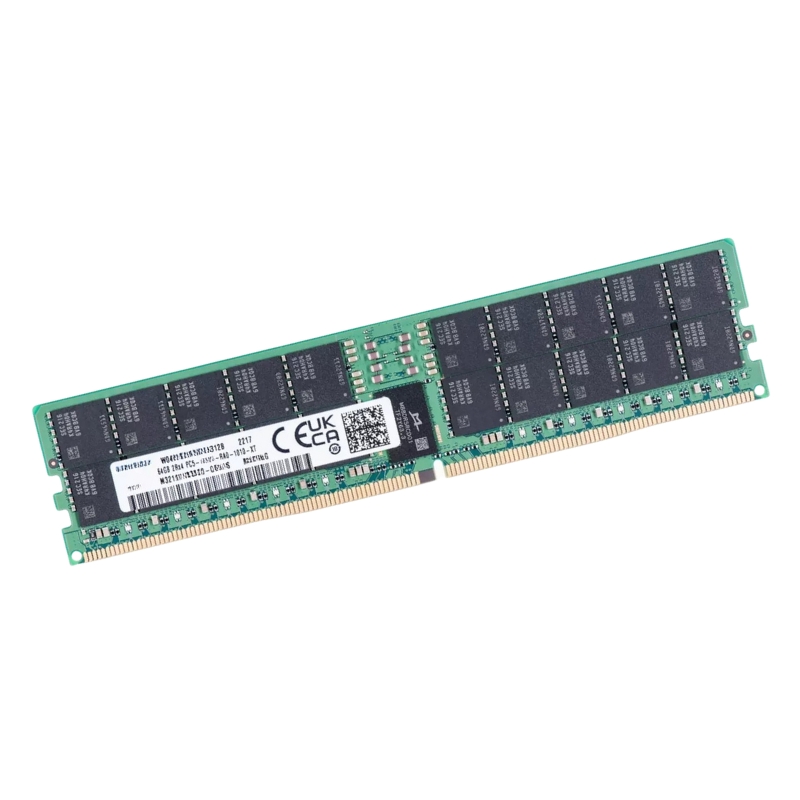
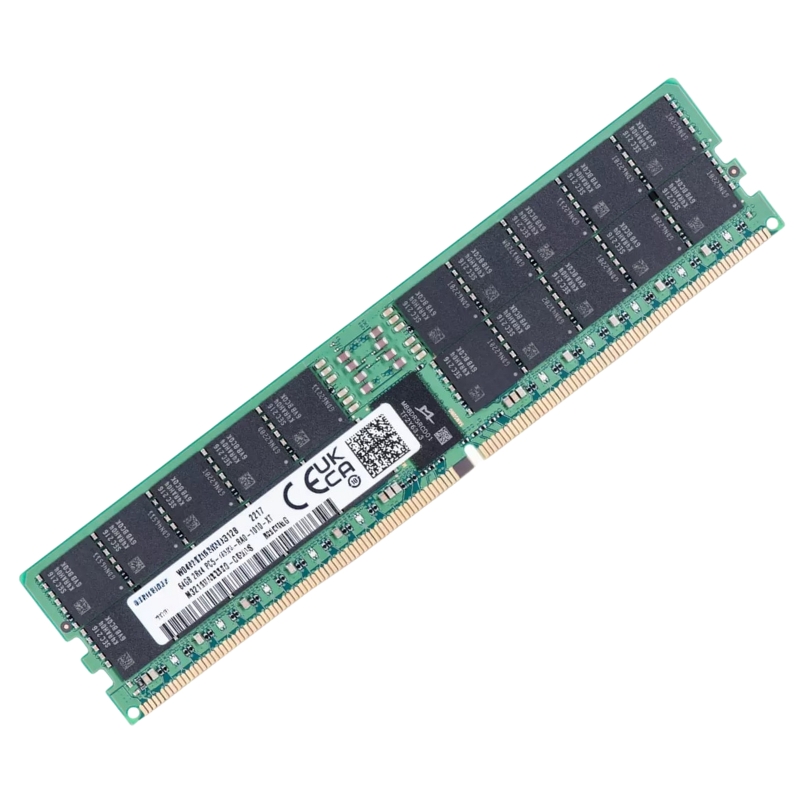
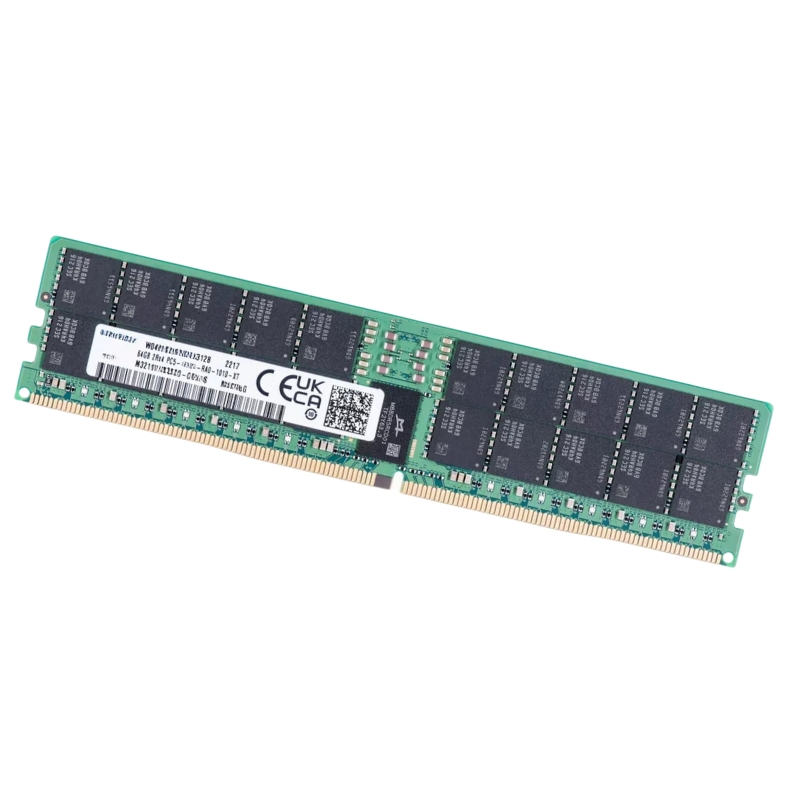
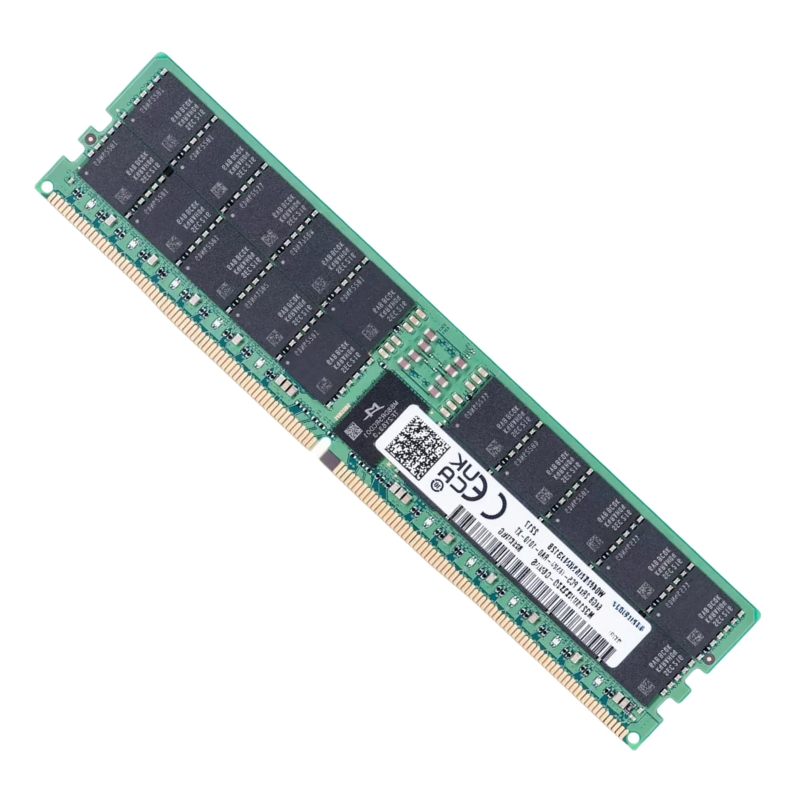
Lenovo SM37B83227 64GB DDR5 4800Mhz PC5-38400 Dual Rank X4 ECC Registered Cl40 SDRAM 288-Pin Memory Module. New Sealed in Box (NIB) - Samsung Version
Engineered for high-performance computing systems, this component delivers exceptional data handling capabilities and robust reliability for demanding server environments.
Gain detailed insight into the architectural design and operational parameters of this advanced memory component.
Technical specifications
The following technical snapshot is crafted to assist both procurement and technical teams in quick evaluation:
Key Operational Advantages
This memory module is constructed to provide significant enhancements in system stability and data throughput.
The integrated Error Correcting Code functionality diligently identifies and rectifies single-bit data corruptions, ensuring unparalleled data accuracy and minimizing system crashes.
Featuring a registered design, the module incorporates a register between the DRAM components and the system's memory controller, stabilizing signal integrity in systems with substantial memory loads.
Utilizing the cutting-edge DDR5 standard, this component offers substantially improved bandwidth and power efficiency compared to previous-generation memory, enabling faster processing speeds and reduced operational voltage.
This module is ideally suited for deployment in enterprise-grade servers, high-performance workstations, and data center infrastructure that requires large-capacity, reliable memory with advanced error management.
The Lenovo SM37B83227 64GB DDR5 4800MHz PC5-38400 memory module represents a high-capacity, high-bandwidth solution designed for modern servers and enterprise workstations that demand reliability, error correction, and scalable memory density. Built to the DDR5 specification and offered as an ECC Registered (RDIMM) module with Dual Rank X4 organization and a CL40 CAS latency, this class of memory targets data-center workloads, virtualization, in-memory databases, analytics, and compute-dense applications that require both throughput and integrity.
At 4800MHz, PC5-38400 modules deliver sustained transfer rates suitable for memory-bound server operations. This bandwidth benefits large dataset caching, in-memory compute, and multi-threaded server applications where memory latency and throughput directly influence overall system performance.
CL40 indicates the CAS latency in DDR5 cycles. While the numeric latency appears higher than older DDR generations, DDR5’s increased clock rates and internal architecture often deliver equal or better real-world latency due to faster cycle times and improved command scheduling. When comparing modules, balance bandwidth (MHz) and latency (CAS) together — 4800MHz with CL40 is a common, well-balanced specification for server-grade DDR5 modules.
ECC Registered memory corrects single-bit errors and detects multi-bit errors, preventing data corruption and increasing system uptime. The register (the “R” in RDIMM) buffers control and address lines, enabling stable operation when many modules populate a system. For mission-critical environments — database servers, financial systems, or multi-tenant virtualization clusters — RDIMMs such as the SM37B83227 are often mandatory to meet reliability and service-level requirements.
This module is optimized for Lenovo server lines and validated systems that accept DDR5 RDIMM modules. Always confirm compatibility with the system's firmware release notes and supported memory population rules: processor family, memory channel count, and maximum per-socket capacity influence which module combinations are supported.
Mixing different capacities, ranks, or organizations (x4 vs x8) can cause suboptimal performance or incompatibility. For predictable performance, populate matching modules across symmetric memory channels and avoid mixing RDIMMs with LRDIMMs or UDIMMs. When scaling memory in enterprise deployments, use identical part numbers whenever feasible to simplify diagnostics and reduce the risk of DIMM-related errors.
for virtual machine (VM) hosts, memory capacity per socket directly relates to VM density. A 64GB DDR5 RDIMM offers a meaningful increase in guest memory allocation versus smaller modules, enabling higher consolidation ratios and more efficient resource utilization on hypervisors like VMware ESXi, Hyper-V, or KVM.
Real-time analytics and in-memory databases (e.g., SAP HANA, Redis, in-memory variants of relational databases) rely heavily on memory size and bandwidth. DDR5 4800MHz modules allow larger data footprints to reside in RAM, reducing disk I/O and lowering query latency.
Compute clusters and HPC nodes benefit from both bandwidth and low-latency access patterns. Dual rank modules often help in maximizing effective throughput across channels for memory-intensive numerical simulations, machine learning training input pipelines, and large-scale batch processing.
DDR5 introduces features to improve power efficiency at the module and chip levels, such as on-die ECC for individual chips and lower operating voltages compared to previous generations. Registered RDIMMs also help distribute and moderate signal load, but higher capacities and faster speeds can increase module power draw — account for this in thermal planning and PSU capacity calculations.
Handle RDIMMs with anti-static precautions. Use grounding wrist straps or mats and avoid touching gold fingers or chips. Install modules by aligning the keyed notch and applying even pressure to both ends until retention latches click.
Populate DIMMs symmetrically across channels to maximize bandwidth and maintain memory interleaving. Check the server manual for slot numbering and recommended pairing, and if operating mixed capacities, place larger modules in primary channels as advised by the OEM.
Update system firmware/BIOS before deploying new DDR5 modules to ensure compatibility with memory training routines and to access the latest stability improvements. Memory training at boot configures timings and voltages tailored to the module mix and should be allowed to complete uninterrupted during initial power-up.
Registered ECC modules report single-bit corrections and multi-bit error detections to system management logs and BMC interfaces. Integrate DIMM-level event alerts with your monitoring stack (SNMP traps, IPMI alerts, or vendor management tools) to proactively identify failing modules and replace them before they cause data corruption or unexpected downtime.
When procuring Lenovo SM37B83227 modules, verify OEM warranty terms, return policies, and whether the modules are Lenovo-branded or Lenovo-qualified third-party components. For large rollouts, request vendor compatibility matrices and cross-check part numbers against system-specific validated memory lists.
Maintain spare RDIMMs to accelerate repair times—store spares identical to the deployed modules. Because DDR5 and module organizations evolve, track SKU lifecycles to avoid mismatched future purchases and plan for generational upgrades across the fleet.
While RDIMMs typically do not contain updatable firmware in the same sense as SSDs or NICs, system firmware and BMC microcode interact with memory training and error reporting. Keep system firmware up to date and apply vendor security advisories related to management controllers and BIOS vulnerabilities that could indirectly affect memory behavior.
At end-of-life, treat memory modules according to organizational policies for secure disposal. For highly sensitive environments, follow procedures to ensure that any residual data in capacitors or cells is not recoverable, and adhere to environmental recycling regulations for electronic waste.
DDR5 improves raw bandwidth, capacity scaling, and power efficiency compared with DDR4. Upgrading from DDR4 to DDR5 generally requires a platform-level change (supported CPU/motherboard) rather than a direct module swap. Evaluate total cost of ownership when planning migration: new platforms, potential downtime, and requalification testing all factor into upgrade decisions.
RDIMM (Registered) modules like the SM37B83227 balance density and performance with signal integrity. LRDIMM (Load-Reduced DIMM) can support even higher capacities per socket by reducing electrical load, while UDIMMs (Unbuffered) are typically used in desktops and small servers and lack registered benefits. Match the DIMM type to the server vendor's recommendations for optimal reliability and verified support.
Keep language precise, avoid marketing hyperbole, and prioritize facts, performance metrics, and deployment guidance. IT purchasers value credible technical detail and transparent compatibility notes that reduce risk during procurement and installation.


 Contact Us
 Information
 Catalog
 Solid State Drives (SSD)
 Network Switches
 Hard Disk Drives
 HBA & Controllers
 PC & Servers
 PC & Server Memory
 CPU & Processors
 Network Routers
 Power Supplies
 Tape Drives & Libraries
 Network Devices
 Computer & Network Cables