(7% discount is applied at checkout)
Cart is empty
Your go-to destination for cutting-edge server products
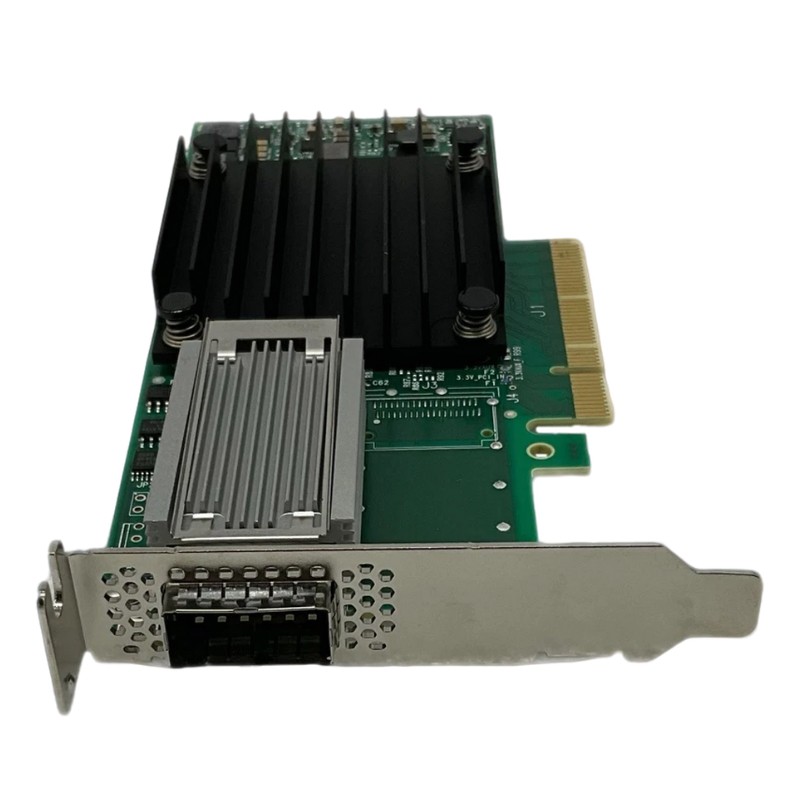


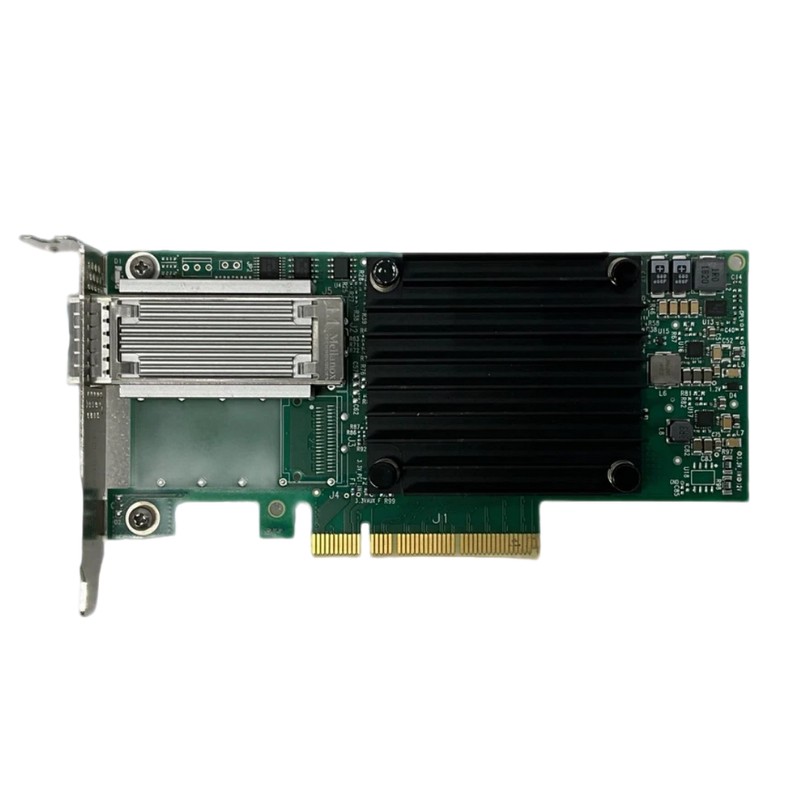
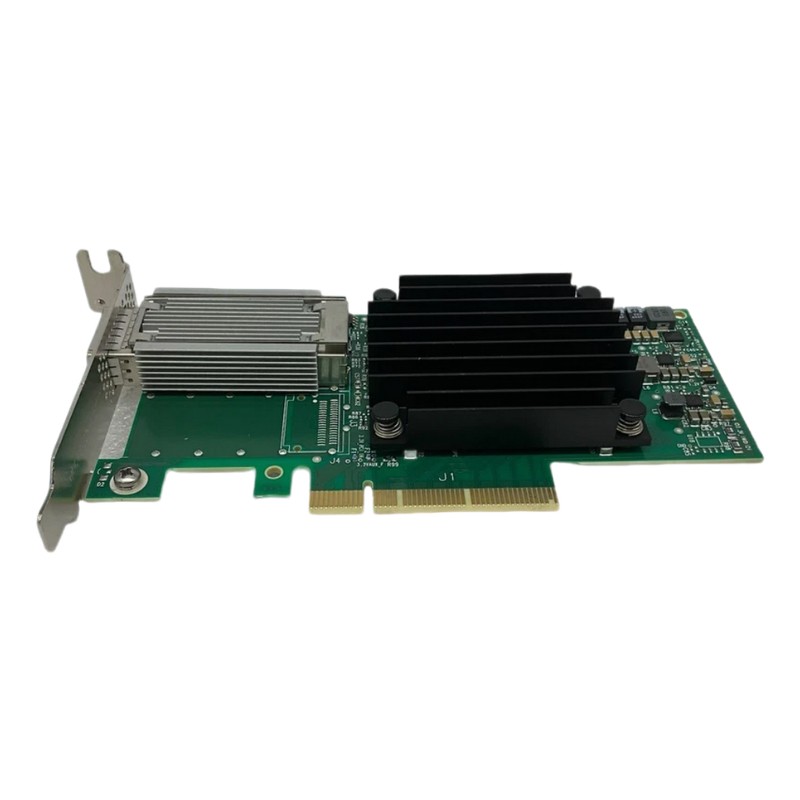
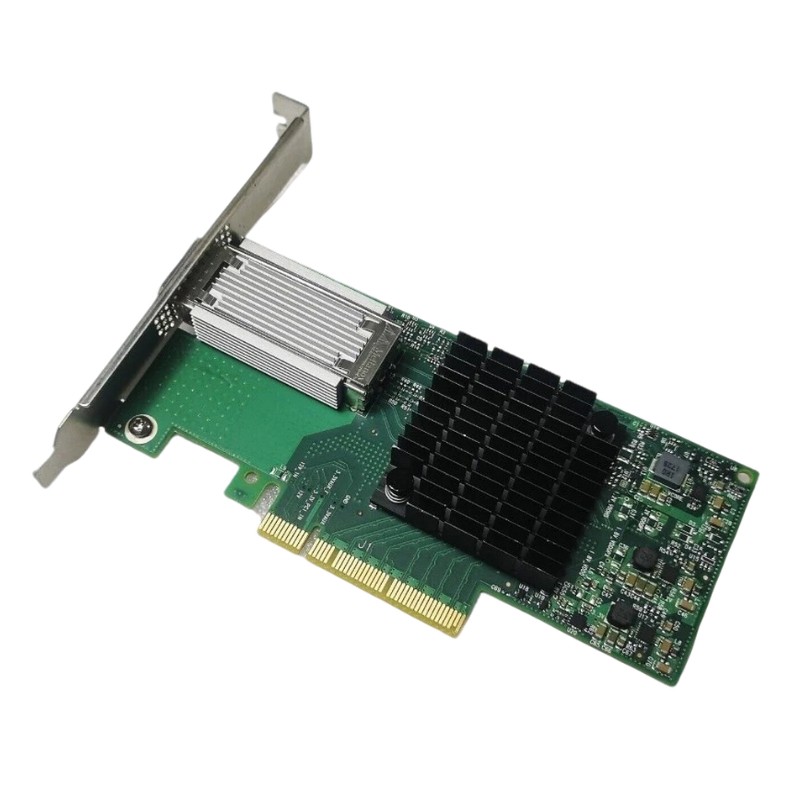
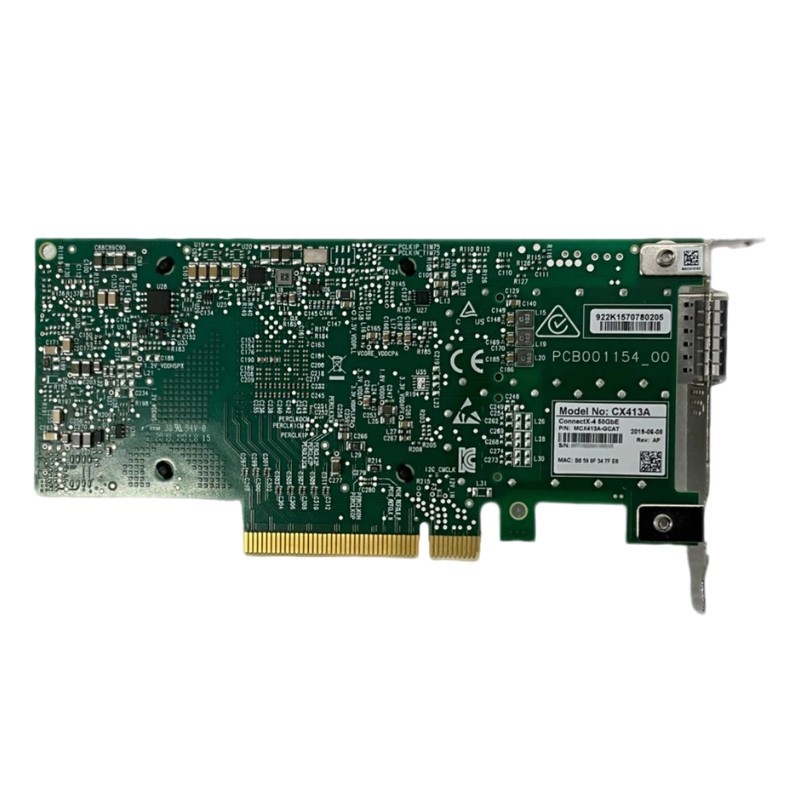
Mellanox MCX413A-GCAT ConnectX-4 EN 50Gigabit Single Port Ethernet Card. Excellent Refurbished with 1 year replacement warranty
The Mellanox MCX413A-GCAT ConnectX-4 EN is a high-performance 50 Gigabit Ethernet network adapter card engineered for modern data centers, enterprise servers, and high-throughput computing environments. Built for speed, reliability, and scalability, this advanced network interface card (NIC) delivers ultra-low latency and exceptional bandwidth efficiency for demanding workloads.
The Mellanox MCX413A-GCAT ConnectX-4 EN 50 Gigabit Ethernet network adapter represents a high-performance class of data center networking hardware designed to meet the increasing demands of modern cloud computing, enterprise virtualization, and high-throughput storage infrastructures. Built on the advanced architecture developed by
As a single-port 50GbE Ethernet card, the MCX413A-GCAT is optimized for environments where maximum bandwidth density, predictable latency, and efficient CPU offloading are essential. It is widely adopted in hyperscale data centers, software-defined storage systems, and cloud-native infrastructures where traditional 10GbE or 25GbE adapters are no longer sufficient to handle modern workloads.
The ConnectX-4 EN architecture is designed to offload a significant portion of networking tasks from the host CPU, enabling improved application performance and reduced system overhead. This is achieved through advanced hardware acceleration engines that manage packet processing, checksum calculation, segmentation offload, and interrupt moderation directly on the adapter.
Unlike traditional Ethernet controllers, this architecture is engineered for parallel packet processing, allowing it to handle millions of packets per second without introducing bottlenecks. The result is a highly scalable networking solution that supports modern multi-core server processors efficiently.
At the core of the MCX413A-GCAT is its 50 Gigabit Ethernet interface, which delivers a significant leap in bandwidth compared to legacy 10GbE and even 25GbE solutions. This increased bandwidth is essential for data-heavy applications such as real-time analytics, high-performance computing clusters, large-scale virtualization platforms, and distributed storage systems.
The 50GbE capability ensures that servers can maintain high throughput even under heavy concurrent workloads, minimizing congestion and packet loss. It also allows data centers to reduce the number of physical network interfaces required per server, improving rack density and reducing cabling complexity.
The MCX413A-GCAT utilizes a single QSFP28 interface, which supports high-speed optical and direct attach copper (DAC) connections. This design choice prioritizes bandwidth efficiency and simplicity, making it suitable for servers where a single high-throughput uplink is sufficient to meet application requirements.
The QSFP28 form factor is widely used in modern data center networking, providing compatibility with a range of transceivers and cables that support 50GbE connectivity. This flexibility allows network architects to design scalable infrastructures without being locked into proprietary cabling systems.
This adapter is built to operate over a PCI Express interface, ensuring high-speed communication between the network card and the host system. The PCIe architecture provides low-latency data transfer paths and supports advanced features such as DMA (Direct Memory Access), which significantly reduces CPU involvement in packet handling operations.
By leveraging PCIe bandwidth efficiently, the adapter ensures that network traffic does not become a bottleneck in high-performance server environments. This is particularly important in virtualization clusters and distributed computing systems where multiple virtual machines may compete for network resources.
The design of the MCX413A-GCAT emphasizes energy efficiency and thermal stability, which are critical in dense data center deployments. Advanced power management techniques allow the adapter to dynamically adjust its power consumption based on network load, ensuring optimal performance without unnecessary energy usage.
Heat dissipation is managed through an optimized layout and efficient controller design, reducing the need for excessive cooling infrastructure. This contributes to lower operational costs and improved long-term reliability in enterprise environments.
One of the most critical advantages of the ConnectX-4 EN platform is its ultra-low latency packet processing capability. By bypassing unnecessary software stack layers and handling key networking tasks in hardware, the adapter minimizes the time required for data transmission between endpoints.
This reduction in latency is essential for high-frequency trading systems, real-time analytics platforms, and distributed database clusters where microseconds can significantly impact performance outcomes.
A key feature of this Ethernet adapter is its ability to offload networking tasks from the CPU. Functions such as TCP segmentation offload, checksum computation, and interrupt moderation are handled directly by the hardware, freeing CPU cycles for application-level processing.
This results in improved overall system efficiency and allows servers to support more virtual machines or containerized workloads without requiring additional CPU resources.
Modern storage systems rely heavily on fast and reliable network connectivity. The MCX413A-GCAT enhances distributed storage performance by providing high-speed data transfer between storage nodes, reducing replication delays and improving overall system responsiveness.
This is particularly beneficial in software-defined storage environments where data is distributed across multiple nodes and must remain synchronized in real time.
In HPC environments, computational tasks are distributed across multiple nodes that require rapid data exchange. The low latency and high bandwidth of the ConnectX-4 EN architecture make it ideal for scientific simulations, machine learning workloads, and complex mathematical modeling. The adapter ensures that inter-node communication does not become a limiting factor in overall cluster performance, enabling researchers and engineers to maximize computational efficiency.
The ConnectX-4 EN platform is designed to support a wide range of operating systems commonly used in enterprise environments. This includes various Linux distributions, Windows Server environments, and virtualization hypervisors. Such broad compatibility ensures that the MCX413A-GCAT can be deployed across heterogeneous infrastructure without requiring specialized configurations or proprietary software stacks.


 Contact Us
 Information
 Catalog
 Solid State Drives (SSD)
 Network Switches
 Hard Disk Drives
 HBA & Controllers
 PC & Servers
 PC & Server Memory
 CPU & Processors
 Network Routers
 Power Supplies
 Tape Drives & Libraries
 Network Devices
 Computer & Network Cables