(7% discount is applied at checkout)
Cart is empty
Your go-to destination for cutting-edge server products
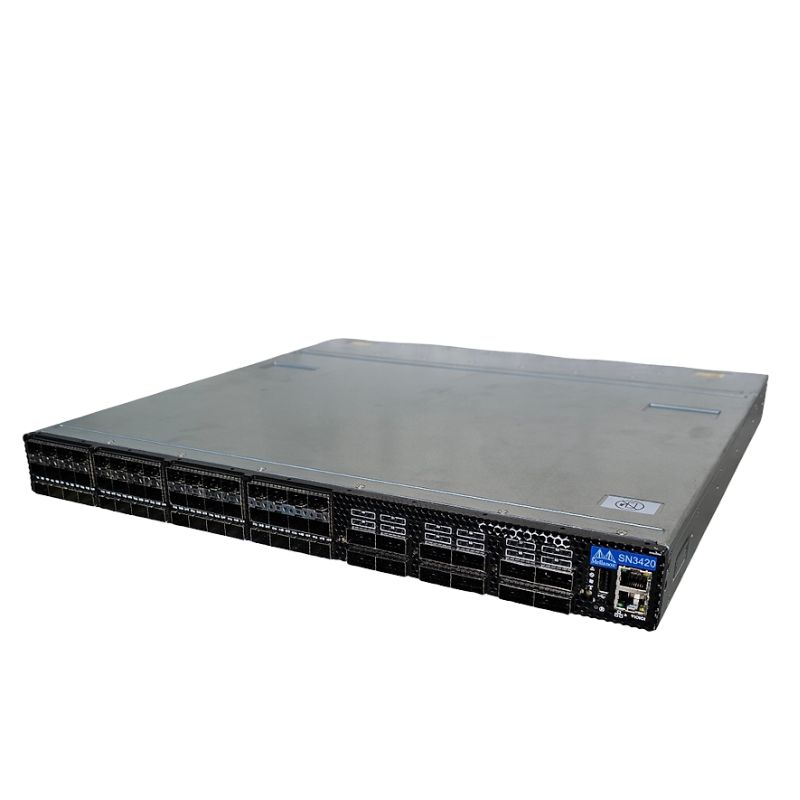


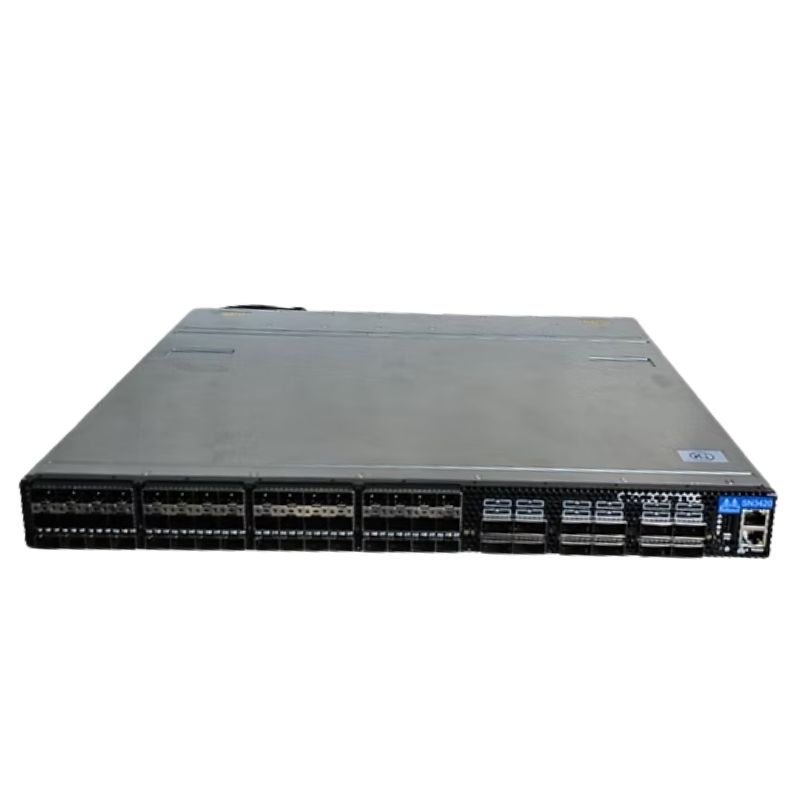
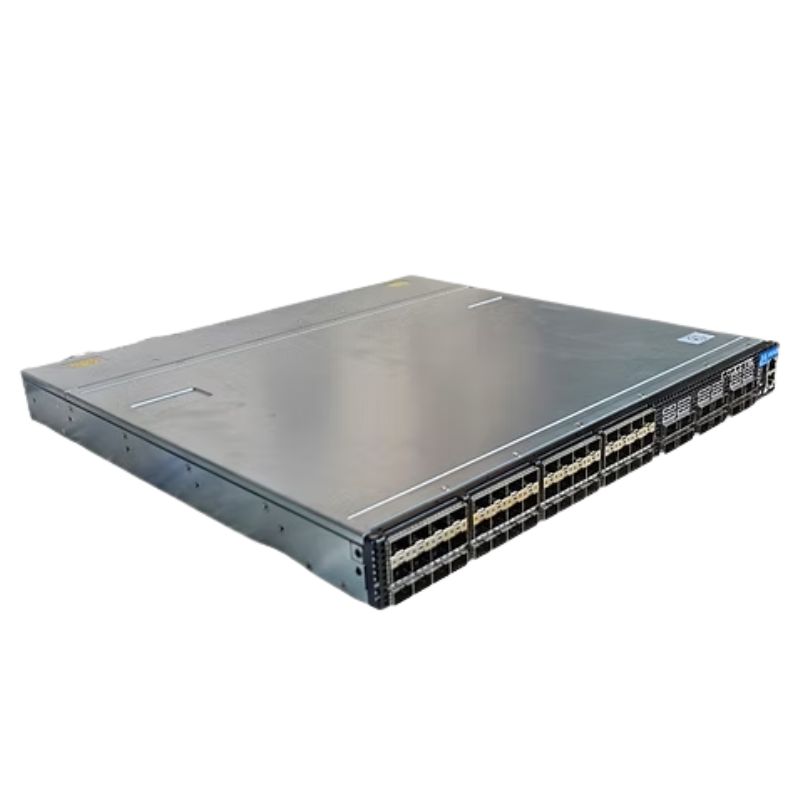
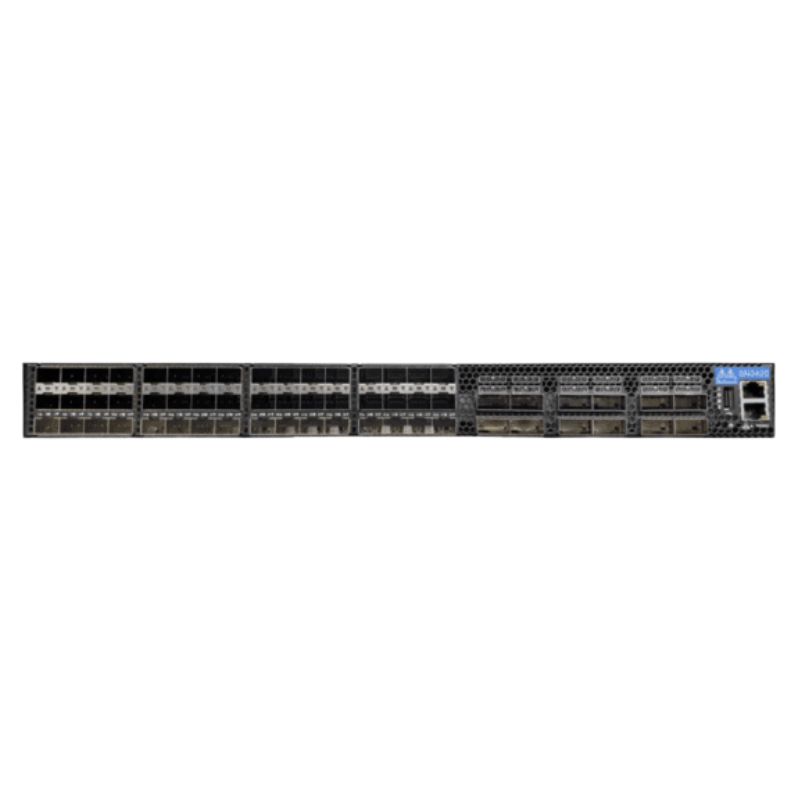
Mellanox MSN3420-CB2FC Spectrum-2 60 Ports Switch Manageable 25 Gigabit Ethernet, 100 Gigabit Ethernet Rack-mountable. Factory-Sealed New in Original Box (FSB) with 3 Years Warranty
The Mellanox MSN3420-CB2FC, part of NVIDIA’s Spectrum-2 family, is a high-performance, rack-friendly Ethernet switch engineered for modern data centers and demanding network environments. Built for ultra-low latency, high throughput and flexible optics, this compact 1U switch consolidates 25GbE and 100GbE connectivity into a single, manageable platform.
The MSN3420-CB2FC is optimized for applications that demand sustained bandwidth and deterministic latency — from east-west server fabrics to storage clusters and AI/ML training clusters. Its Spectrum-2 silicon provides advanced telemetry, congestion control and programmable pipeline features that accelerate cloud, virtualization and HPC workloads.
Flexibility is central to the MSN3420-CB2FC: the mixture of QSFP28 and SFP28 slots lets you deploy a hybrid optical architecture using a wide range of pluggable transceivers and DAC/AOC cables. This modularity simplifies upgrades and enables smooth migration paths from 10GbE to 25GbE and 100GbE topologies.
Spectrum-2 switches ship with a rich feature set for routing, switching and fabric visibility. Expect comprehensive Layer-3 routing, robust ACLs, QoS primitives, and modern telemetry for real-time performance monitoring. These capabilities make the MSN3420-CB2FC suitable for multi-tenant clouds and intense microservice ecosystems.
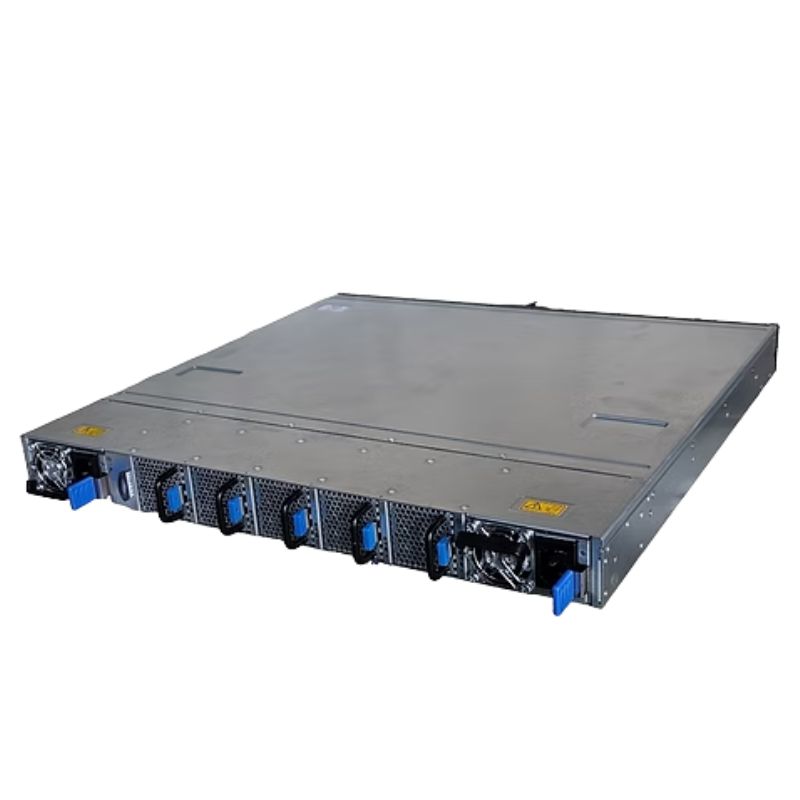
The compact 1U chassis supports standard rack mounting and also includes rail kit compatibility for dense deployments. Its power, cooling and cable management are engineered to maintain throughput while minimizing footprint and power draw per gigabit.
The Mellanox MSN3420-CB2FC Spectrum-2 SN3420 series represents a class of compact, rail- and rack-mountable managed Ethernet switches designed to deliver carrier-class throughput, low latency, and flexible optics support for modern data center, cloud, and high-performance computing environments. This category focuses on devices that combine 25 Gigabit and 100 Gigabit Ethernet port densities with full Layer 2 and Layer 3 routing capabilities, modular optical fiber compatibility, and the manageability enterprises require for automated operations and advanced network services. The product family is a perfect match for aggregation layers, top-of-rack deployments, spine-and-leaf fabrics, and any situation where high throughput in a 1U compact form factor is essential.
Switches in this category are purpose-built for environments that demand predictable latency and high bandwidth. Typical deployments include cloud service provider racks, colocation facilities, hyperscale compute clusters, AI/ML training farms, and enterprise data centers modernizing to 25G server uplinks and 100G aggregation. These switches are also ideal where space is constrained: their 1U chassis and compact footprint provide a high-performance option for dense racks and edge facilities. Network architects choose the MSN3420-CB2FC Spectrum-2 style switches where a balance of port speed versatility, optics modularity, and comprehensive Layer 3 feature sets are required to support multi-tenant isolation, east-west traffic patterns, and high-frequency east-west application communication.
Performance in this category centers on line-rate switching across mixed 25G and 100G interfaces, extremely low and consistent latency for latency-sensitive workloads, and deterministic behavior under full load. These switches are engineered to support a combination of 25GBASE-X and 100GBASE-X transceivers, enabling flexible connectivity to both server NICs and aggregation fabrics. Whether the network carries storage traffic, RDMA over Converged Ethernet (RoCE), telemetry streams, or east-west microservice traffic, the Spectrum-2 based hardware is built to maintain high throughput while preserving packet ordering and minimizing jitter. High-performance buffering and flow control mechanisms provide resilience during microbursts and heavy multi-tenant activity, and hardware-based forwarding ensures CPU resources are available for advanced control plane services rather than basic packet forwarding.
Low-latency forwarding is a hallmark of the Spectrum-2 architecture used in this category. For environments such as financial trading platforms, high-frequency data analytics, or distributed storage systems, predictable latency and minimal jitter are critical. Devices like the MSN3420-CB2FC are engineered so that latency remains low even when operating at full line rate. Deterministic forwarding features help preserve application performance when traffic patterns are bursty or when overlay fabrics are heavily utilized. The result is stable application-level performance, reduced tail latency, and improved efficiency when running latency-sensitive jobs.
The modular optical fiber approach is a defining trait of switches in this category. Support for pluggable optics enables a single device to connect to a variety of media types and distances without requiring a different switch model for each cabling scenario. This category supports modern 25G optics, often via SFP28 modules, and 100G optics typically through QSFP28 transceivers or DAC/active optical cable options. Optical modularity delivers operational flexibility: shorter distances within a rack can use direct attach copper or short-range optics, while longer links between racks, rows, or data halls can be served by single-mode transceivers. For organizations migrating from 10G to 25G server fabrics, the presence of mixed-speed optics simplifies phased upgrades because the same switch can interoperate across multiple generations of cabling and transceivers.
Careful cable management is essential in dense 1U deployments. The compact rail-mountable design reduces the rack depth footprint, but requires planning for airflow and cabling paths. Because these switches often connect to many 25G server ports, planners should account for the increased number of cables compared to lower-speed uplinks. Consideration for front-to-back or back-to-front airflow in the rack, compatibility with patch panels or breakout harnesses, and the use of structured cabling to group and label connections will keep operations efficient. The modular optics approach reduces the need to stock multiple specialized switch SKUs; instead, operators can standardize on a cabling strategy and exchange transceivers to meet reach or media requirements.
Manageability is a major differentiator for managed switches in this category. Standard management capabilities include a robust CLI, web-based GUI, and support for industry automation protocols such as SNMP, NETCONF, and RESTful APIs. Software feature sets span the essentials—VLANs, link aggregation, STP variants, and QoS—to advanced capabilities like VRF, BGP, EVPN-VXLAN overlays, and policy-based routing. These advanced Layer 3 and overlay networking features enable the switch to function as both leaf and spine elements in modern fabric designs, supporting multi-tenant segmentation and automation-driven provisioning workflows. Integration into orchestration platforms and programmability through APIs is essential for teams practicing infrastructure-as-code and continual deployment.
High availability features are integral to production-grade networks. Managed switches in this category support redundant uplinks, multi-chassis link aggregation, and fast failover mechanisms to minimize downtime. Stateful routing protocols and graceful restart capabilities help keep traffic flowing during maintenance windows. For environments with strict uptime requirements, combining hardware redundancy with software-level route convergence features ensures that services continue uninterrupted even when individual links or components fail. The compact 1U form does not imply compromise on resilience; power supply and fan design, as well as software features for fast reconvergence, are chosen to meet enterprise availability expectations.
Layer 3 support in this category goes beyond basic static routes. Many of these switches support dynamic routing protocols such as OSPF, IS-IS, BGP, and policy-based routing. For cloud-scale fabrics, BGP-based underlays and EVPN overlays are commonly used to scale multi-tenant infrastructures while maintaining strong traffic isolation. The SN3420-style devices are capable of participating in distributed routing, enabling traffic offload at the edge and reducing east-west latency between servers. Hardware-accelerated forwarding for IPv4 and IPv6 ensures route processing does not become a bottleneck, and support for large routing tables enables deployment in environments with many virtual networks and microsegmented tenants.
Network virtualization is a common requirement for modern multi-tenant data centers and private cloud deployments. Switches in this category typically support overlay technologies such as VXLAN with EVPN control-plane integration, enabling scalable L2 extension over L3 fabrics. These overlay features make it possible to migrate VMs, containers, and workloads without re-cabling or redesigning the underlay network, and they ease multi-tenant operations by separating tenant addressing from physical topology. Built-in support for tunneling and encapsulation, combined with policy enforcement and telemetry, provides the visibility and control operators need when running virtualized network services.
Security features in this product class include port-level access control, 802.1X authentication, role-based administration, and ACLs for traffic filtering. For multi-tenant and regulated workloads, network segmentation through VRFs, VLANs, and virtualization-aware policies is essential to protect tenant boundaries and comply with data separation requirements. Hardware-enforced access control lists allow high-performance filtering at wire speed without compromising forwarding capacity. Complementary features such as DHCP snooping, ARP protection, and IP source guard help defend against common layer 2/3 threats, and integration with centralized identity and policy systems allows consistent enforcement across the fabric.
Observability is a necessity for troubleshooting and performance optimization. Switches in the MSN3420-CB2FC Spectrum-2 category expose rich telemetry, flow sampling, and streaming statistics that enable proactive monitoring and rapid problem diagnosis. Modern telemetry stacks ingest structured data from devices via streaming protocols and APIs, enabling real-time dashboards and automated alerts. Packet capture capabilities and granular flow visibility support root cause analysis for complex distributed applications, while support for sFlow, IPFIX, or native streaming telemetry gives operators multiple options to integrate with existing monitoring ecosystems.
Although compact, these 1U switches are engineered with attention to power efficiency and thermal performance. The design balances dense I/O with thermal dissipation to sustain continuous full-rate operation. Redundant or hot-swappable power supplies can be supported in some variants, and fan modules are typically designed for predictable airflow in common rack configurations. When planning deployments, consider rack unit density, cooling capacity of the data hall, and electrical provisioning; using standardized rack power distribution and ensuring sufficient cooling headroom will pay dividends under high utilization scenarios. The rail-mountable form factor eases installation into varied rack types and facilitates serviceability when maintenance or upgrades are required.
Capacity planning for 25G/100G fabrics requires a different calculus than legacy 1G or 10G deployments. Planners should examine not only average bandwidth but also peak-to-average ratios and east-west traffic locality. Because these switches enable higher per-server uplink speeds, careful design of aggregation topologies and oversubscription ratios is necessary to maintain application performance. Consideration for future growth is also important; opting for modular optics and flexible port speeds allows the same switch infrastructure to adapt as server NIC speeds increase and as new traffic patterns emerge. Properly sized fabrics reduce the need for disruptive forklift upgrades and align infrastructure costs with expected growth trajectories.
Interoperability is essential for heterogeneous environments. Switches in this category typically conform to networking standards and provide mechanisms for integrating with existing routing, security, and orchestration layers. Whether the broader ecosystem includes legacy 10G access switches, high-capacity 400G spines, or software-defined platforms, the Spectrum-2 family-style switches can be inserted as leaf or aggregation elements. Support for open standards and common APIs helps organizations adopt a best-of-breed approach rather than being locked into a single vendor for every layer of the network stack. This flexibility supports phased modernization, allowing networks to evolve without large-scale rip-and-replace projects.
Automation reduces operational risk and accelerates provisioning. Devices in this category support standard automation frameworks and configuration management tools, enabling tasks such as zero-touch provisioning, mass configuration changes, and scheduled firmware updates. Software lifecycle management features that allow rollback, image verification, and staged upgrades help mitigate the operational risks associated with firmware changes. For organizations adopting DevOps practices, programmable switch APIs and integration into CI/CD pipelines allow network changes to be versioned, tested, and deployed in a controlled manner, bringing network operations in line with application delivery processes.
When evaluating switches of this class, buyers typically compare port density, supported optics, Layer 3 throughput, available buffer memory, management features, and form-factor particulars. Differences between models often revolve around the mix of 25G and 100G ports, the level of hardware acceleration for overlay and tunneling, and the richness of supported routing protocols. Some organizations prioritize maximum port density to limit the number of devices per rack, while others emphasize advanced fabric features and deep telemetry for operational insights. Matching the switch capabilities to the operational model, whether that model prioritizes raw throughput, feature-rich routing, or operational simplicity, ensures the selected device delivers the greatest long-term value.
Total cost of ownership considerations extend beyond the sticker price. Energy efficiency, optics and cable inventory, service contracts, and the cost of integrating the switch into existing automation frameworks all contribute to long-term expenses. Opting for modular optics and a compact, power-efficient 1U chassis can reduce ongoing costs related to cooling and power. Additionally, selecting devices that align with existing operational skill sets and automation investments reduces training and implementation expenses. When calculating return on investment, include the value of higher application performance, reduced maintenance windows through automation, and the agility gained from a programmable switching platform.
Modernization often occurs in stages, and switches in this category support smooth migration paths. By providing mixed-speed optics and strong Layer 3 capabilities, these devices let organizations transition from older 10G or 40G infrastructure to a 25G/100G fabric without major disruption. Future-readiness comes from programmability, standards-based interoperability, and the ability to handle increasing traffic volumes from AI workloads, larger datasets, and microservices architectures. Investing in these switches establishes a network foundation that can evolve in place as server speeds, storage needs, and application topologies change over time.
When acquiring switches from this category, evaluate the intended role of the device in the network, confirm optics compatibility with existing cabling, and plan for firmware and management integration. Validate the switch’s support for the routing and overlay features required by your environment and test management automation workflows in a lab prior to mass deployment. Pay attention to warranty and support options, as well as the vendor’s roadmap for software features and hardware refresh paths. Engaging network architects early in the procurement process ensures the chosen hardware aligns with business goals and technical constraints.


 Contact Us
 Information
 Catalog
 Solid State Drives (SSD)
 Network Switches
 Hard Disk Drives
 HBA & Controllers
 PC & Servers
 PC & Server Memory
 CPU & Processors
 Network Routers
 Power Supplies
 Tape Drives & Libraries
 Network Devices
 Computer & Network Cables